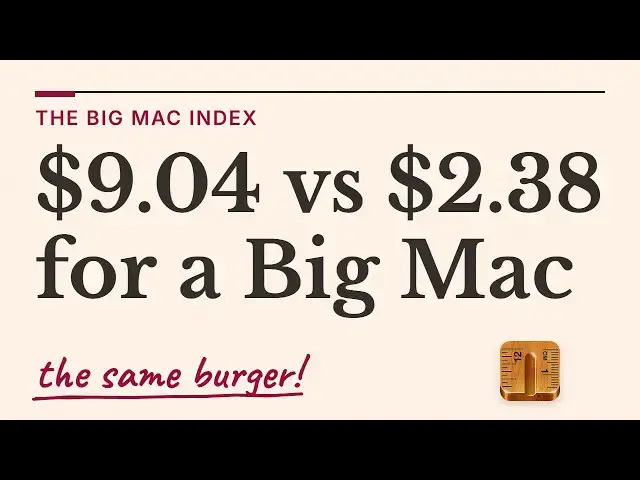

The Big Mac Index
Oct 27, 2026

Why is a Big Mac used to compare currencies? In July 2026, a Big Mac cost about $9.04 in Switzerland (CHF 7.30) but only about $2.38 in Indonesia (Rp 43,000): almost four times the price for the same burger. The Economist's Big Mac index, which began in September 1986, uses gaps like this to judge whether a currency is cheap or expensive.
This video also explains purchasing-power parity, works through an example with made-up round numbers ($5.00 in the US, €4.00 in the euro area) to find the "burger exchange rate," and shows why, by burger logic, the Swiss franc was about 45% overvalued and the Indonesian rupiah about 62% undervalued against the dollar. It ends with the index's limits: local wages, shop rents, taxes, competition and even the recipe differ between countries. It's a general explanation, not financial advice.
Currency converter in our app:
▶ https://www.metric-conversions.org/currency/
Chapters:
0:00 The same burger
0:40 The idea behind it
0:58 A worked example
1:47 Back to the real burgers
2:26 The limits
2:51 Takeaway
Sources:
• Big Mac Index, Wikipedia: https://en.wikipedia.org/wiki/Big_Mac_Index
• The Economist, big-mac-data (GitHub): https://github.com/TheEconomist/big-mac-data
• Currency Conversion, metric-conversions.org: https://www.metric-conversions.org/currency/
Is there anything else you'd like us to cover? Let us know in the comments below.
Show More Show Less