0:00
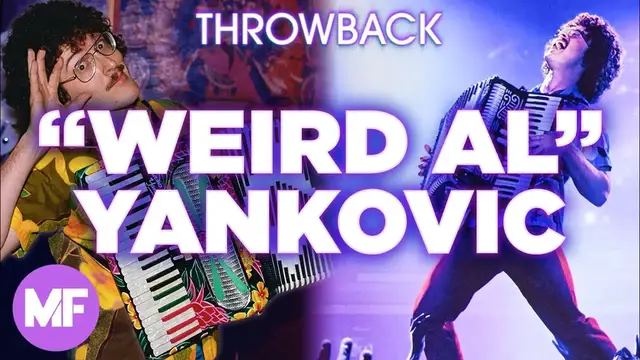
In 1982, a young and still mostly unknown Weird Al Yankovic got on stage at the Santa
0:05
Monica Civic Auditorium to belt out some of his song parodies in a 45-minute set
0:09
Instead of being welcomed and applauded, the audience, which was there to see the very serious
0:14
new wave headlining band Missing Persons, hated Al's music. Hated his parodies. Hated Al. They
0:21
pelted him with objects, and when they ran out of those, they threw loose change at him
0:25
Afterward, when a dejected Al was in the parking lot, a 12-year-old came up to him and asked
0:29
if he was Weird Al. When Al said he was, the child screamed, you suck, and walked away
0:34
Of course, we know now that Al does not suck, and that night's audience was an outlier
0:39
For the next four decades, Weird Al's bizarre brilliance in reimagining hit songs into parodies
0:44
has been one of the best parts of pop culture. We explain how he did it on this installment of
0:49
Throwback. Welcome to the show where we take a look back at some of the most influential pop
0:58
culture stories and events you might remember from your childhood. I'm Erin McCarthy, and I can
1:03
tell you that my childhood would not have been quite the same without the melodious sounds of
1:06
Eat It and Amish Paradise ringing throughout my earphones and car stereo. Weird Al's songs are
1:11
like a genetic splicing of Mad Magazine, The Onion, and actual musical genius. Weird, the Al Yankovic
1:17
story, Al's mock biopic released on the Roku channel in November 2022, is more of the same
1:22
with lots of creative liberties taken. This is hashtag not an ad, but I have to say the movie is
1:27
absolutely hilarious, and a must-see for any Weird Al fan. But if you're curious about how
1:32
things really went down, it all started with a door-to-door salesman and some good bathroom
1:36
acoustics. Alfred Matthew Yankovic was born on October 23, 1959 and raised in Linwood
1:44
a Los Angeles suburb. His parents, Nick and Mary Yankovic, were extremely loving but extremely
1:49
protective of their only child. Young Alfred was often discouraged from playing with other kids
1:53
and later warned about fraternizing with girls, with his father telling him they had diseases and stuff
1:59
And because he started kindergarten a year early and skipped a grade, he was usually two years younger than his peers
2:04
It was all maximally awkward. And then fate arrived on Al's doorstep in 1966, when he was just six years old
2:11
A door-to-door salesman was peddling music lessons and had, well, not really much of a selection at all
2:17
Just two options. Guitar and accordion. Mary picked the accordion, partly because she was amused by the fact that a famous polka player
2:23
Frankie Yankovic, shared the family's last name. Later, Al would say, My parents made the life-altering decision. I think they realized that the accordion was
2:31
the instrument that would take over the rock and roll world in the 1980s. Peculiar, but not yet weird, Al practiced the accordion relentlessly. He immersed himself in
2:40
polka music. As he got older, and the normal teenage distractions of dating and socializing
2:45
eluded him, Al began to make some important musical connections. He memorized Elton John's
2:49
album Goodbye Yellow Brick Road, playing tracks on his squeeze box, and developed obsessions
2:53
with comedian George Carlin and Mad Magazine. Comedy and music began to blend. He started
2:58
making original compositions, including Belvedere Cruising, about his family's car. Fortunately for Al, there was a market for his brand of humor. In the 1970s, a radio
3:07
personality named Barrett Hansen broadcast a radio program under the pseudonym Dr. Demento
3:12
Every Sunday night, Dr. Demento would curate a playlist of eccentric sounds like Grandma
3:16
got run over by a reindeer. It was irreverent programming, and it was perfect for Al. He spent
3:22
years recording music and trying to get Dr. Demento to play it, even calling in to request his own
3:26
stuff. While this worked for Belvedere Cruising, virtually all of his other submissions were
3:30
rejected. Then, in 1979, when Al was enrolled at California Polytechnic State University to study
3:36
architecture, he decided to take a big swing, setting his satirical sights on the biggest hit
3:41
single on the radio, My Sharona by The Knack. Al reimagined it as My Bologna, recording it in one
3:46
of the bathrooms at the university because the acoustics were good. The school is also where his
3:50
dorm mates had dubbed him Weird Al for being socially awkward. Al used the nickname while he
3:55
was a campus DJ, and obviously it caught on. Dr. Demento's listeners loved My Bologna
4:00
and it became so popular that an executive at Capitol Records released it as a single
4:04
at the urging of the Knack's lead singer, Doug Figer. That led to Al getting his own
4:08
recording contract but there were a few more steps along the way to becoming a weird household name After graduating college Al continued making parodies including a riff on Queen Another
4:20
One Bites the Dust called Another One Rides the Bus that was one of Demento's most requested songs
4:24
It actually started becoming a hit on more mainstream radio. Eventually, Al signed with Scoti Brothers Records and released his first album, Weird Al Yankovic
4:32
in 1983. Naturally, it included My Bologna, as well as Another One Rides the Bus
4:37
And who could forget I Love Rocky Road after the song Joan Jett made famous, I Love Rock
4:41
and Roll? Well, a lot of people, apparently. Al's first album really didn't make much of an impression
4:46
For the most part, novelty songs, as Al's music was considered to be, were usually a one-off
4:51
If someone was lucky enough to have a hit, it was typically their only one before they
4:55
faded into obscurity. There wasn't much reason to believe someone could make a career out of it
4:59
But just like Al had the good fortune to have Dr. Demento as an outlet for his music, he
5:03
He also had the benefit of breaking into the industry right around the time it was being transformed by a disruptor, MTV
5:10
The music video network launched in 1981, and turned pop music from a radio and cassette
5:14
industry to a visual medium. Al took advantage of this shift, with well-received videos for Rocky Road and another song, Ricky
5:22
which was about I Love Lucy. If Al recognized MTV was perfect for his brand of humor, MTV saw that Al was an ideal on-air personality
5:30
thing, the network was still growing and didn't have an endless library of videos to play
5:35
They needed content. So they turned to Al, giving him four hours of airtime on April Fool's Day in
5:40
1984. It was effectively a four-hour infomercial for Al's brand of zaniness. Viewers got a
5:45
concentrated dose of that with Eat It, Al's parody of Michael Jackson's smash hit Beat It
5:49
which was a single from his new album Weird Al Yankovic in 3D. Both the song and the video were
5:54
absolutely ridiculous, but they were also compulsively watchable. In riffing on Jackson
5:59
at the time perhaps the most famous artist in the world, Al was able to have an immediate
6:03
shorthand with his audience. Everyone knew Beat It, and therefore everyone got the absurdity of
6:07
turning it into a lyrical joke about indulging in junk food. Al would return to the Billboard
6:11
charts again and again. The only songs he wouldn't parody were those by recently deceased artists or
6:16
one recorded for charity. Eat It became Al's first real smash hit, hitting number 12 on the Billboard
6:21
chart, with the 3D album eventually going platinum. Al won a Grammy for the song. Thanks to the power
6:26
of MTV, Al's talents, which had long been dismissed as quirky or a novelty act, were
6:31
being taken seriously. With his Hawaiian shirt, glasses, and frizzy mop of hair, he was also
6:36
becoming immediately recognizable. But not everyone wanted to be in on the joke
6:43
While Al is a very talented musician, his song parodies do require one key ingredient
6:48
a culturally resonant song to spoof. Most sources discussing Al's work correctly point out that you
6:53
can parody copyrighted works in the United States. That's how Saturday Night Live can
6:57
lampoon the latest blockbuster, for example. But whether Al's work definitely qualifies as
7:01
parody, and not the legally unprotected satirical copying, is potentially a matter of debate
7:06
Since there's always a chance of an artist getting legally agitated, and since Al is a
7:10
polite guy, he's made it a policy to ask musicians for their permission before recording a song
7:15
And for the most part, they're happy to grant it. Famously, Al credited Madonna with suggesting a
7:19
spoof of Like a Virgin, wondering out loud to a mutual friend of hers and Al's manager when he
7:24
would record Like a Surgeon. Michael Jackson was also kind to Al, lending him permission for a
7:29
series of parodies of his music, including Fat, which was a spoof of Bad. Yankovic later said that
7:34
the Jackson blessing was huge. If a megastar said yes, then it would be hard for others to say no
7:39
But everyone has limits. Jackson didn't want Al to spoof Black or White, his hit 1991 single
7:45
which Al wanted to rework as Snack All Night. And yes, Al's songs often revolve around food
7:50
Jackson thought Black or White had too serious a message to satirize. Paul McCartney felt that way too
7:55
When Al asked him for permission to parody Live and Let Die as Chicken Pot Pie
7:59
McCartney told him no, because he was a vegetarian. Sometimes it's the label and not the artist
8:05
James Blunt was fine with Al recording You're Pitiful to the tune of You're Beautiful
8:09
but The Record Company wasn't. In those MySpace days with the blessing of the actual artist behind the tune
8:14
Al just released it as a free download to avoid any hassles. Al also had trouble with the late music legend Prince, who repeatedly turned down Al's requests
8:22
At one point Prince management team sent Al with other people apparently letter warning him not to look Prince in the eye when both were scheduled to appear at the American Music Awards In response Al sent Prince a letter back warning him not to look Al in the eye In 2016 about a year after the Purple One had
8:38
passed, Al told People that, I had this fantasy that he'd come out with a new song, I'd have a
8:42
great idea, and he'd finally say yes, and it would raise decades of weirdness between us
8:47
But that's obviously not going to be the case. Al's other big rejection came from Coolio
8:52
who insisted that Al's Amish-flavored parody of Gangsta's Paradise in 1996 was done without his
8:57
permission. Apparently, Al had erroneously thought he had gotten approval before recording his song
9:02
Coolio held a grudge about it for a few years before eventually admitting that the parody was
9:06
funny as s**t. There's actually a great interview clip available online where the rapper talks about
9:10
growing up, evolving in his attitudes toward Weird Al's work, and offering the comedian an apology
9:15
Al had another misunderstanding with Lady Gaga, whose team turned down Al's request to record
9:19
Perform This Way, as a spoof of Born This Way. When Gaga heard the song, she loved it and granted
9:24
her approval. Al may also seek permission because he wants to make sure he has a clear claim to
9:28
partial ownership of the new and copyrighted song for royalty purposes, which are typically
9:32
shared with the original artist, unless you're the artist formerly known as Prince
9:39
Al had a pretty solid decade in the 1980s. He released a total of six albums, remained a fixture
9:45
on the Billboard charts and on MTV, and was the subject of not one, but two movies
9:50
The first you may not have heard much about. It's called The Complete Al, and it's a mockumentary released pretty much directly to home video back in 1985. An hour-long version
9:58
of the flick aired on Showtime, but the 97-minute feature film certainly never made it to theaters
10:02
In the movie, Al offers a largely fictional take on his life, from his upbringing to his
10:06
breakout successes. The narrative is interwoven with eight of his music videos, including I Lost
10:10
on Jeopardy and Dare to be Stupid. This was really just a warm-up for Al's real breakthrough
10:15
1989's UHF. Al worked on the project for years with his manager, Jay Levy
10:20
who also directed it. If Al the musician was a song satirist, Al the actor was spoofing the movies
10:26
He appeared in a very oily muscle suit to lampoon Sylvester Stallone's Rambo
10:30
and a fedora to riff on Raiders of the Lost Ark. One segment features a trailer for Gandhi 2
10:35
where Gandhi has traded in pacifism for a machine gun. Al also saw the movie as a chance to tip his
10:40
hat to his influences. Dr. Demento makes a cameo as an audience member, and Al's character name
10:45
George Newman, is a nod to Alfred E. Newman of Mad Magazine fame. In the film, Al's uncle wins
10:50
a UHF television station during a poker game and appoints his nephew to run it. Al manages to improve
10:55
its dismal ratings with his creativity. He tries a variety of alternative programming choices
11:00
from sadistic game shows to children's programs, all of it peppered with parodies that take place
11:05
in his character's imagination. Think of it as Walter Mitty meets Garbage Pail Kids. There were
11:09
high hopes for the film, which had gotten Orion Pictures' best audience test scores since RoboCop
11:14
Satisfied that it would be a hit and that Owl would be the next comic filmmaking genius
11:18
Orion premiered UHF in the summer of 1989. The problem? The summer of 1989 was also home to
11:24
Indiana Jones and the Last Crusade, Batman, Ghostbusters 2, Lethal Weapon 2, Honey
11:29
I Shrunk the Kids, and about two dozen other films that all worked to practically obliterate UHF
11:33
from the minds of moviegoers. It received a mixed critical reception, with Siskel and Ebert giving
11:38
it two thumbs down. Owl and producers also believed everything from its PG-13 rating to its title
11:43
could have heard it at the box office. While UHF would grow into a cult hit, at the time
11:47
its failure wasn't great for Al's career. But one good thing came out of it
11:51
and it would come in handy for the next phase of Al's story. When we started putting together this throwback, we discovered that a career as long as Al's is
12:00
overflowing with interesting trivia. So consider these facts, the liner notes. Al used to have his own children's television show. The Weird Al show aired on CBS for one
12:09
season starting in 1997, and featured Al hosting guest stars like Patton Oswalt and Hanson
12:14
and bantering with Harvey the Wonder Hamster. The show's production designer was Wayne White
12:18
who also worked on a little series called Pee-wee's Playhouse, and episodes were directed
12:22
by Peyton Reed, who went on to the Ant-Man film franchise. But it was too weird for CBS
12:27
and lasted just 13 episodes. The Weird Al show was also among the last appearances of Al's
12:31
distinctive look. His glasses disappeared in 1998, when he underwent LASIK surgery to correct his vision
12:37
Around the same time Al also decided to shave his trademark mustache In 2011 Al released a children book titled When I Grow Up that features a child speculating on what he might wanna be as an adult Firefighter Movie director
12:49
Gorilla massage therapist? It's a notable Al project because his byline is just
12:53
Al Yankovic, no weird qualifier. In 2003, Al wrote and recorded a parody
12:57
of Eminem's Lose Yourself titled Couch Potato. The rapper was okay with Al doing the song
13:02
but didn't want him filming a music video for it, with Eminem's management saying their client preferred
13:06
not to have the visual perception of the song changed. Al, of course, honored Eminem's wishes
13:11
Amish Paradise is one of Al's biggest hits, thanks in part to its music video
13:15
Some of the Amish who appeared included Al's parents, as well as his aunts and uncles
13:19
Al said they were cheaper than extras. You may have noticed Al doesn't go for anything too risque in his work
13:24
His songs generally don't contain any profanity. And according to a 2020 New York Times profile, he never swears either
13:31
His wife Suzanne has admitted to trying to get him to curse, just in private, but Al refuses
13:36
Finally, Al himself isn't immune to being parodied. On the HBO series Mr. Show, future Better Call Saul star Bob Odenkirk portrayed a character named Daffy Mal Yinkle Yankle
13:45
Al called the sketch pretty savage, but very funny. Following the muted reception to UHF, Al returned to the recording studio, not quite sure what his next move should be
13:57
A paradigm shift was taking place on the music scene. Instead of the upbeat pop anthems of the 80s, Al was looking at the beginning stages of grunge, or the so-called Seattle sound
14:06
And there was no band bigger than Nirvana, who released their album Nevermind to massive success
14:12
In fact, Al had heard the album before it blew up. And while he loved it, he didn't think it would catch on
14:17
When it did, Al wanted to spoof their hit Smells Like Teen Spirit as Smells Like Nirvana
14:21
with the premise being that lead singer Kurt Cobain wasn't that easy to understand
14:25
Al even recorded one portion of the song with cookies in his mouth for maximum muffling
14:29
But Al's management team was unable to contact the band, eventually telling Al that if he was going to make the parody happen
14:35
he'd have to find them himself. Al was finally able to approach Cobain thanks to Victoria Jackson, who had appeared in UHF
14:41
and became friendly with Al. Jackson was a cast member on Saturday Night Live. When Nirvana was
14:46
booked to appear on the show, she was able to get Al and Kurt Cobain on the phone together
14:50
Cobain thought Al's idea of spoofing his semi-intelligible singing was hilarious, and granted him permission. Al's album, Off the Deep End, even spoofed Nirvana's album cover
14:59
with Al naked and chasing a donut on a fishhook while underwater. Thanks to that
15:03
Amish Paradise, and a slew of other hits, Al remained very relevant and very funny through
15:08
the 1990s and beyond. In 2006, Al's White and Nerdy, a take on Chameleon Air's Riding Dirty
15:14
became Al's first top 10 Billboard singles hit. In 2014, Mandatory Fun became his first ever
15:19
number one album, and the first comedy album to debut in the top spot. And in 2015, Al's career
15:24
came full circle when he was invited to be guest editor of his beloved Mad Magazine
15:29
and revealed such secrets as his abandoned idea for a riff on Celine Dion's theme for
15:32
Titanic. My fart will go on. You have to wonder what the lyrics would have been for My Fart Will
15:38
Go On. Like, I tried to come up with my own. Al is still going strong. In addition to the new
15:47
streaming film starring Daniel Radcliffe, Al is touring and producing new music he distributes
15:51
himself. Now in his fifth decade of performing, Al has defied predictions that novelty songs and
15:56
artists are usually just one-hit wonders. So what's the secret? It's probably that for all
16:01
his silliness, Al takes the art of music very seriously, poring over lyrics and bringing genuine
16:06
talent to his parodies. If he was a terrible musician, the parody probably wouldn't land
16:11
That he's deeply committed to all of it makes something like Amish Paradise, as dumb as it is, a kind of genius. Al probably inspired buddy comedians the same way Mad inspired
16:20
him. And not just comics. Lin-Manuel Miranda told the New York Times in 2020 that Al was an
16:26
influence on Hamilton, and that he often prefers Al's spoofs to the original songs. So, sure
16:31
An accordion-wielding kid growing up to write songs about food is weird
16:35
But for legions of Weird Al fans, weird is wonderful. And while we'll never know for sure, I bet that rude little kid at the Santa Monica
16:41
Civic Auditorium eventually came around