Up next in 10



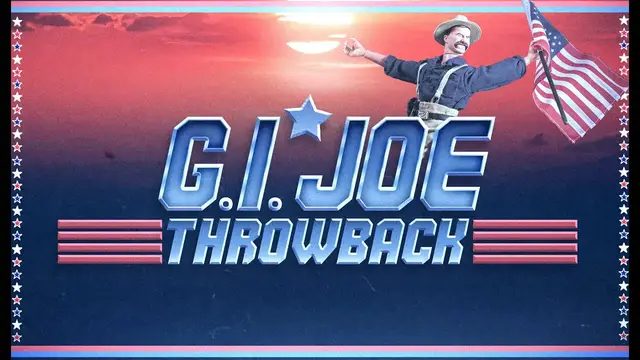
G.I. Joe has a history full of stops, starts, and surprisingly few on-screen deaths. But knowing the history of G.I. Joe is just half the battle. In this episode of Throwback, Erin talks about the origins of G.I. Joe, the sprawling (and sometimes strange) extended universe it created, and the critical role a misprinted fingernail played in its success. We'll cover the G.I. Joe cartoon and the ever-helpful G.I. Joe PSAs, and even reveal Stephen King's connection to the Joe-verse. Don't miss a video! Subscribe NOW: https://www.youtube.com/@MentalFloss?sub_confirmation=1 About Mental Floss: Mental Floss is where curious people come for trivia-tastic information. Mental Floss produces lists of fun facts, debunks common misconceptions, and tells untold stories from history, science, culture and more. Website: http://www.mentalfloss.com Twitter: http://www.twitter.com/mental_floss Facebook: https://facebook.com/mentalflossmagazine Copyright Notice: This video and YouTube channel contain dialog, music, and images that are property of Mental Floss. You are authorized to share the video link and channel, and embed this video in your website or others as long as a link back to this YouTube Channel is provided. 2025 Mental Floss The Rise and Fall of G.I. Joe | Mental Floss https://www.youtube.com/@MentalFloss
Show More Show Less View Video Transcript
0:00
Did you know that the secret to the long-standing success of G.I. Joe was an inverted thumbnail
0:04
When Hasbro produced the earliest 12-inch versions of the popular military combat doll
0:08
in 1964, they were concerned companies might produce copycat versions. But those early figures had a production error
0:17
The nail in the thumb was inverted, so it was on the inside of the thumb
0:20
That meant if a company tried knocking it off without inspecting it too closely, copying
0:24
the thumb would be a dead giveaway. The toys also had a scar in the face, which was intentional
0:29
These unique features made the Joes distinctive, and allowed Hasbro to pursue copyright or
0:33
patent infringement cases. That was smart business. In the decades to come, G.I. Joe would not only rule toy shelves, but dominate cartoons
0:40
invade comics, and cross over into live-action blockbuster movies. Or movies, anyway
0:46
At their peak in the 80s, two out of every three boys in the U.S. owned at least one Joe
0:51
It's the story of America's greatest fictional military force, that has basically never managed
0:55
to defeat its primary enemy or even hit a target. it's next on this edition of Throwback. Welcome to the show where we take a look back at some of
1:08
the most influential pop culture stories and events you may remember from your childhood
1:12
I'm Erin McCarthy, and while I was not alive when G.I. Joe first burst onto the scene in 1964
1:17
I've been around for many of the toys' moments in the spotlight. The public service messages at the
1:21
end of the 1980s animated series taught me to never swim during a thunderstorm, never pull a
1:26
fire alarm if there was no fire, and never to jump over down power lines with my bike
1:30
which before that I really, really loved to do. But before the Joes could lecture kids, they had to go through some growing pains of their own
1:41
You're familiar with Hasbro, the gigantic toy company responsible for G.I. Joe
1:45
Transformers, and other classic toy lines. But in the 1950s, the brand was best known as the
1:50
manufacturer of the unarmed pacifist called Mr. Potato Head. The word Hasbro refers to the
1:55
Hasenfeld brothers, siblings Henry, Hillel, and Herman, who were originally in the business of
2:00
marketing textile scraps. They moved from that to school supplies, and eventually to toys like
2:05
Mr. Potato Head. In those days, people shoved those plastic eyeballs into real potatoes
2:10
By the 1960s, however, the toy market seemed ripe for something else. Something beyond tubers
2:16
America was caught in the middle of the Cold War. Hasbro knew there was an appetite among kids for
2:21
combat toys. After all, little green army men made of lead and later plastic had been perennial hits
2:26
But those tiny plastic toys weren't poseable like Mattel's popular Barbie line
2:31
What if you could combine the two trends? As with many such ideas, there's debate about who
2:35
came up with G.I. Joe. The fight centers on Stan Weston and toy designer Lawrence Reiner
2:40
According to One Story, Weston was a licensing agent who cut deals for merchandising based on
2:44
existing properties, like Dr. Kildare, a popular medical television drama that was kind of the
2:49
Grey's Anatomy of its time. Weston believed posable military toys could fill a need in the
2:53
market. Lawrence Reiner then came up with the idea of figures that could move their arms and legs
2:57
According to another story, Reiner was working for Ideal Toy Company when they began thinking
3:01
of relatives to market for their Tammy dolls, like making a fireman father. Reiner came up
3:06
with a soldier, and after taking it to his boss was told a phrase that many people would say
3:11
boys will never play with dolls. But Reiner's boss gave him permission to shop the idea around
3:16
elsewhere, and Reiner eventually met Weston. Whichever story is true, Weston had a lot more
3:20
than dolls in mind. He wanted to create a toy that emulated the razor blade business model
3:25
Say a customer buys a razor. That's fine. But what the razor blade company really wants is for that
3:30
customer to keep buying disposable razor blade heads. That was what Weston wanted for toys
3:35
Kids could buy an action figure and then all the accessories for it. The weapons, outfits
3:39
and vehicles they'd need to patrol the backyard. Hasbro executive Donald Levine liked it and worked
3:44
with Weston to create some prototypes of the figures in uniform. On the strength of the samples
3:49
skeptical Hasbro boss Merrill Hasenfeld made Weston an offer. He could take a flat fee of $75,000
3:54
or a royalty based on toys sold. Weston counted with $100,000 and handed over total ownership to
4:01
Hasbro. It would be a deal that Weston would grow to regret. Hasbro executive Donald Levine
4:05
got the name G.I. Joe from a 1945 film titled The Story of G.I. Joe, but the name first appeared as
4:11
the title of a 1942 comic strip by David Breger. Levine also worked to develop the entire assortment
4:15
of figures and had the idea to fit them with articulated joints, which allowed the toys to
4:20
kneel down to get behind enemy lines or lob a grenade at the nearest house cat. Along with the
4:24
accidental thumbnail and scar, Hasbro had a toy line, save for one problem. They were worried boys
4:30
of the era wouldn't want to play with what amounted to a doll. So Hasbro insisted retailers
4:34
call the Joes action figures. When Hasbro proudly showed off their Jo line at the toy fair in 1964
4:40
before, prospective buyers laughed. These were toy soldiers in fancy clothing Few people thought kids would be interested but they were G Joe was an immediate hit when it debuted that year with sales of the figures far exceeding Hasbro expectations
4:54
Multiple branches of the United States Armed Forces were represented. You could get an action soldier, marine, sailor, or pilot
5:01
Each figure was an imposing 12 inches tall, with real fabric uniforms and 19 points of articulation
5:07
To save on manufacturing costs, the bodies were the same. Only the heads and accessories differed
5:12
This was a great idea, until it wasn't. By the end of the 1960s, America was deep into a divisive war in Vietnam
5:18
and the use of military force was no longer something that everyone could get behind. The toys, once a piece of Americana, became controversial
5:26
So Hasbro decided to pivot, reframing the G.I. Joe line as a team of adventurers
5:30
who went on top-secret missions that had no military sanctioning. There wasn't a lot of continuity to these stories
5:36
Sometimes the figures were on a mission to save the environment. Other times they were fighting mummies or looking for the abominable snowman
5:43
Instead of a naval officer, a Joe might be an aquanaut. The new line also pioneered something that entered the pop culture lexicon
5:50
a kung fu grip feature, which allowed the figures to grasp guns or ropes
5:54
What this had to do with kung fu, I cannot tell you, but kids liked it. By 1976, G.I. Joe barely resembled the original toy line
6:01
The figures had been reduced in size to 8 inches. Characters like Bullet Man and Atomic Man battled against galactic cavemen known as the Intruders
6:09
But not even the lifelike hair and beards on the Joes could entice kids
6:13
Hasbro quietly gave the Joes an honorable discharge, not realizing they'd soon be back in a big way
6:19
Or in a small way. The success of Star Wars in 1977 was felt throughout the movie and toy industries
6:29
and anything having to do with outer space was suddenly hot. To capitalize on the trend, a Hasbro executive named Bob Prupas decided to relaunch G.I. Joe
6:37
as a military operation with a science fiction element. Soldiers would carry laser weapons and travel via jetpack
6:43
Krupa stubbed the project Operation Blastoff. There was just one problem, and that problem was a very real-world situation involving petroleum
6:52
Remember that the original Joes were 12 inches in height, which meant a lot of plastic was being
6:56
used to produce them. But a series of energy crises in the 70s affected the price of petroleum
7:01
which was the raw material used to make the plastic, meaning each Joe would have cost way
7:05
too much at retail to entice customers. Attempts to reduce the amount of raw materials needed for
7:10
production hadn't worked out. Some of the later Joes made to conserve raw plastic were so flimsy
7:15
their arms would spontaneously come off. Not a good trait for a soldier. So Prupus innovated again
7:21
once more turning to Star Wars for inspiration. Star Wars! The Star Wars toy line from Kenner
7:27
featured figures that were just 3.75 inches tall. This let them keep production costs low
7:32
and allowed them to make vehicles the figures could fit into for reasonable retail prices
7:36
Proupas decided these new Joes would need to be smaller in stature. But that still didn't excite the higher-ups at Hasbro
7:42
While American attitudes about the military had softened since the end of the Vietnam War
7:46
the Joes still felt a little aimless. Having them fight real-world threats was maybe a little offensive
7:52
Having them fight mummies was kind of stupid. So, with the help of marketing firm Griffin Bacall and Hasbro creatives
7:57
Proupas tried to hammer out what the G.I. Joe of the 1980s would look like. While Hasbro was excellent at making toys
8:03
they had never launched a cohesive mythology surrounding one of their toy lines. What they needed was a partner with experience in storytelling
8:10
And who better than the people at Marvel Comics? Griffin Bacall reached out to Marvel
8:14
which was receptive to partnering up with Hasbro in a mutually beneficial arrangement. Hasbro would design and market toys
8:20
Marvel would come up with motivations for the Joes to be marching into battle as part of a comic book series
8:24
As a bonus, Griffin Bacall promised to create television advertisements for the comics
8:28
which was rarely done at the time. That served two purposes. It got the word out on G.I. Joe, and it circumnavigated the strict television broadcasting lines of the era about toy commercials
8:38
This was an ad for a comic, not a toy. On the surface, anyway
8:42
Marvel contributed a lot to the G.I. Joe lore. At the time, Marvel's editor-in-chief, Jim Shooter, knew writer Larry Hama and was working on a title called Fury Force
8:50
which was a military adventure series starring Nick Fury Jr. as the leader of an elite strike team
8:55
Hama was himself a Vietnam War veteran. He knew his way around the tropes of the war story genre
9:01
But Fury Force was idling, and Marvel wasn't sure it was ever going to move forward
9:05
So Shooter told Hama to take some of the ideas he had earmarked for Fury Force and adapt them for the G.I. Joe series
9:11
At this point, it's hard to say where Hasbro ended and Marvel began. According to Hama, he would usually be presented with black and white drawings
9:17
and a rough idea of the character's purpose. It would be up to him to come up with a personality
9:23
Another Marvel editor, Archie Goodwin, suggested that the Joes face a perpetual foe in Cobra
9:27
a kind of nonspecific terrorist organization led by the evil and helmeted Cobra Commander
9:33
who served as the franchise big bad Hama contributed a number of character and vehicle ideas which he kept on file cards that Hasbro eventually used on the packaging of the toy line This bold new look for Joe was unveiled in 1982 when Hasbro debuted 11 figures and 8 pieces of equipment including
9:48
fan-favorite Ninja Snake Eyes, Scarlet, and Cobra Soldiers. Even though the figures were
9:53
smaller, they still retained a lot of articulation. Each one had 10 points, or double that of
9:58
the average Star Wars figure. During the 1982 holiday season, Hasbro expected to sell 15 million
10:03
in G.I. Joe toys. Instead, they sold $50 million. The second year, it was $100 million. And
10:10
in another parallel to Star Wars, which basically sold an empty box during the fall of 1977
10:14
because no figures were ready, Hasbro offered fans the chance to get a mail-in Cobra Commander
10:19
if they sent in proofs of purchase of existing figures. Hasbro thought maybe 5,000 orders
10:24
would come in. They got 125,000. The toys help sell the comics, and the comics help
10:30
sell the toys. In fact, Marvel's G.I. Joe was once its best-selling subscription title
10:35
moving over 331,000 copies a month, even outselling The Amazing Spider-Man. It was
10:40
clear Hasbro knew their resurrected toyline was turning into a phenomenon, but knowing was only
10:45
half the battle. As successful as the Marvel Comics title was, Hasbro knew that to really
10:54
break through to their audience, they'd need more exposure. Kenner's Star Wars toys had a movie
10:59
series to help them move little plastic Luke Skywalkers. A G.I. Joe movie was a little too
11:03
ambitious, but an animated limited series? Very doable. In 1983, Hasbro brought on a writer named
11:09
Ron Friedman to script the adventures of the Joes and their endless conflict against Cobra
11:13
The result was G.I. Joe, A Real American Hero, a five-episode series that was followed in 1984
11:19
by G.I. Joe, The Revenge of Cobra. These brief runs were a proof of concept for an ongoing
11:24
animated series that debuted in 1985. For that series, Hasbro enlisted a military consultant in
11:30
the form of the Rhode Island National Guard, which helped make sure the uniforms and vehicles were at
11:34
least plausible in appearance. In return, the Guard insisted the military be made to look good
11:38
But parents insisted that the military not look too good at their job. In the cartoon version of
11:43
G.I. Joe, enemy soldiers who get clipped typically parachute to safety. And despite lots of fire
11:48
fights, no soldier ever died on the show. So on the one hand, G.I. Joe glorified war and violence
11:53
without any repercussions. But if we're being fair, in some respects, it was also pretty
11:57
progressive for its time. The Joes welcomed female members like Scarlet long before the
12:01
actual US military got its act together on that front. And it wasn't mentioned as anything
12:05
remarkable within the context of the show, either. The Hasbro and Marvel synergy introduced some memorable characters into the Joes canon
12:12
including Duke, Zartan, Baroness, Destro, Storm Shadow, and Lady J. But the biggest
12:17
character of them all might have been Wally Burr, who was the primary voice director for the show
12:21
and was himself a World War II veteran. According to voice actors, Bird treated the show like a
12:26
regimented military assignment, barking orders and having actors fall in line with multiple takes
12:31
All of this was made possible by, of all people, Ronald Reagan. The president had pursued a policy
12:36
of deregulation at the Federal Communications Commission, leaving Hasbro free to produce the
12:41
cartoon, which they did in conjunction with Sunbow Productions, a division of the Griffin-Pacall
12:45
Marketing Firm, and Marvel Productions. In addition to the two limited series, the main show ran for
12:51
95 episodes. It also introduced the now-iconic phrase, Yo Joe, to the Joe mythology, though Ron Friedman originally scripted the line as
12:58
Ho, Joe, the change was probably for the best. The show wasn't completely free of responsibility, however. To appease parents and broadcast
13:08
policymakers who feared it was nothing more than a 22-minute toy commercial, Hasbro and others
13:12
inserted a public service message at the end of each episode. These typically consisted of a Joe
13:17
character popping up just as some kids were doing something irresponsible like playing with fire
13:22
and admonishing them not to act foolishly. The spot's closing line, and knowing is half the battle
13:28
became an earworm for kids of the 80s. It all worked. G.I. Joe was a massive success
13:34
sending Hasbro's stock from $0.42 a share to $4.36 by September 1985. But G.I. Joe's tour of duty
13:40
couldn't last forever. They were about to get some competition, and not from Cobra, but from four
13:46
turtles who were familiar with martial arts. Something unique to G.I. Joe was that, unlike
13:54
most toy lines, it incorporated people from other areas of pop culture in the fictional world of
13:59
the Joes. In doing so, it allowed audiences from other areas of entertainment to engage in the toys
14:04
comics, and cartoons. If you really think about it, the Joe line might be one of the earliest
14:08
examples of a shared universe. How? Take a look. In 1985, the only thing more animated than a
14:14
were the heroes and villains of the World Wrestling Federation. To capitalize on the popularity of pro wrestling
14:20
Hasbro invited Sergeant Slaughter for a meeting. Slaughter whose real name was Robert Remus is not an actual veteran but managed to carry the stern disposition of a drill instructor to the ring Hasbro thought he make a perfect recruit and Slaughter appeared as himself or his wrestling character in the toy line comics and series The toy was a mail Kids
14:39
had to send him proof of purchase tabs to get him. Based on the success of Sergeant Slaughter
14:43
Hasbro went after another larger-than-life character in the form of William Perry, an NFL star and Chicago Bears defensive lineman whose nickname was The Refrigerator
14:51
In 1986, the Bears won the Super Bowl and became something of a cultural sensation
14:56
It made perfect 1980s sense for Perry to become the Joe's physical fitness instructor
15:00
He came packaged with a football and a chain, presumably to bludgeon Cobra with
15:04
While Crystal Ball wasn't exactly based on an existing character, it did come from one of the 20th century's most valued imaginations, Stephen King
15:12
The horror author's son, Owen, was such a big fan of the Joe toy line that he and his father pitched the idea for a Cobra hypnotist to Hasbro
15:19
which liked the idea and eventually released him as an action figure in 1987
15:24
Hasbro also released a figure named Sneak Peek that year, which was made in the likeness of Owen and carries his name
15:29
Both Crystal Ball and Sneak Peek had ties to Bangor, Maine, King's hometown
15:34
King actually gave Crystal Ball a shout-out in the novel Tommyknockers. After the Joe's heyday of the 1980s, which we'll get to momentarily
15:41
Hasbro issued a line of retro 12-inch figures in the late 1990s based on iconic American historical figures
15:46
They included George Washington, General George S. Patton, and Theodore Roosevelt, complete with a polka dot bandana and cult revolver
15:54
I obviously had to have one of these. Finally, Hasbro negotiated with Sylvester Stallone to incorporate the character of Rocky Balboa into the G.I. Joe universe
16:04
Rocky would have been a hand-to-hand combat instructor. It nearly happened, but Hasbro failed to complete the deal
16:09
and Stallone's likeness was used for a Rambo toy line by Coleco instead. Hasbro released a boxing-themed Cobra toy named Big Boa in 1987
16:17
Big Boa. Balboa. Oh well. Ivan Drago would have made an ideal Cobra villain
16:23
If he dies, he dies. The end of the 80s was also the end of an era for G.I. Joe
16:32
Newer toy lines and cartoons like the Teenage Mutant Ninja Turtles were diverting the attention of kids
16:37
And not even some Hail Mary attempts like incorporating characters from the popular video game Street Fighter 2
16:42
couldn't make much of a difference. In the 1987 G.I. Joe direct-to-video animated movie
16:46
they even tried to kill off popular leading character Duke, though someone clearly had
16:51
second thoughts, as a dubbed line indicates he had merely gone into a coma. It was G.I. Joe by
16:55
way of General Hospital. A second cartoon followed, this one airing from 1989 to 1992
17:01
but it wasn't very well-received by Joe fans. Hasbro discontinued the main Joe line in 1984
17:06
and Marvel ceased publication of their comic after 155 issues that same year
17:11
In the final issue, the Joes were disbanded and their headquarters closed. Perhaps for good
17:15
But the Joes had one more round of ammunition left. Nostalgia. As time went on, kids who grew up with the Joes toys and cartoons became adults
17:23
who started snapping up classic Joes toys for hefty prices. Throughout the 1990s and into the 2000s, Hasbro tried to reinvigorate the line
17:31
with ideas like Sergeant Savage and his Screaming Eagles and G.I. Joe Extreme
17:36
But fans seemed to prefer the original recipe. The toyline got its second wind in 2009 when Paramount released G.I. Joe The Rise of Cobra
17:43
the first live-action adaptation of the franchise. Starring Channing Tatum as Duke and Joseph Gordon
17:48
Levitt as Cobra Commander, it was successful enough to warrant a sequel, G.I. Joe Retaliation
17:53
in 2013. The story got another wrestler involved, former WWE superstar Dwayne The Rock Johnson
17:59
who co-starred in the film. More recently, Snake Eyes G.I. Joe Origins hit theaters
18:04
starring Henry Golding as Snake Eyes and Samara Weaving as Scarlet. That film only did middling business
18:09
But it's clear that Hasbro will continue to mind the G.I. Joe universe. A Lady J television series is still in development at Amazon
18:17
So why has G.I. Joe endured for nearly 60 years? Early on, it was about filling a need
18:23
Kids wanted an action doll. Sorry, action figure. That was nimble enough to fuel their play scenarios
18:29
Later, the toys became a way to interact with characters they saw on television. Good and evil were clearly defined
18:35
The characters were memorable. The opportunity for waging war seemed endless. And unlike a lot of real wars, the motivations were clear
18:44
Hasbro had made superheroes of soldiers. The only person unhappy about this development
18:48
Stan Weston. Remember that he created the toy line and received $100,000 for a franchise that's made hundreds of millions
18:56
In 2015, Weston sued Hasbro to try and recapture the copyright. The case was settled in 2016 with details that were undisclosed
19:02
but hopefully made Weston, who died in 2017, happy. Without him, Hasbro might still be in the business of sticking plastic eyes into potatoes
#education