Up next in 10



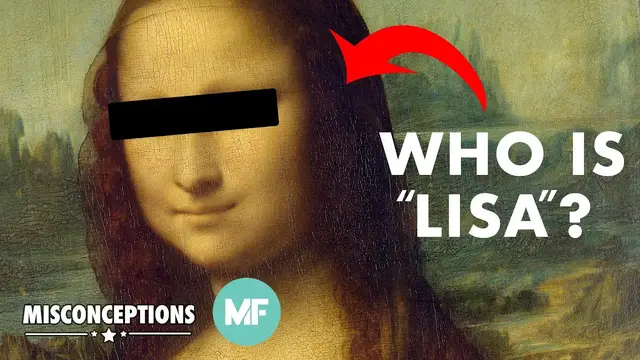
The Renaissance gave us the Mona Lisa, the telescope, and the Sistine Chapel. But who is the Mona Lisa actually a painting of? And did Galileo really invent the telescope? And be honest, do you picture Michelangelo painting the ceiling of the Sistine Chapel... on his back? We've got some centuries-old myths to debunk, let's get started.
Let's reshape how we think about this important cultural movement. Join host Justin Dodd in an endless pursuit of the truth.
Subscribe here for new Mental Floss episodes every Wednesday: https://www.youtube.com/channel/UCpZ5...
Don't miss a video! Subscribe NOW: https://www.youtube.com/@MentalFloss?sub_confirmation=1
About Mental Floss:
Mental Floss is where curious people come for trivia-tastic information. Mental Floss produces lists of fun facts, debunks common misconceptions, and tells untold stories from history, science, culture and more.
Website: http://www.mentalfloss.com
Twitter: http://www.twitter.com/mental_floss
Facebook: https://facebook.com/mentalflossmagazine
Copyright Notice: This video and YouTube channel contain dialog, music, and images that are property of Mental Floss. You are authorized to share the video link and channel, and embed this video in your website or others as long as a link back to this YouTube Channel is provided.
2025 Mental Floss
Misconceptions About The Renaissance | Mental Floss
Show More Show Less View Video Transcript
0:00
If you asked a high school history class when and where the Renaissance started
0:04
at least a few students could probably tell you the textbook answer. Early 14th century Italy
0:10
And that is where some trailblazing Renaissance work was definitely taking place
0:14
I mean, Dante was writing the Divine Comedy, for example, and Giotto was painting all his favorite Bible scenes
0:20
If you posed the same question to a Renaissance historian, however, they might have a more complicated response
0:25
The Renaissance didn't exactly have a launch date. Some scholars actually considered Dante and Giotto's work to be part of a proto-Renaissance
0:33
which started closer to 1200. According to that school of thought, the proto-Renaissance laid the groundwork for the real Renaissance
0:41
which didn't build momentum until certain important events occurred in the 15th century
0:46
like the Medici family taking over Florence in 1434 and using their money and influence
0:51
to support the arts, and Johannes Gutenberg's printing press, which made it possible for
0:56
Europeans to disseminate new and old texts to the masses. The innovation didn't appear in Italy
1:03
until about 1465. Since the timeline is subject to interpretation, some historians have suggested
1:08
that we all just stop referring to the Renaissance as a time period at all. Instead, they prefer to
1:13
call it a movement. And as far as movements go, this one went really far across both space and
1:20
time. So it's not totally surprising that some finer points haven't been preserved quite as well
1:25
has all that precious art and certain key players have gone recast as characters of themselves
1:31
Machiavelli as the dastardly scoundrel for example or Galileo as the only soul smart enough
1:36
to train his telescope on the stars. Hi, I'm Justin Dodd and today we're talking myths and
1:41
misconceptions about the Renaissance. Shalt thou join me in this journey? They didn't talk like that, that was gibberish. Let's go
1:55
Nobody cared about ancient culture before the Renaissance. The term Renaissance didn't enter the English lexicon until the 19th century
2:07
but its meaning, rebirth, had long been associated with the era. Italian painter Giorgio Vasari had used the Italian equivalent
2:15
renaschita, way back in the 1500s. Rebirth does make it seem like everyone went to sleep in the Middle Ages
2:21
and woke up the next day with completely new skills, values, and personalities. And key
2:27
Renaissance thinkers definitely promoted the idea of the Renaissance as a dramatic and decisive shift
2:32
Florentine apothecary Matteo Palmieri threw his shade to Middle-agers in his book
2:38
On Civic Life, written in the 1430s. Letters and liberal studies, the real guides to the distinction in all the arts
2:45
the solid foundation of all civilization, have been lost to mankind for 800 years and more
2:50
It is but in our own day that men dare boast that they see the dawn of better things.
2:56
Burned! In slightly less bombastic terms, Palmieri was saying that people were finally
3:01
starting to rediscover the achievements of ancient Greece and Rome and that this was leading to new
3:06
and better things. Palmieri and his contemporaries weren't totally wrong in believing that they were
3:11
living through a resurgence of interest in ancient culture. Historians think the fall of
3:16
of Constantinople in 1453 furthered this trend since Byzantine scholars migrated west and
3:22
brought more ancient texts with them. It's like someone carrying the whole of Wikipedia
3:26
on their shoulders. But as I discussed in our episode of Misconceptions about the Middle Ages, that era might not truly
3:32
deserve to be called the Dark Ages. Religious institutions were often hubs of culture and
3:38
education, preserving seminal Latin works by Cicero, Aristotle, and other Roman thinkers
3:44
And the church sponsored awe-inspiring works of art and architecture, too. Some medieval art actually depicted ancient legends like Hercules or co-opted pagan motifs
3:53
for Christian designs. So Palmieri's assertion that Renaissance artists were bringing ancient works back in
3:59
style is a little like Justin Timberlake singing about bringing sexy back when it really never
4:04
totally left. I mean, I do have to applaud Palmieri's understated performance as Sean Parker in The
4:10
social network, though, and I think I've confused myself. Religion fell out of fashion during the Renaissance
4:17
Francesca Petrarca, whom you might know better as Petrarch, was a 14th century Renaissance
4:22
heavyweight who sometimes called the father of humanism The term humanism wasn coined until centuries later and there not exactly a fixed definition but basically Petrarch thought people should take a
4:34
page out of an ancient Latin or Greek book and spend more time studying subjects that weren't
4:39
religious. Art, literature, philosophy, history, rhetoric, you name it. In other words, the humanists
4:46
believe it was worth focusing on things that didn't explicitly relate to God, like exploring
4:51
what it means to be human, or discussing the limits of civic duty
4:55
When people talk about studying the humanities or getting a liberal arts education, they're
5:00
following in these footsteps. But just because Renaissance humanists encouraged secular studies doesn't mean they sanctioned
5:07
abandoning religion. In fact, Petrarch himself remained deeply religious throughout his life, and he didn't consider
5:13
his two interests incompatible. And even if artists drew from ancient Greece and Rome to inspire their work, a lot of the
5:20
the work was religious and even made at the behest of church leaders. Take Leonardo da Vinci's The
5:27
Last Supper or Michelangelo's David. In general, God still loomed large in people's minds. Baldassare
5:33
Castiglione, but I'm sorry, having the name baldass in your name must have been really rough in middle
5:37
school, he illustrated just how much God loomed in his 1528 work The Book of the Courtier. It's
5:43
meant to be an etiquette guide for aspiring courtiers, and the courtly characters discuss
5:48
all the hot Renaissance topics. God comes up a lot, especially when someone's trying to justify
5:54
why a certain thing should be acceptable, like painting or music. As Castiglione wrote
6:00
we find music used in holy temples to render praise and thanks to God, and we must believe
6:05
that it is pleasing to him and that he has given it to us as most sweet alleviation for our fatigues
6:11
and troubles. Another character in the book stresses the importance of avoiding impiety
6:15
when you're trying to be witty, because that can incidentally lead to blasphemy
6:20
Anyone willing to disrespect God for the sake of a good joke, quote
6:24
deserves to be chased from the society of every gentleman. Sure, the Book of the Courtier can't attest to the piousness of every person who lived during the Renaissance
6:33
but it was extremely popular when it came out, which does seem to suggest that the character's perspectives resonated with a wide audience
6:42
Niccolo Machiavelli was Machiavellian. If someone calls you Machiavellian, you might want to reevaluate how you're living your life
6:50
These days, the adjective essentially describes a morally corrupt schemer willing to do anything and hurt anyone to bop to the top
6:58
But did the term's namesake practice what he preached, or even believe it for that matter
7:03
Not everyone thinks so. Machiavellianism comes from The Prince, a how-to guide for political leaders
7:09
written by Florentine philosopher and statesman Niccolò Machiavelli. Among other advice in the book, he wrote, quote
7:16
It is often necessary to act against mercy, against faith, against humanity, against frankness
7:22
against religion, in order to preserve the state. People have spent centuries debating whether Machiavelli meant for people to take these
7:30
upbeat nuggets of wisdom at face value. As historian Garrett Mattingly wrote in a 1958 essay on the topic
7:37
the notion that this little book was meant as a serious scientific treatise on government
7:41
contradicts everything we know about Machiavelli's life, about his writings, and about the history of his time
7:48
Not only did Machiavelli's career revolve around serving the short-lived Florentine Republic
7:52
he also praised republicanism as the ideal form of government in other writings
7:57
So the idea that he'd write a handbook for tyrants does seem questionable
8:01
The mystery gets even murkier once you know what was going on in Machiavelli's life when he wrote The Prince
8:07
For most of the 15th century, the Medici family had essentially been ruling as unofficial monarchs
8:12
over the region. That ended in 1494 after Piero de Lorenzo de Medici capitulated to French soldiers going
8:19
to conquer Naples. Public outrage ensued and Piero, who sometimes called Piero the Unfortunate, was driven into exile
8:27
Florence adopted a republic and everyone lived happily ever after. Yeah, just kidding
8:33
In 1512, the Medicis returned with a vengeance and with an ally too, Spanish troops who helped
8:38
them reclaim control over Florence. In February 1513, the reinstated dynasty tossed Machiavelli
8:44
in prison and accused him of conspiring against them. He was tortured mercilessly, never admitted
8:50
anything and finally got released in March 1513 He wrote The Prince later that year and dedicated it to the magnificent Lorenzo di Pirro de Medici Some scholars argue that the book was Machiavelli attempt to ingratiate
9:03
himself with the regime—a creative cover letter, if you will—which would have been a pretty
9:08
Machiavellian move. But others think he meant to expose the type of tyrannical behavior that was
9:13
happening without actually pointing fingers. It could be read as a satirical work. If Machiavelli
9:18
trying to get in the good graces of the ruling family or to undermine their authority, he
9:23
apparently should have tried another tactic. The Benicis continued to rule Florence, and Machiavelli
9:28
wasn't ever really welcomed back into the political fold. He spent the rest of his life
9:32
writing essays, plays, and other works. The Prince wasn't widely published until 1532
9:38
five years after Machiavelli's death. People were sort of scandalized by what Machiavelli wrote in
9:44
but he wasn't around to defend his reputation. Niccolo the Unfortunate. Galileo Invented the Telescope
9:51
Okay, we don't exactly know who invented the telescope. Back in the 17th century
9:56
French scientist and intellectual Pierre Borrell looked into the matter and found that the French
10:01
Spanish, English, Italians, and Dutch were all claiming credit. The first person to file a patent
10:06
for the device, though, was Hans Lieperhey, a Dutch eyeglass maker. Just weeks after Lieperhey
10:12
tried to trademark the invention in 1608, another Dutch eyeglass maker named Jacob Medias also
10:17
filed a patent for a telescope. Officials decided it was too close to call and denied both requests
10:23
They also claimed that the telescope could be easily duplicated, so slapping a patent on it
10:28
was sort of impractical. Maybe that was for the best. There were later claims of a third
10:32
possible inventor, Zacharias Janssen, and even today, partisans disagree on the matter
10:38
But no one really argues that Galileo should get the credit. The Italian did soon prove that recreating the design was well within his abilities
10:45
Less than a year after the dueling Dutchman tried to patent the telescope, he made himself one. And he didn't stop there. While Galileo's original prototype could only
10:54
magnify things three times larger than their normal size, he eventually developed a telescope
10:59
that made objects look a staggering 30 times larger. Galileo wasn't necessarily the first to turn his telescopic gaze skyward
11:07
English astronomer Thomas Harriot, for example, drew the moon as seen through a telescope
11:11
in July 1609, a few months before Galileo did. We remember Galileo so much better than
11:17
Harriet and other astronomers, partially because Galileo was often really quick to publish and
11:21
promote his work. Let that be a lesson to anyone with the really funny tweets sitting in their
11:26
drafts folder. If you don't tweet it, someone else will. Galileo's troubles with the Catholic Church
11:32
might not match up with whatever story you've heard either. In the most sensational version
11:36
The church wages a decades-long battle to discredit, imprison, and eventually excommunicate
11:42
Galileo because he believed in heliocentrism. Here's how things actually went down. Around 1615
11:48
the church caught wind that Galileo might be espousing Copernicus's theory that the earth
11:53
revolved around the sun. Since the earth was God's creation, the idea that it might not be at the
11:57
center of the universe was total blasphemy. The Roman Inquisition summoned Galileo to court in
12:03
1616 and basically said, check yourself before you wreck yourself. For the next 15 years or so
12:09
Galileo appeared to heed the warning and the church stayed off his back. That period of peace
12:13
ended in 1632 when Galileo made too strong a case for heliocentrism in his Dialogue Concerning the
12:20
Two Chief World Systems. Unfortunately for him, the church did not play by the three-strike system
12:26
which makes sense since Abner Doubleday had not invented baseball yet. Anyway, the Roman
12:31
Inquisition hauled Galileo in again in 1633. This time they put him on trial for heresy
12:36
and Galileo admitted partial guilt. He explained that while he did appear to endorse heliocentrism
12:41
in his book, it was an accident. He had meant to make it clear that he was just presenting it
12:46
as a possible theory. The Inquisitors found him guilty, not of outright heresy
12:51
but vehemently suspect of heresy, which was a crime below formal heresy. Call it
12:56
I can't believe it's not heresy, a metaphor which holds up to very little scrutiny, but which did
13:01
allow me to make this stupid graphic. The church told Galileo his book would be banned, and he had
13:07
to read a statement personally renouncing heliocentrism. And he did. As the story goes
13:12
Galileo then muttered, and yet it moves, under his breath, as one last parting middle finger to the
13:18
church But yeah this probably didn happen The earliest known written mention of that detail The detail comes from a 1757 book by Giuseppe Beretti who claimed that Galileo said the phrase once he was out of court But considering the consequences of endorsing heliocentrism
13:33
contemporary experts generally agree there's a slim chance Galileo said it anywhere
13:38
As historian Henry Kelly put it in 2016, if Galileo had ever come out and said he believed in heliocentrism after swearing it off
13:46
he would have been liable to receive an automatic death sentence. After the trial, Galileo spent one night in prison before the court knocked his sentence down
13:54
to house arrest. He lived in his villa outside Florence until his death in 1642
14:00
Could have been worse, and you know what? I bet he rocked that ankle bracelet. Michelangelo painted the Sistine Chapel on his back
14:07
In the 1965 film The Agony and the Ecstasy, Michelangelo, played by Charlton Heston
14:12
is shown lying on his back while painting the ceiling of the Sistine Chapel
14:16
Though the movie may have introduced the myth to a new audience, it did not create it
14:20
Circa 1527, a bishop named Paolo Jovio published a biography of Michelangelo in Latin
14:26
While discussing the painter's work on the Sistine Chapel, Jovio described him as resupinus, or
14:31
bent backward. But resupinus has also been interpreted as on one's back, which might be
14:37
the original source of this misconception. Michelangelo definitely did bend backward during the project, but he wasn't supine like a mechanic sliding under a car on one of those
14:46
cool little dollies. With the help of his assistants, the painter constructed special
14:50
wooden scaffolding to reach the ceiling, and he basically climbed around on that for four years
14:55
to create his famous frescoes. It involved a lot of uncomfortable neck craning and other contortions
15:01
and he wasn't happy to suffer for his art. In fact, Michelangelo hadn't even wanted the job
15:06
in the first place. Though confident in his sculpting skills, Michelangelo did not fancy
15:10
himself a painter. When Pope Julius II commissioned him to color the chapel in 1508, the artist was
15:16
already busy with another project for the pope—an opulent tomb. He very reluctantly switched gears
15:23
and the experience really was agony, which Michelangelo himself detailed in a poem to a
15:28
friend in 1509. Here's the beginning. I've already grown a goiter from this torture, hunched up here like a cat in Lombardy
15:35
or anywhere else where the stagnant waters poison. My stomach squashed under my chin
15:40
my beards pointing at heaven, my brains crushed in a casket, my breasts twists like a harpies
15:46
It ends with, I am not in the right place, I am not a painter. Okay, sure, Michelangelo
15:53
The Mona Lisa is a secret self-portrait. Over the last few centuries, amateur art sleuths and
15:58
actual scholars have had a pretty fun time devising new theories about the identity of
16:03
of Leonardo da Vinci's Mona Lisa. Some believe the painting was a self-portrait, or just
16:08
an idealized version of a woman in general. It's also been suggested that the model was
16:12
one of Leonardo's assistants, a man named Gian Giacomo Caprotti, better known as Salai
16:18
If you've been down this internet rabbit hole before, you've probably heard that the Mona Lisa is most widely believed to depict an actual woman named Lisa. Lisa Garrardini
16:27
the wife of Francesco del Giacondo, a Florentine merchant. There's at least some evidence to
16:32
back up this theory. For one thing, it's what Giorgio Vasari wrote in his very famous collection of biographies
16:37
The Lives of the Most Excellent Painters, Sculptors, and Architects. Vasari also referred to Lisa Giardini as Mona Lisa, which explains the painting's title
16:46
Leonardo actually died before naming the piece. But Vasari's biography was published in 1550, more than 30 years after Leonardo's death
16:55
And Vasari was also known to embellish when he didn't have all the facts. In 2005, a researcher at Germany's University of Heidelberg found a clue that supported
17:03
Vasari's assertion, though. In the margin of a 15th-century manuscript, a Florentine clerk named Agostino Vespucci
17:10
had jotted down a note saying that da Vinci was currently creating a portrait of Lisa
17:15
del Giocondo. The note was from October 1503, which is the same year da Vinci is thought to have started
17:21
work on the Mona Lisa. That said, there's still no incontrovertible proof that the Mona Lisa was the painting
17:26
Vespucci mentioned, and Da Vinci didn't leave any records that we know of confirming the
17:31
model's identity or even the commission itself. So if the model is your great-great-great-great-grandmother
17:39
please tell us in the comments below
#education