Up next in 10



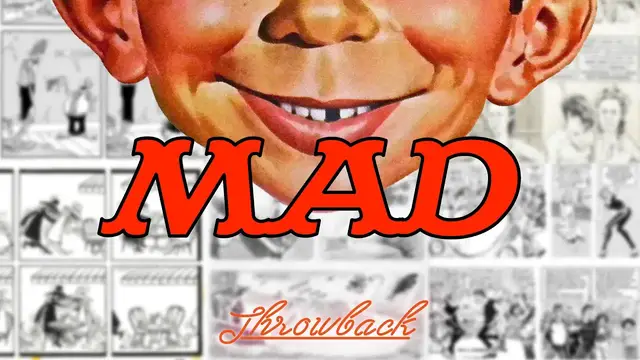
Mad magazine has a rich history-a story of rebellion and reproach, of Alfred E. Neuman's controversial gap-toothed face, and of a "gang of idiots" that happened to be some of the smartest satirists of their day.
Mad magazine changed humor, but it met its fair share of speed-bumps along the way. J Edgar Hoover wasn't a fan and the U.S. Treasury Department once took issue with one of Mad's gags. Mad was talked about in concerned tones in the halls of governmental power and snuck into many a classroom.
Don't miss a video! Subscribe NOW: https://www.youtube.com/@MentalFloss?sub_confirmation=1
About Mental Floss:
Mental Floss is where curious people come for trivia-tastic information. Mental Floss produces lists of fun facts, debunks common misconceptions, and tells untold stories from history, science, culture and more.
Website: http://www.mentalfloss.com
Twitter: http://www.twitter.com/mental_floss
Facebook: https://facebook.com/mentalflossmagazine
Copyright Notice: This video and YouTube channel contain dialog, music, and images that are property of Mental Floss. You are authorized to share the video link and channel, and embed this video in your website or others as long as a link back to this YouTube Channel is provided.
2025 Mental Floss
How Mad Magazine Changed Comedy & Angered the FBI | Mental Floss
https://www.youtube.com/@MentalFloss
Show More Show Less View Video Transcript
0:00
Thanks to satire like The Simpsons and The Daily Show, it's hard to imagine a time
0:04
when irreverent humor wasn't everywhere. But the 1950s were much different. Anti-establishment
0:09
humor wasn't part of the mainstream. Not until MAD Magazine arrived to poke holes in
0:13
everything from politics to movies to advertising. And even if you never picked up MAD, you probably
0:18
know Alfred E. Newman, its moronic mascot. But who came up with MAD? What prompted a
0:23
lawsuit over Alfred E? And why did the FBI feel the need to keep a file on a silly humor
0:28
magazine. It's all next on this special fold-in edition of Throwback. Today, comic books are the source material for movies that gross billions of dollars
0:42
But in the 1950s, adults generally perceived them as hot dumpster trash that would rot kids' brains
0:47
Some people even took to burning them. How did comics get such a bad rap? While characters like
0:53
Superman and Batman were viewed with suspicion, adults were really fixated on crime and horror
0:57
comics, like the ones published by EC. Founded by Maxwell Gaines in 1944 and later run by his son
1:03
William Gaines, EC was the publisher behind grisly titles like Tales from the Crypt and
1:08
The Vault of Horror. Beheadings and other gore made them a little bit like the slasher movies
1:12
of their day. But Gaines had one employee who thought comics could do better. His name was
1:17
Harvey Kurtzman, and he was a very talented writer and artist who had finished military service and
1:22
and was looking to become a professional illustrator. After a series of odd jobs, Kurtzman landed at EC Comics, where his approach to popular
1:29
war titles was more thoughtful than most of the stories being published at the time
1:33
With the Korean War raging and the experiences of his many fans in the military to draw from
1:38
Kurtzman told stories that examined the human price of war. While Kurtzman examined serious topics, he wasn't that serious a guy
1:45
He had spent years illustrating humor comics, including a stint working for Marvel mastermind
1:49
Stan Lee. But as much as he loved his combat stories, EC Comics wasn't exactly known for their
1:54
deep pockets. Kurtzman wanted an opportunity to be funny. And to make more money doing it
2:00
The historical record gets a little murky when it comes to who exactly came up with
2:04
the idea for Mad. Kurtzman insisted a humor comic was his idea
2:08
William Gaines said it was his. The two never even agreed on who named it Mad
2:13
Kurtzman said he came up with it. Gaines said that he and other editors had referred to EC Comics as quote
2:18
EC's Mad Mags for their bombastic approach, and that Kurtzman had merely taken the phrase
2:23
and shortened it. What we do know is that Kurtzman wanted to do something new at the time, a comic book
2:29
that made fun of other comic books. Each issue would have a series of stories poking fun at popular genres like horror, westerns
2:35
and superhero titles, with Kurtzman using many of the same artists, including Jack Davis
2:40
and Wallace Wood, that EC used for their conventional titles. It was something different, and in the comics market of 1952, different was important
2:48
Roughly 3,250 comics were published that year, with over 60 different titles hitting the
2:53
newsstands every week. Kids, who made up most of the comic book readership, had lots of choices, and there was no telling
3:00
whether a humor comic would succeed. The first issue of Mad was actually titled, Tales Calculated to Drive You Mad, and retailed
3:06
for 10 cents. Gaines printed 400,000 copies for its October-November 1952 launch, and waited to get word from
3:13
distributors and retailers on whether it was a hit. And it wasn't
3:17
sold pretty poorly, actually. All of that competition had squeezed mad out of the picture
3:22
Gaines was dismayed to see that issues 2 and 3 were also met with a lukewarm reception
3:26
Kurtzman decided that if they were going to parody comics, they might as well set their sights on the biggest and most indestructible target possible, Superman. A satire titled
3:35
Super Duper Man ran in the fourth issue, and was significant for two reasons. Mocking DC's
3:40
hero created strong word of mouth among readers. And it also led to DC, then known as National
3:45
Comics publications sending a strongly worded legal letter demanding Mad stop mocking their most popular character Did Mad comply It did not Did Mad get a lot of legal letters from that point forward
3:58
Oh, it did. With momentum generated by Super Duper Man, the circulation of Mad soared to 750,000 copies per
4:10
issue. More parodies followed, like Starchy, a takeoff of Archie, which saw the Riverdale
4:15
gang acting more like delinquents than innocent teenagers. Under Kurtzman's watch, Mad was
4:20
also leaning more into subversive humor. One issue had a cover printed to look like a classic
4:25
composition book, which persuaded kids to try and get away with reading it in school
4:29
The success of the comic came at a good time for EC, since they were about to face a very
4:34
public scolding for pretty much everything else they published. In 1954, congressional hearings
4:39
were held on the potential dangers of comic books, and William Gaines was called in to testify
4:44
by. It did not go well. Confronted with an EC cover featuring a decapitation, Gaines declared
4:50
it appropriate for a horror comic, which is not what a bunch of very stern senators wanted
4:55
to hear. Pretty soon the comics industry was being forced to govern itself with the Comics Code Authority
5:01
a panel that monitored comics for good taste and made sure titles avoided controversial
5:05
topics like horror and gore. The Comics Code Authority could have been named the Screw
5:10
William Gaines board, and the end result would have been about the same. Most of EC's more
5:15
sensational titles were dropped. Pretty soon, MADD was their standout title, but Kurtzman was already
5:21
thinking about new endeavors. Faced with the prospect of losing a star employee, Gaines allowed
5:26
Kurtzman to change the format of the comic to a magazine, which had the lucky, and according to
5:31
Gaines, unintended consequence of rendering MADD beyond the scope of the comics code authority
5:36
After all, it wasn't the magazine code authority. So beginning with issue number 24, cover date July 1955, MAD became a magazine
5:45
And soon, it would get a mascot. One of the biggest mysteries behind MAD actually started more than 50 years before the first
5:56
issue was printed. That's around the time an illustration of a gap-toothed imbecile began circulating in
6:01
advertising material. It was even used in a political campaign against Franklin Roosevelt
6:06
Around the time Gaines and EC were preparing to issue a series of mad trade paperback collections
6:11
Kurtzman was in the offices of Ballantyne Books when he saw this strange figure on a
6:14
bulletin board with the caption, Me Worry? Kurtzman stole the name Alfred Newman from a radio show hosted by Henry Morgan, but it
6:21
was originally just used as sort of a generic stand-in name around EC, not a label for any
6:26
particular character. A story in Crime Illustrated, for instance, has a story attributed to Newman
6:31
According to Kurtzman, it was only when fans began applying the name Alfred E. Newman to
6:35
the dim-witted character that Mad editors followed suit. Artist Norman Mingo perfected
6:40
Newman's dull expression and illustrated many covers for Mad. Alfred E. Newman became so
6:45
popular that a reader in New Zealand once sent a letter to the publisher's office in
6:48
New York with no address on it. Instead, the correspondent had drawn Newman on the envelope
6:54
It made it to its destination. Even though authorship of the character was never discovered, it wasn't long before someone
6:59
tried to claim Newman as their own. A woman named Helen Pratt Stuff sued E.C. claiming that her late
7:05
husband, Harry Spencer Stuff, had copyrighted the character back in 1914. As Matt geared up for the
7:11
lawsuit, they began researching the history of the character and found widespread use of the face
7:16
What's more, Harry Spencer Stuff was, in the words of the court, most derelict in preventing others from infringing his copyright, which didn't help his widow's
7:24
argument. She lost the lawsuit on appeal. In fact, Newman's likeness may date back to 1894
7:31
when the Los Angeles Herald ran an announcement for a play called The New Boy. His depiction
7:35
may have been inspired by an actor who appeared in the show. How popular did Newman get In 1959 Fred Astaire starred in a variety special titled Another Evening with Fred Astaire In it Astaire performs a dance routine that every bit as compelling as any other Fred Astaire
7:50
routine, except that he happens to be wearing an Alfred E. Newman mask the entire time
7:56
It's cool, it's weird, and you can probably find it on YouTube. Alfred E. Newman might have been the most recognizable personality from MAD, but
8:07
but he wasn't the only one. Over time, the magazine would introduce some popular recurring features in the magazine
8:13
as well as writers and artists who developed followings of their own
8:16
While MAD referred to them as the usual gang of idiots, they were some of the most talented
8:20
visual storytellers in the business. One of the most notable features was the MAD fold-in
8:26
Created by MAD contributor Al Jaffe, who spent an astonishing 56 years making them, the fold-in
8:31
encouraged readers to reveal a hidden image by pressing two sides of the inside back cover together
8:36
Jaffe said he was inspired by the foldouts common in magazines of the era, like those
8:40
found in Playboy. Jaffe also created the popular Snappy Answers to Stupid Questions column, which allowed
8:46
readers to pick their choice of sarcastic retort. Jaffe contributed to MADD through 2020, when he retired at age 99
8:53
Sergio Aragones was best known for his work in the margins of the magazine
8:57
According to Aragones, he arrived in New York from Mexico in the 1960s in the hopes of making
9:01
it as a cartoonist. When he showed some samples to editors, they declared his work a good fit for MAD
9:07
Aragones noticed that there was plenty of empty space on the borders of each page, and
9:11
offered to start filling them with tiny, wordless illustrations. He essentially created a position for himself that lasted for decades
9:18
Antonio Prohias, who created the secret agent spoof Spy vs. Spy, was actually a Cuban refugee
9:24
who fled the country in 1960 and devised his famously inept spies while working in a clothing factory
9:30
visited the MAD offices with both his drawings and his daughter, 14-year-old Marta, to help
9:34
him translate. Finally, if you enjoyed the numerous movie and television satires in MAD, you probably
9:40
recognize the work of Mort Drucker. The artist is credited with pioneering the illustrated pop culture parody when he spoofed
9:46
the Perry Mason television series in 1959. Even celebrities thought being drawn by Drucker was an honor
9:52
When Michael J. Fox was on the Tonight Show in 1985 at the height of his Back to the Future
9:56
stardom, he told Johnny Carson he knew he had made it, quote, when Mort Drucker drew
10:01
my head. George Lucas loved Drucker's Star Wars parody, The Empire Strikes Out, so much
10:06
that he offered to buy the original artwork. Drucker arrived at MADD in 1956, the same
10:11
year the magazine had to say goodbye to perhaps its biggest influence, Harvey Kurtzman
10:20
Despite having a significant influence on the direction and style of MADD, Harvey Kurtzman
10:24
wasn't at the helm very long. Kurtzman was big on quality control, and he felt the freelance
10:29
budget Gaines allotted didn't permit him to pay his talent what they deserved. At the
10:34
same time, Kurtzman was being courted by Hugh Hefner, who had recently started his Playboy
10:37
publishing empire, to come make a humor magazine for him. So in 1956, Kurtzman parted ways
10:43
with Gaines to start a magazine titled Trump. When that met with mixed reviews, Kurtzman
10:48
tried again with a magazine titled Humbug. But recapturing that mad magic was proving
10:52
elusive. Despite Kurtzman's best efforts, MADD stood alone in the humor department
10:58
And under the watch of new editor Al Feldstein, who would remain on board for 28 years
11:02
MADD was growing by leaps and bounds. In 1960, the editorial staff seemed to predict the future
11:07
when they printed a cover congratulating John F. Kennedy on his presidential victory
11:12
even though the election was weeks away. How did they do it? Simple. The issue had two covers
11:17
with Kennedy on one side and candidate Richard Nixon on the other. Distributors were told to
11:22
display whichever candidate won, making MAD look smart. For a minute, anyway
11:26
In the 1960s, songwriter Irving Berlin and others went after MAD in court. MAD had printed
11:31
a collection of joke lyrics to be sung to the tunes of popular songs and the music industry felt this was copyright infringement The United States Court of Appeals disagreed and sided with MAD citing that parody and satire were deserving of substantial freedom both as entertainment and as a form of literary and social
11:47
criticism. That is a powerful proclamation, which MAD may or may not have been thinking about when
11:51
they decided to print a middle finger on the cover of their April 1974 issue. Some stores refused to
11:57
stock it, which prompted William Gaines to write a letter of apology, one of the many MAD has been
12:02
forced to issue over the years. The first was addressed to newsstand dealers in 1953
12:07
when Gaines published his biography in the magazine describing himself as a communist
12:11
pyromaniac, and dope dealer. Then, in 1957, Gaines invited the wrath of the Federal Bureau
12:17
of Investigation, when the magazine printed a game in which the reader could earn a draft
12:21
Dodger card they were supposed to request from FBI Director J. Edgar Hoover. When three readers
12:26
actually wrote to Hoover asking for their card, the FBI visited the mad offices in New York
12:31
Gaines was conveniently not in, but art director John Putnam promised they would never make fun of Hoover again
12:37
Gaines then wrote a letter saying how very sorry he was. And in June 1961, the FBI got upset when MAD offered advice on writing an extortion letter that several kids used as a template to demand money
12:49
The FBI wanted the attorney general to investigate since they felt the magazine was urging people to violate federal laws
12:55
They didn't get their wish, but in 1967, MADD did get a visit from the U.S. Treasury
12:59
Department after printing what was obviously a fake $3 bill. The problem was that some of the first change machines in the country couldn't tell a legitimate
13:07
bill from one bearing Alfred E. Newman's face. The machines were giving out change when people inserted the fake money into the slot
13:14
How that was the fault of MADD was never really explained, and they ultimately wound up not
13:18
getting in trouble for the accidental counterfeiting. By the early 1970s, MAD had a circulation of over 2 million readers and was increasingly
13:29
seen as a vital voice in the counterculture movement. Alfred E. Newman set his sights on everything from Vietnam to Watergate
13:36
Even Harvey Kurtzman returned briefly in 1985 to help spoof Rambo. But by the end of the 20th century, pop culture and humor were changing rapidly
13:45
Kids who had grown up on MAD were now crafting their own comedy, and the winking satire once
13:49
exclusive to the magazine could be seen in films like The Naked Gun, shows like Saturday
13:54
Night Live, and even The Onion, which would eventually bridge the gap between print and
13:58
online humor. Faced with dwindling circulation, editors at MAD took some drastic steps
14:04
In 1994, they allowed Alfred E. Newman to become a spokes idiot for a PsyQuest computer
14:09
memory device. By 2002, he was appearing in catalogs for Land's End and a Got Milk campaign
14:15
The magazine itself had also started accepting ads. Both of these steps were a big deal
14:20
William Gaines had stopped taking ads in 1957. who had passed away in 1992 shortly before Kurtzman, felt that MAD couldn't parody consumerism
14:28
if they were profiting from advertising. In 2001, ads helped pay for the magazine's
14:33
switch to color printing. But by 2002, MAD was selling just 200,000 copies a month. Eventually
14:39
the magazine faced the same critical decision that a lot of print publications had to make
14:44
In 2019, DC Entertainment, which had long ago acquired MAD, decided to stop publishing
14:49
new issues. For now, the magazine mainly offers reprints of classic stories both in
14:53
print and online, with some rarer new material sprinkled in. Mad Magazine's time as a rite of passage for teens may be over, but there's no mistaking
15:01
the impact it had on popular culture. Without Mad, we might never have gotten the Garbage
15:05
Pail Kids or Weird Ali Yankovic, who once guest-edited an issue, incidentally
15:10
Underneath the vacant gaze of Alfred E. Newman were some absolutely amazing artists, plying
15:14
their craft in the same subversive way Harvey Kurtzman used throwaway war comics to get
15:18
readers thinking about more important things. Mad let kids know that making sense was overrated
15:23
Making nonsense was sometimes better. I'm Erin McCarthy. If you have a favorite department or parody from MADD
15:28
let us know in the comments. Thanks for watching
#education