Up next in 10



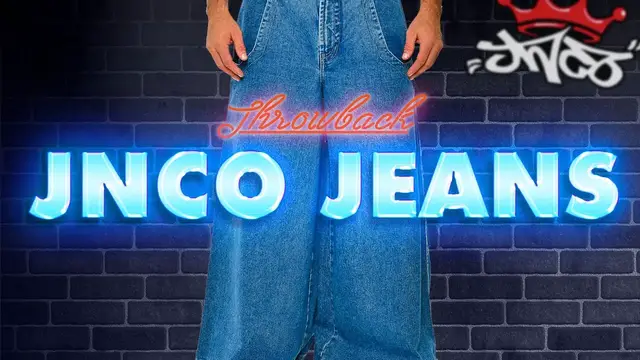
JNCO jeans (JNCOs, if you're nasty) epitomized a brief, strange moment in fashion history. They were "countercultural" jeans marketed towards suburban tweens. JNCOs made adults angry, but what might be odder is that they made so many young people happy.
Erin dives into the history of JNCO jeans, from their iconic logo to their fall from wide-legged grace. She hits on the comfortability of JNCOs, the different meanings ascribed to the acronym (?) JNCO, and attempts to fit an entire JNCO leg over her head (OK, not that last one ... though she did request that we make that a part of the video).
Don't miss a video! Subscribe NOW: https://www.youtube.com/@MentalFloss?sub_confirmation=1
About Mental Floss:
Mental Floss is where curious people come for trivia-tastic information. Mental Floss produces lists of fun facts, debunks common misconceptions, and tells untold stories from history, science, culture and more.
Website: http://www.mentalfloss.com
Twitter: http://www.twitter.com/mental_floss
Facebook: https://facebook.com/mentalflossmagazine
Copyright Notice: This video and YouTube channel contain dialog, music, and images that are property of Mental Floss. You are authorized to share the video link and channel, and embed this video in your website or others as long as a link back to this YouTube Channel is provided.
2025 Mental Floss
How JNCO Jeans Made Absurd Fashion History | Mental Floss
https://www.youtube.com/@MentalFloss
Show More Show Less View Video Transcript
0:00
It's the 1990s. You're a cool, hip, skateboarding teenager hanging out with your cool friends
0:05
sipping ecto-coolers, and doing radical moves on halfpipes. Or maybe you're at a rock club in New
0:10
York City. Suddenly, an adult appears and asks you to take off your pants. Do you tell your
0:15
parents something strange is afoot? No, you don't, because that adult isn't a weirdo at all
0:20
He's a marketing executive for JNCO Jeans, engaging in a little grassroots marketing
0:24
And JNCO jeans are the trendiest fashion item going. Everyone wants them
0:29
and he's got samples. These ultra-wide-leg jeans look ridiculous today, but back then
0:34
they were the pants that defied authority. Also, common sense and many school dress codes
0:39
The story of JNCOs is next on Throwback. Haim Reva was born in Morocco and raised in France. When he was a kid growing up in the 1970s
0:52
Haim, who later went by the name Milo, watched a lot of American television
0:56
like Starsky and Hutch and Charlie's Angels. To Milo, America was full of extremely good-looking police officers
1:02
who wore a lot of denim on the job. But that wasn't the only reason Milo got interested in fashion
1:07
His father was in the denim sales business. When Milo and his younger brother Yakov, known as Jacques
1:12
moved to Los Angeles, California as adults, getting into the apparel game was a natural fit
1:17
By day, they studied the business. At night, they learned English with the help of a tutor
1:21
But one does not simply get into fashion. It's a cutthroat business with plenty of competition
1:26
So how did the Rava brothers do it? In 1985, with $200,000 in savings, they started a company called Ravatex
1:33
and their approach was simple but effective. Most retailers who ordered private-label clothing and rebranded it
1:38
had to wait about six months for overseas manufacturers to fill orders. But the Ravas owned a factory based right in Los Angeles
1:45
and could fill orders in just eight weeks. That meant their customers could have them make more of what was selling
1:49
and less of what wasn't, making Ravatex an invaluable partner. The merry-go-round mall chain was one of Ravatex's biggest customers
1:57
which is a detail that becomes important a little later. The Ravis spent years making apparel that would then get another company's name slapped on it
2:05
They were successful, but eventually the brothers wanted something they could call their own
2:09
For inspiration, Milo turned to the Latino community of East Los Angeles
2:13
a vibrant culture he had long admired. There he found young men who favored a specific style of jeans
2:18
that were wider around the ankle and hung low on their waists. In an era of Levi's, which took a straightforward approach to jeans, Milo believed that a mass-marketed design along these lines could appeal to a subset of teens who wanted an alternative to the classic 501s
2:32
Ravitex had a style, but they needed a marketing hook. To capture the urban feel of the jeans, they enlisted Los Angeles graffiti artist Joseph Montalvo, who went by the name Nuke, to design a logo they could slap on the jeans
2:44
They settled on the name Jinko, spelled J-N-C-O, though it was never explicitly made clear what the letter stood for
2:50
Some say it was an acronym for Judge None Choose One while others said it meant Journey of the Chosen Ones It also might have meant Jeans Company The Revas never addressed it because they hardly ever gave interviews preferring to let the commercial side of the business take a back seat to what they hoped would become a hot new trend
3:06
It did, but not in the way anyone expected. JNCOs debuted in 1993, and for a long time, not much happened. The Jeans were a steady seller in
3:20
specialty markets and had a home at Merry-Go-Round, where the Ravas had an existing relationship with
3:24
buyers. The stores were able to target the trendy teen shoppers that JNCOs needed to become a
3:29
success. But by the early 1990s, Merry-Go-Round had become a victim of its own success, expanding
3:35
too rapidly to sustain business at over 1,500 locations of its various brands across the country
3:40
After losing $46 million in 1993, they were forced to declare bankruptcy. By 1996, they were
3:46
liquidating all of their stores and offering steep markdowns on unsold inventory, including
3:50
JNCOs. Losing their major retailing partner turned out to have a silver lining for Ravitex
3:55
All of those JNCOs being sold at a discount were snatched up by boutiques, which resold them at
4:00
regular price and introduced the jeans to a whole new market. At the same time, the Ravis decided
4:05
to recruit a marketing guru named Steven Sternberg, who had successfully made Bum Equipment a big name
4:10
in jeans. Sternberg was blunt in his assessment of JNCOs. He explained that the Ravis needed to
4:15
pay much more attention to the suburban market in order to grow the brand. To test this theory
4:21
he turned to the standard bearers of suburban counterculture, surfers and skateboarders
4:26
If they thought JNCOs were cool, well, so would teenagers. To prove his point, Sternberg went to
4:30
a surf trade show in Orlando and set up a JNCO booth at a hotel across the street from the
4:34
convention. He took orders for $120,000 worth of merchandise from skate and surf shops
4:40
JNCO jeans were about to see the inside of fitting rooms all over the country
4:45
After merry-go-round imploded, JNCOs started springing up at cool mall shops everywhere
4:54
from Ron John Surf Shop to Pacific Sunwear to Hot Topic. Many of these stores didn't even carry Levi's or Wranglers
5:00
They specialized in brands that felt a little underground, with names like Menace
5:05
There, shoppers would be confronted with jeans that didn't conform to the standard tapered leg or acid-washed look
5:10
They had logos, racing stripes, and neat silhouettes. JNCOs weren't adult jeans
5:15
They were jeans for teens who wanted to rebel against adults. And there were more rebels than ever
5:21
In the 1990s, 31 million teens were going shopping an average of 54 times a year
5:25
and buying 8 to 12 pairs of jeans annually. It was a good time to get into the teen-targeted denim game
5:32
The secret was in the wide leg. Your typical jeans have a cuff about 16 inches in circumference, with pockets 6 inches deep
5:40
While the most popular JNCO style was 23 inches, the company offered versions exceeding 40 inches
5:45
At one point, you could buy a 69-inch opening, which was more like having two skirts
5:49
attached to your knees. Some pockets were 17 inches deep A JNCO leg was so wide and hung so low to the ground that the cuffs could completely obscure shoes and catch discarded gum on the sidewalk It was kind of like having a small army of street sweepers walking around
6:05
Many teens bought JNCOs to get a taste of rebellion, but that wasn't their only appeal
6:10
Kids compared them to shorts, saying the lack of a tight ankle cuff made the entire pair
6:14
feel more comfortable. In a 1998 survey conducted by Teenage Research Unlimited, teens named JNCOs the 12th coolest
6:21
brand, behind companies like Nike and Tommy Hilfiger but ahead of Calvin Klein and Mountain Dew
6:27
But the real reason JNCOs took over may have more to do with marketing than anything else
6:31
Ravatex hired graffiti artists to draw on walls near high school cafeterias in California
6:35
where kids could sit outside and get a dose of subversive advertising with their square pizza
6:40
The company also sponsored extreme sporting events and their athletes, like BMX biker
6:44
Todd Wildman Lions and Street Luz star Sean Mallard. JNCO ads popped up in skateboarding magazines like Thrasher
6:51
The jeans grew popular in the rave scene, where Ravitex hired breakdancing teams
6:55
to perform and represent the brand. DJs got free pairs. The members of Limp Bizkit recorded by the brand
7:02
What other endorsement would you need? You know what Limp Bizkit song I also love is break stuff
7:07
It's just one of those days. OK. Everything is . Everybody sucks
7:13
You're damn right I'm a maniac. All right, all right, all right. And I could justify ripping someone's head off
7:18
All right, we got that. In 1995, sales of JNCO jeans were reported to be around $36 million
7:25
By 1998, the company's sales were $186.9 million. At one point, JNCOs were responsible for 10% of all sales at PacSun
7:33
But the edges were beginning to fray. Like any teenage trend, adults weren't crazy about JNCOs
7:44
In fact, they tried to ban them. At least some schools did. The wide-legged jeans presented a hazard to students, who might trip over their own attire
7:52
The cuffs were also prone to being worn down, which some faculty found less than attractive
7:56
to the eye. Some administrators in Orange County even believed students could hide weapons in the
8:01
cuffs, though there were never any documented cases of kids stowing illegal contraband in
8:05
their JNCOs. Kids violating dress codes were generally asked to change into a gym uniform
8:10
or call their parents and have them bring a change of clothes. One student speaking to
8:14
the Los Angeles Times claimed he had a friend who was forced to remove their rave pants and put on
8:18
pants so tight that he, quote, couldn't kick a football. Ravitex had another problem that only
8:24
comes with success. Copycats. Brands like Kickwear introduced wide-leg jeans and took up some of that
8:30
new market share. Existing brands like Lee tried a modestly wide leg, though nothing close to the
8:35
massive legs offered by JNCOs. At least those attempts were legal. When Ravitex executives
8:40
landed in Chicago to meet with retailers, they found some stores already selling what was
8:44
supposedly legitimate Revitex apparel, but the clothing was counterfeit. Although the company
8:49
hired private investigation firms to track down the culprits they had already taken away some valuable business But counterfeiting wasn the worst of it JNCOs would soon be threatened by the very forces that had made them a success in the first place The changing taste of teen trendsetters
9:09
Ravitex had their best year ever in 1998, with sales approaching $200 million
9:14
Just one year later, sales had plummeted to $100 million. Part of the problem was the fact that Ravitex had too many orders to keep up with demand
9:21
forcing some retailers to get important back-to-school stock late. Not wanting to upset their partners, Ravitex wound up buying some of the inventory back
9:29
But the real problem was that JNCOs were meeting the same fate as every trend
9:34
If something gets popular enough, it stops being cool. When JNCOs found widespread success at major mall chains
9:40
it was hard to maintain the kind of counterculture appeal the brand was built on
9:44
Jeans that were once endorsed by extreme athletes and seen at raves were now being sold at JCPenney
9:49
where, incidentally, they were very big sellers. The more kids were turned on to JNCOs, the more other kids were turned off
9:56
Ravitex tried to avoid the fickle factor. They branched out into khakis
10:01
which also might have gotten around some of the school dress codes on a technicality, and offered shoes and tops
10:06
They started marketing to teenage girls, which hadn't originally been their focus. But their teen overlords were already beginning to move away from the trend
10:14
Baggy jeans were out. Drawstring and cargo pants were in. PacSun was one of several stores that had to eventually mark down JNCOs just to clear out their inventory
10:23
At Gadzooks, the $48 to $58 jeans were lowered to $29.99. The skate aesthetic had been overcome by Polo and Tommy Hilfiger
10:31
The real blow came from no less an authority than Cindy Levitt, a merchandise manager for Hot Topic
10:36
who said the chain began to worry when JNCOs started showing up in other storefronts
10:40
They were, in Levitt's words, uncool, which must have pierced JNCO devotees like a knife in the heart
10:45
By 2001, Rava Techs had closed their massive 10,000-square-foot factory in Los Angeles
10:51
shifting much of their production to local contractors. By 2003, the Ravas had largely
10:55
stepped away from JNCOs, with different licensees reviving it periodically over the years
11:01
In 2019, Milo Rava returned to the brand and relaunched it with the help of his daughter
11:05
Camilla, offering a line of products up to a classic 50-inch leg in an effort to capture an
11:10
older and possibly more nostalgic consumer. But why did JNCOs resonate in the first place
11:15
They actually had a practical application, if you were a skateboarder. The jeans could easily fit over knee pads or roller blades, making them easy to wear if you wanted to skate in stealth mode
11:25
But for most kids, they didn't have any gear to hide. They just wanted to adopt what they perceived to be the style preferred by those on the outskirts of society
11:32
or at least the fun, relatively safe section of the outskirts that appealed to suburban teens
11:37
The more adults complained, the more kids wanted to wear them. JNCOs were just the latest in a long line of fashion trends, from bobby socks to bell-bottoms
11:46
that announced a kid had their own identity and could make their own choices. JNCOs may have looked silly to some, but that's exactly the reason they felt so right
11:53
to others. I'm Erin McCarthy. Thanks for watching
education