Up next in 10



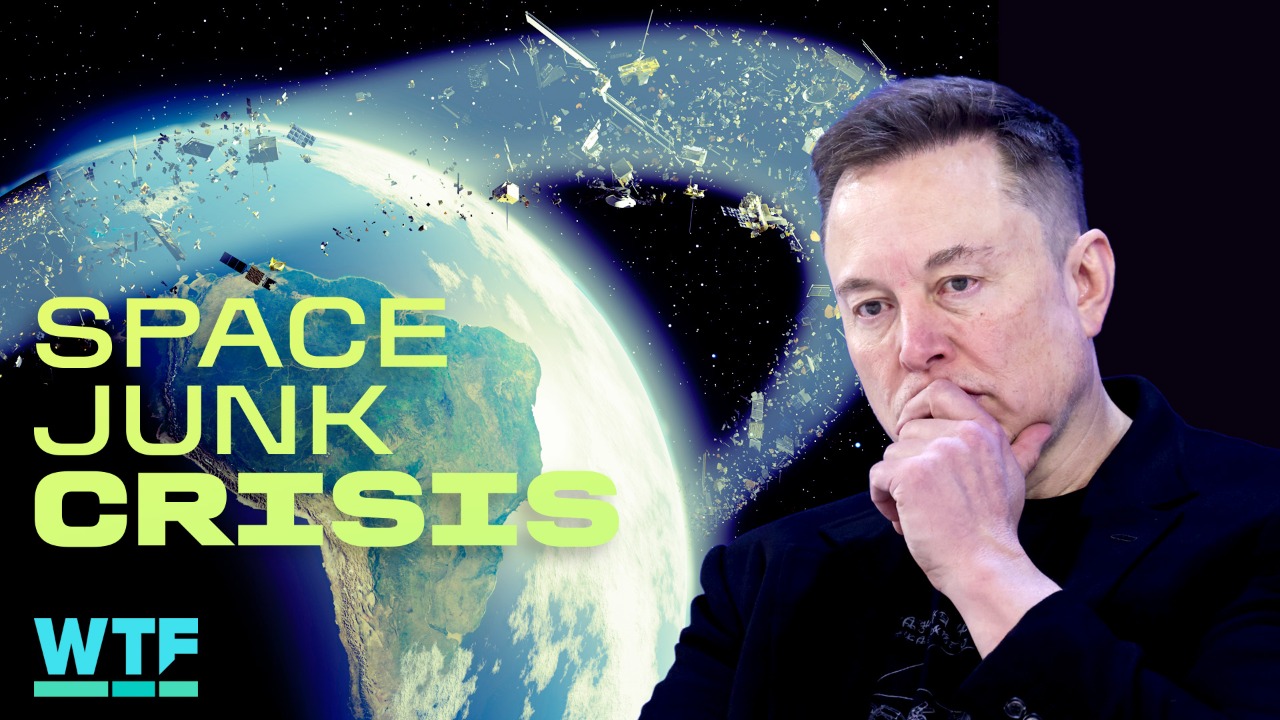
How Starlink and AI are fueling the space junk crisis
Show More Show Less View Video Transcript
0:00
The sky above our heads is about to get way more cluttered with space junk than it already is
0:04
increasing risk of collisions, atmospheric contamination, and a runaway doomsday scenario called Kessler Syndrome that could put humanity's ability to operate in space at risk. Elon Musk
0:16
just got the green light to double the number of Starlink satellites currently in orbit
0:20
and to have them operate closer to Earth than ever before. He's even started pushing the idea
0:25
of building AI data centers in space, and he's not the only one coveting the real estate above our
0:30
heads. As their numbers increase, satellites have to take special maneuvers to avoid possible
0:35
collisions more frequently, like a giant game of Frogger with extremely high stakes, since all it
0:41
takes is one small piece of space junk traveling tens of thousands of miles per hour to cause
0:46
severe damage to critical space infrastructure, a scenario vividly depicted in the 2013 film Gravity
0:52
So how and why is this happening? How bad is it really? And what can be done about it
0:57
I spoke to CNET reporter Joe Supan, who's been covering Starlink for years, to find out
1:02
Five six years ago there were only a couple thousand satellites in space total And now Starlink just got approved for a total of 15 more The approval from Trump FCC is a major win for Musk but still only about half the total
1:17
number of satellites SpaceX had requested. Starlink aims to provide a wireless internet
1:22
option for underserved communities where it isn't economically feasible to run cables
1:26
and the recent approval also included the green light to bring its satellites down to an even
1:31
lower orbit. Putting their satellites in low Earth orbit was really Starlink's great innovation
1:36
Satellite internet has been around forever, but it's generally been really slow
1:41
The latency has been really bad. By moving them closer to Earth, it really cut out those problems
1:47
You could really have modern broadband speeds through satellite internet. Bringing these satellites even lower is a trade-off that may improve some of the latency issues Starlink users have experienced
1:57
while also making the satellites more vulnerable to damage from solar storms
2:01
When these satellites do have issues or reach the end of their working life, they're designed to burn up in the atmosphere
2:07
a process with an environmental impact that's raising concerns about air pollution, global warming, and impacts to the ozone layer
2:14
There are currently about 40 objects in space being tracked by space agencies like NASA and the European Space Agency But there estimated to be over a million much smaller objects that aren being tracked capable of causing catastrophic damage due to the high speeds at which they are moving
2:31
Starlink also isn't the only actor that's moving thousands more satellites into low Earth orbit
2:36
Competition between corporations and countries has many others worried that they need to act now
2:41
or miss out on the opportunity to claim their spot in this increasingly crowded space
2:45
It's really turned into a geopolitical tool, I think, especially you see it in Ukraine or Iran or Russia
2:54
Starlink has great control over whether these areas get internet. So I think these countries are now saying, well, why are we relying on this company to do this
3:05
We need our own LEO satellites. We're already seeing the effects of this increasing density of material in low Earth orbit
3:11
The threat to aircraft from space junk is increasing, and satellites currently in operation are having to perform
3:18
more frequent evasive maneuvers to prevent collisions. Since I published a month ago
3:23
FCC gave Amazon approval for 4,500 satellites. Another company called Logos got approval for 4 And that just US That just like where the FCC has control Globally China filed for 200 satellites Each collision creates more debris creating
3:42
greater risk of even more collisions, which can quickly spiral into a runaway train scenario
3:47
called Kessler syndrome. Some experimental efforts to reduce space junk have been explored
3:52
including using nets to catch out of control satellites. But this is most useful for larger
3:58
debris that can be easily tracked, rather than the smaller, more dangerous stuff that can't
4:03
Elon Musk doesn't seem worried though. One of the things we'll be doing with SpaceX within a few years is launching
4:10
solar-powered AI satellites. People in need of internet in rural areas have long had to rely on satellites to get connected
4:18
but that could be changing with the rise of HABs, high-altitude platform systems that use
4:23
helium to float up into the stratosphere, where they're designed to stay in place over a given
4:27
service area for up to a year, beaming internet directly to people's devices. Check out our special
4:32
report from inside a HAPS hangar in New Mexico right here. Are you worried about space junk or
4:37
do you think the danger is overhyped? Let us know down in the comments and subscribe for more stories
4:41
that make you say, what the future
#Celebrities & Entertainment News
#Ecology & Environment
#Technology News