Up next in 10



The ocean is the world's largest untapped source of sustainable energy. But this is slowly changing.
Show More Show Less View Video Transcript
0:00
Think about the vast open ocean covering most of our planet
0:03
Imagine the power of the waves, hundreds, no thousands of kilometres away from shore
0:08
What if we could turn this force of nature into clean, sustainable energy
0:12
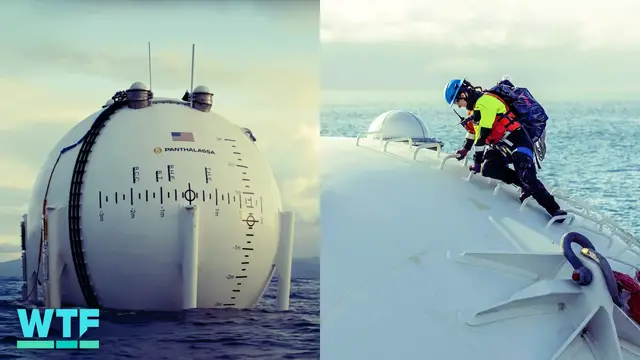
Meet Ocean 2, Pantalus' new wave power converter. Joining the ranks of ambitious renewable energy projects
0:19
this giant and strange buoy-like object wants to transform the ways we source our power
0:24
Let's see how it works, why it could matter, and whether it can survive the ocean's fury
0:28
constant, powerful and notoriously difficult to harness. Wave power has become a sort of holy
0:34
grail in renewable energy over the years. Wave and tidal converters are used across the globe
0:39
from Sri Lanka to Ghana to France and the UK, which is currently the world's leading producer
0:44
of wave and tidal power. But wave harnessing comes with its challenges. Converters often
0:49
break during storms, get fouled by marine biogrowth or simply cost too much per megawatt
0:54
to compete with all the other energy sources on the market. And renewable doesn't necessarily mean environmentally friendly
1:00
There are major environmental concerns, as wave energy converters tend to contribute to sound pollution in the sea
1:05
and disturb local ecosystems. Pantalisa, a startup based in Portland, Oregon, believes it's cracked a new design with Ocean 2
1:12
According to the company, their converter is a modular, flexible buoy system
1:16
designed to work with the ocean. Here's how. The part of Ocean 2 visible above the water's surface
1:22
makes it look like a giant ball. The energy converter is about 10 meters wide, built from durable composites and rust-proof alloys
1:29
The company has been testing Ocean 2 off the shore of Puget Sound in Washington State
1:33
collecting data on its performance, durability, and ecological impact. But before we dive in, how does wave energy become electrical power
1:41
As always, science has the answer, and it's awesome. Remember studying kinetic energy in school When the wind blows air across the ocean surface it creates friction that stacks the water up into waves The stronger the wind the bigger and more powerful the waves become This power created by movement is kinetic energy Now there are different ways to turn
2:00
kinetic energy into electrical energy. It's also how wind turbines work. And wave and tidal power
2:04
projects across the world all have their own conversion techniques. Ocean 2's all-black shape
2:10
could make this process very efficient. When the converter rides on waves, water is forced through
2:14
internal channels and up into a spherical or semi-spherical surface form, then down again
2:19
through turbines. Each movement up and down provides a chance to generate electricity
2:24
Pantalisa claims that the spherical design can help absorb parts of that energy and reduce the
2:29
risk of mechanical stress. The thing is, we still can't declare with certainty that this works in
2:33
practice. Ocean 2 is still a prototype, but preliminary testing has so far shown that the
2:38
converter is indeed quiet and therefore potentially less intrusive to the marine life around it
2:43
Pantalisa says that the first sound tests haven't detected any major disturbances
2:48
and their ecologists are monitoring the process. The tests also saw Ocean 2 pumping 50 kilowatts of energy
2:54
enough to power around 15 houses. There are still a lot of tests and challenges Ocean 2 needs to overcome
2:59
in order to turn this idea into reality. Ocean conditions can be ruthless
3:03
and the converter needs to withstand challenges, such as storm surges and the eroding saltiness of water
3:08
There are also questions of scalability, and there will be further tests on Ocean 2's impact on marine life
3:14
But if it proves successful, this project could have huge implications for the way we source our energy
3:19
If scaled up, a group of Ocean 2 converters could potentially generate gigawatts of wave power for entire communities
3:25
and reduce reliance on fossil fuels. So what do you think? Can Ocean 2 become a big player in renewable energy
3:32
And would you like to see more projects like it? Let us know in the comments. And subscribe for more explainers from What the Future on the technology shaping our world
#Celebrities & Entertainment News