Up next in 10



DEEP's Vanguard aims to bring humans back underwater with a new generation of subsea living.
Show More Show Less View Video Transcript
0:00
Ever wished you could actually sleep with the fishes
0:02
and live to tell the tale? A new underwater home for humans has been installed at Tennessee Reef
0:07
a marine sanctuary off the coast of Florida. And it's kind of like a reverse aquarium
0:12
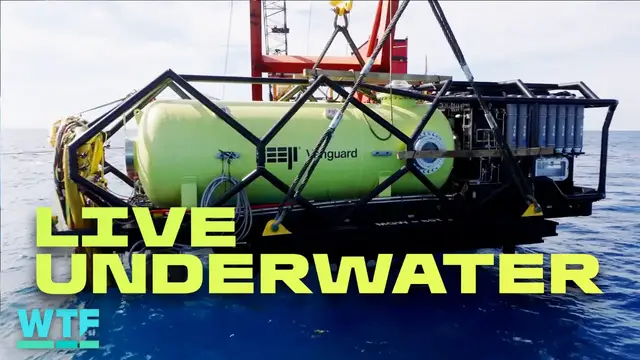
with people inside and fish outside. The habitat, named Vanguard, is the first open ocean undersea habitat built
0:19
tested, and deployed in America in almost four decades. Designed to house four people
0:24
for stays of up to five days or more, Vanguard could help usher in a new era
0:28
of ocean exploration, marine science, and environmental monitoring. It may even prove useful in helping astronauts
0:34
train for space missions. Aquanauts, the people who are living in the habitat
0:38
are gonna be in what's called saturation. It's not a new concept, but essentially allows your tissue
0:42
and blood to become saturated with the gas that you're breathing, the inert gas that you're breathing
0:46
They're breathing off of umbilicals, at least for our first sets of missions. And so that's a continuous gas supply
0:51
So now you're looking at dives that are six, seven, eight hours long. Vanguard is made up of five main components First there the living chamber with four bunk beds countertops for meal prep and a table for eating with an ocean view Next there the bathroom
1:05
which can also be used as a workspace when needed, just requires some coordination with
1:10
your colleagues. I could say the same thing about spaceflight too. If you think about the crew that
1:14
was just an art of us, the very tiny space that they had. It's a really good training scenario for
1:18
folks like spaceflight crews or folks that are going to be living in small environments. A support team topside routinely takes dirty water out of the facility to be disposed of properly
1:27
Beyond the dry living areas is the dive center, which features a moon pool where divers can enter and exit the water
1:33
and a staging area to put on and take off dive equipment. Fourth is the habitat's foundation, which connects the habitat to the ocean floor
1:39
And finally, a topside buoy identifies where the habitat is located to people on the surface
1:44
and provides a mooring point for boats bringing divers to and from the habitat
1:48
When we have divers that are out in the water, we have a boat that's topside that has a recompression
1:53
chamber to handle any kind of emergency scenarios. Vanguard is the first submersible living space deployed by DEEP In its new location Vanguard sits 56 feet below the surface which is near the upper limit of 60 feet for PADI open scuba divers like me
2:08
Vanguard can be understood as a stepping stone to Deep's more long-term vision
2:12
of building out the ocean equivalent of the International Space Station, a modular space for studying and living in places that are otherwise unfit for long-term human survival
2:21
Deep's larger habitat is called Sentinel, and it will have some notable differences from Vanguard
2:27
including a modular design and individual sleeping quarters. Do you have a vision of having multiple habitats around the world
2:33
So we do have a sustained subsea presence 24-7. But that's still years away
2:38
Right now, Deep is focused on doing more tests on Vanguard in its new location
2:42
before inviting researchers and scientists to come aboard and live inside. I'm very excited about being a part of that and being able to go back and live underwater
2:50
Without ocean habitats like this, researchers time at depth is limited by their air supply
2:54
and the time consuming process of safely decompressing after being under pressure For non out there that basically means the longer and deeper you dive beyond a certain point the more time you have to spend equalizing to normal pressure Even relatively short dives at extreme depths can require hours
3:10
of safety stops on the way back up to surface safely. It's kind of like interstellar where
3:14
every minute they spend in high gravity was costing them years back home. Habitats like
3:19
Vanguard could save divers a lot of time by allowing multiple dives in a row without surfacing
3:23
and giving researchers a place to study samples immediately after gathering them
3:28
Now you have this undersea laboratory setting where you can actually take those samples and process them nearly real time
3:34
So instead of taking that sample back to the surface and decompressing that sample
3:39
now we're actually seeing what is happening at depth and in that environment
3:43
It's also in a much shorter time frame, so now you're getting less of a chance of sample degradation as well
3:48
To see a full walkthrough of DEEP's larger Sentinel habitat, click here. And let me know down in the comments whether you would like to stay in one of these pressurized underwater apartments for a while
3:56
And while you're there, hit that subscribe button for more stories that make you say, what the future
Celebrities & Entertainment News