Up next in 10



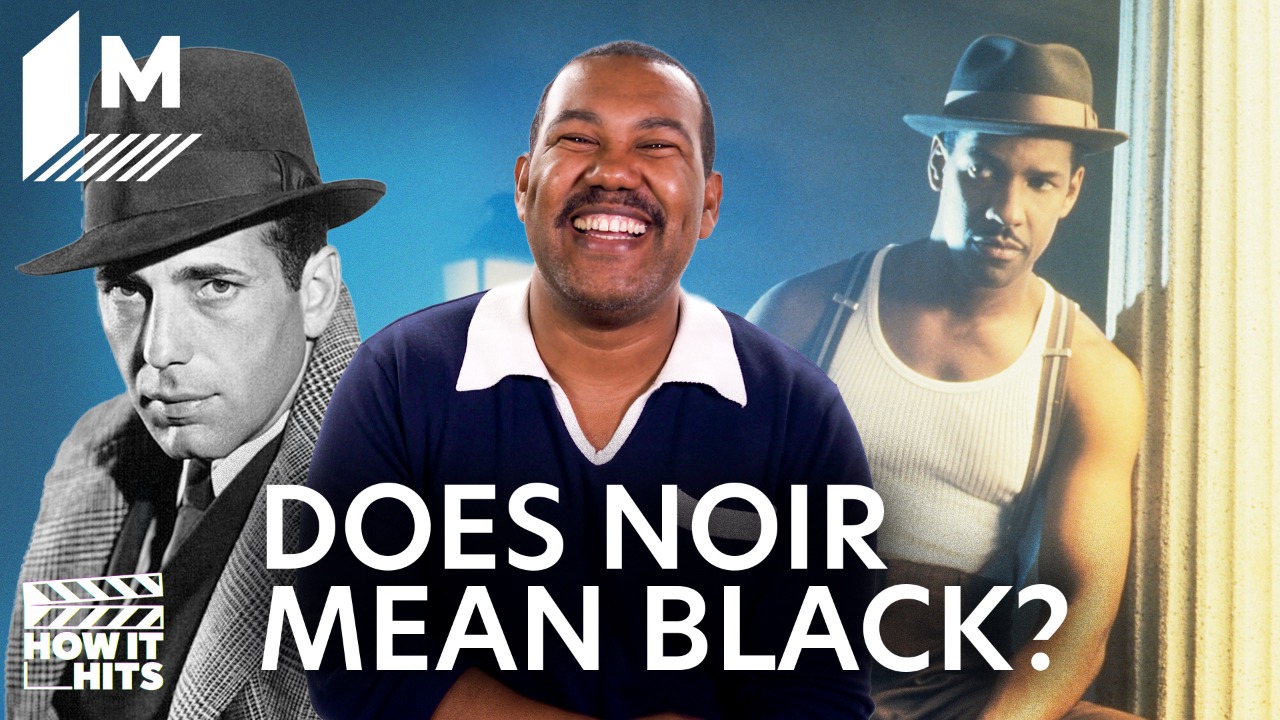
Does 'noir' mean Black?
Show More Show Less View Video Transcript
0:00
My name is Tarrick Rashawn Davis, and I'm here to solve a murder
0:03
I am a huge fan of film noir. A lot of people nowadays don't know what film noir is
0:09
What is film noir? Is film noir a very political subgenre that speaks to the times we're living in right now
0:15
They have an existential crisis, if I'm honest. Is it a genre that is in need of a big resurgence
0:21
Can noir save Hollywood? And most important of all, does noir mean black
0:28
Yes, noir in French means black. Yes, that kind of black and that kind of black, too
0:34
The label of film noir is originally a French term meaning black film or dark film
0:39
The term film noir was used to describe the type of Hollywood film that became popular after World War II
0:45
French critic Nino Frank coined the term in 1946 to describe the new American cinema style
0:51
which, after experiencing the horrors of war, was less innocent and far darker and much more moodier than the films made prior to World War II
1:00
If all of this is new to you, it's okay. You're in luck
1:04
You've probably already seen a film noir, or an homage to a film noir, or a spoof of a film noir, and you didn't even know it
1:13
And like a case a noir detective has to solve, together we're going to dig into the origins of noir
1:20
We're going to crack the case of why does film noir feel so black-coated to me
1:26
Even though in the majority of the genre's films, we're barely present
1:31
I'm no Eddie Muller from Turner Classic Movies. Film noir is crime with a twist
1:36
He's the best. But still, I hope I can set some light on what film noir is
1:41
What makes film noir a film noir? What exactly is the style of that type of film
1:46
and why do I think that you will love film noir in that genre just as much as I do
1:53
First, we need to talk about genres and subgenres. A genre, as you know, is a category for style or form of music, books, movies, TV, etc
2:02
Like comedy, romance, science fiction, fantasy, all that good stuff. A subgenre is a smaller, more specific category and the larger genre umbrella
2:12
Like gothic horror in horror or cyberpunk in science fiction, Noir, hard-boiled noir, and neo-noir are subgenres in the umbrella of crime fiction
2:23
Film noir is a cinematic subgenre that grew out of detective fiction subgenre that was really popular in the 1920s and 30s
2:31
So, what is film noir? A type of crime film featuring cynical, malevolent characters in a sleazy setting
2:38
and an ominous atmosphere that is conveyed by shadowy photography and foreboding background music
2:46
Let's talk about the film widely considered to be the first film noir, 1941 classic, The Maltese
2:55
Falcon, starring my man, Humphrey Bogart. That was terrible, but you know who that was. That was a
3:02
good impression. Come on, give me something. What's this bird, this falcon that everybody's all
3:06
steamed up about? The Maltese Falcon is one of my favorite films of all time. But did you know
3:11
that The Maltese Falcon was actually a remake? That's right, in 1931
3:17
an actor by the name of Ricardo Cartes, he is not Latino
3:21
That's the whole thing. But he was the first to star as the famous private eye, Sam Spade, in a film called The Maltese Falcon
3:29
It wasn't actually until recently that people were even able to watch this film
3:32
because Warner Brothers, who made both versions, buried the original after Bogart's film
3:37
became an iconic hit. Bogart's version, however, hit on something new. It was darker, moodier, morally ambiguous
3:45
When you watch the original with Ricardo Cortez, an entertaining actor in his own right
3:49
but he plays Sam Spade as like a smiling, happy-go-lucky, fun typical hero
3:54
commonly found in detective fictions at that point. You trust him as soon as you see him on screen, but Humphrey Bogart
4:00
he plays Sam Spade with a hard, cynical edge. When you're slapped, you'll take it and like it
4:06
he's just as shady as the criminals he's investigating maybe he's one of those criminals
4:12
you don't know everyone in the movie in some way is complicated or compromised in crime and
4:18
detective movies before the Maltese Falcon it was pretty clear-cut who the good guy and the bad guy
4:23
was but not in this case not with bogey director John Houston increased the themes that made this
4:30
movie a lot darker and more morally ambiguous it was a change that american film goers weren't used
4:37
to at the time it was also at the end of 1941 and america became by that point involved in world war
4:43
ii so the country's attitudes were shifting side note the same director of bogey's version of the
4:49
malteese falcon john houston he was also the creepy bad guy in the 70s neo-noir chinatown
4:56
forget it jake it's chinatown if you don't know that reference turn this off right now and go
5:01
watch the damn movie what's that movie now those familiar with the genre the tropes of film noir
5:06
will pop right out at you and many of those tropes started with the maltese falcon and they carried on
5:11
in other films the harsh contrast lighting that captures the dramatic feel using light and shadow
5:18
like in citizen kane and night of the hunter the detective in the trench coat walking the dark and
5:24
lonely streets of the city like an out and past and murder my sweet to my faves the light blazing
5:31
through the office blinds like in double indemnity the murder is never perfect all this comes apart
5:36
sooner or later then there's the style shady characters doing bad things speaking at a faster
5:41
cut out let him talk his head off i'll guarantee you nobody will do anything about it smoking
5:45
cigarettes and shadows and back alleys wide brim fedoras detectives and offices with neon lights
5:52
and of course the voiceover. Then I saw her coming out of the sun
5:57
and I knew why Witt didn't care about that 40 grand. Film noir is my ship
6:03
You have your more modern takes and homages to the genre that update the genre for modern audiences
6:08
This actually creates a new subgenre called neo-noir. Neo-noir films that you may have seen
6:13
are films like Chinatown, Shaft, Devil in the Blue Dress, I love that one
6:18
Blade Runner, Strange Days, old boy John Wick, Jackie Brown, even Tim Burton's Batman, Sin City, Marvel's Daredevil
6:27
Then you got your comedic send-ups, the ones that Looney Tunes did, or Steve Martin's Dead
6:31
Men Were Plaid, The Naked Gun. You even have a new genre film experience with Spider-Man
6:36
starring Nicolas Cage on Amazon. All of these have their basis in classic film noir. Film
6:42
noir is like the blues or jazz where so many modern films can trace their roots back to
6:47
film noir. There is no Matrix or cyberpunk genre without film noir. Considered a major influence
6:54
on the cyberpunk subgenre is Philip K. Dick's 1968 novel, Do Androids Dream of Electric Sheep
7:00
An adaptation of that novel was made into the 1982 movie Blade Runner. I need you, Dick. And that movie is steeped in film noir aesthetic. So is The Matrix. And the
7:11
Wachowskis were so inspired by film noir. In their animated anthology, The Animatrix, there's a short
7:17
entitled A Detective Story about a down-on-the-zuck private eye who discovers the truth of the Matrix
7:23
It's in black and white, and the noir aesthetics lend themselves so perfectly
7:26
to anime that... Actually, so much of anime is inspired by film noir
7:33
How many animes have you seen taking place in rain-slick streets with a dark anti-hero protagonist
7:39
Cowboy Bebop is nothing but a film noir in space. There I was. There she was
7:43
And I was in wet shoes. Then space. Ghost in a Shell. Noir. Perfect Blue
7:47
Noir, Gungrave, Noir, all borrow heavily from film noir. Hell, there's even an anime called... Noir
7:54
How about this? Does the superhero genre survive without the addition of the world's greatest detective Batman
8:00
A pulpy noir inspired vigilante created by Bob Kane and Bill Finger in 1939 who took his inspiration from the pulpy fedora wearing superhero The Shadow who predates Batman by nine years No I don think so I think all of these things benefit from film noir especially Batman
8:20
Lieutenant, is there a six-foot bat in Gotham City? Nice outfit. First, film noir is for everybody, like music, but it's worth pointing out the real roots of a thing because it matters
8:32
History gets erased or co-opted, and it's on each of us to research and illuminate
8:37
to tell the truth about our past so we can have a clear direction of our future
8:42
When a lot of these films were coming out, people who looked like me were considered by Hollywood
8:46
and the larger majority in America to be less than human. People who looked like me were relegated to the margins of the film frame and into the shadows
8:56
But in the shadows isn't just where true film noir exists. it's in the shadows where film noir was born now weren't you afraid little lambs down there
9:07
all that dark like a detective investigating a case i plan to expose the truth about film noir
9:12
a truth that's been buried for decades a truth of history identity culture music and blackness
9:20
i don't think the answer is going to be as cut and dry as some might think however what we know
9:25
about the real origins and inspirations of The Lone Ranger and Bass Reeves
9:31
Elvis and Big Mama Thornton. Rock and Roll. So many American myths, legends and genre styles
9:40
So many of them have dark roots. We might find out that
9:45
one of the most innovative film genres that changed the way movies were made
9:49
may also have those same dark roots. Fictional private eyes like Sam Spade
9:55
and Philip Marlowe are some of America's biggest fictional literary exports. They're kind of responsible for the creation of characters like James Bond, Batman
10:05
Have you ever danced with the devil in the pale moonlight? Their influence on American and global pop culture is immeasurable
10:11
What if I told you that both Sam Spade and Philip Marlowe were very possibly based on a real man
10:19
A real life black man. A man by the name of Sam Marlowe
10:23
I made a video a few years ago about the man who inspired it all
10:27
And thanks to the LA Times article, Finding Marlowe by Daniel Miller, where I learned all about him
10:33
Samuel Benjamin Marlowe was alleged to be the first black man in Los Angeles to have his own private investigator license
10:41
He was born on August 3rd in 1890 in Montego Bay, Jamaica
10:46
He fought with Britain's Egyptian Expeditionary Force and guarded the Suez C
10:51
and after the first war, he immigrated to L.A. While in L.A., Sam also made his living as an actor
10:58
I like this guy already. It's rumored that Sam Marlowe had an uncredited walk-on role
11:03
as an extra warrior in the 1933 film King Kong. If you've seen King Kong, you know all the racist
11:10
and primitive African stereotypes that appear on screen. Sam Marlowe was one of those guys
11:16
Meanwhile, a white guy pretending to be Latino, So, Ricardo Cortez gets to play the role inspired by a black man in the first iteration of the Maltese Falcon
11:26
Hollywood is a trip. You getting this all right, son, or am I going too fast for you? Apparently, this small role helped Sam meet influential people in the film industry
11:34
such as studio heads who were aware of Sam's other job and used him and his skills
11:38
to look after famous white actors starring in their films. these actors like to party and hang out on the wrong side of the tracks if you know what i mean
11:49
they like to hang out in black neighborhoods and get drunk in in black clubs that's that's what i'm
11:56
saying that's what this meant you know if you didn't get that sam was also a fan of the pulpy
12:01
detective magazine black mass magazine sam especially became a fan of both raymond chandler
12:06
and dasho hammond the creators of both famous more private eyes that started the genre sam spade and
12:13
philip marlowe sam was such a fan in fact he wrote both to issue corrections to their work
12:19
letting them know where their work was inaccurate and in these corresponding letters a friendship
12:24
developed sam even did some research for raymond chandler the inside joke is that both our typical
12:32
private eyes are named after sam marlowe get it sam spade spade is a derogatory term for black
12:40
people like the word noir is in france philip marlowe sam marlowe sam spade sam marlowe
12:47
rumor has it that those letters that sam marlowe wrote to chandler and hammett well apparently he
12:55
hid them away along with all the other hollywood secrets he learned as a private eye sam marlowe
13:01
himself lived to a ripe old age up until his death in 1999 his family who still reside in la
13:07
they're looking for those letters to prove his incredible story. So if the iconic detective characters that started film noir
13:15
were not only named after and based on a black man, what does that mean for the genre itself
13:23
Does that answer whether noir truly means black? I don't know. I know what you're thinking
13:30
Tara, it looks like you found the murder and the real daddy. Case closed
13:35
You are the father! I think you're right, but bear with me
13:42
I think we need to go just a little bit deeper. There is a bunch of black representation in the crime fiction genre and noir genre
13:51
Many black authors even made the jump to the screen. Chester Himes, a prolific black writer who had many of his novels adapted into notable films
13:59
primarily his Harlem detective series, including Cotton Comes to Harlem. Himes created the Harlem detective characters, and that is Coffin' Ed and Grave Digger Jones
14:10
I recommend Cotton Comes to Harlem, directed by Ozzie Davis. It is a very funny, very good movie
14:16
And it's more of a bright comedy than a traditional noir, but maybe that even makes it more noir
14:21
I don't know. Oh, the great Bill Duke made three neo-noir films
14:27
Deep cover. Starring Lawrence Fishburne and Jeff Goldblum. then he made another great dark comedy a rage in harlem excuse me but uh do we know you not in this
14:37
lifetime based off the chester himes novel and another one with laurence fishburne hoodlum
14:43
you want to do this peaceful or you want to make a go he does not get enough love he is underrated
14:50
and one of the best american directors bar none case closed i said what i said there's also walter
14:57
Moseley, who created one of the coolest black private eyes ever with Ezekiel Rollins in his
15:02
first published novel, Devil in the Blue Dress, which was also made into one of my all-time
15:07
favorite movies ever, starring Denzel Washington, Don Cheadle, and Jennifer Beals. It was made in
15:12
1995 and directed by another underrated director, Carl Franklin. Turn this off and go see it right
15:19
now, then come back because we're going to talk about it. Now, this is my personal opinion, and and we get close to the camera
15:24
Devil in the Blue Dress should have been the start of Denzel Washington's first film franchise
15:29
Not the Equalizer, I love those films, but it is a cinematic crime that we were robbed
15:34
of more adventures of Denzel E. Z. Rollins roaming around solving mysteries
15:38
with a sidekick mouse played by Don Cheadle. Okay. Also, it is worth pointing out that there were so many
15:46
and are so many great black film directors who paved the way for our Ryan Coogler's
15:52
and our Nia DaCostas today. Directors not named Spike Lee, who's also great
15:58
but directors whose name you don't know. Directors who are still alive
16:01
and should still be getting budgets to make whatever they want to make in Hollywood
16:06
Bill Duke, Carl Franklin, Cassie Lemons, Charles Stone III. There are so many more
16:11
We worship at the altar of the people who came before us. Now I personally came to know Schaaf through the 1971 film directed by Gordon Parks and played by the legendary Richard Roundtree Just found him R Now I consider Shaft a neo Neo are noir
16:29
films that are made or set after what many considered to be the golden age of classic
16:34
film noirs, which is from 1941 to 1959. In 1972, Isaac Hayes won an Oscar, right? He became the
16:43
first black person to win an oscar in a non-acting competitive category he won an oscar for best
16:50
original song for the iconic theme of shaft from the film so put some respect on shaft name because
16:57
he's one bad mother anyway shaft is a neo-noir perhaps the first neo-noir with black leads
17:03
but how many classic noirs had black leads interestingly enough the film many considered
17:10
to be the last classic film noir stars a black man harry belafonte all right so i'm crazy in the
17:16
1959 film odds against tomorrow harry belafonte plays a nightclub entertainer and gambler who
17:23
teens up with a racist ex-con played by one of my favorite actors robert ryan and they team up to
17:30
rob a bank spoiler alert it doesn't go well this film is a rare classic noir where a black man is
17:37
the lead but it's not the only one sydney poitier's screen debut film 1950s no way out is a noir film
17:45
that is also a hospital drama with charged racial social commentary that preceded the civil rights
17:51
movement by a few years you won't help him that way keep your black hands off my boy
17:56
the film is about a black doctor who was hired as the first black doctor at an urban county hospital
18:04
when two white brothers, criminals, one wounded from a gunshot from a bank robbery gone wrong
18:10
coming for help. The older brother, played by Richard Widmark, who's racist
18:14
doesn't want Sidney Poitier's character to operate on his wounded, sicker, younger brother
18:19
Sidney does operate. Spoiler alert. It doesn't go well. Black people take center stage in the 1958 noir drama Ana Lu Costa
18:28
starring Sammy Davis Jr. and Eartha Kitt as the titular character. It's a remake of another classic noir from the 1949 film of the same name, which had an all-white cast
18:39
I recommend watching it, too, if anything, just to see Eartha Kitt and Sammy Davis Jr., both in their prime, taking center stage
18:45
That's at least four or five classic noir films with black leaves that I've mentioned so far
18:51
So why earlier did I state there aren't many black classic noir films
18:55
Well, one, because out of the hundreds, probably even thousands of classic noir films
19:01
four or five with black leads is a drop in the bucket. Two, none of the classic noirs I mentioned have a black lead playing as detective
19:10
which I stated earlier is a very popular trope in film noir. Now, you do not need to have a detective or mystery in your film for it to be considered a noir
19:21
Many, many noir films don't have a detective or a private eye at the center of the stories
19:26
However, when people think of noir and its classic tropes, we think of the hard-boiled detective
19:31
so why no black detectives and classic film noir three all of the films that i mentioned may have
19:40
black faces at the center of the stories but the writers directors and perspectives of those films
19:45
are still white narratives conceived controlled and produced by non-black people even for the
19:51
most progressive films of the classic black film noir period black filmmakers actors and writers
19:57
only had so much agency. Well, that's not entirely true either. There was one exception, one man
20:06
A man who was known for breaking barriers years, decades ahead of his time, a legend
20:12
a black superhero of filmmaking, producing and directing. His name was Oscar Michaud
20:19
the first black filmmaker in America to make a full-length feature film back in 1919 called The Homesteader
20:26
And it was a silent film based on a novel he wrote about his own life experience as a Pullman porter in South Dakota
20:33
Oscar Michaud started with this silent film in 1919, but his black independent filmmaker self survived into the transition of sound or talkies
20:44
And he continued making films until his last film, The Betrayal, in 1948
20:49
That's remarkable. All of his films had predominantly black cast dealing with head-on with issues of race, class, lynching, corruption, police profiling, and more
21:00
Oscar Michaud also made what many consider to be very early film noirs or proto-noirs
21:06
These are noir films made before the classic noir period, which starts in 1941 with the Maltese Falcon remake starring Humphrey Bogart
21:15
Oscar Michaud made two pre-code films, both made in 1931, that live in this proto-noir genre
21:22
They all in some way have the typical settings and tropes commonly associated with film noir
21:28
like nightclub settings, blackmail, moral ambiguity, etc. So what happened? Why did it stop with Oscar Michaud
21:36
Why didn't he make more noir films or more black filmmakers? What does pre-code even mean
21:43
Aha! I know who killed her black private eye. This dude, Will H. Hayes, the president of the Motion Picture Producers and Distributors of America
21:54
The man responsible for the Motion Pictures Production Code, better known as the Hayes Code
22:01
The Hayes Code was a set of industry guidelines for the self-censorship of content that was applied to most motion pictures released by major studios in the United States from 1934 to 1968
22:16
Will H. Hayes was a former campaign manager for President Warren G. Harding and a postmaster general in the same administration who vowed to clean up the pictures
22:25
And if I clean up the pictures, you mean erasing queer people, erasing the contributions of black people and people of color and keeping them relegated to the margins and racist, stereotypical subservient roles, making it impossible for anyone who wasn't a straight white man unable to challenge the racial and gender hierarchies on screen
22:46
then yes. Hayes cleaned up film. Way to go Hayes. Hollywood reluctantly adopted the strict
22:54
guidelines of the Hayes code as a means of getting around expensive federal censorship fines
23:00
Guidelines meant to inform Hollywood filmmakers what they were and weren't allowed to do on film
23:07
Specific prohibitions included the category of sex and relationships, nudity, even a silhouette
23:14
Suggestive dances Ooh, you're making me feel things Lustful kissing Adultery Sexual perversion Homosexuality Miscegenation Diversity
23:24
Well, interracial relationships and gay characters were explicitly banned So were black people
23:30
Here's a photo shot in 1940 by Whitney Schaefer Called Thou Shalt Not
23:35
Deliberately poking fun at all the things that you weren't allowed to put on film
23:40
Due to the Hays Code Put them all in one photo I mean, look at that. That is a beautiful photo. That's cinema
23:47
Will Hayes and his code made it impossible for independent filmmakers like Oscar Michaud to expose his work to a larger movie going audience
23:59
Will Hayes is a big reason we don't get classic film noirs with a black perspective
24:05
But Hayes isn't our only suspect. He didn't work alone. He hired an accomplice, infamous anti-Semite and Hitler fan, Joseph Breen
24:16
A man who tried his best to keep American filmmakers from criticizing the Nazi party
24:22
Hey Indiana Jones what do you say about the Nazi party Nazis I hate these guys I agree The Nazis who we fought in World War II were inspired by Jim Crow laws here in America not the other way around
24:38
And these men helped. It's important to remember that Oscar Michaud continued on until his death in 1951
24:45
Michaud explicitly continued to tackle difficult subjects like lynching, color prejudice, and queer and interracial relationships in his films
24:55
while at the same time navigating the oppressive censorship of his time
25:00
And he had to work with low budgets to boot. And I think, ultimately, Asma Shou got the last laugh
25:07
In the late 60s, Hollywood was struggling. And so the Hays Code needed to be scrapped, and a new rating system needed to be adopted
25:17
The Hays Code, which was self-imposed by studios and remained influential, eventually was replaced by our current MPAA rating system in 1968
25:27
So a new rating system was established. And who saves Hollywood? Who brings the youth back into movie theaters
25:34
That's right, blaxploitation films. Like the 1971 film from Melvin Ban People's Sweet Sweet Bat to Badass Song
25:43
Considered by many to be the first blaxploitation film. And it contained everything Will Hayes tried to ban
25:50
And it would have made Will Hayes' head explode. Sweet Sweetback's Badass Song was a massive, unexpected success, grossing over $10 million
26:00
against a tiny budget. And despite a limited initial distribution and an X rating
26:08
That's right. The movie was an X-rated independent film. It became one of the highest grossing independent films of all time
26:17
And best believe, Hollywood took notice. This film directly launched the blaxploitation era, and it also paved the way for the new Hollywood era
26:28
You know, where indie directors by the names of Francis Ford Coppola, Martin Scorsese, William Freakin, George Lucas
26:35
These young kid director-auteurs who were considered too risky and too artsy to helm Hollywood films with real budgets suddenly found themselves getting real budgets
26:46
being able to make films like The Godfather, The French Connection, Exorcist, Star Wars, and Chinatown
26:55
A lot of these directors were inspired by what genre of film
26:59
That's right, it always comes back to noir. Music like jazz and rock and roll, which we all commonly listen to nowadays
27:06
used to be called the devil's music. But despite attempts at censorship, those styles of music, as well as film noir
27:13
were very popular in the 50s, an era defined for selling conformity
27:17
The revolution that happens in the 1960s makes perfect sense when you consider the decade that came before it
27:23
In the 1950s, film noir was for many the revolution on screen
27:28
that they couldn't quite materialize or live in their own lives. Film noir breaks all of these rules of conformity and polite society with abandon
27:38
And this is why classic noir strangely feels black to me. They were as black as films of the past were allowed to be
27:47
Look, we know America has a tradition of exploitation and appropriation. It's literally the foundation of our country
27:54
Stolen land farmed and worked by stolen people. You cannot make a film with a cynical, hard-boiled, black private eye
28:01
who sees corruption everywhere and who sees the broken promises of the American dream
28:06
and then shoves the country's face in it like an untrained puppy dog
28:10
Don't ever do that to your dog, by the way. But you can do that with a cool, detached white guy as your lead
28:17
I know the value in human life you people put on it. Now it's cool and non-threatening or scary to everyday moviegoers
28:24
That's why the 1967 movie In the Heat of the Night, directed by Norman Jewison and starring Sidney Poitier and Rod Steiger, was such a revolutionary film
28:35
Hell, it's considered one of the most important American films ever made
28:39
Even if you've never seen the film, you may know the quote. They call me Mr. Tibbs
28:46
Mr. Tibbs! The film is set in Sparta, Mississippi, and begins with the discovery of a murdered body
28:53
and then cuts to Sidney Poitier's character, Virgil Tibbs, waiting at the train station
28:58
minding his black business. Spoiler alert. I mean now. Then he is arrested for being black
29:06
And at the police station, the police chief played by Rod Steiger finds they've wrongly arrested a Philadelphia police detective instead of a suspect
29:15
Did you question this man before you brought him in? No, sir. Sidney Poitier's Virgil Tibbs is clearly smarter than everyone in the town
29:25
And he's such a good detective that they employ him and need him to assist the local police chief in solving the actual murder. Yeah
29:36
Oh, yeah. One of the most famous scenes in all of cinema is when Detective Tibbs has the temerity to question the wealthy plantation owner, Eric Endicott, who himself is a genteel racist and Sparta's most powerful citizen
29:53
Eric Endicott is so offended by the idea of being questioned by a black man
29:57
He considers his lesser that the plantation owner slaps Virgil Tibbs while he is in the middle of a question
30:03
Last night about midnight. And without hesitation, Virgil Tibbs goes uno reverse and slaps the taste out of the racist mouth
30:14
It was deemed the slap heard around the world. And with the first time on screen, a black man so viscerally asserted his authority over a white character
30:25
This was in 1967, one year before the Hays Code came to an end
30:31
One year before Martin Luther King was assassinated. It was simply impossible to shoot such a scene in the 1930s, 40s or 50s
30:41
Police detectives and private eyes have the authority to question and to press
30:45
And it would have been too taboo back then to give a black main character that kind of understood authority on screen
30:52
There was a time when I could have had you shot. Angelica J. Bastien said in her article referring to film noir that it has been argued that noir transfers
31:04
the fear of blackness that permeates American culture into the existential fear of the other
31:11
that marks the genre. The unwritten truth that many black folks in this country
31:19
have known for a very long time is that America loves our style, loves our music, our way of talking, our walking
31:28
our rhythm, but it hates us. this country would rather take these things from us and place a white face on them that's the crime
31:37
that's been committed that is the case of film noir case closed it's us and those black and white
31:43
films even when we're not on screen the haze code protected the nazis from criticism and denied black
31:50
possibility from the silver screen while at the same time spinning out the propaganda of the
31:55
american dream a broken dream a stolen dream the private eye in film noir is cynical not for cool
32:03
effect they see what others don't they recognize repeating patterns and rhythms others can't hear
32:09
or dance on beat to america's been out of step for a long time and if it can get in step with
32:15
the music maybe maybe it can change its tune but first it has to tell the truth
32:24
it has to shine a light on the shadows and it has to face its crimes
32:28
face the history and the people it tried to erase so why does film noir
32:34
mean black
#Celebrities & Entertainment News
#Movies