Up next in 10


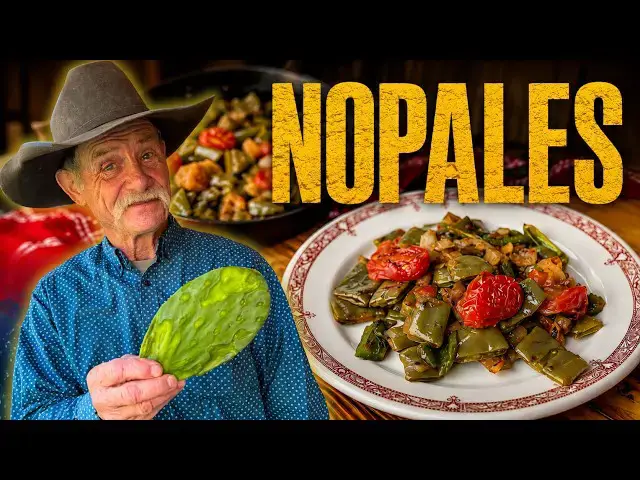
Printable recipe below! Nopales, cactus pads or prickly pear have actually been cooked for hundreds of years- but it may be the one thing you've never thrown on the grill or fried up. But you are missing out, so we're showing you 3 different ways to turn this forgotten vegetable into a recipe masterpiece!
Used in this video:
Hasty Bake Legacy 131: https://www.hastybake.com/?rfsn=5346419.73615f
Use code: KENTROLLINS for 10% off
Kent's Original Seasoning: https://www.kentrollins.com/shop
Rode wireless Go 2 mic: https://amzn.to/3seAQ7X
Cowboy Hat: Chazhatz.com
For more suggested products seen in our videos click here: https://www.amazon.com/shop/cowboykentrollins
======================
Printable Recipes:
https://kentrollins.com/blogs/vegetables/nopales-a-la-mexicana
https://kentrollins.com/blogs/vegetables/grilled-nopales
https://kentrollins.com/blogs/vegetables/deep-fried-nopales
======================
Check out our BEST SELLING cookbooks. Get your copy here: https://www.kentrollins.com/shop
Also available at bookstores nationwide, and Amazon www.amazon.com/shop/cowboykentrollins
---------------------------------
Connect with us!
https://facebook.com/cowboykentrollins
https://instagram.com/cowboykentrollins
https://twitter.com/Kent_Rollins
---------------------------------
Kent Rollins
Cowboy Cooking, Cast Iron, Outdoor Cooking, Grilling, Dutch Oven Cooking
Note: Some of the above links are affiliate links, meaning at no additional cost to you, we may receive a commission for your click through and purchase.
Show More Show Less View Video Transcript
0:00
Hold your horses. You're telling me that
0:03
I got to cook this for supper? Have
0:06
y'all ever seen a green steak thrown
0:08
right there on the grill? Now, these
0:10
cactus pads, otherwise known as
0:12
Nepali's, these things have been eaten
0:14
for over 9,000 years. They have. And
0:16
we're going to show you three different
0:18
ways to fix them up today.
0:24
[music]
0:26
What are no polies? They are the pads of
0:29
the prickly pear cactus. Now, there's
0:32
over 300 different species of these in
0:34
North America and Central America. Now,
0:37
the younger pads, which are smaller,
0:40
which are more tender, often called
0:42
nalitos, and them are really the ones
0:44
you want to get if you have the chance.
0:47
The bigger pads like these right here
0:49
are often referred to as nopalis. Now, a
0:52
lot of times when people cook these,
0:54
they say, you know, they have the
0:55
resembling flavor of a green bell
0:58
pepper, maybe even asparagus. Now, these
1:01
are pretty big, and I like to come up
1:03
pretty good ways from the stem end here
1:06
where they've been attached. And just
1:07
cut them off. Now,
1:11
everybody's got one of these in the
1:12
kitchen. I know you do. And you can go
1:15
with the grain or against the grain, but
1:18
I just want you to come through here.
1:20
And we're going to get all them stickers
1:21
off that's on the outside edges first. I
1:25
like to take it in my hand and just go
1:28
across here. We got to get all them
1:30
little lumps, bumps here. You can see
1:32
that's where them little hairike cactus
1:34
thorns were. We want to make that all
1:36
smooth.
1:49
Got them clean. Got them rinsed that
1:51
first time. That's very important to do.
1:53
And I just want you to take them out cuz
1:55
we're going to cut them in about little
1:57
1 in squares. Then we're going to boil
2:00
them in some water for about 10 minutes
2:02
till they soften just a little bit. Pour
2:04
them through a colander. Let it drain.
2:05
Then we're going to put them in some ice
2:06
water for a bit. And then we're going to
2:08
go ahead with the rest of it. So, let's
2:11
just slice these right here.
2:23
[music]
2:31
Npali's Alla Mexicana. That is the name
2:34
of the first dish. It is. It is a very
2:36
colorful dish because when we get the
2:38
white onion in there first with this
2:40
bacon grease and then time you get the
2:42
tomatoes and you get the npali out
2:43
there, it symbolizes all the colors that
2:46
are in the Mexican flag. When the
2:49
Spanish missionaries and settlers
2:50
arrived in the 1500s, they encountered
2:53
indigenous peoples who had been
2:54
preparing npali for millennia. The
2:57
Spanish brought onions, tomatoes, and
3:00
cast iron. The resulting fusion, no
3:02
polies [music] could be cooked now
3:04
Mexicana style. It became the standard
3:06
on ranch tables across northern Mexico
3:09
and South Texas within a few
3:10
generations.
3:12
So, bacon grease has got hot. First goes
3:16
the onion. And we're just going to let
3:18
it cook till it softens a little.
3:24
Them onions have softened a little. They
3:27
have little bit of cumin.
3:31
Mexican oregano. And I love this brand
3:33
more than anything in the world. Give it
3:36
a little crumble when you pinch it in
3:38
there. It just sort of helps break it up
3:40
just a little more. It does. We're going
3:42
to add just a tad of salt.
3:46
Then we're going to add the garlic and
3:49
the pablano.
3:53
And for that pablano, I roasted it over
3:55
a open fire, let it steam in a plastic
3:58
sack a minute, and then took the seeds
4:00
and the stem off, cut it up about the
4:01
same size as the Npali. We'll get it in
4:03
the skillet, get it to going. There is a
4:06
great fragrance coming off there. Things
4:08
are beginning to work. They are. I'm
4:10
loving it.
4:14
And we don't want to burn that garlic,
4:15
so it' be a good time to check the
4:17
height of your fire. We're going to turn
4:19
that down to like a medium low.
4:21
So,
4:23
cherry tomatoes,
4:26
just remember, had them in ice water,
4:28
run them through the condor, let them
4:30
drain, and pour them out on a paper
4:31
towel. In they go.
4:37
Let's give it another stir. We're going
4:40
to let this cook till we get a little
4:41
char on them tomatoes and they soften
4:44
and all them flavors blend and melt
4:47
together.
4:59
>> [music]
5:02
>> Now, ain't this a beautiful dish? I'm
5:03
going to let it cool just a minute, but
5:05
you could serve it this way, fresh and
5:07
hot, or you could let it cool, then
5:08
chill it. Serve it as a sort of a cold
5:10
salad. Have it for breakfast with a
5:12
fried egg. I don't think there's a bad
5:14
way. But me, I'm gonna have me a bite of
5:17
this if I can get all the ingredients
5:18
there that I want.
5:24
I am shocked. There is so much flavor
5:27
coming in here. You get the little acid
5:30
from the tomatoes, a little bit of the
5:31
heat from the pepper, but them nepali
5:34
which are a little bit tangy. It all
5:36
blends in perfect with that cumin and
5:38
that oregano. I like it so much I'm
5:40
gonna have me another
5:45
[music]
5:46
grilled napali. Now I done got me some
5:49
hardwood lump in here. Added some
5:51
mosquite wood to it because I think
5:53
that's the wood they would have had on
5:54
hand down there so many years ago. Now
5:57
remember we cleaned and washed these
5:59
just like we showed you right there at
6:00
the first. But I need you to take your
6:03
knife, come about halfway up here, and
6:06
let's just cut some little strips in
6:09
them. That way, they're going to spread
6:11
out a little. I hope
6:16
you know, there ain't nothing better
6:18
than when you grill a vegetable or
6:20
something on the grill, you get that
6:21
good flash of smoke and heat and that
6:24
char to them. Two or three minutes
6:26
aside, then we're going to brush them
6:27
with some olive oil and some butter. Let
6:30
them glaze just a little bit more. And
6:32
we're going to top it off with a little
6:33
smoked paprika and some parmesan cheese.
6:37
During the catastrophic Texas drought of
6:40
1947 through 1956, one of the worst in
6:44
the state's history, 75% of Texas
6:47
recorded below normal rainfall. Beef
6:50
cattle prices collapsed from 15 cents a
6:52
pound to 5 cents. Feed was impossible to
6:55
find or afford. But the prickly pear
6:58
cactus was everywhere. Packed with
7:00
moisture and enough protein and
7:02
nutrients to sustain livestock. The
7:04
problem, the spines. A rancher named
7:07
Clyde J. Davis from north of Lockheart,
7:10
Texas came up with a solution. He built
7:12
a prickly pair burner, also called a
7:15
Blackhe burner, a propane torch device
7:17
that burned off the spines right on the
7:19
living cactus plant. The Par burner
7:21
became standard equipment on
7:23
droughtstricken Texas ranches.
7:27
[music]
7:36
[music]
7:45
[music]
7:49
I do love to grill these up and I do
7:51
love to eat them just like that because
7:53
they are oh so good. Got that char and
7:55
that flavor to them. But also you can
7:58
put these on a salad. You could put
8:00
these on a hamburger. You could even put
8:02
them on a quesadilla filled with cheese.
8:05
But what I like to do is top them right
8:07
there on top of a taco. Lookie there in
8:11
there. [clears throat]
8:16
I'm saving the dance to the end, folks.
8:18
But it's hard. That is so good.
8:23
[music]
8:28
[music]
8:34
[music]
8:36
As the railroad expanded, supplies
8:39
become more plentiful and spread across
8:41
everywhere. But one guy that was really
8:43
wanting them and looked out for me, it
8:45
was the chuck wagon cook. And what was
8:47
he after? He got lard. What can you do
8:49
with lard? Deep fry. Oh my gosh.
8:52
Goodness is coming about. Especially
8:54
back in the southwest in the late 1800s.
8:57
Deep frying become a big thing with
8:59
these no polies. Now we treated them the
9:02
same way we did. We cleaned them,
9:05
chopped them, boiled them, cooled them,
9:08
got them over here on a paper towel to
9:10
dry out. Now to that we're going to have
9:14
cup of flour and a cup of cornmeal. I
9:16
done got in this little bowl. To that,
9:18
we're going to add a little baking
9:19
powder. Now, have y'all ever eat or
9:24
was a staple at my house.
9:25
>> Okay, I have a question.
9:26
>> Yeah.
9:27
>> Is it oak tree or okra r?
9:30
>> Well, back there in southwestern
9:32
Oklahoma, it was okri. And if you didn't
9:33
get there quick, you weren't going to
9:35
get none. Now, the reason I want to go
9:37
back a little bit and tell you why do we
9:39
bull these and then we chill them like
9:41
that. First of all, if you know anything
9:44
about oakri and you cut it and you begin
9:46
to cook it, it's got this sort of old
9:48
gel that comes out. Same thing with them
9:50
cactuses, just old white sort of sticky
9:52
stuff. This makes the process a little
9:54
better, tenders them up some, but when
9:56
you're frying, make sure that these are
9:59
dry because oil and water do not mix.
10:02
So, we've added our baking powder in
10:04
here. We're going to use some of our
10:05
original seasoning. If you ain't got
10:07
that black pepper, salt, little garlic
10:09
powder will get you by.
10:13
Give it a good stirring and mixing with
10:15
your hand.
10:17
To that, we got to have a cackleberry.
10:22
In it goes a little cow juice.
10:27
Give it a good mixing.
10:31
What we're going to start out with is
10:33
we'll put the Npali over here in the egg
10:36
mixture to give them a little coating.
10:38
Then we'll dredge them in the flour. And
10:40
then we're going to throw them in that
10:41
wonderful thing that the old Chuck Wagon
10:43
cooked is some hot oil and deep fry.
11:00
>> [music]
11:07
[music]
11:12
>> Not only does this plant offer a lot of
11:14
different ways to prepare and eat it,
11:16
but it also has many health and healing
11:18
properties that have been used for
11:20
thousands of years. Aztec healers use
11:23
the cactus juice to treat burns. They
11:25
use pads as wound dressing to reduce
11:27
inflammation. The cactus was called La
11:30
Planta, the plant of life. Unlike most
11:33
cacti, the entire nopal plant is edible
11:36
pads, fruit, buds, and flowers. Nopalis
11:40
are loaded with fiber, both soluble and
11:42
insoluble, which helps regulate blood
11:44
sugar. Studies have shown that they can
11:47
have real benefits for people managing
11:48
type 2 diabetes. They're rich in vitamin
11:51
C, magnesium, potassium, and calcium.
11:56
This is my favorite way to have them.
11:58
And I am going to have me one right now.
12:02
The crunch, the flavor. To me, this is
12:05
just like okra, but it got just a little
12:06
tang.
12:09
I do love them.
12:12
[music]
12:17
>> Well, there you have it. Nepali's three
12:19
ways. Now,
12:20
>> can I
12:21
>> something happened to one taco?
12:23
>> Something happened to one of the tacos.
12:24
me. I do love a quesadilla. And I'm
12:26
going to put me some of them grilled
12:28
napali right up here on top.
12:34
Oh man, Lou, make me want to run
12:36
everywhere I can. [music] Find me some
12:38
more of them cactus and pick off some of
12:39
them no polies and fry them up. I want
12:42
y'all to look for these in the grocery
12:43
store and I want you to try them out.
12:45
And we're going to have to finish up
12:46
pretty quick cuz I think the good Lord
12:48
going to let us get some water. But
12:50
there's so much flavor that comes out of
12:51
this. And these old cactus have stood
12:54
the test of time. People getting by on
12:56
them forever and ever. But try them, fry
12:58
them up, grill them, whatever you got to
13:00
do. But let me know. Leave me a comment.
13:03
But it is with great pride, honor, and
13:05
privilege that I tip my hat to all the
13:07
service men and women and all the
13:08
veterans that have kept that old flag of
13:10
flying behind me there. We commend you
13:12
all and we lift you up in prayer daily.
13:14
Rest of you, get on up in here. You
13:16
ain't going to see it, but when I hug
13:17
the back of you, I'm going to slap you
13:18
with one of them cactus pads.
13:21
God bless you each and every one and
13:22
I'll see you down the Nepali trail.
People & Society