Up next in 10

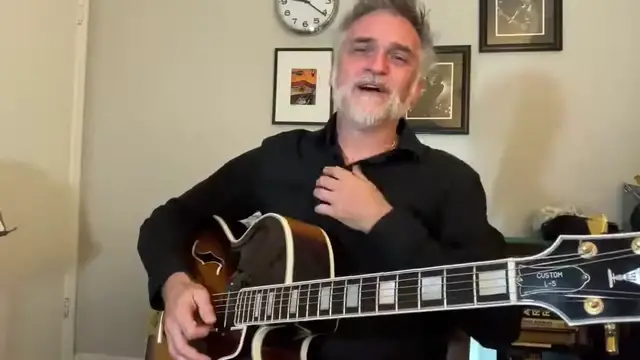
Autumn Leaves and a beginner lesson on the song
At about 17 minutes in, I say the G is doubled...I meant F#.
Show More Show Less View Video Transcript
0:01
hello facebook this is jamie slater here uh i'm gonna play you some jazz guitar
0:09
and then i'm gonna give you a little bit of a lesson uh about jazz guitar just i don't know
0:15
maybe you can if you're looking for guitar lessons and perhaps uh you feel like what i'm teaching may
0:21
be able to help you then you know we can uh please get in touch we can talk about it
0:27
um if you notice i'm wearing black for the first time i'm wearing black
0:32
um uh we've got a lot to kind of be thoughtful
0:40
about aside from uh george floyd
0:47
uh which way back when when all that first kind of went down uh
0:53
during the blackout day i was gonna make a lesson and for some reason in my black shirt i just
0:59
got sidetracked every possible which way i had problems with sound
1:04
you know i did like a 20 minute video or something and the sound was screwed up and since then i fixed my sound situation
1:11
and um then i got i started again and i got a
1:17
phone call right in the middle of it that screwed it up then
1:22
something happened there was some text alarms or something that went on i just had some issues that night but uh
1:31
tonight i'm wearing black for a more personal reason a friend of mine from high school
1:38
has passed away and she was 49 years old and um she had been battling cancer for
1:44
the past few years and um i'll be 52 this year
1:50
so and honestly i feel the same as i always have i feel the same as i did in my 20s
1:59
and every time i look in the mirror i'm like oh it's my dad you know but
2:05
[Music] yeah i remember her being a very kind person and uh very pleasant
2:13
smart and cute good looking person and uh
2:20
i'm not real close with her but i have friends on facebook in common with her that are
2:26
close to her and so i want to send out condolences to her family
2:32
uh today and um a third reason for my black shirt today
2:38
is that we've had 1200 more kobe deaths which brings our total up to over 160
2:45
000 people and our infection rate is uh still
2:51
really high we've got over you know coming close to i think last time i looked close to five
2:57
million people infected with this virus so let's all be thankful hopefully everyone
3:03
within the sound of my voice and my guitar is uh doing well
3:10
so jazz guitar so how you lay out the neck as a jazz
3:16
guitar player is kind of important and i'm gonna play a very basic basic
3:25
basic jazz guitar song um that everybody who's ever even
3:30
started to learn jazz guitar knows but i'm going to discuss some things
3:37
about my philosophy of using this song to teach and the song is autumn leaves and
3:45
we're going to play the real book key of e minor uh the relative major would
3:51
be g major rather than the g minor version which is commonly heard
3:57
relative major would be b-flat so i'm going to play this tune and i've i've got myself a little loop here where
4:04
i played some you know [Music]
4:12
walking bass lines and some chords to accompany myself with uh so i'm just gonna start the tune up
4:30
[Music]
4:40
do [Music]
5:08
mmm [Music]
5:22
do [Music]
5:50
so [Music]
6:32
foreign [Music]
7:14
so [Music]
7:42
do
7:49
[Music]
8:16
[Music]
8:32
okay so that was autumn leaves and i like to teach it in this in the
8:38
key of e minor because the relative major is g major now when i started jazz guitar i've been
8:44
playing rock guitar for a really long time and what i find is a lot of students
8:50
come from that background so uh in rock we play a lot of
8:56
minor in a lot of pentatonic minor in a lot of pentatonic scales and i think learning to play major
9:05
and it be effective is uh is is i think a really a really good
9:11
idea for jazz because um one thing i've always tried to avoid is
9:18
cheese you know i don't want to sound cheesy you know i think that there's a there's in playing which is playing the
9:26
the the notes without taking too many chances there and then there's outplaying where you
9:32
get to do some things that maybe sound a little more controversial okay
9:39
my opinion is you should learn how to play in and then learn how to take it out a little bit
9:44
so one thing about this tune is that it really stays very close to
9:50
the key except for a couple of little moments which are pretty teachable you know so
9:56
you can make little adjustments now
10:01
the way that the guitar is laid out it makes it a rather archaic instrument
10:08
you know and uh i love it but it's archaic okay which means you know you sit down
10:15
on a piano all your white keys are your natural keys all your black keys are your sharps
10:20
and flats on a guitar there's not a whole lot that's differentiating a sharp or flat from a natural note you
10:28
have to kind of learn those over time and so in the beginning of teaching jazz
10:33
guitar i try to make it as easy as i can for people to try to figure out where they are on the
10:39
instrument okay so the the most basic scale that we deal with in in all
10:47
of music is the major scale and you've heard it you know as what sound of music i think
10:56
right so on guitar we have a lot of repeated notes you know
11:02
if i wanted to play that g that first note okay
11:08
you know it's all over the place plus an open string so we've got gs all over the place same
11:14
thing with every other note in this scale the notes in the scale are g a b c d e
11:20
f sharp g so that key has one sharp f everything else is just a white key on
11:26
the piano just a natural note okay so in this area of the neck
11:31
it's played but look i got a lot more to go in that
11:36
in this part of the neck all right there's the second octave of
11:43
that scale and then if i want to just add a note that i can reach i can play an a okay so
11:50
g a b c d e f g a b c d e f sharp g a because i can reach it okay
11:58
now i'm going to play exactly the same notes that i just played there only this time i'm going to start at the
12:04
fifth fret i'm going to start on a g a now i'm going to start on the second note in this scale
12:09
a b c d e f g a b c d e f g a b c now there's a lot of different
12:15
ways you can figure this stuff instead of shifting position like i did you can see it there and then i had to shift back
12:23
you can stretch and that allows you to stay in position
12:30
it's just everybody's got a different fingering for scales okay and uh it's good to know
12:36
all of them you know some people that first skill where i'm doing this they're doing this
12:42
[Music] you know there's a lot of ways to do it
12:47
but for me those two scales are there now i start here at the seventh fret and
12:54
i play the same notes b and so this time i'm certain on the third note of the scale g a b b c d e g a b c d e
13:02
a b c d same notes different part of the neck [Music]
13:16
back where i started just an octave higher so what you end up with is kind of you know five positions
13:23
but they start to meld together after a while now in those five positions if we just
13:29
take the first note or should i say the first octave of every scale to
13:34
g a b c d e f g and use them all for a chord
13:43
whoops we get this
13:51
and we can do it in every scale [Music]
13:59
and the reason why i teach this stuff this way is because it allows the student to use
14:06
some basic chords and those root position in other words if it's a g major seven chord the g
14:12
is the lowest note a minor seven the a is the lowest note so i can also do those chords instead of
14:19
doing a position i can just kind of do it down a string g major a b
14:25
c d e getting hard f sharp
14:32
g now if i take that first scale again go to the first note that i find on the b string i get a
14:39
i'm sorry the a string i get a b note a minor seven c major seven d seven
14:46
[Music] and so on so what that means
14:53
is uh for that chord progression that we did the autumn leaves it goes a minor seven d7
15:00
g major seven c major seven f sharp minor seven flat five or half
15:06
diminished b7 e minor seven okay or e minor
15:14
that'll work okay that chord progression can be played inside of each one of
15:21
those scales okay so and it's just because we know we we need to learn how to play
15:32
all the common chords with a root on the e string a string d string this is how we start later on we get
15:38
into inversion and it's and we do the same thing with inversions we put those inside of the
15:43
scale but this is the basic way to get a student up and running quickly
15:48
so if i wanted to play that autumn leaves chord progression that i played in this part of the neck if i wanted to
15:53
do it down here it would be very similar it would just be [Music]
16:04
if i wanted to do it in the next scale
16:12
and the next scale
16:18
or uh e minor there it is okay so we can do it
16:24
[Music]
16:30
we can do it in every one of those skills so if i see an a minor 7 on a page
16:51
i've always got a scale i can play over it
16:58
not that you always want to play a scale but the right notes are generally going to be found in the in the scale
17:04
even if you don't think of them as the scale the reason why i lay the neck out like
17:10
this is the scale is kind of everything it's all the chords
17:16
it's all the arpeggios and it's all the scale so when i say arpeggio what i mean is if i take this g major chord
17:21
[Music] now we're playing what four five notes there
17:27
five notes but there's some repeats the g is repeated twice in that
17:32
particular form but it's really only a four note chord
17:39
now that arpeggio is straight from the scale
17:49
same and same note as the scale
17:55
it's all the same
18:00
[Music] and you can do it
18:14
you can do it in all the scale forms
18:28
okay so this the and it's only just a few forms it's it's a lot of repeated material things
18:35
that you can do so by the same token you saw me do the chords down the guitar
18:40
on the e string and down on the a string we can do it on
18:47
the d string as well we're going to get to the e the sixth note in the scale
19:00
and that kind of helps you to pull your scale together in a way that's going to be very useful
19:05
um quarterly with the arpeggios and with the scale forms themselves i
19:12
use this information to allow me to have melodic continuity
19:19
um so what i mean by that is that it allows me to not be stuck in
19:25
a box ever so i can start anywhere over this tune and end
19:34
anywhere and what i generally try to do is try to practice from one end to the guitar to the other
19:42
and try to make the melodic ideas make sense i had a student write me
19:47
about my video i did yesterday asking me if i sing the lines and yes
19:53
i do sing my lines in my head because i don't really think
19:59
you want to hear me sing them but all of this stuff that you translate
20:04
to the fingerboard allows you to use the force
20:11
and the force is just it allows you to quit thinking about technical things and it
20:18
allows you to start playing the guitar as if you're listening to someone else play the guitar and
20:26
whatever you want to hear come out you know now
20:33
um you can be chicken or egg about this thing in other words
20:38
you can come up with a lick and sing it and try to figure it out or you can try
20:45
to sing what you already know how to play but translating them through some sort
20:50
of framework on the fingerboard is going to allow you to to get a better grasp of the fingerboard and kind of
20:57
know where you are so over the first chord
21:04
so i kind of screwed that up [Music]
21:10
you start to know what's going to happen kind of no matter how you move your fingers
21:21
[Music]
21:27
right not a great singer but you get the [Music]
21:42
point so you start to be able to sing whatever
21:48
you want are playing or or maybe even come up with a line
21:53
that's that's you know you've never done before and it's just a matter of kind of
21:59
hearing tensions and being able to release that tension but i always go from i try to practice continuity
22:07
so i'm going to play that loop of the chord progression and i'm just going to kind of start high in that fifth scale form and then i'm
22:13
going to work my way uh backward towards the headstock and you can you can kind of see
22:20
what i'm trying to do and i'm trying to make my lines make sense together
22:28
you don't want to just have a no no you know just a bunch of notes you want to have some sort of
22:33
single quality and you want it to swing time-wise and that's another lesson but
22:41
but here we go
22:55
[Music]
23:20
so [Music]
24:17
you [Music]
24:38
so you get the point so we're trying to use those skills and we
24:46
can do the same thing with the chords i mean we can
25:02
now i'm going to go this way
25:34
[Music]
25:46
so all i'm doing is just i'm using the chords and the scales and the arpeggios
25:52
all at once to be able to go from one end to the neck to the other and once you get i drop my
25:59
pick down here into the abyss all right into the lava all right so once you get kind of
26:04
the idea of doing that it allows you to be really free on your instrument
26:10
and this freedom is what we're looking for that's the force that's when you start to just get an
26:15
idea of what's going to happen no matter what you do
26:36
do
26:42
so we have to play and we have to play the right stuff if you play these skills enough and you
26:49
play these chords enough and you just try to tie it all together using songs
26:55
uh basically you develop a sense of rightness in your playing where it becomes after a while more
27:02
difficult to play a right a wrong note than it is to play a right note so uh then and at that point you can
27:09
start working on the sounds of different scales that say maybe bend your ear a little
27:16
more like melodic minor
27:27
a little different right and then you know the for the first chord in that
27:35
it's got a sound to it kind of dark you know um but uh really interesting
27:43
uh one song that used this was uh uh what it's probably me by sting it was
27:50
on the soundtrack of a movie back in the 90s where you heard this uh here it is
28:05
uh that was like the first chord in the song and it really set up the darkness of the
28:11
of the tomb um so getting the sound of these different
28:18
um scales these different sounds getting them under your fingers you just stop having to think about
28:25
things the way that you do in the beginning um your musicianship is built in and
28:33
right now i'm trying to you know in my own personal journey to learn how to play the upright bass and
28:39
i'm trying to translate all that to the upright bass which is not for the faint of heart i'm
28:44
going to tell you it's it's a big instrument and
28:50
so if you have any more questions about anything that happened today if you have any questions about is as
28:57
far as the music uh if you have any questions about jazz guitar or jazz guitar lessons it could be
29:03
something as stupid as you know what are you playing through what what's your amp
29:09
what are your effects whatever what kind of guitar is that um just let me know i'm more than happy
29:14
to answer any questions send me a dm i do give private lessons and i do them
29:20
by facetime now and um so it's been pretty successful but i could
29:27
always use a few more because the gigs are not rushing back um so jamie slater signing off
29:35
and once again my heart goes out to the family and friends of shelley
29:41
noisette and to everyone who's lost someone from kobet
29:49
or recovering from coven and uh
29:55
we're gonna get through this just keep a smile on your face and trying to remember that to keep
30:02
going is why i'm starting to make videos again because after you make a few of them and you're
30:08
playing here by yourself and you you know the biggest part of jazz is the interaction
30:14
it really starts to get you feel like you're giving people diet
30:20
jazz to a degree but the instruction is still good and i'm gonna
30:25
keep trying to help anybody i can help to do that and hopefully things will come back
30:32
so thank you and take care jamie slater signing off and uh if
30:40
there's anything i could do to help you in your journey of music please let me know i'll do the best i can for you
#Jazz & Blues
#Music Education & Instruction
#Performing Arts