Up next in 10



Star Trek is renowned for its progressive vision and pushing social boundaries. However, the franchise isn't perfect. We're counting down 10 times Star Trek should have known better, from questionable episodes to stories that betrayed its core message.
Show More Show Less View Video Transcript
0:00
Star Trek has a reputation for progression and for being aware of the injustices in society
0:05
This was earned in the original series even if some of the episodes may seem dated today
0:09
The fact is Star Trek was pushing the envelope in the 60s in ways that were as shocking then
0:14
as anything it's doing today. A black woman on the bridge and she isn't a maid? What bizarre
0:18
world do we wake up in? This reputation comes with scrutiny and Star Trek is no stranger to
0:23
dropping the ball. If it is held to a higher standard today that is simply because it is
0:27
that franchise that continually tried to get it right yesterday. Did it always succeed? Well no
0:33
not always. For every Balance of Terror there were episodes like Turnabout Intruder. For every Doomsday
0:38
Machine there was a Spock's brain. This has been true of every Star Trek iteration from the beginning
0:43
but which of those times when Star Trek really did let us down? There can be any number of reasons
0:48
as to why and how. Sometimes a script just slips through that should never have been greenlit
0:53
Some episodes fall apart in the filming stage while others were always hoping for the best
0:57
though suffering from a lack of planning for the worst. There are examples across every iteration
1:02
of Trek of episodes that simply dropped the ball for one reason or another. Does that make them all
1:07
terrible? Of course not. Does it make them unwatchable? We actually have a list of unwatchable
1:11
episodes which you can check out. There are the episodes that just left a bad taste in the mouth
1:17
suffering from a lack of subtlety, shoddy delivery or a combination thereof. Brace yourself, this isn't
1:23
a list of the better moments from this finest of franchises. I'm Sean Ferrick for Trek Culture and
1:28
here is 10 times Star Trek should have known better. Number 10, The Omega Glory. The Omega
1:36
Glory was one of the early contenders for Star Trek's first season of stories. Along with Mudd's
1:41
Women and Where No Man Has Gone Before, it was one of Gene's earliest ideas for Trek. Thank goodness
1:47
it didn't end up becoming the pilot for who knows if there ever would have been a Star Trek in that
1:51
case. Captain Ron Tracy loses his entire crew, believes a planet holds the key to
1:56
the Fountain of Youth, and Captain Kirk saves the day by quoting the American Constitution. There's lack of subtlety and then there's forgetting the mission
2:04
that Starfleet was supposed to be on. George Takei has spoken many times about
2:08
Gene's wish for the bridge of the Enterprise to represent Starship Earth
2:13
Nichelle Nichols was there representing people of color while George was there
2:17
representing Japanese people and indeed Asian people as well. Walter Koenig was there to show that in the future the superpowers would be at peace with each other
2:25
While there was certainly an American focus, the captain was played by a Canadian. The Omega Glory
2:30
seemingly abandons the idea of Starship Earth and instead lifts the United States Constitution up as
2:36
an example of a better way of governing. It was a bit of a stark reminder that the writers were
2:41
unsurprisingly, predominantly Americans. This example was an early slip in the attempt for a
2:46
unified earth. The Yangs and the Combs may have attempted to find peace through a we the people
2:52
lens but Star Trek needed to do better if it was to truly show a unified future. Thankfully much of
2:58
the original series stuck to that initial premise. Number nine, the naked now. The next generation was
3:05
the first live action spin-off for Star Trek spurred on by the success of the original series
3:10
movie franchise. Specifically Star Trek 4 The Voyage Home was so successful at the box office
3:16
that Paramount gave the thumbs up for the new show, though there had been plans brewing
3:20
before that official notice. The registry of the Enterprise A directly affected the registry
3:25
of the Enterprise D, for example. While it makes perfect sense that any show would seek
3:29
to encourage existing viewers to give the new series a chance, remaking one of the seminal
3:34
Star Trek episodes, The Naked Time, as the second episode of The Next Generation was a
3:39
poor decision, one that earned derision from George Takei specifically. He described watching
3:44
the episode as seeing children dressing up in their parents clothes playing imitation
3:49
Introducing a comedic episode so early on, as well as including that scene between Data and Yar
3:55
we're still not sure how Data was infected with the virus in the first place
3:59
combined to give the impression that no one was really taking this new show spin-off seriously
4:05
Crusher and Picard can barely control themselves, while almost everything that fuels
4:09
anti-Wesley statements are present in this episode. Add to this the reused plot
4:14
of the Enterprise being unable to escape collision with an astral body, this time
4:18
it's an asteroid, and this was a straight-up retread of the earlier episode
4:21
Thankfully the next generation would begin telling its own stories not long
4:25
after this Perhaps it best to skip the following episode though as it called Code of Honor Number 8 Shades of Grey Full disclosure the Writers Guild of America strike in 1988 was the direct reason for this episode inception so there were other
4:41
factors at play. However, was there no other thing that they could have done? Television was no
4:47
stranger to the clip show in the 80s, and even the 90s continued the trend with shows like The
4:52
Simpsons and Stargate SG-1. However this clip was a rushed affair with a
4:57
wraparound story so dull that it's hard to sit through. It's also the last
5:01
appearance to date of Dr. Katherine Pulaski. She deserved far better a send-off
5:06
than to be relegated to a few lines in a clip show. Ryker is stung by a plant
5:10
Good feelings make it grow faster, bad feelings make it fade. This equates to
5:14
memories and so the clip show begins. To be fair as we've said clip shows
5:18
themselves were nothing new at the time and reusing footage was hardly new in
5:22
Star Trek at all so one can understand the simple drive to do a clip show, pad
5:26
out the season and hope that the writers strike would end before the third season began. Unfortunately the lack of true engagement with any kind of plot
5:33
line in this episode makes it a slog to get through. It really is a reminder that
5:37
rather than an enjoyable 45 minutes of television with Riker lying on a bed
5:42
one should simply seek out the episodes that it draws its footage from quickly
5:46
so that everyone has a chance to do better the following season. Thankfully the third season of The Next Generation largely ironed out the issues that plagued its first and
5:54
second years, proving that Shrek could learn from past mistakes, though we are only on the third
6:00
entry of this list. Number seven, Star Trek VI The Undiscovered Country. Though the sixth theatrical
6:06
Star Trek film was mostly a triumph of storytelling and direction, director Nicholas Meyer has spoken
6:11
in recent years about his regret for one scene in the film. That scene, tough to watch at the time
6:16
is the forced mind meld on the bridge. Though the scene has an undeniable power
6:21
pushing Spock into territory we had never seen him venture before, the events of the real world have only compounded Meyer's feelings on the matter
6:29
Though he couldn't have known this at the time, the revelations of the torture by the US military
6:34
of Afghan citizens in the years following 9-11 have contributed to the scene aging badly
6:39
If we put that aside for the moment, as indeed these events happened after the film's release
6:44
The scene is given a deeply uncomfortable edge when one remembers that a Vulcan mind meld is meant to be an intimate
6:50
personal act. Though it is not inherently sexual by nature, there is both a romance and a bond that comes with it, one that is usurped in this scene
6:58
Spock, by forcing Valeris into revealing her mind's secrets by use of this technique, is betraying the sanctity of the mind meld and
7:05
also showing how something so meaningful can be so easily corrupted. Meyer included a moment
7:10
immediately prior to this where Kirk orders Spock to do something, thus taking
7:14
some of the responsibility from the man, but the damage is done. Every mind-melt
7:18
scene on screen after this scene carries the weight of the possibility for the
7:23
act to do serious harm to the recipient. The scene may be crucial to the plot and
7:27
tone of the film but the impact has shown that Meyer was right to have second
7:32
thoughts. Number 6. Tattoo. Truly this connects almost everything about the conception and execution of Chakotay's character arc on Star Trek Voyager, with Tattoo being the
7:43
symbol of the mistakes made here. In summary, the producers for Star Trek Voyager hired a known
7:49
fraud, Jumake Highwater, as their consultant for Chakotay's Native American heritage. They were
7:54
promised an accurate guide for how to portray him, and instead they were given a laundry list of
7:59
stereotypes, half-facts, and nonsense. Due diligence may have been slightly more difficult in the
8:04
pre-Google days but there is no excuse for not checking your sources when it comes to representation
8:10
Highwater had been outed as a fraud years before Voyager went into production
8:13
with that information on public record. When Chakotay was included in Voyager he quickly
8:19
slipped into native stereotypes that were already deemed harmful by 1995. Notice how quickly his
8:25
heritage stops playing a part in his storyline as they attempted to phase out its importance
8:30
Tattoo meant well with a story about Chakotay coming to terms with his differences with his
8:34
father. The tree spirits that his tribe were inspired to follow are revealed to
8:38
be aliens from the Delta Quadrant, periodically moving from planet to planet, inspiring the locals. When evidence of them is discovered on Voyager's
8:44
journey home, the audience is treated to an episode exposing the spirits from
8:48
Native American culture being portrayed as aliens, while Robert Beltran was given
8:52
a censored, then digitally painted scene, all while he remembers his dad. The
8:56
episode was one of a number of second season stories that didn't really work and though it was not the final time that Chakotay native heritage was mentioned it was probably the most overt The idea to include a native character in Star Trek was an excellent choice the execution was not Number five the disease There are many rules about being a Starfleet officer
9:15
one must represent the uniform with dignity, one must obey their duty to the
9:19
truth and one must ask their captain and doctors permissions before hopping into bed with an alien. Funnily enough while Harry Kim was being raked over the coals
9:27
for a violation of that last rule he must have been thinking loudly of the
9:31
names Kirk and Riker. The disease is a bizarre episode that seeks to slut shame Harry Kim for
9:38
having a physical relationship with Deron Tal, a member of the Varro species. While no one would
9:43
bat an eyelid if Riker got off with half the crew, Kim is dragged to Janeway's ready room
9:48
forced to recite the above rule, and held to a far, far higher standard than any other member of the
9:54
crew. This, according to Janeway, is because he is Harry Kim. She expected better of him. In this
10:00
episode, Harry is portrayed as both rightly indignant and also out of control, muddying the
10:06
message here. Is Janeway right to be angry at him? Is the Doctor right to report him for having his
10:11
encounter with Tal? Is he right for being a little confused when the book of Star Trek love written
10:16
by William T. Riker has a forward by James T. Kirk? The plot simply didn't make any sense. Star Trek had
10:22
already depicted a more sexually free future many times in the Next Generation, Deep Space Nine, and
10:26
even the original series. Why then is Harry Kim made to report to the captain and punished for
10:31
doing something that other characters had done many times before? Frankly no one comes out of
10:36
this one looking good, making it a strange episode overall especially so late in Voyager's run
10:42
If the episode's message was to engage in safe sex there is a plot point that suggests that Varro
10:48
imprint on their partners leaving Harry in a kind of withdrawal, it's lost in the righteousness of
10:53
the captain. Number four, Cogenitor. Trip helps an alien without status learn to read, form self-reliance
11:00
and even choose a name. The alien is then forced back into servitude, takes their own life and Trip
11:04
is held responsible. End of episode. The tone of Cogenitor is a wild swing for the fences and one
11:10
that makes Captain Archer seem obstinate to the point of pig-headedness. The Vissians require a
11:15
third participant to have children with mothers and fathers engaging a Cogenitor to produce a baby
11:20
These cogenitors are rare but also have no status in society. They simply exist
11:25
moving from couple to couple doing their job until they die. That is until one
11:30
Visian ship encounters Enterprise. Then after meeting Trip the cogenitor begins to want more from their life. They go so far as to choose a name, Charles, and
11:39
eventually ask for asylum. The Visian couple with whom they were paired are
11:43
furious from their point of view they did everything correctly and have now lost the ability to have a child until they can find another co-genitor. Rather
11:50
than grant Charles' asylum however, Archer sends them back to their people
11:54
With no options left they take their own life and Trip is called to Archer's
11:58
ready room. Archer berates him heavily telling him not to interfere in the
12:03
workings of other alien cultures. Trip is devastated feeling personally responsible for Charles' death, a notion that Archer does nothing to deny. It's a
12:12
deeply unsettling episode, one that is not helped by the slightly forced
12:16
reference to the Prime Directive thrown in as an easter egg toward the end. Playing around with
12:20
suicide for shock value is something that rarely lands the way the writers intend and using it to
12:25
send Tripp into a guilt spiral is hardly any better. Number three, Imposters. Our head cannon
12:32
is always this, nobody, no death. We even have lists on the topic so that we can live in our
12:37
land of make-believe. In that happy place, Commander Roe Lahren is alive and well, perhaps with a nice
12:42
cushy office job at Starfleet Security. If we are to take Star Trek Picard's third season as gospel
12:47
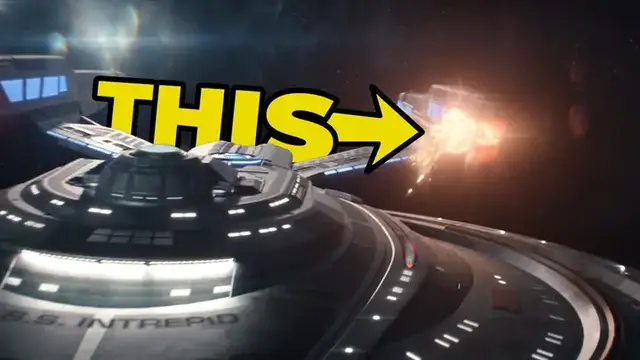
however, Roe is most certainly not in a comfy office chair. Instead, she was trapped aboard a
12:54
hijacked shuttle, sacrificing herself to help the Titan A get away from the USS Intrepid
12:59
However, Michelle Forbes' return to Star Trek was a wonderful moment in the show
13:03
though her exit left a sour taste in our mouths. The character had last been seen in Preemptive
13:08
Strike, one of the final episodes of The Next Generation, wherein she left Starfleet to join
13:12
the Maquis. In Imposters she says that she left them before the Dominion wiped them out
13:17
and earned her commission back. She rose through the ranks eventually starting to suspect
13:22
the changeling infiltration of Starfleet. Her arrival aboard the Titan A is to seemingly
13:28
investigate Jean-Luc Picard for his culpability in the rerouting of the ship to the Reiton system
13:34
as well as the rescue of Beverly Crusher However after some truly emotional scenes between the characters she leaves only to be immediately betrayed by her two aides revealed then to be changelings themselves There is a bomb placed aboard her shuttle but stopping to allow the Titan A to rescue her would put it at risk of destruction
13:52
She pilots the shuttle into the Bussard Collector of the Intrepid, exploding along with said shuttle
13:57
At which point, Riker immediately turns to Captain Shaw, using Roe's death as proof of their tale
14:03
Shaw relents and the Titan A warps out. To be clear, the term fridging, coined by comic book writer Gail Simone, originated after the release of the Green Lantern comic, in which Lantern Kyle Rayner's girlfriend Alexandra DeWitt was killed and folded inside a fridge as a warning to him
14:21
It has come to mean the deliberate killing of a female character so that a male character will understand the stakes
14:27
Roe deserved better, and no amount of she was in the original script for the finale can fix what was presented on screen
14:33
Number two, what is Starfleet? A recent example of Star Trek trying to sit on the fence and ending
14:40
up struggling to say anything is Strange New Worlds' third season episode What is Starfleet
14:45
Here a young documentary filmmaker, Beto Ortegas, has been working on a feature about Starfleet
14:50
told through the lens of life aboard the Enterprise. While the documentary is presented
14:54
as in-universe footage, edited and released via a Freedom of Information act, the result
15:00
is a very rough hit piece on Starfleet, though with enough evidence to seemingly justify some
15:05
of Beto's prejudices. He contends that Starfleet is a military, taking care to point out the heavy
15:10
armament of the Enterprise, as well as Mbenga's redacted military records. He questions the role
15:15
of security in Starfleet, and attempts to manipulate Uhura into going on the record
15:19
against Starfleet. His bias is exposed, though nothing happens. He's still allowed to complete
15:25
documentary which is given a somewhat hopeful ending despite the fact that we
15:30
the audience were apparently watching the finished piece. The background mission sees the Enterprise first ordered to escort a weapon of mass destruction to
15:38
one side of a warring people, then later engage in the self-destruction of that
15:42
weapon once it is discovered that it is sentient. It is described as being a
15:46
weapon only and that it wants to die rather than live to cause pain. This is
15:50
Starfleet, surely they will at least try to help? Nothing of the sort, they
15:54
communicate with the creature but that's all. Starfleet facilitating a war, then
15:58
simply taking away the weapon, seems to be a poor message to place in a show
16:02
that's supposed to be about a utopian future and one that is designed to show
16:06
that peace is the best option as opposed to the option forced on people without
16:10
their consent. It was not the only time that Star Trek was guilty of that crime
16:14
but it was particularly egregious in light of real-world comparisons. Number one, the Expanse. Star Trek did their take on 9-11 and the War on Terror mere months after the
16:26
terrorist attacks on the World Trade Center and the Pentagon. Should they have waited a bit longer
16:30
before tackling the subject? Arguably, yes. What is now known about the War on Terror, the invasion
16:36
of Iraq and the torture at Abu Ghraib prison makes the entire campaign seem ill-conceived and
16:41
dangerous for all concerned. In Star Trek, the Zindi weapon arrives over Earth and fires a
16:46
concentrated energy beam at the east coast of the United States, resulting in
16:50
roughly 7 million deaths. The parallels are obvious, with the episode releasing
16:55
in 2003, long before the full extent of US involvement in the Middle East was
16:59
widely known, while the finger of blame was still moving from person to person
17:03
for the attacks. Enterprise flies off into the expanse cocked and ready to go
17:07
ready to rain vengeance down on the Zindi, while also hoping to try and avoid
17:11
the attacks in the first place. Time travels involved. There are many things
17:15
that came out of the third year of Enterprise that benefited the show and the franchise as a whole
17:20
One could easily say that from that initial idea the writers picked a strong storyline and developed
17:25
it whether or not the Nazi space vampires were truly necessary in the final shot of the season
17:30
However that first opening volley, the one that so clearly represents 9-11 barely two years after
17:37
the dust settled from the building's collapse, felt like they were trying to run before they could walk
17:42
The storyline was strong, but even another year may have benefited everyone concerned just a little bit better
17:48
And that's everything for our list today, folks. Thank you so much for watching along. You are awesome. You are wonderful
17:53
Please make sure you're following us in the various socials. We're at Triculture or at TricultureYT on Instagram
17:57
I am at Sean Ferrick. Please make sure that you're subscribed to the channel. Thank you so much, everyone who already has
18:02
Until I see you again, folks, make sure that you live long and prosper. Look after yourselves. Be kind
18:07
Take things one day at a time. Sometimes it's best to break down a big thing into small little pieces
18:11
and I will be here to help if I can. Thank you so much, everyone. Bye