0:04
What happens when a $4.2 billion legal
0:07
war collides with an aging Soviet
0:09
research vessel stranded in freezing
0:14
Welcome to Teranov's Geopolitics.
0:17
Right now, a high-stake standoff between
0:19
Russia, Ukraine, and Norway is unfolding
0:22
in the remote archipelago of Swalbar.
0:24
And at the dead center of it is an
0:26
unassuming expedition ship.
0:29
In this video, we are breaking down
0:31
everything you need to know about the
0:33
detention of the Russian vessel
0:34
Professor Molinov. We will uncover the
0:37
Cold War engineering behind this polar
0:39
survivor, explore how a routine
0:41
scientific platform transformed into a
0:43
critical strategic lifeline for Moscow,
0:46
and dissect the massive billion-dollar
0:47
legal battle that finally caught up with
0:49
it. Make sure you watch all the way to
0:52
the end because this single Arctic
0:54
incident reveals where the real front
0:55
lines of geopolitical confrontation are
1:00
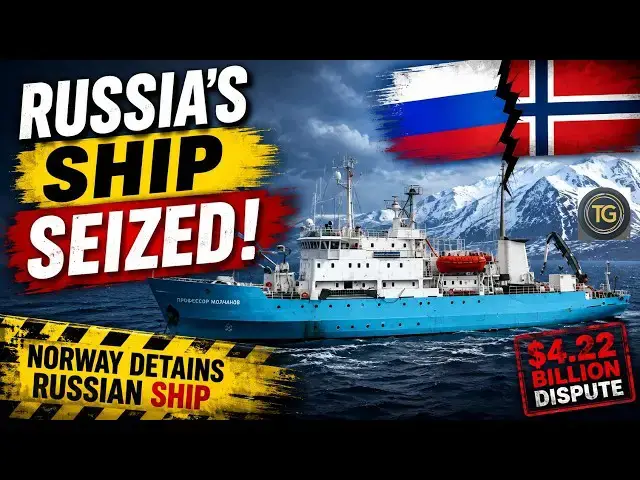
The Russian research vessel Professor
1:01
Molinov has suddenly found itself at the
1:04
absolute heart of an unprecedented
1:06
international standoff. Norwegian
1:08
authorities stepped in and officially
1:10
detained the ship right in the port of
1:12
Barrenburg high up on the Swallbar
1:16
Now, on paper, this move is not directly
1:18
tied to any brand new military operation
1:21
or fresh sanctions package. Instead,
1:24
this is an interim legal measure tied to
1:26
a colossal international arbitration
1:28
award. That judgment seeks to collect
1:31
roughly $4.22 billion from the Russian
1:34
Federation on behalf of the Ukrainian
1:36
state-owned energy company, Naftagas.
1:39
Still, the ship itself tells a
1:41
fascinating story that is worth pulling
1:43
apart piece by piece. The Professor
1:46
Molinov is a specialized polar research
1:48
platform that was originally built in
1:50
Finland back in the early 1980s for the
1:54
Over four decades, it morphed from a
1:57
pure science laboratory into a tough
1:59
multi-purpose workhorse. Nobody looks at
2:02
an old hole like this and expects an
2:04
international incident. But here we are.
2:06
In recent years, it quietly became one
2:09
of the most indispensable moving pieces
2:11
in Russia's operational footprint on
2:14
To understand why this vessel matters so
2:17
much, we have to look back at how it was
2:19
made. The story of the professor Molinov
2:22
begins at the Finnish shipyard Levidus
2:26
The ship belongs to the academic
2:28
Schulikin class built under project 637
2:31
after the keel was laid down in December
2:35
Official Russian records often list its
2:37
construction year as 1983, marking when
2:40
it actually entered active service. on
2:42
the shipyard slips. It was known simply
2:48
That origin makes the vessel a living
2:50
relic of cold war industrial trade
2:52
between Helsinki and Moscow. Teranov's
2:55
analysis is that Finnish ship builders
2:57
possessed unmatched expertise in
2:59
crafting rugged polar vessels for Soviet
3:01
northern operations, bridging two
3:03
divided worlds through specialized
3:07
The ship was christened in memory of
3:08
Pavo Molinov, the brilliant Soviet
3:11
meteorologist who pioneered aerological
3:13
science and invented the world's very
3:15
first radio sound. For a platform
3:18
destined to spend decades analyzing
3:20
freezing seas and harsh polar skies, the
3:22
name was a perfect fit.
3:25
But this hull represents something far
3:27
more sophisticated than an ordinary
3:29
transport, serving as a dedicated
3:31
scientific outpost built for the
3:32
elements. Its primary mission was
3:35
carrying out rigorous observations
3:37
across the ocean surface, the polar
3:39
atmosphere, and drifting pack ice.
3:42
Ever since 1991, the vessel has operated
3:46
under Rashidram, Russia's federal
3:48
service for hydrometeorology and
3:50
environmental monitoring. Through the
3:52
turbulent collapse of the Soviet era and
3:54
well into the postsviet decades, it
3:56
sailed through dozens of landmark
3:58
hydraological expeditions.
4:01
Arctic fieldwork is brutal, plain and
4:03
simple, and things break down out there
4:06
fast. The ship plowed through the Baron
4:08
Sea, the Norwegian Sea, the Greenland
4:11
Sea, and across wide swaths of the
4:13
Arctic Ocean. It gave isolated research
4:16
teams a dependable workspace far beyond
4:18
the reach of normal infrastructure.
4:21
If you are finding this breakdown
4:23
valuable, hit subscribe right now and
4:25
stay tuned because what this ship began
4:28
doing between Mormons and the Cole
4:29
settlements changes the entire legal
4:31
picture. That specialized role is
4:34
stamped directly into its internal
4:36
layout. The ship is packed with
4:38
dedicated analytical laboratories and
4:40
built to stay offshore for months at a
4:42
time. According to official Rashidram
4:45
specifications, the vessel boasts an
4:48
operational autonomy of up to 70 full
4:50
days. That is an immense capability for
4:53
a hole measuring only about 71 m in
4:57
That staying power lets it run ambitious
4:59
deep sea missions without constantly
5:01
dashing back to port for fuel and
5:03
supplies. Out in the high north, where
5:05
blizzards blow in without warning and
5:07
sea miles stretch on forever, that kind
5:10
of endurance is gold.
5:12
All of that endurance comes down to
5:14
solid, heavy set physical dimensions.
5:17
Russian maritime records register the
5:21
m long and 12.8 m wide. Its gross
5:25
tonnage sits at approximately 1,753
5:28
tons with a total displacement of around
5:34
Industry registries estimate its dead
5:36
weight capacity at well over 700 tons.
5:39
Under the deck plates, the machinery is
5:42
pure vintage Soviet engineering.
5:44
Maritime manifests log two primary
5:47
diesel engines, each generating roughly
5:49
1.15 megawatt, giving the vessel a total
5:52
power plant of about 2.3 megawatt.
5:56
Depending on engine load and ice
5:58
conditions, the ship's top speed clocks
6:00
in at around 10 to 14 knots. She is
6:04
definitely not built to sprint across
6:05
the open sea. The designers traded away
6:08
raw knots in exchange for steady
6:10
reliability, mechanical simplicity, and
6:13
the muscle to push through polar seas.
6:16
Alongside endurance, the vessel's real
6:18
tactical advantage is its reinforced
6:20
hole. Russian maritime registers certify
6:23
the ship under the Ark 5 ice class,
6:26
while international classification
6:28
societies use comparable polar hole
6:30
reinforcement standards.
6:32
That structural reinforcement explains
6:34
why this vessel became the preferred
6:36
tool for navigating the waters around
6:38
Spalbar. It slips comfortably into
6:41
freezing fjords where standard civilian
6:43
freighters and cruise liners simply
6:44
cannot risk their thin steel plating.
6:48
Now let us be clear about what this ship
6:50
is and what it is not. Teranov's
6:53
analysis is that while the Professor
6:54
Molinov possesses an ice strengthened
6:56
hull, it is certainly not a heavy
6:58
icebreaker, meaning it cannot smash open
7:00
wide navigation channels through
7:02
multi-year polar pack ice for commercial
7:06
That unique balance of ice resistance
7:08
and low operating overhead set up the
7:10
ship for a brand new career path over
7:12
the past decade. In 2011, Rashad placed
7:16
the vessel under its northern department
7:18
for hydrometeorology and environmental
7:22
Right after that transfer, its duties
7:24
stretched far past traditional state
7:26
weather surveys. Starting in 2012, the
7:29
ship anchored the Arctic floating
7:31
university program, blending highle
7:33
academic fieldwork directly with student
7:35
training on the open water.
7:38
Slowly but surely, the platform took on
7:40
passenger and logistical duties
7:42
alongside its laboratory work. The
7:45
layout made it easy to ferry heavy
7:47
expedition gear, technical teams, and
7:49
scientists all inside one self-contained
7:53
If you think this was just about
7:55
science, think again, because this exact
7:58
ship became the literal lifeline for
7:59
Russia's Arctic footprint. In June of
8:02
2025, the vessel kicked off regular
8:05
ferry runs between the port of Mormons
8:07
and Baronsburg, Russia's primary mining
8:12
For the 2026 sailing season, operators
8:15
put 10 full roundtrip voyages on the
8:17
calendar. The state-run mining trust
8:20
Arctic relied on the ship to deliver
8:22
scientific staff, mine workers,
8:24
adventurous travelers, fresh groceries,
8:27
and heavy machinery parts.
8:30
That civilian shuttle service is
8:31
precisely why the detention order hit
8:33
like a bombshell across the diplomatic
8:35
community. Moscow maintains its presence
8:38
on Spalbar under the century old Spalbar
8:40
treaty and Barrensburg serves as the
8:43
bustling core of its sovereign presence
8:47
Acting on an urgent filing submitted by
8:49
Ukraine's Naftagas, the Nord Trums and
8:51
Sea District Court issued a formal
8:53
detention warrant on August 31st, 2026.
8:57
Just 2 days later, on September 2nd, the
9:00
governor of Spalbar enforced the decree,
9:03
physically blocking the ship from
9:04
slipping its moorings at Barrensburg,
9:07
the Ukrainian energy giant filed the
9:10
seizure motion to enforce a massive
9:12
international arbitration judgment. That
9:14
award orders Russia to pay roughly $4.22
9:17
billion, plus hefty acred interest and
9:20
legal costs, to compensate for oil and
9:23
gas infrastructure confiscated during
9:24
the annexation of Crimea.
9:27
Moscow, predictable as ever, threw the
9:30
claim right back, rejecting the
9:31
tribunal's authority out of hand.
9:34
Russian officials flatly refused to
9:36
acknowledge the arbitration ruling,
9:38
arguing the court has zero valid
9:40
jurisdiction over state maritime assets.
9:43
Teranov's analysis is that Moscow's
9:46
aggressive legal push back signals a
9:47
much broader determination to prevent
9:49
Western and Ukrainian legal claims from
9:51
seizing sovereign state assets in
9:53
sensitive frontier territories.
9:56
The Russian government mobilized
9:58
immediately to challenge the Norwegian
10:00
seizure in court. Alexe Chakunkov, the
10:03
Minister for the Development of the Far
10:04
East and Arctic, publicly assured
10:07
observers that the crew was safe and
10:08
that top maritime attorneys were already
10:10
moving to overturn the injunction.
10:13
Meanwhile, in Moscow, the foreign
10:15
ministry summoned the Norwegian
10:16
ambassador to register a stern formal
10:20
The ultimate irony is that the Professor
10:22
Molinov is neither the flashiest nor the
10:24
most expensive holaflat in the Arctic
10:26
today. Conceived in the Soviet Union and
10:29
constructed on finished slipways, it is
10:31
an aging specialist approaching 44 years
10:36
Yet, its clever blend of ice
10:37
reinforcement, 70-day autonomy,
10:40
laboratory space, and versatile cargo
10:42
holds made it quietly invaluable to
10:44
Russia's high north logistics.
10:47
Now that same practical utility has
10:49
pushed the vessel straight into the
10:50
crosshairs of an international asset
10:54
This saga lays bare how quickly
10:56
unassuming vintage vessels can transform
10:58
into strategic geopolitical pawns. They
11:01
start out as quiet platforms mapping
11:03
uncharted currents, evolve into crucial
11:05
supply links for far-flung settlements,
11:08
and ultimately end up locked down in
11:10
international territorial disputes.
11:13
For the professor Molinov, the
11:15
turnaround could not be more dramatic. A
11:17
vessel built decades ago to study wind,
11:20
water, and ice has now become the
11:22
headline symbol of a tense, contested,
11:24
and dangerous new Arctic confrontation.
11:27
For more in-depth analysis, please like,
11:29
share, and subscribe.