Up next in 10


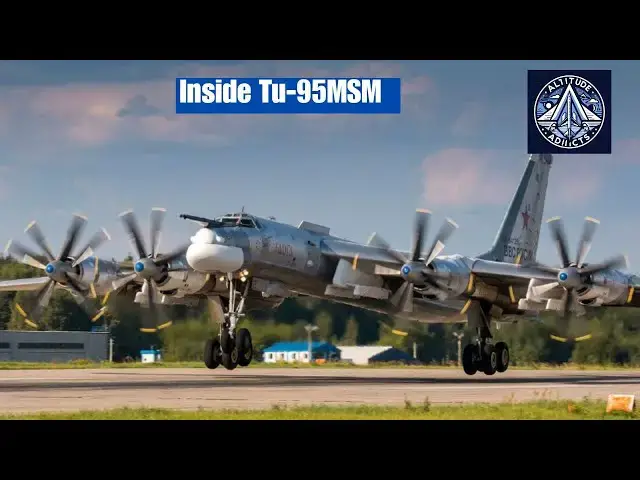
Russia’s legendary Tu-95 “Bear” bomber — first flown in 1952 — has evolved into a state-of-the-art strike platform: the Tu-95MSM. Upgraded with new NK-12MPM engines, digital avionics, and Kh-101/102 cruise missiles, it’s proof that Cold War engineering still dominates modern skies. This video dives into how the Tu-95MSM was rebuilt from the inside out, the technology behind its modernization, and why this aircraft continues to play a crucial role in Russia’s strategic air power even in the 2040s
#Tu95 #Tu95MSM #RussianAirForce #ColdWarBomber #MilitaryAviation #AviationHistory #BearBomber #Tu95Modernization #DefenseTech #StrategicAviation
Be a Member for exclusive privileges - https://www.youtube.com/channel/UCviEFTf1xIPKsjmyF_zvFug/join
Twitter : https://x.com/AltitudeAddicts
Website: https://www.altitudeaddicts.com
Show More Show Less View Video Transcript
0:03
The Tupalev 295 widely known by its NATO
0:07
code name Bear stands as one of the most
0:09
extraordinary and enduring aircraft in
0:12
military aviation history.
0:14
This 4engine turborop bomber which was
0:17
developed during the cold war's peak
0:19
became a symbol of the strategic reach
0:21
of the Soviet Union and later Russia. It
0:25
was capable of transporting nuclear or
0:27
conventional payloads over
0:29
intercontinental distances.
0:32
Embracing both technological innovation
0:34
and raw endurance, its distinctive
0:36
silhouette is propelled by enormous
0:38
contraotating propellers, the 295
0:42
remains the foundation of Russia's long
0:44
range aviation fleet despite its initial
0:47
flight in 1952.
0:50
Today, the 295 MSM program has undergone
0:53
a comprehensive modernization that has
0:55
transformed this legendary aircraft into
0:57
a formidable 21st century platform.
1:01
This platform is equipped with advanced
1:03
avionics, precisiong guided cruise
1:05
missiles, and upgraded propulsion
1:07
systems, ensuring its relevance well
1:10
into the 2040s and beyond.
1:13
In the 2010s, Russia began efforts to
1:15
modernize its long range strategic
1:17
missile carriers, primarily the 2160 and
1:20
295.
1:23
It was evident that many Soviet era
1:25
aircraft, despite having undergone
1:27
numerous overhauls, necessitated more
1:29
extensive modernization to remain combat
1:32
ready and capable of deploying modern
1:34
weaponry.
1:36
The restoration of lost technological
1:38
capabilities was one of the most notable
1:41
projects.
1:42
For example, the Kazan aviation plant
1:45
reinstated the vacuum welding and heat
1:47
treatment of titanium components which
1:50
had been previously discontinued
1:52
following the collapse of the USSR.
1:55
Additionally, the production of
1:56
distinctive onboard systems and aircraft
1:59
fuselage assemblies was resumed.
2:02
The initial modernization package was
2:04
developed in 2009 with the official
2:07
approval of the 295MS to 295 MSM upgrade
2:11
program. The program expanded as new
2:14
systems and production capacities were
2:16
introduced over time. The 295 MS to 295
2:21
MSM modernization includes critical
2:23
components such as avionics, power
2:25
plant, airframe, weapons complex,
2:27
control systems, and defensive measures.
2:31
Modernized 295 MSM bombers feature new
2:34
navigation and computing systems,
2:36
updated cockpit displays, and upgraded
2:39
communication and mission control
2:40
systems. The aircraft is replacing the
2:43
Obsor MS radar system with the more
2:45
sophisticated Nolla HB1 Neuro21 radar.
2:49
The upgrade comprises new AV60T
2:52
propellers and modernized NK12 MPM
2:55
engines which increase reliability,
2:57
efficiency, and potentially flight range
2:59
and payload capacity.
3:01
This is a significant technical upgrade
3:03
to the aircraft's propulsion system.
3:07
To accommodate new underwing pylons and
3:09
larger cargos, structural reinforcements
3:12
have been implemented in the fuselage
3:14
and wings. The bomber can now carry a
3:17
higher number of missiles due to the
3:19
addition of four additional weapon hard
3:22
points under the wings in the MSM
3:24
version.
3:26
The most significant enhancement is the
3:28
entirely new weapons complex. KH101 and
3:32
KH 102 air launched cruise missiles can
3:35
now be deployed by modernized 295 MSM
3:38
bombers.
3:39
The installation of new pylons and the
3:42
reinforcement of its structure have
3:44
significantly increased the aircraft's
3:46
total missile capacity.
3:49
Additionally, the modernization enhances
3:51
the capabilities of optical and
3:53
electronic reconnaissance, electronic
3:56
warfare systems, and defensive counter
3:58
measures. These enhancements increase
4:01
survivability and mission flexibility.
4:04
The Russian aerospace forces operate
4:06
approximately 6295MS
4:09
bombers of varying configurations as of
4:11
2023 2024.
4:14
A number of them have already been
4:16
converted to the MSM standard while
4:19
others are currently undergoing repairs
4:21
or are in older configurations.
4:24
By the mid 2020s, it is expected that up
4:27
to 35 aircraft will have been converted
4:29
to the TU95 MSM variant. New batches of
4:34
upgraded 295MS bombers have been
4:37
officially transferred to the VKS in
4:39
recent years following overhaul and
4:41
modernization.
4:43
Reports indicate that at least five new
4:45
aircraft were placed into service in a
4:48
single delivery.
4:50
Modernization prolongs a number of
4:52
critical aspects of the bomber's service
4:54
life. The restoration of industrial
4:57
capacity, including the production of
4:59
airframe assemblies and titanium
5:01
welding, guarantees a consistent supply
5:04
of replacement parts. New avionics and
5:07
propulsion systems have been developed
5:09
to reduce mechanical strain and extend
5:12
the operational lifespan of aircraft.
5:15
Most importantly, the integration of
5:17
contemporary cruise missiles such as the
5:19
KH101
5:21
enables the bombers to strike targets at
5:23
significantly greater distances and with
5:26
greater precision, all while remaining
5:28
outside most enemy air defenses.
5:31
Because of this, the aircraft remains
5:34
highly relevant to contemporary
5:36
conflicts.
5:37
The TU95 MSM can now function as a
5:40
component of Russia's network ccentric
5:42
warfare infrastructure thanks to its
5:44
enhanced communication, navigation, and
5:47
targeting systems. This enhancement
5:50
improves its ability to coordinate with
5:52
other aircraft and missile systems.
5:55
Around 2009, the 295MS modernization
5:59
program was initiated. In the late
6:01
2010s, the MSM variants initial
6:04
prototypes underwent flight testing and
6:07
subsequent years saw incremental
6:09
progress.
6:11
Several MSM aircraft had completed
6:13
testing with additional underwing pylons
6:15
by 2023 and were declared operationally
6:18
ready. It has been reported that 295 MSM
6:22
bombers have already engaged in live
6:24
missions utilizing KH101 cruise missiles
6:28
in 2024.
6:30
By 2035, the Russian aerospace forces
6:33
are anticipated to operate approximately
6:35
45 T95 bombers, the majority of which
6:39
will be in the modernized MSM
6:41
configuration.
6:42
Their service life is anticipated to
6:45
extend until at least 2040 and possibly
6:48
beyond if regular maintenance and
6:50
updates are maintained.
6:52
The 295 MSM exemplifies the
6:55
effectiveness of the modernization
6:56
program. It boasts a redesigned weapons
6:59
complex capable of deploying KH101 and
7:02
KH102 missiles, updated avionics,
7:05
digital flight control systems, and
7:07
reinforced wings. Additionally, it is
7:11
equipped with contemporary NK12 MPM
7:13
engines.
7:15
The aircraft's armament has been greatly
7:17
improved by the ability to transport up
7:20
to four additional missiles beneath its
7:22
wings.
7:24
Radar and electrooptical systems enhance
7:26
detection, targeting, and reconnaissance
7:29
capabilities.
7:30
The implementation of new electronic
7:32
warfare and defense systems further
7:34
improves survivability in contested
7:37
airspace.
7:39
Challenges persist regardless of the
7:41
sizable improvements.
7:43
Even with reinforcement, metal fatigue
7:45
and structural aging remain persistent
7:48
concerns in the 295's fundamental
7:50
airframe design, which dates back to the
7:53
1950s.
7:55
Time and investment are necessary to
7:57
restore lost industrial technologies,
8:00
including titanium vacuum welding and
8:02
precision machining.
8:04
Furthermore, although modernization
8:06
improves armaments and sensors, the
8:09
overall effectiveness of the system
8:11
remains dependent upon its integration
8:13
with communication networks, navigation
8:16
systems, and reconnaissance satellites.
8:19
The bomber's maximum potential cannot be
8:21
realized without the concurrent
8:23
modernization of these systems.
8:26
Additionally, the TU95MS
8:29
is more susceptible to sophisticated air
8:32
defense systems than newer generation
8:33
bombers due to its lack of stealth
8:36
characteristics.
8:37
However, this limitation is mitigated by
8:40
its capacity to launch longrange
8:42
missiles from a distance of thousands of
8:44
kilometers.
8:46
In conclusion, the modernization of
8:48
Russia's strategic aviation,
8:50
particularly the 295MS to 295 MSM and
8:54
2160 to 2160M programs, is a fundamental
8:58
component of the nation's defense
8:59
policy.
9:01
Russia is not just conserving its old
9:03
bombers. It is building new long range
9:06
strike platforms through the restoration
9:08
of manufacturing capabilities and the
9:11
upgrading of engines, avionics, and
9:13
weapon systems.
9:15
These upgraded aircraft are capable of
9:17
launching precisiong guided missiles
9:19
over extensive distances, incorporating
9:22
into Russia's expanding network of
9:24
strategic deterrence.
9:26
The 295 MSM fleet will continue to be a
9:30
critical component of Russia's strategic
9:32
air power for decades to come as their
9:35
service life has been extended to at
9:36
least the 2040s and modernization
9:39
processes continue at a consistent
9:41
tempo.
9:45
If you find this video informative,
9:47
please like, subscribe, and share.
9:49
Please also take our membership to
9:51
encourage us.