0:06
2025 has become a critical year for the
0:09
URKit MC21 program in the Russian
0:12
aviation industry as it represents the
0:15
technical resilience of domestic
0:16
aircraft manufacturing and the
0:18
establishment of a comprehensive
0:20
industrial cooperation network both
0:23
domestically and internationally.
0:26
The Nijni Navgarad aircraft plant Soal
0:29
is the focal point of this development.
0:32
This facility which has a rich history
0:34
of combat aircraft production is
0:36
currently responsible for a critical
0:38
civilian project. The series production
0:41
of underfloor compartments for the
0:45
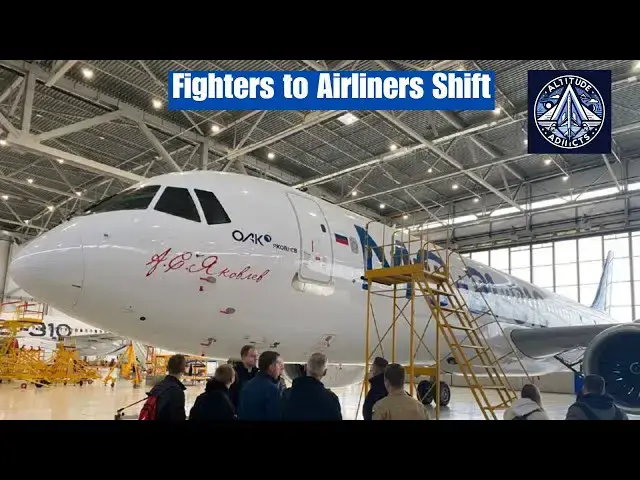
This symbolic transition from fighters
0:47
to airliners shows the Russian
0:49
industry's adaptation to evolving
0:51
priorities and the importance of
0:53
directing advanced aerospace expertise
0:56
toward the long-term success of the
0:57
nation's premier civil aviation
1:02
The official announcement from SoCal
1:04
marked the beginning of one of the most
1:06
crucial production processes of the
1:10
The plant has initiated the assembly of
1:13
the underfloor cargo and systemsbased
1:15
sections of the MC21310
1:20
This structural unit is essential for
1:22
the integration of systems and the
1:25
strength of the next generation narrow
1:27
body. Unlike less demanding fuselage
1:30
subasssemblies, the underfloor
1:32
compartment is one of the most demanding
1:34
and quality sensitive elements of an
1:36
aircraft structure as it houses critical
1:39
conduits for hydraulics, fuel lines,
1:41
electronics, and environmental control
1:45
The accomplishment is not only the
1:47
assembly of parts that have already been
1:49
delivered from other sites, but also the
1:52
establishment of a dedicated production
1:54
base with specialized tooling, fixtures,
1:57
and trained personnel capable of
1:59
reproducing this module at a serial
2:01
production rate. The strategic
2:04
confidence with which the Russian
2:06
aviation leadership has integrated Soal
2:09
into the MC21 program is what makes this
2:12
milestone remarkable.
2:14
The plant promptly entered mass
2:16
production planning rather than limiting
2:18
itself to experimental or prototype
2:21
runs. This move recognizes its extensive
2:24
experience in metal machining, assembly
2:27
discipline, and quality control, which
2:29
has been honed through decades of MIG
2:31
fighter production, including MiG 31
2:34
interceptors and MIG 29 enhancements.
2:38
Now, Moscow is placing high expectations
2:40
on a civil product that must embody
2:42
those same qualities in order to compete
2:44
with Boeing's 737 Max and Airbus's A320
2:50
The manufacturing procedure is divided
2:52
into three distinct stages.
2:55
So, had already mastered most of the
2:57
detail part production during the first
2:59
stage, including machine fittings,
3:02
brackets, and minor loadbearing
3:05
The second stage, currently in progress,
3:08
involves complete assembly of the cargo
3:10
compartment, including alignment,
3:12
fastening, and system integration.
3:15
The third stage will involve full
3:17
localization, which SOAL is preparing
3:19
for with in-house production of large
3:21
fuselage panels, hydraulic and fuel
3:24
system lines, and conditioning system
3:28
The plant has already acquired new
3:30
machine tools, advanced welding
3:32
equipment, and composite handling
3:34
devices to achieve this. Progressive
3:37
localization is essential in the
3:39
sanctions era landscape as Russia seeks
3:42
independence in aerospace supply chains.
3:46
Another layer of resilience comes from
3:50
Underfloor compartments of the MC21 will
3:53
be produced both at Aviaar in Ulionovsk
3:57
This guarantees faster build rates and
4:00
prevents bottlenecks.
4:02
So alone intends to manufacture up to 24
4:05
sections annually after updated type
4:09
In comparison to the overall production
4:11
target of 72 aircraft annually by the
4:14
early 2030s, this shows how dependent
4:17
the industry is on every node in the
4:20
cooperation chain. Years of consistent
4:23
orders will ensure Soal's economic
4:25
security and technological relevance.
4:28
The new philosophy of Russian aviation
4:31
is symbolized by Soal's role which
4:33
extends beyond this assignment.
4:36
Previously, the nation's strategy
4:38
focused mainly on combat aviation with
4:41
civil aircraft limited to a few Soviet
4:43
era design bureaus. Since 2014, the
4:46
focus has shifted to civil
4:50
Plants such as Soal, Urkutz, Evestar,
4:52
and Vorones are now key contributors to
4:55
programs like the Superjet New 2214,
4:58
L114, and MC21. Regardless of military
5:01
contract fluctuations,
5:04
the MC21, once seen as just another
5:06
regional attempt at an A320 class
5:09
competitor, has become a national
5:13
2025 is a year of consolidation with
5:16
serial production readiness, supplier
5:18
synchronization, and international
5:20
cooperation all converging.
5:23
Earlier this year, production facilities
5:26
in her cutscary final assembly center
5:30
The Urkutzk aviation plant is refining
5:32
the serial assembly line for the MC21310
5:36
while stockpiling fuselage sections,
5:38
wings, and empanage units throughout
5:42
2025. The integration of domestically
5:44
produced composite wings from aerero
5:47
composite in Julion has been a major
5:49
focus. These wings are being
5:52
incorporated into both flight test
5:54
aircraft and production stock units.
5:57
The year also saw continued deliveries
5:59
of PD14 engines designed specifically
6:04
At least 24 PD14s have been allocated
6:08
for near-term builds with United Engine
6:10
Corporation confirming regular
6:12
production. The PD14 ensures full
6:15
program autonomy unlike earlier
6:18
dependence on PW000G geared turbo fans
6:20
that sanctions blocked.
6:22
Engineers also confirmed development of
6:25
the PD-14M, which has a higher thrust
6:27
margin, paving the way for heavier MC21
6:31
versions in the late 2020s.
6:34
Other Russian facilities have joined
6:36
production. Kazan institutions now
6:39
handle avionics and cabin system
6:41
integration, while Voron aircraft plant
6:44
continues fuselage panel production for
6:49
This contrasts with the 2010s when her
6:52
cuts carried most of the load.
6:55
Certification is at a key stage in 2025.
7:01
with PD14 has Russian certification, but
7:04
incremental trials added features such
7:06
as improved environmental control,
7:08
avionic software, and fire containment
7:11
systems. These are essential before
7:14
series deliveries planned for 2026, 2027
7:18
to airlines like Russia, Red Wings, and
7:22
The PD14 equipped MC21 has also
7:25
undergone high altitude and cold weather
7:27
testing, ensuring reliable performance
7:30
across Russia's climate. Trials
7:33
simulated engine starts, hydraulic
7:35
operations, and cabin pressurization
7:37
under extreme cold in Yakuchia and
7:41
The MC21 order book is supported by
7:46
Aeroflot alone has more than 200 MC21s
7:49
in its renewal plans. Leasing company
7:52
Avia Capital Service ensures
7:54
distribution to carriers, though limited
7:57
foreign sales are being discussed with
7:59
Iran and Egypt. Russian airlines will
8:02
remain the foundation of production.
8:05
The Ministry of Industry and Trade
8:07
expects MC21 production to replace
8:10
retiring Airbus and Boeing fleets in
8:12
Russia and support moderate exports to
8:15
Eurasian markets by the early 2030s.
8:18
A notable development is Russian
8:20
Bellarusian cooperation.
8:23
Minsk based enterprises are now
8:25
supplying subsystems and components. The
8:28
Bellarusian Aviation Concern 558 ARS and
8:31
others are producing avionics modules,
8:34
wiring harnesses and hydraulic parts.
8:37
The Minsk automobile plant is also
8:39
building transport trolleys and assembly
8:41
equipment for MC21 sections.
8:45
Bellarus's participation is strategic
8:48
with Western Electronics restricted.
8:50
Allied sources are vital. Bellarus's
8:53
experience with MIG and SU aircraft
8:55
avionics, radar, and electrical repairs
8:58
is now integrated into MC-21 production.
9:01
Minsk views its role as both industrial
9:04
and geopolitical, strengthening ties
9:08
In conclusion, the story of MC21
9:11
production in 2025 with Soal as a
9:14
central new player reflects the
9:16
transformation of Russia's civil
9:17
aviation industry into a sanctions
9:20
resilient enterprise.
9:22
The MC21 is moving from concept to
9:24
production reality supported by Kutsk
9:27
aerero composite PD14 supply and
9:29
certification progress. Bellarus's role
9:32
adds both practical and geopolitical
9:35
strength. Despite Western dominance in
9:38
global aviation, Russia is building a
9:40
sustainable civil aircraft program and
9:42
facilities like SoCal are transitioning
9:45
from interceptors to airliners, shaping
9:48
the future of Russian aviation.
9:52
If you like this video, please like,
9:56
Also, please take our channel membership
9:59
which is very affordable to encourage