0:05
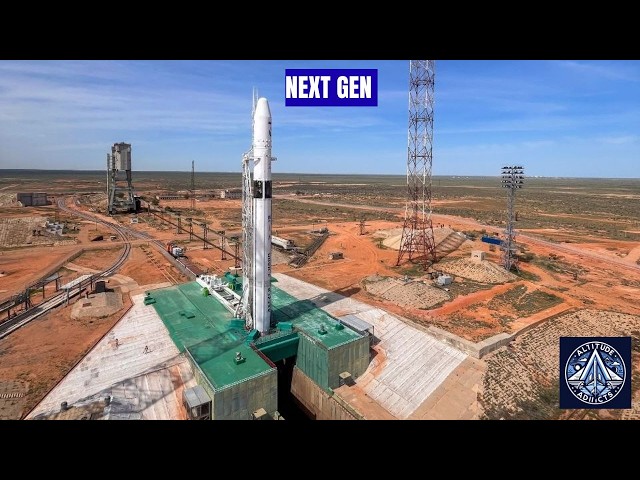
April 30th was an important date for the
0:08
Russian space industry.
0:10
The Soyuz 5, the most recent
0:12
medium-class launch vehicle, was
0:15
launched for the first time from site 45
0:17
at the Baikonur Cosmodrome at 2100 hours
0:22
This launch kicked off the flight design
0:24
testing phase of a rocket already being
0:27
positioned as a cornerstone of Russia's
0:29
future space ambitions.
0:32
The event drew attention not just within
0:34
aerospace circles, but across the globe.
0:37
With its ability to deliver heavy
0:39
payloads into orbit, a record-breaking
0:42
engine, and modern engineering, this
0:44
rocket has quickly become one of the
0:46
most watched developments in launch
0:50
It feels like one of those moments where
0:52
everyone pauses and says, "Okay,
0:54
something big just happened."
0:57
As the first flight unfolded, the test
0:59
itself told a reassuring story.
1:02
The inaugural launch was conducted in a
1:04
fully nominal configuration, signaling
1:07
that the rocket is ready for further
1:11
Both the first and second stages
1:12
performed exactly as expected, with no
1:15
anomalies reported by Roscosmos.
1:18
The rocket carried a mass and dimension
1:20
simulator instead of an operational
1:24
It followed a calculated suborbital path
1:27
before reentering the atmosphere and
1:29
splashing down safely in a designated
1:33
That area had already been cleared, so
1:36
no ships or aircraft were put at risk.
1:39
These kinds of test missions are
1:43
Engineers prefer dummy payloads to avoid
1:46
risking expensive satellites during
1:49
In simple terms, this launch acted as a
1:52
full systems check, covering propulsion,
1:54
structure, and onboard software.
1:57
Not glamorous, maybe, but absolutely
2:01
What makes this launch stand out becomes
2:03
clearer when you look at leadership
2:07
Dmitry Rogozin described it as a special
2:10
mission, and that label isn't just for
2:13
This wasn't only a first flight, it was
2:15
also the debut of a propulsion system
2:18
pushing new limits in power and
2:22
At the center of it all sits the
2:26
Widely considered the most powerful
2:28
liquid-fueled rocket engine ever built,
2:31
it produces roughly 800 tons of thrust.
2:35
That's not just impressive.
2:37
It's kind of absurd when you think about
2:40
This engine is more than an upgrade.
2:42
It is a deeply modernized version of the
2:44
legendary RD-170 family, incorporating
2:48
digital controls, stronger materials,
2:50
and higher reliability.
2:52
According to Altitude Addicts, this step
2:55
shows how legacy Soviet-era engineering
2:58
is being reimagined for modern missions.
3:01
The so-called Tsar engine lives up to
3:05
Weighing about 10 tons, it produces
3:08
thrust exceeding 800 tons, delivering a
3:10
remarkable power-to-weight ratio.
3:13
That imbalance between size and force is
3:16
what makes engineers smile.
3:19
It runs on a tried and tested mix of
3:21
kerosene and liquid oxygen.
3:23
This combination keeps costs manageable
3:26
while still delivering strong
3:29
Sometimes the old ways still work best,
3:32
and this is one of those cases.
3:34
Before reaching the launchpad, the
3:36
engine underwent extensive ground
3:40
Long-duration firing tests confirmed
3:43
that it could handle real mission
3:46
It is also expected to power future
3:48
heavy and even super heavy rockets,
3:51
extending its importance beyond this
3:55
Moving into the design itself, Soyuz 5
3:57
is a two-stage medium-lift rocket.
4:00
It was developed as a replacement for
4:02
older systems and partially as a
4:04
successor to the Zenit rocket.
4:07
That lineage matters more than it
4:11
The rocket stands between 62 and 66 m
4:14
tall, with a launch mass of about 530
4:17
tons and a diameter of roughly 4.1 m.
4:22
These specs place it firmly in the
4:24
medium-class category while still
4:26
offering strong performance.
4:29
The first stage uses the RD-171MV
4:31
engine, while the second stage is
4:33
powered by the RD-0124MS
4:37
Together, they create a balance of
4:39
thrust and efficiency that enhances
4:44
It's a pairing that just works.
4:47
Advanced avionics also play a role here.
4:50
Fiber optic gyroscopes, onboard
4:52
computing systems, and high-strength
4:54
aluminum alloys all contribute to better
4:56
precision and reliability.
4:59
Altitude Addicts often highlights how
5:01
these quieter upgrades matter just as
5:06
When it comes to payload capacity, Soyuz
5:10
It can carry up to 17 tons into low
5:13
Earth orbit, making it highly versatile.
5:16
That opens the door to a wide range of
5:20
With upper stages, it can push about 5
5:22
tons into geostationary transfer orbit
5:25
and roughly 2.5 tons into geostationary
5:29
That flexibility supports
5:31
communications, science, and even deep
5:35
Cost-efficiency is another key factor.
5:38
The design aims to reduce launch
5:40
expenses compared to older systems,
5:43
improving competitiveness.
5:45
And yes, in the space industry, cost is
5:49
Looking at international cooperation,
5:51
Soyuz 5 is part of the Baiterek project.
5:55
This joint effort between Russia and
5:57
Kazakhstan focuses on modernizing
5:59
Baikonur and introducing cleaner, more
6:04
The goal is to replace aging systems
6:06
with modern alternatives.
6:08
Soyuz 5 sits right at the center of that
6:11
plan, acting as a bridge between old
6:13
infrastructure and new ambitions.
6:17
Baikonur itself remains historically
6:20
Even with newer spaceports emerging, it
6:23
continues to play a crucial role in
6:25
global space operations.
6:27
Launching from here adds symbolic weight
6:32
The journey to this first launch was not
6:35
Development gained momentum around 2016
6:38
under the Phoenix program, aimed at
6:41
building a next-generation rocket.
6:44
Initially, the launch was expected by
6:49
Delays pushed it into 2026 due to
6:51
additional testing, infrastructure
6:54
upgrades, and system refinements.
6:57
Engineers chose caution over speed.
7:00
That decision seems justified now, given
7:02
the successful outcome.
7:04
Sometimes slow really is smooth, and
7:09
Looking ahead, Soyuz 5 is more than just
7:13
It is a platform for future missions,
7:15
including crewed flights, orbital
7:17
stations, and interplanetary
7:21
Its technologies could also feed into
7:24
super heavy rocket development.
7:27
That positions it as a stepping stone
7:29
toward lunar and Martian missions.
7:32
Flexibility is another advantage.
7:35
The rocket is expected to operate from
7:37
multiple launch sites, increasing
7:42
According to Altitude Addicts, this
7:43
adaptability may become one of its
7:46
strongest selling points.
7:48
Economically, the rocket arrives at a
7:52
The global launch market is competitive,
7:55
and cost-effective reliability is
7:59
By relying on domestic technology, the
8:01
project reduces dependence on foreign
8:05
This strengthens strategic autonomy and
8:10
Commercial potential is also
8:13
If successful, Soyuz 5 could attract
8:16
international clients and expand its
8:18
role in the launch services market.
8:21
What comes next is a series of further
8:25
Multiple launches, varied payloads, and
8:27
system refinements will follow before
8:29
full operational deployment.
8:32
Only after these stages are complete
8:35
will the rocket enter regular service.
8:38
That's just how these things go.
8:41
In conclusion, the first successful
8:43
launch of Soyuz 5 marks a major
8:47
It demonstrates the readiness of a new
8:48
generation of launch technology and
8:51
highlights the capabilities of the
8:56
Soyuz 5 is not just another rocket.
9:00
It represents a strategic investment in
9:02
the future of space exploration and a
9:04
clear signal that ambitions in orbit are
9:07
far from slowing down.
9:11
If you like this video, please like,
9:13
share, and subscribe the channel.
9:16
Please also take the channel membership