Up next in 10


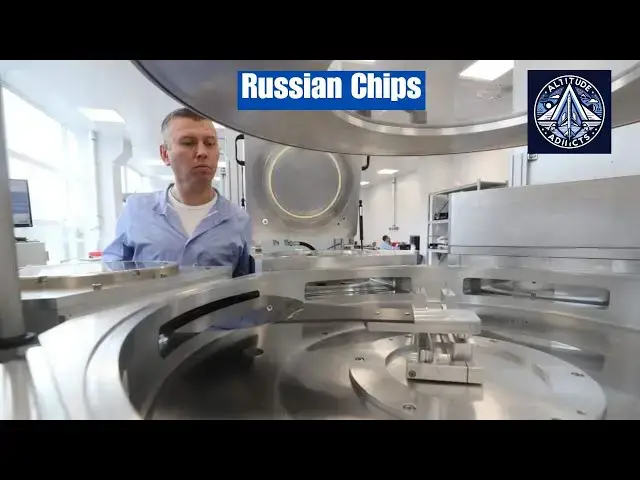
Since 2022, Russia’s microelectronics industry has faced unprecedented pressure from global sanctions. Now, the government has launched a bold plan to achieve technological sovereignty by 2030, aiming for 70% domestic chip production. From 180 nm to 28 nm, this strategy focuses on developing EDA software, building new fabrication facilities, and training a skilled workforce to reduce dependence on foreign technology.
In this video, we break down:
Russia’s strategic initiatives and key documents shaping the plan
The challenges the semiconductor sector faces under sanctions
2030 benchmarks for domestic production and EDA tools
Government support measures, investments, and incentives
Milestones, risks, and weaknesses of the ambitious plan
Predictions on whether Russia can catch up with global chip leaders like TSMC, Intel, and Samsung
If you want to understand Russia’s race for semiconductor independence, this video covers the full picture—from strategy to execution and potential outcomes. Stay tuned!
Don’t forget to Like, Share, and Subscribe for more deep dives into technology and aerospace!
Show More Show Less View Video Transcript
0:09
Russia has been experiencing significant
0:11
technological pressure since 2022 as a
0:14
result of the imposition of large-scale
0:17
sanctions.
0:18
This pressure is characterized by
0:20
restrictions on the supply of equipment,
0:22
materials, and software, as well as the
0:25
potential loss of access to foreign
0:27
supply chains.
0:29
Pre-existing issues in the micro
0:31
electronic sector have been made worse
0:34
by these factors. The industry
0:36
encountered major challenges prior to
0:39
the implementation of sanctions.
0:42
Domestically available manufacturing
0:44
processes below 180 nanome were limited
0:47
and chip design and production were
0:49
heavily reliant on imported components
0:51
and foreign solutions.
0:54
The current plan aims to significantly
0:56
close these gaps by encouraging the
0:58
creation of local materials, electronic
1:00
design, automation software and skilled
1:03
workers while also boosting local
1:05
production and enhancing technological
1:07
independence.
1:10
Let us start with the strategic
1:11
initiatives and key documents.
1:14
The strategy for the development of
1:16
micro electronics in Russia until 2030,
1:20
which was developed by the Ministry of
1:22
Industry and Trade in 2022, is a
1:25
critical component of this effort. This
1:28
strategy is a concept document that
1:30
delineates the objectives, key problems,
1:33
tasks, and proposed measures for
1:35
developing the sector. It is officially
1:38
titled foundations of state policy of
1:41
the Russian Federation in the field of
1:43
development of the electronic industry
1:45
for the period until 2030 and further
1:48
perspective.
1:50
The strategy is complemented by road
1:52
maps and subprograms such as the road
1:54
map for the development of domestic EDA
1:57
tools by 2030.
1:59
This road map is designed to target
2:02
Russian software that is capable of
2:03
circuit design down to 28 nanometer
2:06
process nodes.
2:08
Subsidies, preferential loans, tax
2:11
exemptions and mechanisms to regulate
2:13
demand for domestic products are all
2:16
forms of government support primarily
2:18
through state procurement. The strategy
2:20
also establishes precise objectives and
2:23
measures including the forecasting of
2:25
market growth, the expansion of domestic
2:28
production shares, the increase in
2:31
production capacity measured in wafers
2:33
per year, the scaling of facility
2:35
proportions, and the development of the
2:37
workforce.
2:39
Now, we will discuss the challenges the
2:41
plan intended to address.
2:44
Several significant obstacles facing the
2:46
sector have been highlighted by the
2:48
Ministry of Industry and Trade and other
2:51
sources.
2:52
Russia is lagging behind global leaders
2:54
in certain semiconductor process nodes
2:57
by 10 to 15 years indicating a major
3:00
technological lag. The dependence on
3:03
foreign technology remains significant
3:05
covering the importation of EDA software
3:08
and materials such as silicon and high
3:10
purity compounds. The domestic
3:13
manufacturing capacity for
3:14
semiconductors that are less than 180
3:17
nanometers is insufficient.
3:20
The micro electronics industry in Russia
3:22
is not attractive to investors due to
3:25
the high production costs and the
3:27
difficulties associated with
3:28
establishing a competitive environment.
3:32
Furthermore, there are significant
3:34
workforce shortages including a lack of
3:36
qualified engineers and insufficient
3:39
technical training.
3:41
So what are the 2030 benchmarks and
3:44
objectives?
3:46
The development plan establishes
3:48
ambitious objectives in a variety of
3:50
domains.
3:52
The objective is to modernize existing
3:54
facilities or establish new fabs to
3:56
produce circuits at technological nodes
3:58
of 90 nanome, 65 nanome, 28 nanm and 14
4:04
nanm in process nodes and production.
4:07
Russia's objective is to establish a
4:09
completely operational domestic EDA
4:12
ecosystem that is widely used in the
4:14
design of 28 nanometer chips by 2030.
4:18
The plan also aims to reduce dependence
4:20
on imports, establish research and
4:23
development centers, develop fabrication
4:26
facilities, and increase the proportion
4:28
of Russian-made materials and equipment.
4:31
Through 2030, there are plans for
4:33
sizable state investments, subsidies,
4:36
and tax benefits totaling hundreds of
4:38
billions of rubles. The objective is to
4:42
increase the domestic chip proportion in
4:44
Russia's total consumption to
4:46
approximately 70%.
4:49
Through universities, industry
4:51
partnerships, and new institutes,
4:53
workforce development encompasses the
4:55
expansion of engineer and researcher
4:57
training.
4:59
Now we will discuss the support measures
5:01
that are either in place or scheduled.
5:05
In an effort to facilitate the
5:07
strategy's success, several support
5:09
measures have been implemented or are
5:11
expected to be implemented.
5:14
Subsidies for research and development,
5:16
lowinterest financing and tax reliefs
5:18
comprise financial incentives.
5:21
In state procurement processes, the
5:23
government prioritizes domestic
5:25
producers.
5:27
Strategies, decrees, laws, and road maps
5:30
have been implemented for priority areas
5:32
such as EDA tools. From a regulatory
5:34
perspective,
5:36
infrastructure investment is
5:37
concentrated on the establishment and
5:39
modernization of fabrication facilities
5:42
and research centers and the development
5:44
of supply chains for critical materials
5:47
including chemicals, wafers, and
5:49
equipment.
5:50
the expansion of university programs,
5:53
the retraining of current personnel, and
5:55
the promotion of collaboration among
5:57
research institutions, industry
5:59
participants, and academia are all
6:02
components of the effort to establish
6:04
the workforce and scientific base.
6:07
Let's talk about the milestones and
6:09
timeline.
6:11
The strategic framework and legal
6:13
environment were established between
6:15
2022 and 2023 and initial funding was
6:19
introduced.
6:21
It is anticipated that government
6:23
support will increase from 2024 to 2025
6:27
as a result of the launch of first
6:29
manufacturing initiatives around 90 to
6:32
65 nanometers, the development of
6:34
domestic EDA tools and the increased
6:37
demand for Russian-made components.
6:40
Production capacity scaling and future
6:42
mastery of 28 nanometer technologies are
6:45
anticipated from 2026 to 2028. In
6:49
addition to the establishment of early
6:51
export opportunities, the enhancement of
6:54
product quality and the reinforcement of
6:56
supply chains. The objective is to
6:59
achieve a significant decrease in
7:01
technological lag, the establishment of
7:04
competitive domestic production, the
7:06
majority supply of the internal market
7:08
with domestic processors, and limited
7:11
international competitiveness by 2030.
7:15
The first tangible outcomes may be
7:17
observed within the next 2 to 3 years
7:20
with a more sizable technological
7:22
convergence anticipated by 2030. As per
7:25
the president of the Russian Academy of
7:27
Sciences, Jannadi Krasnikov,
7:30
what are the weaknesses and risks of
7:32
this plan?
7:34
The ambitious strategy is accompanied by
7:36
a number of risks.
7:39
Sanctions that prohibit the importation
7:41
of critical tools, substances, and
7:43
licenses continue to restrict access to
7:46
advanced equipment and materials.
7:49
The construction of fabrication
7:50
facilities that are capable of producing
7:53
at nodes below 65 to 28 nanometers
7:56
necessitates a significant amount of
7:58
time, expertise and capital. Despite the
8:02
expansion of university programs, the
8:04
development of highle expertise requires
8:07
quite a bit of time which is why
8:09
workforce deficits remain. Potential
8:12
bottlenecks in management, financing or
8:14
roadmap delivery are among the program
8:17
execution risks. Moreover, the global
8:20
competition is intense. Even if Russia
8:23
makes technological advancements, it
8:25
will be difficult to compete on cost and
8:27
quality with industry leaders such as
8:29
TSMC, Samsung, Intel or CH. Let's now
8:34
look at predictions and projections.
8:36
By 2030, the micro electronics market in
8:39
Russia is expected to treble with
8:42
domestic chips satisfying approximately
8:44
70% of the national demand. In a more
8:48
optimistic scenario, the market volume
8:50
may exceed $10.5 billion
8:54
while it could reach 8.34 billion US in
8:57
a baseline scenario. It is expected that
9:00
the government will allocate hundreds of
9:03
billions of rubles to the development of
9:05
electronics and micro electronics
9:07
between 2025 and 2030.
9:12
What is the degree of realism in the
9:14
plan? The feasibility of the proposal is
9:17
supported by a number of favorable
9:19
factors.
9:21
Concrete actions have been initiated
9:23
such as the implementation of road maps,
9:26
increased funding, and initiatives to
9:28
create domestic EDA software. The strong
9:31
political and strategic commitment to
9:33
attaining technological sovereignty is
9:36
reflected in the support of internal
9:38
demand through import substitution and
9:41
state orders.
9:43
Nevertheless, Russia continues to face
9:45
major obstacles, including the lengthy
9:47
process of constructing factories and
9:49
perfecting technologies, the potential
9:52
for sanctions to obstruct essential
9:54
inputs, the uncertainty of cost
9:56
competitiveness as a result of Russia's
9:59
smaller size, and the potential for
10:01
inefficiency, mismanagement, or
10:03
corruption to impede progress.
10:06
In conclusion, the scope of Russia's
10:08
micro electronics development plan
10:10
through 2030 is ambitious.
10:13
It aims to establish a comprehensive
10:15
legal and strategic framework, secure
10:18
supply chains and the construction of
10:20
fabrication facilities, develop domestic
10:22
EDA software and scientific
10:24
capabilities, and improve workforce
10:26
training and retention. Additionally, it
10:30
will assure state support and
10:31
substantial investments.
10:34
It will be important to obtain
10:35
dependable materials, maintain steady
10:38
research and development centers,
10:40
develop effective Russian EDA tools, and
10:42
make progress in producing fabs at sizes
10:45
smaller than 90, 65, and 28 nanm.
10:49
If Russia is successful, the
10:51
technological gap could be substantially
10:54
reduced by 2030, although global
10:56
technological leaders are expected to
10:59
continue to dominate.
11:02
If you like this video, please like,
11:04
share and subscribe.
11:07
Also, please take our channel membership
11:09
which is very affordable to encourage
11:11
us.
#Science