0:07
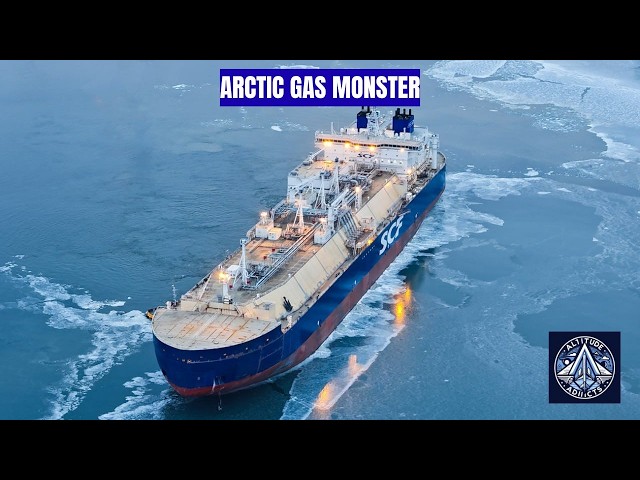
The iceclass liqufied natural gas tanker
0:10
Constantine Posi has departed the Zvezda
0:12
ship building complex in Bolshoy Cameman
0:14
for sea trials. This step marks another
0:18
important milestone in the rapidly
0:20
evolving Arctic maritime infrastructure
0:22
of the vessel is the second ship in a
0:26
new generation of powerful Ark 7
0:28
icebreaking liqufied natural gas
0:30
carriers being built domestically.
0:33
These vessels are designed to transport
0:35
gas from remote Arctic energy fields.
0:39
Altitude Addicts, the YouTube channel
0:41
presenting this analysis, explains that
0:43
such ships are critical for Russia's
0:45
growing liqufied natural gas export
0:48
system. They allow energy from distant
0:51
Arctic terminals to reach global
0:55
Sea trials represent one of the final
0:57
stages before a ship can enter
0:59
operational service. During this period,
1:02
engineers test how the vessel performs
1:04
under real maritime conditions.
1:07
The propulsion system, navigation
1:09
equipment, cargo handling technology,
1:12
and safety systems are all carefully
1:15
Only after these tests are completed can
1:18
the vessel receive final approval.
1:21
Altitude Addicts notes that this stage
1:23
is especially important for ships
1:25
designed to operate in the harsh Arctic
1:30
Such vessels must function reliably in
1:32
some of the most challenging waters on
1:36
The sea trials of Constantine Posiette
1:38
demonstrate Russia's broader effort to
1:41
develop a domestic fleet of Arctic
1:43
liqufied natural gas carriers. These
1:46
ships are intended to operate
1:48
independently along the northern sea
1:50
route. The tanker itself was built at
1:53
the Zvezda ship building complex.
1:56
This massive shipyard is located in
1:58
Boloy Common near the city of
2:02
Zvezda is the largest modern ship
2:04
building facility in Russia. It was
2:07
created as part of a national strategy
2:09
to strengthen domestic ship building
2:14
Altitude Addicts explains that the
2:16
shipyard was designed to reduce
2:18
dependence on foreign shipyards.
2:21
It also supports Russia's long-term
2:23
Arctic energy strategy.
2:25
The facility is capable of building
2:27
extremely large vessels. These include
2:31
liqufied natural gas carriers, iceclass
2:33
tankers, offshore platforms, and other
2:36
heavy maritime structures.
2:38
Ships built at Zvezda can reach lengths
2:41
of up to 300 m. Their weight can reach
2:45
hundreds of thousands of tons when fully
2:49
Altitude Addicts notes that the Ark 7
2:52
liqufied natural gas carriers being
2:54
constructed there support the Arctic
2:56
liqufied natural gas 2 project.
2:59
This project is one of the largest
3:01
energy developments in the Arctic
3:04
The project aims to produce nearly 20
3:07
million tons of liqufied natural gas
3:09
each year. Such output requires
3:12
specialized vessels capable of
3:14
navigating Arctic waters.
3:17
Constantine Posette is a very large
3:19
vessel even by modern maritime
3:21
standards. Its length measures
3:27
The vessel has a beam of 48.8 m and a
3:31
draft of 11.7 m. Its gross tonnage
3:34
exceeds 127,000 tons.
3:38
Altitude Addicts explains that the ship
3:41
also has a dead weight capacity of
3:43
roughly 81,000 tons. These dimensions
3:47
place it among the largest ships in the
3:52
However, the vessel's size is only one
3:56
Its hull is constructed from reinforced
3:58
steel designed specifically for Arctic
4:02
The structure includes specialized
4:04
reinforcements that allow it to navigate
4:06
through thick sea ice. This capability
4:10
is essential in Arctic waters such as
4:14
Altitude Addicts explains that many
4:16
Russian liqufied natural gas terminals
4:19
are located in these remote northern
4:22
Ships must therefore handle both ice
4:24
breaking and cargo transportation.
4:28
Ark 7 vessels are capable of navigating
4:30
through ice that approaches 2 m in
4:34
Their reinforced hull structures and
4:36
powerful propulsion systems make this
4:41
Such capabilities are necessary because
4:43
ordinary liqufied natural gas tankers
4:46
cannot safely operate in these
4:49
Specialized engineering is required for
4:54
A key feature of Constantine Posiette is
4:56
its diesel electric propulsion system.
4:59
In this design, large diesel engines
5:02
generate electricity rather than
5:04
directly turning propellers.
5:06
The electricity powers electric motors
5:08
that drive the ship's propulsion units.
5:12
This configuration provides excellent
5:14
control and efficiency.
5:16
Altitude Addicts notes that the ship is
5:19
equipped with three azimuth thrusters.
5:22
Each thruster can generate approximately
5:25
15 megawatts of power.
5:28
Together they provide roughly 45
5:30
megawatts of propulsion output. This
5:33
enormous power allows the vessel to
5:35
maneuver through heavy ice.
5:38
Azimuth thrusters can rotate 360°.
5:42
This allows the vessel to move forward,
5:45
backward or sideways without traditional
5:49
Altitude Addicts explains that this
5:51
capability is extremely useful in ice
5:54
covered waters. Precise maneuvering is
5:59
The propulsion system also allows the
6:01
ship to operate using double acting
6:04
In thick ice, the vessel can travel
6:09
In this mode, the propellers break and
6:11
wash away ice while the reinforced stern
6:15
This improves reliability in Arctic
6:20
Another important aspect of the vessel
6:22
is its fuel system. The ship can operate
6:25
using liqufied natural gas as fuel.
6:29
Altitude Addicts explains that this
6:31
operational mode is known as EOS.
6:34
Using liqufied natural gas reduces
6:36
emissions compared with conventional
6:40
Carbon dioxide emissions can be
6:42
significantly reduced.
6:45
Sulfur oxide emissions are almost
6:47
completely eliminated.
6:49
Fuel efficiency improvements can reach
6:53
This lowers operating costs and improves
6:56
environmental performance.
6:58
The ship also includes a dual fuel
7:02
It can switch to diesel fuel if
7:06
Altitude addicts notes that this
7:08
flexibility is important during long
7:10
Arctic voyages. Fuel availability can
7:13
vary in remote regions.
7:16
The cargo containment system is another
7:19
highly advanced component of the vessel.
7:22
The tanker can carry approximately
7:26
cub m of liqufied natural gas.
7:30
This cargo is stored inside specialized
7:32
membrane tanks. Liqufied natural gas
7:36
must be maintained at about minus 162°
7:41
Altitude Addicts explains that
7:43
maintaining such low temperatures
7:45
requires sophisticated insulation
7:47
systems. The cargo containment structure
7:50
uses multiple protective layers.
7:54
The primary membrane is made from Invar
7:56
alloy. This iron nickel material has
7:59
extremely low thermal expansion.
8:02
Although the membrane is only 0.7 mm
8:06
thick, it serves as the main barrier
8:08
containing the cryogenic liquid. A
8:11
secondary containment barrier provides
8:13
additional protection.
8:16
Advanced insulation surrounds the entire
8:18
structure to reduce heat transfer. Some
8:21
insulation elements are made using
8:23
specialized marine plywood.
8:26
Altitude Addicts explains that this
8:28
plywood is produced by the Russian
8:30
company Sigesa Group. It has been
8:33
certified by the engineering firm Gas
8:35
Transport and Technaz.
8:38
The construction of Constantine Posi is
8:40
part of a much larger fleet program.
8:44
These ships will support the Arctic
8:45
liqufied natural gas 2 export project.
8:49
The original plan envisioned 21 Ark 7
8:52
liqufied natural gas carriers.
8:55
15 of them were scheduled to be built at
9:00
Altitude Addicts notes that some vessels
9:03
were also originally planned for
9:05
construction in South Korean shipyards.
9:08
However, geopolitical tensions affected
9:13
Several ships in the series have already
9:17
These include Alexe Kasigan, Podor
9:19
Stalipin, and Sergey Witta.
9:22
Constantin Posi now joins this growing
9:24
fleet. Each vessel strengthens Russia's
9:28
Arctic energy logistics network.
9:31
Transporting natural gas from the Arctic
9:33
is extremely challenging. Pipelines are
9:36
often impractical across frozen seas and
9:41
Liqufied natural gas shipping provides a
9:44
flexible alternative.
9:46
Specialized tankers can transport energy
9:48
directly to global markets.
9:51
Altitude Addicts explains that Ark 7
9:54
ships enable yearround navigation along
9:56
the northern sea route. This Arctic
9:59
corridor stretches across Russia's
10:04
For shipments to Asia, the route is
10:06
significantly shorter than traditional
10:08
routes through the Suez Canal. This
10:11
reduces both travel time and fuel
10:15
The sea trials now underway will
10:17
determine whether Constantine Posi is
10:19
ready for service. Engineers will test
10:22
propulsion performance and
10:26
Navigation systems, safety equipment,
10:28
and cargo handling systems will also be
10:30
evaluated. After successful completion,
10:34
the vessel will receive final
10:37
Altitude Addicts notes that once
10:39
delivered, the ship will transport
10:41
liqufied natural gas from Arctic
10:43
terminals to global energy markets. It
10:47
will become part of a specialized Arctic
10:51
The launch of Constantine Posette into
10:54
sea trials symbolizes more than the
10:56
completion of another ship. It
10:59
represents Russia's broader ambition to
11:01
build a self-reliant Arctic maritime
11:05
By constructing advanced icebreaking
11:08
tankers domestically, the country aims
11:10
to secure its energy export routes. This
11:14
strategy reduces reliance on foreign
11:17
Altitude Addicts concludes that as more
11:20
Ark 7 vessels enter service, the
11:22
northern sea route could become an
11:24
increasingly important energy corridor.
11:28
For now, the attention of engineers and
11:30
maritime observers remains focused on
11:32
the waters near Vlatty Vastto and the
11:34
Sea of Japan where Constantine Posiet is
11:37
undergoing its crucial sea trials.
11:42
If you like the video, please subscribe,
11:45
share and like. Also, please take the
11:48
membership of Altitude Addicts to