0:06
Six powerful diesel generators with a
0:08
combined output of 22 megawatt were
0:11
successfully delivered to the shipyard
0:13
in April 2026, marking a critical step
0:16
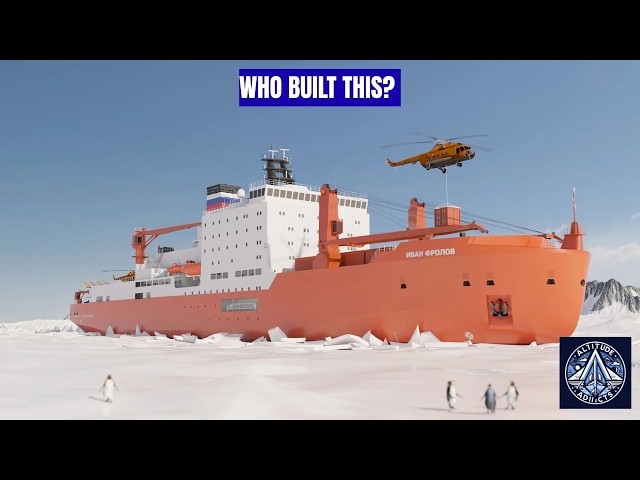
toward the completion of the Ivan
0:18
Frolaf, Russia's most ambitious
0:20
scientific vessel to date. This vessel
0:23
is expected to become the flagship of
0:25
Russian polar research.
0:28
However, despite the technical
0:30
information that has been disclosed
0:32
regarding the ship's propulsion system,
0:34
one key question remains unresolved. Who
0:37
is the actual supplier of these diesel
0:41
The manufacturer has not been mentioned
0:43
by Russian sources, which has prompted
0:45
altitude addict style analysis, digging
0:48
into Russia's ship building ecosystem,
0:51
sanctions environment, and industrial
0:53
capabilities to identify the most likely
0:58
This is where the story opens up a bit
1:00
wider than it first appears.
1:02
The vessel is not just a ship. It sits
1:05
right at the intersection of Arctic
1:06
ambition, si pressure, and industrial
1:11
So yes, we're talking about engines, but
1:13
also about strategy, capability, and a
1:16
quiet shift in how Russia builds its
1:18
most critical machines.
1:21
Now, moving into what makes this vessel
1:23
so significant, the Admiral T shipyards
1:26
in St. Petersburg, one of Russia's
1:28
oldest and most capable ship building
1:30
enterprises, is currently constructing
1:32
the vessel. The ship commissioned by
1:35
Rash Hyramat is intended for some of the
1:37
most challenging environments on Earth.
1:41
The ARK 7 iceclass designation is
1:43
assigned to even Froolov which is a
1:46
member of project 23680.
1:49
This classification enables it to
1:51
independently navigate through Arctic
1:54
ice that is approximately 2 m thick with
1:57
even greater capability when ice
1:59
breakers assist. It is not merely an
2:02
icebreaker. It is a hybrid platform
2:04
integrating the functions of a research
2:06
vessel, tanker, container carrier, and
2:09
logistics hub. And honestly, the scale
2:12
of it feels slightly unreal when you
2:14
picture it. With a displacement of about
2:18
25,000 tons and accommodation for up to
2:21
240 people, it surpasses most scientific
2:24
vessels globally. A dual helicopter
2:28
hanger and up to 20 laboratories
2:30
reinforce its role as a floating
2:34
As we move into the technical heart of
2:36
the vessel, the entire system revolves
2:38
around diesel electric propulsion.
2:41
Instead of engines directly turning
2:43
propellers, the engines generate
2:46
electricity, which then powers electric
2:48
motors connected to the propulsion
2:52
This configuration offers advantages
2:54
that are not optional in Arctic
2:57
It improves maneuverability, increases
3:00
redundancy, and handles fluctuating
3:02
loads far better than traditional
3:06
The integration with iceclass propulsion
3:08
including azimuth thrusters is what
3:10
really makes it work under pressure.
3:13
At the core of all this are the six
3:15
generators, four rated at 4 megawatt and
3:21
Together they ensure continuous
3:23
operation in extreme cold power heavy
3:25
onboard systems and support laboratories
3:28
that may be running around the clock.
3:31
Which brings us back quite naturally to
3:33
the unanswered question, who built them?
3:37
Because in modern ship building, the
3:39
supplier of critical components is never
3:41
just a technical detail. It reveals
3:44
industrial strength and geopolitical
3:48
Before 2022, Russia depended heavily on
3:51
Western manufacturers for marine engines
3:53
and power systems. Companies like man
3:56
energy solutions and warts dominated
3:59
this space supplying engines for LNG
4:01
carriers, ice breakers and offshore
4:05
Then sani changed everything and quite
4:09
western suppliers either exited or were
4:12
restricted forcing Russia to accelerate
4:14
domestic production and rethink its
4:16
supply chains almost overnight.
4:19
That kind of shift doesn't happen
4:21
cleanly, by the way. It's messy,
4:23
layered, and ongoing.
4:26
This is where altitude addicts would
4:28
typically pause and zoom in on the most
4:30
probable candidate. Colmenski Zavod,
4:34
also known as the Colomna plant. It is
4:36
Russia's primary producer of
4:38
medium-speed diesel engines for marine
4:40
and rail applications.
4:43
Over the past decade, Colinsky Zavote
4:45
has taken on a growing role in import
4:47
substitution, particularly for naval and
4:50
iceclass vessels. Its engines are
4:53
already used across multiple Russian
4:55
projects including icebreaking patrol
4:57
ships and auxiliary fleets.
5:00
More importantly, and this part matters,
5:03
the company has been developing higher
5:05
capacity marine engines suited for
5:08
diesel electric propulsion systems. The
5:11
configuration seen on Ivan Frolaf with
5:14
multiple medium power generators rather
5:16
than a few large ones align closely with
5:19
Colomna's design philosophy.
5:21
This modular setup also enhances
5:24
redundancy, which is absolutely critical
5:26
in Arctic missions. If one generator
5:29
fails, the system doesn't collapse, it
5:33
Simple idea, high stakes.
5:35
Now, it would be too neat to say the
5:37
story ends there. Even under sanctions,
5:41
foreign influence doesn't disappear
5:42
completely. It just becomes less
5:46
Earlier Arctic LG carriers, especially
5:49
those built under projects like Yamal
5:51
LG, relied heavily on man engines.
5:54
Some vessels still under construction
5:57
today, use partially localized or
5:59
adapted versions of those systems.
6:02
However, for a flagship scientific
6:04
vessel like Ivon Frolaf, reliance on
6:07
Western suppliers would be politically
6:09
sensitive and strategically
6:13
that strengthens the argument for a
6:14
predominantly domestic solution even if
6:17
some legacy design influence remains.
6:21
There is also quiet speculation about
6:23
limited cooperation with non-western
6:25
partners. Chinese manufacturers, for
6:28
instance, have been expanding their
6:30
presence in marine engine markets.
6:33
Still, there is no confirmed link to
6:36
this particular project.
6:38
Coming back to the shipyard itself, the
6:40
integration of these generators into a
6:42
unified system is a complex engineering
6:47
Admiral T shipyards brings decades of
6:49
experience in building submarines and
6:51
iceclass vessels, making it one of the
6:54
few facilities capable of handling such
7:01
more than 100 sections of the vessel had
7:03
already been assembled.
7:05
The installation of the generators marks
7:08
the transition from structural
7:10
construction to systems integration. A
7:13
phase where everything either starts
7:14
working together or doesn't. And in
7:17
Arctic conditions, failure is not really
7:22
Systems must synchronize perfectly with
7:24
propulsion motors, onboard electrical
7:26
networks, and power management systems.
7:29
Even a small malfunction can escalate
7:32
quickly in extreme cold.
7:34
Expanding the lens further, the
7:36
significance of even frolof goes well
7:39
beyond engineering. It reflects Russia's
7:42
broader strategic shift in the Arctic,
7:44
where science, logistics, and
7:46
geopolitics increasingly overlap.
7:49
By building a vessel that combines
7:51
research, transport, and supply
7:53
capabilities, Russia is strengthening
7:56
its yearround presence in polar regions.
7:59
This supports environmental monitoring,
8:01
resource exploration, and the operation
8:06
The ship's ability to function in
8:08
temperatures as low as -50° C makes it a
8:12
versatile platform for both Arctic and
8:17
Not many vessels can do that to be fair.
8:21
Ultimately, the question of the diesel
8:23
generator supplier connects to a much
8:27
Russia is attempting to build industrial
8:30
self-reliance under pressure and
8:32
projects like this are realworld tests
8:37
Success would strengthen domestic ship
8:39
building and reduce dependency on
8:43
But the transition is complex, requiring
8:45
advanced materials, precision
8:47
engineering, and sustained investment.
8:51
And here's the slightly awkward truth.
8:53
Matching the efficiency and reliability
8:55
of established western manufacturers is
8:58
not something that happens overnight.
9:01
It takes time, iteration, and probably a
9:04
few setbacks along the way. So the
9:07
silence around the supplier may not be
9:11
It reflects a system in transition,
9:13
moving away from dependence but not yet
9:16
fully settled into a new equilibrium.
9:19
In that sense, even Froolov becomes more
9:21
than a ship. It is a symbol of
9:24
adaptation, resilience, and evolving
9:26
capability in a shifting geopolitical
9:30
As construction progresses toward its
9:33
planned completion in 2028, more details
9:36
may emerge. Until then, the most
9:39
grounded conclusion is that the diesel
9:41
generators are part of Russia's
9:42
localization push, most likely supplied
9:45
by Colinsky Zavod, possibly shaped by
9:48
inherited or adapted foreign designs.
9:52
And that leaves us with a final thought.
9:55
When this vessel finally sails, it won't
9:57
just be exploring the polar regions. It
9:59
will also be carrying a story about how
10:02
it was built piece by piece under
10:08
If you like the video, please subscribe,
10:11
share and like. Also, please take the
10:13
membership of the channel to encourage