0:04
Russia is preparing to begin flight
0:06
tests of a new stratospheric unmanned
0:08
aerial vehicle called Argus developed by
0:11
the company Stratink with initial trials
0:13
expected in March 2026.
0:17
The project represents an ambitious
0:19
effort to create a highaltitude
0:21
communications platform capable of
0:23
delivering electronic warfare functions,
0:26
surveillance, and broadband connectivity
0:28
without relying on orbital satellites.
0:32
Altitude Addicts, the YouTube channel
0:34
presenting this breakdown, explains that
0:37
the system is often compared to a
0:39
conceptual alternative to satellite
0:41
internet constellations, but it operates
0:44
within the atmosphere rather than in
0:46
space. The concept reflects a broader
0:49
global trend towards pseudo satellites,
0:52
which combine aircraft flexibility with
0:54
some advantages traditionally associated
0:58
Argus is expected to operate in the
1:00
stratosphere at altitudes between about
1:03
15 km and 25 km, which is roughly 9.3 mi
1:08
to 15.5 mi above Earth's surface,
1:12
placing it above commercial air traffic
1:14
and beyond the reach of most portable
1:19
By flying at these heights, the platform
1:21
could maintain continuous coverage over
1:24
specific regions for extended periods.
1:27
Looking at why such a system is being
1:29
pursued helps clarify its purpose
1:32
because the development of Argus
1:34
reflects recognition that existing
1:36
satellite infrastructure provides
1:38
limited high bandwidth realtime
1:40
communications compared with some global
1:44
Stratospheric platforms are viewed as a
1:46
way to augment orbital capabilities
1:49
while maintaining operational
1:53
The drone is designed to transmit
1:54
highresolution video, coordinate
1:57
unmanned systems, and provide high-speed
1:59
connectivity to remote installations and
2:02
operational units. By remaining over a
2:05
designated area, it can function as a
2:08
localized communications hub that
2:10
reduces dependence on external
2:13
Another advantage lies in rapid
2:15
redeployment because satellites follow
2:18
fixed orbital paths while a high alitude
2:20
relay can be repositioned relatively
2:23
quickly to meet changing operational
2:27
Altitude addicts notes that this
2:29
adaptability is considered strategically
2:31
valuable in dynamic environments.
2:34
Turning to technical characteristics
2:37
provides a clearer picture because Argus
2:39
is designed as a fixedwing unmanned
2:41
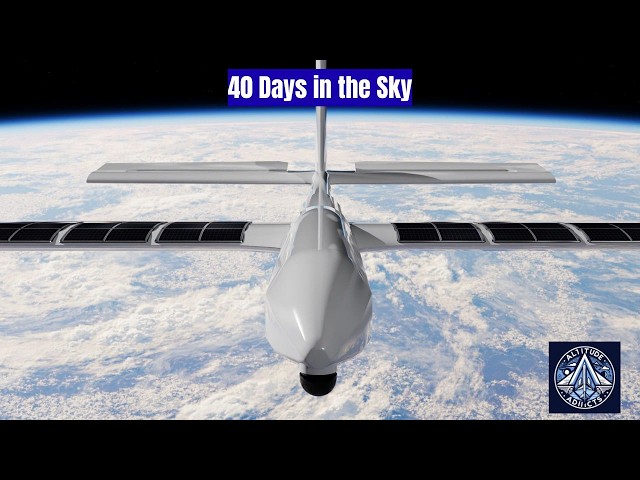
aircraft powered primarily by solar
2:44
energy for long duration missions.
2:47
The full scale version is expected to
2:49
have a wingspan of about 40 m which is
2:56
The maximum launch mass is projected at
2:58
around 315 kg or about 694 lb. While the
3:04
payload capacity could reach roughly 40
3:06
kg, equal to about 88 pounds, allowing
3:10
integration of surveillance,
3:11
communications, and electronic warfare
3:16
Lightweight composite materials are
3:18
expected to play a central role in
3:20
maintaining structural strength in thin
3:25
Solar panels integrated into the wings
3:27
would generate electrical power during
3:29
daylight hours to operate onboard
3:31
systems and recharge batteries for
3:34
nighttime flight. Efficient electric
3:37
propulsion is intended to enable
3:39
sustained operations with minimal energy
3:43
The aircraft's cruising performance is
3:46
expected to allow either station keeping
3:48
over a target region or gradual
3:50
relocation as mission requirements
3:54
Advanced control algorithms may optimize
3:57
energy use and maintain stability during
3:59
long endurance flights.
4:02
Considering how testing will proceed
4:04
shows that the program will begin with a
4:06
smaller prototype featuring a wingspan
4:09
of about 7 m, approximately 23 ft. This
4:13
scaled model allows engineers to
4:15
validate aerodynamics, flight control
4:18
systems, and energy balance before
4:20
progressing to a full scale vehicle.
4:23
One of the primary challenges will be
4:25
ensuring that sufficient energy can be
4:27
stored to sustain operations during
4:30
nighttime periods when solar input is
4:34
Engineers must also confirm that the
4:36
structure can withstand temperature
4:38
extremes and atmospheric conditions at
4:43
Altitude Addicts highlights that low air
4:45
density and persistent winds in the
4:47
stratosphere require precise design and
4:50
control strategies to maintain stable
4:52
flight. These environmental factors make
4:56
testing particularly demanding.
4:59
Looking at earlier experience provides
5:01
context because Argus builds on
5:03
knowledge gained from previous high
5:05
alitude projects such as SOA and ACE
5:08
experimental platforms.
5:10
These earlier efforts demonstrated the
5:12
feasibility of long endurance operations
5:15
and helped engineers understand
5:17
challenges associated with stratospheric
5:21
Previous experiments showed that solarp
5:24
powered aircraft could remain airborne
5:26
for extended periods while carrying
5:28
useful payloads, providing a foundation
5:31
for current development.
5:33
Lessons learned are expected to
5:35
influence design refinements and
5:37
operational concepts.
5:39
From a strategic perspective, the
5:41
platform could support communications
5:43
relay, reconnaissance, and electronic
5:45
warfare by operating far above
5:50
Sensors could detect thermal signatures
5:52
and radio emissions across wide regions,
5:55
enhancing situational awareness.
5:58
The system could also function as a
6:00
mobile relay to connect dispersed units
6:03
or potentially disrupt communications
6:06
and navigation signals depending on
6:08
mission configuration.
6:10
Operating at stratospheric altitude
6:12
makes interception significantly more
6:16
Beyond military uses, there are
6:18
potential civilian applications as well,
6:21
including environmental monitoring,
6:23
agricultural observation, and
6:25
atmospheric research.
6:27
Persistent coverage could support
6:29
disaster response by providing
6:31
communications in regions where ground
6:33
infrastructure is damaged or absent.
6:36
Altitude Addicts explains that the
6:39
ability to reposition quickly makes such
6:41
platforms suitable for temporary
6:43
missions requiring enhanced
6:47
This flexibility distinguishes them from
6:49
traditional satellite systems.
6:52
Comparing Argus with foreign high
6:54
altitude platforms shows that similar
6:56
systems worldwide have demonstrated long
6:59
endurance flights lasting weeks or even
7:02
months. Balloonbased approaches have
7:05
also explored alternative connectivity
7:09
Argus appears to emphasize a balance
7:11
between payload capability and
7:13
operational versatility rather than
7:15
focusing solely on maximum endurance.
7:18
This reflects diverse design
7:20
philosophies across the evolving high
7:22
alitude platform sector.
7:25
Examining technical challenges reveals
7:27
that maintaining sufficient power
7:29
reserves, managing strong winds, and
7:32
ensuring structural durability remain
7:34
complex engineering tasks. Battery
7:37
efficiency and solar performance
7:39
continue to be critical constraints.
7:43
Jetream winds can displace aircraft from
7:45
intended positions, requiring control
7:48
systems to compensate while conserving
7:50
energy. Materials must also endure
7:53
prolonged exposure to ultraviolet
7:55
radiation and extremely low
7:59
Looking at the broader context shows
8:01
that development of systems like Argus
8:03
reflects growing global interest in
8:06
layered communications architectures
8:08
combining space, air, and ground
8:10
elements. Such approaches can enhance
8:13
resilience by reducing reliance on any
8:16
single infrastructure layer. Altitude
8:19
Addicts notes that high alitude
8:21
platforms can create localized coverage
8:24
zones tailored to specific operational
8:26
needs, strengthening communications
8:30
The project also highlights ongoing
8:32
technological competition in advanced
8:35
unmanned aerospace systems.
8:37
As flight tests begin, observers will
8:40
watch closely for demonstrations of
8:42
endurance, stable communications links,
8:44
and operational reliability.
8:47
Key milestones will include successful
8:49
longduration flights, and validation of
8:52
mission capabilities.
8:54
In conclusion, Argus represents a vision
8:57
of persistent presence and connectivity
8:59
in the stratosphere, bridging the gap
9:02
between satellites and ground networks.
9:05
Its progress will depend on overcoming
9:07
technical challenges, but it reflects
9:10
continued investment in innovative
9:12
approaches to surveillance and
9:16
Altitude Addicts concludes that even
9:18
partial success could provide valuable
9:20
insights for future highaltitude systems
9:23
and shape the evolution of pseudo
9:25
satellite technologies in the years
9:31
If you like the video, please subscribe,
9:33
share and like. Also, please take the
9:36
membership of Altitude Addicts to