Up next in 10


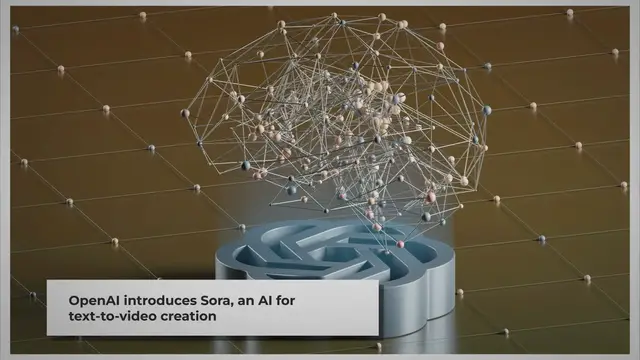
OpenAI, the leading artificial intelligence research lab, has released its newest creation - Sora, an AI system capable of generating short videos from simple text descriptions. This groundbreaking text-to-video generation model signals a major advance for deep learning and its potential multimedia
Show More Show Less View Video Transcript
0:00
OpenAI, the leading artificial intelligence research lab, has released its newest creation
0:06
Sora, an AI system capable of generating short videos from simple text descriptions
0:12
This groundbreaking text-to-video generation model signals a major advance for deep learning
0:17
and its potential multimedia applications. How Sora works Sora represents the cutting edge of generative AI research into translating
0:26
language into lifelike video. Under the hood, it combines object detection, motion prediction
0:33
video generation, and other AI techniques to bridge text and video. Specifically
0:39
Sora takes a text prompt as input and first creates a static background scene to set the stage
0:45
It then populates the scene with relevant objects, animals, or people that match keywords in the
0:51
description. Finally, it animates the objects to create a smooth, looping video clip lasting up to
0:58
32 seconds. Throughout the process, Sora handles scene composition, transition smoothing, motion
1:05
trajectories, and other complex aspects automatically based on its deep learning foundations
1:11
The result is an AI system capable of directly manifesting imaginative text into creative video
1:17
content. Applications of text-to-video AI Sora represents a leap ahead for controllable video
1:24
generation AI, unlocking a realm of potential applications. Automated multimedia content, Sora hints at a future where generative AI could greatly simplify and scale video production for
1:37
marketing, education, journalism and more by synthesizing video from text alone, interactive
1:43
storytelling, games, VR, and augmented reality could utilize text-to-video models to craft dynamic
1:50
worlds, characters, and narratives tailored to different users, playable scenarios, and creative
1:56
directions. Accessible video creation, the ability to manifest imaginative ideas into video could make
2:04
multimedia content creation more inclusive for those without advanced technical skills. As the underlying AI capabilities improve, text-to-video generation may shift from
2:14
synthetic supplemental content toward increasingly versatile applications. Progress and Limitations While Sora displays substantial progress for AI-generated video
2:24
OpenAI notes there is still plenty of room for improvement before deployment
2:29
Output quality currently lags behind leading text-to-image models. Sora also lacks fine-grained user controls and can sometimes depict odd combinations of objects
2:40
and actions. Tempering potential concerns about fakes and misuse will also be critical as text-to-video
2:47
technology matures. OpenAI says it plans to enhance Sora's safeguards and monitoring to prevent abuse
2:54
Overall though, early experimentation hints at a highly expressive generative video future ahead
3:00
Comparison of Text-to-Video AI Models Model developer capabilities Limitations Sora OpenAI generate up to 32 seconds videos from text
3:10
handle some abstraction lower quality than images, limited controls to zero meta create realistic
3:16
human speech videos from text limited to talking heads Funaki vid-to-vid anthropic convert text
3:21
instructions into step-by-step how-to videos narrow domain specificity so far googling line
3:27
video google AI convert text and images into video high resolution output requires image input
3:33
not publicly available as the table illustrates Sora stands out for its versatility in directly
3:39
generating videos from text without need for images as OpenAI continues development
3:45
Sora has potential to become a multi-purpose text-to-video model for creative applications
3:51
Its release hints at the dawn of an AI-accelerated multimedia era. The quest to unlock AI's creative potential Sora represents part of a broader push across
4:01
the AI research community to build models capable of imaginative, multimodal generative abilities
4:08
The end goal goes beyond merely mimicking human content creation toward AI that can synthesize
4:13
novel ideas and make new connections between concepts. Models like Sora hint at a future
4:19
where AI could reinforce human creativity rather than replace it. The versions today still rely
4:25
heavily on training data produced by people but they demonstrate increasing aptitude for
4:30
recombining concepts in unconventional ways when prompted. Striking the right balance of control
4:36
and agency is critical as these models progress. Research teams must prevent generative models from
4:42
harmfully appropriating or remixing copyrighted source material. At the same time, reigning
4:49
innovation in too tightly risks severely limiting beneficial creativity. Text-to-video models like
4:55
Sora usher in a revolutionary phase for synthetic media. They edge closer toward an AI-powered
5:01
multimedia creative engine that could democratize and diversify video production. But risks around
5:07
misuse and rightful credit also loom large as progress charges forward. Balancing and courage
5:13
of innovation and development with ethical precautions around access and content protections
5:18
will require diligence across the AI field. If navigated carefully though, a new world of
5:24
generative video possibilities could await thanks to Sora's groundwork. We glimpse only the start of
5:30
AI's vast creative potential
#Funny Pictures & Videos
#Movies
#Online Media
#TV & Video
#Multimedia Software
#Clip Art & Animated GIFs
#Animated Films