Up next in 10


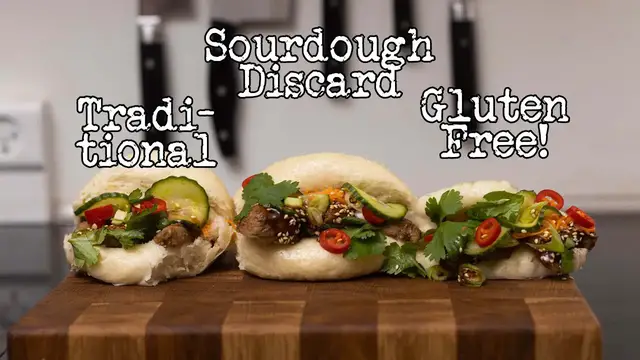
Amazing gua bao recipe - a wonderful fluffy Chinese dumpling with marinated pork, pickled cucumbers, carrots, hoisin sauce, sesame seeds, scallions, cilantro and fresh chilies. I will show you three different buns: traditional, sourdough discard and gluten free!
Buy Foodgeek Merch: https://fdgk.net/buy-merch
Patreon: https://fdgk.net/patreon
The recipe:
https://fdgk.net/gua-bao-recipe
Ad links!
In this video:
Medium measuring cup: https://fdgk.net/buy-medium-pyrex-measuring-cup
Small spatula: https://fdgk.net/buy-small-spatula
Medium bowl: https://fdgk.net/buy-rosti-bowl-4-liters
Cambro Container 2 qt/1.9 liter: https://fdgk.net/buy-cambro-container-2-qt
Cambro Lid 2qt/1.9 liter: https://fdgk.net/buy-cambro-lid-2-qt
Chef's Knife: https://fdgk.net/buy-kasumi-chefs-knife
Induction hob: https://fdgk.net/buy-the-control-freak
Lodge skillet: https://fdgk.net/buy-cast-iron-skillet
Bamboo steamer: https://fdgk.net/buy-bamboo-steamer
Show More Show Less View Video Transcript
0:00
Today I'm going to show you how to make guabag
0:02
Three different ways. Regular, sourdough, discard and gluten-free. Hi, I'm Sune and I'm a food geek
0:19
Today I'm going to show you three ways to make guabag. This video is the first of my new series called Different Ways
0:27
that will showcase a dish or an ingredient and showing different ways to prepare and use it
0:32
and compare the results, both in terms of taste, texture, and what other things I may find relevant
0:38
I hope you're looking forward to this series as much as I am. Kua Bao is a steamed dumpling made from a wheat-based disc of dough
0:46
It's leavened using yeast, folded in half and then steamed. Then it's split and filled with various delicious things
0:54
The traditional fillings are steamed or crispy pork belly, pickled mustard greens, coriander or cilantro, and ground peanuts
1:02
There are many variations on this theme, and what I'm going to show you today does not have all the traditional guabao fillings, but it's delicious nonetheless
1:11
The word bao means bun in Chinese. In the West, they're often called bao buns, which would then mean bun bun
1:19
The word bao is also often used for guabao, and that's really called baozi
1:25
which is a round steamed dumpling, also known as a lotus leaf bun
1:30
While these are also great, they're not the topic of today's video
1:34
The guabao itself originates from the Fujian province in China, but today you will find them in any city with any kind of foodie presence
1:42
We have some great dumpling places in Copenhagen. If you're new to this channel, I bake a lot of sourdough bread and I make delicious food from all over the world
1:51
If you want to see more of this content, please join me by subscribing and ringing the bell so you won't miss any future videos
1:58
I'm going to show you three variations of the guabao. The traditional one made with wheat flour and yeast
2:05
A sourdough discard version also with wheat flour and yeast. And lastly, a gluten-free option, since it seems like a lot of people have difficulty eating gluten
2:15
It's made using both cornstarch, potato starch, rice flour, and glutinous rice flour
2:20
While glutinous rice flour sounds like it may contain gluten, it doesn't
2:25
It's made from a specific sticky type of rice and is also known under the name sticky rice flour
2:32
The meat is marinated pork, which is also a lot faster to prepare than the pork belly
2:37
For the other fillings, I'm opting for some pickled cucumbers and carrots, fresh chilies, spring onions, or scallions, and for sauce, I'm using hoisin sauce. Importantly
2:47
also a good sprinkling of toasted sesame seeds. If you'd like to support the channel
2:52
please consider becoming a member at Patreon. You can also buy some merch or use the links
2:56
in the description for tools and ingredients. Those were the words. These are the recipes
3:04
There's a link in the description for the recipe on my website. Start out by pickling cucumbers and carrots
3:11
In a microwave-safe container, combine 1 dl or 1⁄2 cup of sugar
3:16
1 dl or 1⁄2 cup of vinegar. Microwave it on full until it boils
3:28
Mix it up until all of the sugar is dissolved. Add a pinch of salt and put it away for now
3:37
Then slice half a cucumber thinly. I'm using a mandolin. Then grab two mason jars
3:52
Add half of the pickling liquid to each. Then add some juliant carrots to one
3:59
I bought them like this. I'm a lazy , I know. And the cucumber slices to the other
4:07
Then put them in the fridge until you need them. They're best after 24 hours, but give them at least one hour
4:17
Then it's time to marinate the meat. To a small bowl add 2 tablespoons of soy sauce, 2 tablespoons of neutral cooking oil, 1 teaspoon
4:26
of toasted sesame oil, 1 tablespoon of oyster sauce, 3 tablespoons of hoisin sauce, 3 tablespoons
4:39
of honey 1 teaspoon of Chinese five spice 2 tablespoons of dark brown sugar a 2 centimeter one inch piece of ginger finely grated Two cloves of crushed garlic Mix it all together Add the marinade to 500 grams about 18 ounces of lean pork
5:04
in cubes. I used something akin to pork butt or busting butt. Make sure all of the meat
5:10
is covered in the marinade. Put it in the fridge for at least an hour but 24 hours is better
5:22
Then it's time to make the dumpling dough. First I'll show you the traditional way
5:26
To a medium bowl add 300 grams or 2 cups of all-purpose flour
5:32
125 grams or 1 cup of cornstarch. 25 grams or 2 tablespoons of sugar
5:40
10 grams or 2 and a quarter teaspoons of baking powder. 7 grams or 2 teaspoons of instant yeast
5:48
5 grams or 3 quarters teaspoon of table salt. Mix it up so that everything is completely distributed
5:57
Then add 210 grams or 7 eighths of a cup of tepid water
6:03
60 milliliters or 1 quarter cup of neutral cooking oil. Mix until you have a shaggy dough, then move it to the counter
6:17
Knead it until you have a nice, cohesive, tacky, but not sticky dough
6:37
Put in a container so you can monitor the growth and let it double in size
6:55
Now I'll show you how to make the sourdough discard version. To a medium bowl add 200 grams or 1.5 cup of all-purpose flour
7:04
125 grams or 1 cup of cornstarch, 5 grams or 3 quarters teaspoon of table salt
7:11
10 grams or 2 and a quarter teaspoons of baking powder 5 grams or 2 tablespoons of sugar
7:19
7 grams or 2 teaspoons of instant yeast Mix it up so that everything is completely distributed
7:25
Then add 200 grams or 3 quarters cup of sourdough discard 110 milliliters or half a cup of tepid water
7:35
60 milliliters or a quarter cup of neutral cooking oil. Mix until you have a shaggy dough, then move it to the counter
7:48
Knead it until you have a nice, cohesive, tacky, but not sticky dough
8:06
Put it in a container so you can monitor the growth and let it double in size
8:18
Now I'll show you how to make the gluten-free dough. To a medium bowl, add 170 grams or 1 and 1 3rd cup of cornstarch
8:29
85 grams or 1 half a cup of potato starch. 85 grams or a half a cup of rice flour
8:37
85 grams or a half a cup of glutinous rice flour 5 grams or three quarters teaspoon of table salt
8:45
7 grams or two teaspoons of instant yeast 10 grams or two and a quarter teaspoons of baking powder
8:52
25 grams or two tablespoons of sugar Mix it up so that everything is completely distributed
9:02
Then add 210 grams or 7 eighths of a cup of tepid water
9:09
60 milliliters or a quarter cup of neutral cooking oil makes it the best you can
9:13
When it starts to come together, move it to the kitchen counter
9:17
Then knead it until all of the dry flour has been incorporated into the dough
9:25
The dough will never seem cohesive, as that's what gluten does for your regular dough
9:30
Put it in a container so you can monitor the growth and let it double in size
9:57
While the dough is rising, you can prepare the fillings. Toast a couple of tablespoons of sesame seeds on a warm pan
10:11
Then nice and golden and super fragrant, add them to a bowl to cool off
10:25
This took about five minutes in all. Cut two scallions on the bias
10:29
That's what we call a 45 degree miter cut in woodworking. Then grab a good handful of coriander leaves or cilantro
10:41
Then cut two chilies finely. You decide what strength they should be. These are in the jalapeno
10:49
range. There, that does it for the fillings. Then it's time to prepare the meat. You can use the meat
10:54
warm or cold in the guabao. It's up to you. Add the bag of meat including the leftover marinade to a
11:00
pan heated to medium high. Fry them until they're wonderfully caramelized and cooked all the way through
11:11
Put them aside until you're going to assemble the guabao. You can leave them on low heat on the stove if you want to serve them warm
11:22
When the dough has doubled in size, it's time to shape it. First, I'm going to show you the shaping for the traditional and the sauté discard version
11:30
Shape the dough into a ball. Divide the ball into 8 equally sized pieces
12:01
and shape each piece into a smaller ball. Grab a baking sheet and line it with parchment paper
12:46
Take a dough ball and put it on a flattened paper muffin liner. Squeeze it
12:51
flat. Boil the top of the dough and put a chopstick on the middle of the dough and
12:59
and fold it over. Shape the rest of the dough balls the same way
13:24
Then cover the pan with a clean dish towel and let them rise for 30 minutes
13:29
The gluten free buns are shaped mostly the same way but I just wanted you to see the dough and what to expect
13:59
I don't shape them into balls, but I make a disc. As you can see, you kind of need to squeeze to keep it together
14:19
And add a disc to a flattened paper muffin liner and carefully tap it flat
14:29
Oil the top. Then put a chopstick on the middle of the dough and carefully fold it
14:46
Shape the rest of the dough the same way. Cover the pan with a clean dish towel and let them rise for 30 minutes
15:33
When the dough is risen, it's time to steam the buns. I used a wok with a bit of water at the bottom and bamboo steamer baskets
15:41
It's important that the water does not touch the baskets when you put them in
15:45
Bring the water to a light simmer, then put the steamer basket into the wok and let them
15:50
steam for 10 to 12 minutes. Now it's time to assemble the guabao
16:00
When I serve this for my family, I let everybody just make their own. I don't know if there's a specific way of doing it, but here's my method
16:16
Add some meat to the bao. Then some pickled carrots
17:00
Coriander leaves or cilantro. Some fresh chilies
17:12
And now it's time to eat. Mmm. Oh, good
17:41
Yummy. While I finish my bao, you can look at these pictures
17:48
After that, I will give you my conclusion. so
18:07
damn those things are good so what were the differences well
18:30
the regular guabao was exactly that. An excellent guabao with a fluffy bun and some delicious
18:36
fillings. I'd eat that any old day. The saudo discard guabao brings something different to the
18:42
table. There's more taste to the actual bun. The flavor is more well developed. And that's without
18:48
adding any extra time to the rice. I love saudo discard recipes. The gluten-free guabao was not
18:56
fluffy as the other two, but the problem lies within the nature of the beast. Without gluten
19:01
to keep the dough together, you cannot get the same kind of results. That being said
19:06
it's a good guabao, good taste, and will definitely keep your fillings together
19:10
If you have to eat gluten-free, you don't have to miss eating delicious guabao
19:16
I hope you learned something today. See you next time
#Cooking & Recipes
#Food
#Baked Goods