Up next in 10



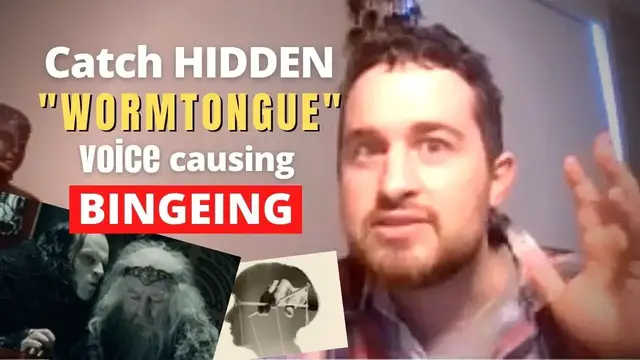
Wormtongue is a manipulative character in the Lord of the Rings.
The King trusts Wormtongue. But in reality Wormtongue uses his voice to keep the King weak.
In food terms, Wormtongue is like the restrictive dieting voice.
It worms its way into your mind and convinces you of all sorts of wrong ideas about yourself.
It makes you feel like a failure for having that piece of cake. It makes you feel awful if you have too much dessert. And it will do anything to keep you from eating any more than the bare minimum required for survival.
With Wormtongue in charge, food is no longer something that brings happiness, joy, or contentment, but rather feelings of guilt and shame.
Wormtongue was powerful in The Keep because he was persuasive and persistent.
In your head, there might be one restrictive dieting voice talking at a time (there may also be a dozen other conflicting voices). But when the time comes to eat, Wormtongue has plenty of opportunities to bring his messages. He can get you to believe that another piece of cake is bad for your health. Or he can make you feel like a failure if you eat something other than salad.
Wormtongue always whispers in our ear. He's not loud nor is he necessarily convincing (if you know better). His main job is just to keep us from listening to our true voice because this ensures that we won't do anything dangerous or foolish…like EATING!
The more Wormtongue talks, the stronger his voice becomes and eventually we become famished and depleted.
Show More Show Less View Video Transcript
0:00
Have you ever wondered why keep self-sabotaging
0:04
Well, in this video, I'm going to be covering these hidden voices
0:08
and this is going another layer down than we normally do. Have you ever wondered why you sabotage yourself
0:23
What if there was a manipulative voice inside your head that was causing you to self-sabotage without you even knowing it
0:31
That's what we're going to be exploring today. So I'm Jared, former binge-eating wrestler turned Zen monk
0:38
And today we're going to be exploring how you can deal with these manipulative voices
0:45
how you can identify them, and ultimately stop the roots of self-sabotage
0:49
so that you can stop binging so you can actually have sustainable healthy eating habits
0:53
and we're going to be examining exploring this through the story of Wormtongue and when I grew up
1:00
I loved Lord of the Rings my dad read it to me as a kid and in the second book The Two Towers
1:06
there is an old king and he has a manipulative servant Wormtongue and Wormtongue very appropriate
1:14
that he's manipulative his name is Wormtongue he whispers in the king's ear and uses his voice
1:20
to make the king weak. Now, in the movie, there's a powerful scene where Gandalf comes in
1:27
and he basically makes the king see the light of day and to see how this manipulative worm tongue figure
1:37
is ruining the kingdom and causing the kingdom to go in disarray
1:44
And it's a movie, so it's instant, right? The king actually becomes younger
1:50
and, you know, more lively. And, you know, in real life, we do things gradually. But I think
1:56
this metaphor holds true that there's a manipulative voice and we need to shine the light
2:02
right? Gandalf kind of represents light and awareness and spirit. We need to take that spirit
2:07
shine it on that voice so that we can be free. And it's very important to see that these
2:14
restrictive voices, they might sound good. They might sound good initially, right? Wormtongue
2:19
sound good initially. You know, these diet voices, they might be things that you've thought for years
2:26
You know, on the top, on the right, you see that there's a thought, one peanut is enough to sustain
2:32
you for an entire night of studying. Now, there's nothing malicious about this voice. It's almost
2:38
like it's caring for you. It's almost, you know, it doesn't seem like outrageously terrible, right
2:45
So these can be very, very tough to spot. And this is why this video is an in-depth video
2:50
and it's really for intermediate students, all right? So this is where you've already been
2:56
tracking your food intake. You've already been tracking your thoughts and emotions related to
2:59
eating okay This is subtle stuff I do not recommend you starting out with this okay But this is for a little bit more nuanced training for intermediate people who kind of jumped in the water a bit And so you know if you are just a beginner it very important that you start off you know understanding this food restriction cycle
3:21
And we'll come back to this image in a little bit. but you need to see when you're tracking your food habits that, you know, these bad voices that
3:30
cause you to bench the anxiety, the pressure that gets built up, the conflict that happens in your
3:37
head. You know, this is where you start. Okay. The bad voices are where you start. Okay. The bad
3:42
voices and part of the rings, you know, they're ogres. They're very easy to spot. All right. So
3:47
again, this is where you start as a beginner, but these good voices, they're, they're more quiet
3:52
All right. So, you know, if you're catching a bad voice, you just journal before you eat in a nutshell. And, you know, the bad voice happens right before you are binging. It's the anxiety. It's the pressure. It's that voice. So this is where you're at as a beginner
4:09
But as you continue to study your eating habits and practice journaling and going through this process of feeling and noticing and stuff and noticing your triggers and your cues and everything like this, these are all concepts that I've covered a lot on this channel
4:25
So I'm kind of skimming by them. But these are the concepts you've got to get down as a beginner. you know so but but anyways as you practice this you'll start reducing your binges but you won't
4:39
quite be able to get over the the hump right and so with this deeper psychological insight you'll
4:46
see why the bad voice continues to beat you and this is like the scene from the lord of the rings
4:53
where it's a very bad picture, I understand. But on the bottom right, there's Boromir
4:59
He's killed everyone. He's exhausted himself. And the orc is about to kill him
5:04
And this is what it's like sometimes when you're just starting to binge, starting to fight back against the binges
5:10
You'll have journaled your feelings. You'll have dialogued with the inner child
5:14
You'll have sat with them. And it'll be too painful. You'll be too exhausted, too depleted to fight
5:21
And you'll, it's like, we just get shot down. And so this is where, you know, we really start looking at what
5:30
what are the conditions, what leads up to the bad voice winning. And one of the conditions you
5:37
very will spot right away is that if you are starving or lightheaded, if you're hungry
5:43
irritable, you're going to binge. If you get too hungry or too depleted, you won't be able to
5:48
resist binging. That's a very powerful insight as a beginner. Right? And so this is a really a
5:53
paradigm shift. Instead of trying to stop binging willpower, you stop that you stop yourself from
6:00
being so depleted from getting so hungry, right? This is a very powerful insight, but right
6:06
very powerful insight. That's what eating enlightenment is all about. You know, you see
6:10
very clearly that it might seem like skipping meals is the best way to cut calories But if you get too hungry you going to end up snacking and binging right And so you start trying to prevent hunger You start trying to prevent depletion
6:24
But here's the thing. Here's where this comes in, this good manipulative voice
6:28
You know that you shouldn't deprive yourself. You know that you shouldn't skip meals. You know that
6:33
you shouldn't allow hunger, but you do. So what's up with that? And this is where the hidden
6:41
warm-tongued voices. And so this good voice, right? Putting good in parentheses is not good
6:47
but it might sound good. And this happens at the restriction part. So this is hard to spot
6:52
because with a binge, you can feel it coming and you can do this journaling process. But this
6:57
good voice is usually when it's calm, you're actually, it's after a binge and you're starting
7:03
to like amp yourself up again. So here's an example of the good voice. Be productive. Usually
7:11
this good voice might be stern. Be productive. Work hard. You know, stick to the meal plan. It
7:16
sounds good. Doesn't that sound good, right? It's good, right? But this restrictive voice, you know
7:23
it might sound like it has your best interest at heart, right? It might sound like this has too
7:27
many calories or this is going to have one bite you know or it might sound good but it's manipulative
7:35
and it's depleting like this this thing over here is this voice i only want what's best for you i
7:41
don't i want you to be skinny i want you to be i want you to be happy and don't eat anything
7:47
it's manipulative it's freaking manipulative and so we want our authentic voice it's not the good
7:54
voice. It's not the bad voice. It's our voice. And, you know, if you are following this good
8:00
voice, this warm tongue voice, how this will be is you will, this is when the meal plan
8:07
eating healthy, becomes a chore. It's because you're being manipulated. Just have one peanut
8:12
just be productive. That is not connected to your emotional needs. You're going to lose motivation
8:18
eventually you're going to binge and the fear oftentimes this this voice is operating out of
8:24
fear of weight gain right so this good voice is terribly afraid of weight gain it's trying to
8:29
prevent that in some ways it's trying to keep you safe don't get me wrong there's this good voice
8:33
is sort of trying to keep you safe it's it's just not very skillful and so this this type of thinking
8:40
this manipulative voice it tends to think in two perfectionistic terms simplistic perfection
8:48
perfectionistic. It's all right or all wrong. You only have one peanut. You got to have this
8:52
You got to do that. It's very strict. And so it leaves you depleted. Here are some thoughts that
8:59
you might have. In particular, what's the point? I can't eat that. These are signs that this warm
9:07
tongue voice is here. And so let's go through some ways that you can overcome restrictive thoughts
9:12
This is very similar to how you catch bad thoughts before a binge
9:18
And I saying bad because I don know good or bad you know whatever It all relative But anyways so these are going to sound familiar but it applied at a different stage in the binge cycle So here are the five steps Identify the
9:34
voice. Notice what it's saying to you. Consider how this voice makes you feel. Challenge your thoughts and facts in multiple conversations. Let's go through these. Identify the voice
9:42
You first got to notice the voice when it is telling you to restrict. Noticing that it's
9:48
telling you to work, work, work, work, work, or noticing that it's telling you to not eat this
9:53
not eat that, not eat this, not eat that. I'm not saying that you need to like go out and like eat
9:58
donuts because the voice is telling you to not eat donuts, but I'm saying we got to be aware of it
10:02
You got to be identify the voice. Okay. So this is where you write out, you know, this voice
10:08
There's this voice in your head that you've got to be perfect. Got to write that out
10:13
write out that voice. Notice the tone of the voice. Sometimes people are just writing down
10:18
the thoughts and that's good. That's a great first step. I'll oftentimes work with people on the
10:23
their thoughts, but eventually you go down a little bit. We got to make it personal. We got
10:26
to put characters, right? We got to, we got to symbolize it. And so, you know, noticing the tone
10:33
of the thoughts, making characters and, and seeing really very deeply how the good voice
10:42
leaves you depleted, leaves you hungry, and then it sets you up for the bad voice to win
10:49
All right. So it's like the good voice seems like it's an angel, right? But it's still giving you bad advice, scratch on the door, don't eat this, work all that. It sounds good, but it's not. It's a worm tub. And so you really got to consider how this voice makes you feel. Is it making you feel depleted? Is it making you feel bad
11:07
you know and then we got we challenge it with thoughts and um you know oftentimes this voice
11:14
is too simplistic right it's mean it's stern it's it sounds like it's has the best thing
11:20
out for you but it you know um like for example for that peanut thing what would a friend say
11:29
about this thought that you should only have one peanut to study the whole night what would a friends say about that, right? Or have you studied on one peanut before? What happened? You know
11:37
you got to challenge these thoughts. You got to notice how they're making you feel. And then we, we have a conversation about this, right? This is a weird thing where you're actually
11:45
having a conversation with yourself, with the brain. So you can imagine this, like
11:52
um, the brain, let's, let's worry about the past or stress about the future
11:55
and she is talking back to her brain or not. And the brain is saying something
12:02
and I'll ask people to write this stuff out. So these are kind of how you start to go beyond the meal plan
12:10
This is how you go into your psychology, how you work with the thoughts on a logical level
12:15
on an emotional level, and how you kind of work through this stuff
12:19
So those are the five steps again. And we'll just wrap up this video
12:23
So let me know if you have any questions. If you liked it, please, please, please like the video
12:28
It helps it spread far and wide. If you want more information, you can go to eatingenlightenment.com
12:34
So thanks again. Hope you enjoyed the video. And as usual, namaste
#Health Conditions
#Eating Disorders
#Self-Harm