Up next in 10

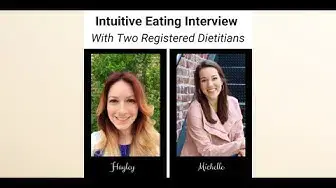
Definition of Intuitive Eating: Interview With Two Dietitians, Hayley and Michelle
Feb 20, 2023


I recently conversed with two wonderful Registered Dietitians Hayley and Michelle about Intuitive Eating!
For an in-depth blog article with this interview and notes, please see here - https://eatingenlightenment.com/2020/01/17/definition-of-intuitive-eating/
Here’s my take on our conversation. In this post I’ll draw from our interview to answer commonly asked questions like:
- What is the definition of intuitive eating?
- Does intuitive eating really work?
- What an intuitive eater eats in a day (if can’t feel hunger cues)?
- How do I deal with a poor body image that prevents me from listening to my body and eating intuitively?
About Hayley: Hayley is a dually licensed dietitian and psychotherapist with 8 years experience working with clients with eating disorders. Hayley also has 12 years experience as a dietitian and 10 years experience as a therapist. She is the owner of Hayley Miller Nutrition.
You can learn more about the services of Hayley and Michelle their website at http://hayleymillernutrition.com/
Hayley’s Instagram @ https://www.instagram.com/hayleymillernutrition/
About Michelle: Michelle is a masters level Registered Dietitian who works with clients from a Health at Every Size and Intuitive Eating lens. She believes that all foods can fit into a healthy lifestyle, feel good, and that eating well can be really simple and fun! Michelle has experience working as both a chef and registered dietitian in residential eating disorders treatment, and has additional experience counseling clients in the private practice setting.
You can learn more about Michelle at https://www.michellepillepichnutrition.com/
Show More Show Less View Video Transcript
0:00
Hey everyone, I'm here with Haley and Michelle
0:03
Haley has 12 years of experience as a dietician and 10 years experience as a therapist
0:09
She's a dually licensed dietician and psychotherapist with eight years of experience
0:14
working with clients with eating disorders. She is the owner of Haley Miller Nutrition
0:20
and we're also here with Michelle who is a master's level registered dietician
0:25
and she works with clients from a health at every size and intuitive eating lens. She has experience working as both a chef and registered dietitian
0:35
and residential eating disorder treatment and has additional experience counseling clients in a
0:40
private practice setting. Welcome to Eating Enlightenment. How's it going? Thanks so much
0:46
Thanks for having us. Great. You know, I was so surprised when I first checked out Haley's website
0:52
that Michelle was on there as well. You guys work together. Can you share a little bit about that
0:59
backstory of how you both met? What happened? Yeah, so I could talk about kind of the past
1:07
several months of changes and craziness in my career. So I am originally from Jersey
1:15
and I was out in California most of last year for a job. And so I moved back to the East Coast
1:20
in October. And so that's the time that I connected with Haley. In moving back and sort of changing
1:29
everything about what I was doing, I was just reconnecting with people and connecting with new
1:34
people, just sort of putting pillars out there around the New York City area. And a mutual
1:40
connection put me in touch with Haley. And as a dietitian in the intuitive eating health at every
1:47
size space. When you hear that someone else does that, it's kind of like an instant, okay
1:52
I'm going to like this person. So that's definitely what I thought about Haley, just knowing that
1:57
immediately we would align in certain philosophies. And that was definitely confirmed when we met
2:04
Absolutely. And I wanted to ask you, I saw that both of you were coming with a tremendous wealth
2:11
of experience. And so I hope to get dive into some, some tougher questions about some of these
2:15
nuances of intuitive eating and health at every size. But perhaps one tough question is
2:22
what are your biggest differences between each other in terms of like, maybe you have different
2:28
treatment approaches, you like different emphasizes, these differences don't have to be bad per se, but I'm just curious about what makes you two different
2:38
I guess that question is hard to answer because the way that Michelle and I set things up is
2:45
since she works at my office and in my practice. She conducts nutrition the way that she feels
2:54
fit in the session. But I haven't seen any marked difference. I mean, I think it's like
3:00
when you say your health at every size and intuitive eating, you're following the books
3:06
that are outlining how to work with people in that approach. And so that includes like
3:13
non-diet that includes um you know getting them more in touch with hunger and fullness cues that
3:21
includes most of the time unless it's medically necessary not giving goal weights or focusing too
3:26
much on weighing in the session now i mean um it's always a judgment call about how often to
3:32
weigh someone in the session um if there was like a medical need if they really need to restore
3:38
weight in a certain period of time yeah we have to really focus more on the weight but
3:42
I haven't seen any I think you bring up a good point
3:48
That, you know, there's so many similarities Between this and there are
3:51
There is like, there are guidelines And steps that I've been written about
3:55
Explored through research that there is like a Pretty clear Path going forward
4:01
Haley, you're a registered Dietitian and psychotherapist That's pretty rare I feel
4:08
What made you, what came first? Sure. I guess to go back to your other question, I guess the difference would be because I am trained as a psychotherapist, maybe I would approach things a little bit differently than Michelle
4:23
Because I am working as a dietician in the sessions in my practice because it's just nutrition, but I'm thinking about it through a psychotherapy lens
4:33
So that may be a little bit different, but I'm teaching Michelle about that approach too, and she's picking it up fabulously
4:40
fabulously. So, and so much of this, like, I think one of the reasons I loved intuitive eating and
4:46
health at every size was because it was really emotional. It was emotional. It was with food
4:51
It was totally integrated with, with how people work in their minds and behaviors and everything
4:57
like that. Um, but yeah, what came first, the dietitian degree or the psychotherapist degree
5:04
So, yeah, it's kind of a longer story, but the Cliff Notes version is, so I'm recovered from my own eating disorder
5:13
It's been 13 years. So I recovered when I was 20, and I was actually in school to be a dietician
5:21
So my bachelor's is in nutrition, and my master's is in psychotherapy
5:26
Now, if anyone's listening that is looking into that career path, they change the requirements
5:32
You must have a master's degree to be a registered dietitian. That was not the case when I got my degree
5:39
And so you would have to get a double master's in psychotherapy, clinical counseling, psych, and nutrition
5:46
So it's a little bit more school than what I ended up doing. And one follow-up question that's just coming up right now
5:52
The way you phrased it ended 13 years ago. Interesting phrase right there
5:59
oftentimes I feel like it's a, you know, a diminishing kind of, or, or maybe for you
6:04
it was more of a, uh, an end. Um, how, how does, how do you, you know, how do you make sense of
6:11
that? Yeah. Um, so I guess I'm considering, um, if you're familiar, Carolyn Koston's definition
6:18
of recovered. So in that definition, um, it's not just about stopping the behaviors and it's more
6:26
about accepting wherever your body naturally lands as far as weight, not weighing yourself
6:32
and also absence of thoughts. So I think push towards recovery for me, that may be different for someone that's not in
6:41
the field of like health, nutrition, psychology is that I knew to do what I wanted to do
6:48
I needed to not be doing this behavior that I deemed to be really bad for me
6:52
So stopped, you know, purging, stopped restricting, got myself into therapy. I didn't have any money for treatment
7:03
So I went to the school counseling center. So not, you know, the most fabulous treatment, but, you know, read as much as I could about it and did what I could to stop the behavior
7:15
And I was really adamant, like, I can't do this behavior anymore because it's not healthy for me
7:21
And how can I be a nutritionist sitting in front of a client and feeling like a friend almost So yeah I would say I stopped um because I had career
7:35
aspirations that I felt like were more important and it just didn't feel authentic to me at the
7:41
time. Yeah. I feel like that story right there kind of resonates with a lot of people probably
7:48
I mean, whether maybe they're not starting to be a dietitian, but it's, it's getting the way of
7:54
something that's, you know, not, not acceptable. It's not, it's not, you know, they, they're
7:59
it's not what they want. And, and that is not their authentic self as well
8:08
Switching over to Michelle, just real quick. I went over to the website, Haley's website
8:13
and I saw you were on there and I Googled you and then I found your website. And there seemed to be an interesting story on your website about a summer internship in politics, which
8:21
motivated you to turn your career towards food, like you're going to be in political science or
8:28
something. And then, nope. What happened there? Yes, it is an interesting story. It was a very
8:33
roundabout path. So yeah, I double majored in government and Hispanic studies during college
8:39
and I thought I wanted to work at the UN or end up in the White House or have some sort of policy
8:45
career. And I had a couple of internships throughout the summer as well. I was in college
8:50
and really the last one after I graduated, I just realized this is not for me. And I was
8:57
working in DC on a campaign and the one, I know exactly the moment that I made that decision
9:05
I was writing a letter to a constituent that was quote unquote from this politician. And I'm
9:12
sitting there, the intern writing from this person. And I just thought this feels so gross and wrong
9:17
and not okay. And it just seemed like a world that I wasn't really a fan of. And of course
9:23
if you're in politics, like you're not a bad person. I'm sure it's not all that way. Hopefully there are good people out there, but it wasn't something that I was as passionate about as I
9:32
thought I was. So I moved home to Jersey and I just thought, okay, well, if I'm not going to use
9:39
my major, what am I going to do? And I just thought about, well, what do I like? And let me pursue
9:44
do something that I enjoy. So I was really into food blogs and cooking and baking and reading
9:50
recipes. And so I thought that I would take the route into food media. And I actually had an
9:57
internship at Rachel Ray magazine. And I thought I wanted to do like some sort of media thing
10:03
And that was a really fun experience. So cool. I got to do a lot of fun stuff and I worked with
10:08
really cool people. But at the time, there were kind of two reasons that I, you know, rerouted
10:16
from there. One was at the time, I was very much like, I want to learn about nutrition for health
10:22
And kind of still in that focus, I hadn't discovered intuitive eating yet at all. So I
10:27
was thinking, well, I don't want to promote any food, I want to promote healthy food and like do
10:31
it the right way or whatever, which is different from my philosophy now, but was something I was
10:36
thinking. And I also felt like I wanted more personal connection with the people I was serving
10:42
So yes, maybe this magazine is really positively impacting all the people who receive it, but I'm
10:47
not getting to see that. And I really like personal connection and being able to see and talk to and
10:54
understand the people who I'm working with. And so I was just talking to people who already were
11:00
dietitians and learning about what that field was. I had taken one nutrition class in college
11:05
senior spring I like heard it was an easy I needed an elective and so I took it um so I knew that the
11:12
dietitian career path was out there and once I dug more into it I decided that's what I wanted
11:17
to pursue so went back to school took all the science that I had avoided in college
11:22
I hear you too I uh graduated with an economics degree and I'm not using it at all and there is
11:28
that moment of like, huh? Yeah. I'm not going to do that. It's wasted
11:35
I don't like to tell people what I study because they assume that I am very up to date on politics
11:40
and I'm not Spanish. I still have a little bit. I try and use my Spanish. So that'll talk about
11:47
but don't ask me about the government, please. Yeah, for sure. Okay. So let's dive into like
11:52
Hayes intuitive eating before we get into the whole thing, just in case there's new listeners
11:57
and because I honestly just like hearing people's different perspectives. But what is health at every size
12:04
Hayes, what is intuitive eating? In a quick nutshell, how would one of you describe it
12:12
Hayley, you first. Sure. So health at every size is just fully avoiding any of the stereotypical
12:24
like you have to lose weight to be healthy. it's more about helping the person understand where their body naturally lands when they're
12:31
feeding themselves. And so something we talked about in section is what are your nutrition needs
12:37
getting more in touch with hunger, fullness cues, and where does your body land because of that
12:42
So that's a little bit of the intuitive eating part of getting up to date with your hunger cues
12:49
And part of that is following a meal plan that's very, you know, eating every few hours so that
12:55
you can start to get the hunger cues back and then not, you know, like not using BMI, not using
13:00
ideal body weight, none of those things that don't include any individual differences when it comes
13:06
to weight and size. Yeah. And the follow-up question I know later on, I had kind of planned
13:11
out was about that meal plan thing, meaning the word intuitive eating kind of sounds, you know
13:17
intuitive and non-structured. And yet it's from what you're saying and what I'm hearing is that
13:23
having, especially in the beginning, set mealtimes or maybe flexible mealtimes, but a rhythm
13:31
going on. That sounds the opposite of intuitive. Would you agree or disagree? How do you think that
13:40
leads to more intuition? Yeah. Well, I would say when we talk about eating disorders
13:45
part of the whole way of relating is you don't get hungry every few hours. So someone that has
13:53
anorexia nervosa will not always get hungry every few hours. Maybe they're initially like avoiding
14:00
that hunger feeling, but they actually stop getting cues. So if you're, how can you say to somebody
14:06
let's start with intuitive eating and you don't even know when you're hungry and not. So some of
14:13
it is actually, that's the step before you can't really start with intuitive eating. If you're not
14:18
getting hunger cues, you don't even know what hunger feels like. And you don't know what foods
14:22
you actually like outside of the eating disorder. So there's like a step before that. But if you
14:27
have that in place, then, you know, intuitive eating can happen because we're tuning back into
14:32
the cues instead of avoiding. And if someone listening were to say, wow, what stage am I at
14:40
Am I ready to kind of do the hunger cues thing or do I, uh, do I not feel hunger
14:45
Is it as simple as just asking yourself like, oh, do I feel hungry or for a listener listening
14:51
How do they know if they feeling their hunger cues or not feeling their hunger cues Or do you need the help of a professional Well I think the first thing you could ask yourself is do I get hungry every few hours Generally you know if I had to put a number on it three to five hours three to six hours
15:08
depending on how much you ate. People, humans should eat at least three balanced meals a day
15:14
and then snacks in between when you get hungry. So if you're not getting hungry three times a day
15:21
every day or you're not feeling a little bit empty or low energy and you're like are you getting a
15:27
headache and you're like oh yeah i must be hungry like you don't have any cues all day all the time
15:32
you can't really start with intuitive eating because you need to start getting back into
15:38
how do i actually know the subtle signs of hunger so those are things we talk about
15:42
you're not always going to get them my stomach's rumbling and i'm ready to eat
15:45
Got you. Yeah. And it seems like awareness of intuitive eating is growing. Well, I just want to cycle back to intuitive eating real quick. It seems to me that it's growing. The word is getting out there, but it seems like on the other hand, there's other opposing forces, we'll say social media, all these images out there
16:08
is health at every size intuitive eating growing? Is it, you know, is it growing
16:16
but then maybe the social media thing is growing faster? I don't know. What's the
16:19
current state of affairs from just from your perspective? Yeah, I would say it's hard to say. I would say personally, since I have a lot of student interns
16:32
student dietetic interns, they may know about it. Sometimes they think it's just a hashtag
16:37
They don't even know it's literature, like research in a book. But they're coming in, never worked with eating disorders, and they're wanting to learn about it, and they maybe have an idea about it, which was not the case a few years ago
16:53
And I would say the book itself is being taught more, and people have found out about it, maybe through social media and then read the book
17:03
So I see like some movements, but, you know, I would say that still, even as a nutritionist, our professional organization has just recently started bringing intuitive eating and health at every size into the yearly conference, the national conference
17:22
Interesting. Yeah. Yeah. Because I'm still in like the eating disorder community. I don't know
17:30
True. Maybe Michelle with her deep experience in politics can... Well, I do want to touch on that, just the growth of it. I think that yes, it is gaining awareness
17:45
Like Haley mentioned, there is more talk about these things at the annual dietetics conference
17:53
It is hard to say because I feel like it's growing because of the sort of bubble I create
17:58
for myself and what I choose to look at on social media and the colleagues who I choose to connect
18:03
with and learn from. And you mentioned these opposing forces, which is, it's out there
18:11
Unfortunately, there are people who are more weight centric and really still are pushing that
18:16
And, you know, even I like saw a doctor the other day for just my annual physical and
18:21
end up in a conversation about the keto diet, of course, as soon as I mentioned I'm a dietitian
18:26
and people are pushing that. So it's out there. And what makes me so sad about that conflict is
18:33
ultimately as health professionals, as, as long as you're a respectable health professional
18:39
working ethically, we all want the same thing. We all want our clients to be healthy. And if you are
18:47
using, you know, sound knowledge and evidence, you want to do that through behavior change
18:53
And so that's what we're doing with intuitive eating and health at every size. We're working
18:58
on behavior change, whether that's for an average person moving towards intuitive eating or someone
19:03
in an eating disorder working towards recovery. It's all about just altering your lifestyle
19:08
And a weight loss professional is hopefully not going to prescribe diet pills, but they're going
19:14
to try and alter someone's lifestyle. The difference is we don't want to have any restriction in there
19:20
and we're not focusing on the number. So if the middle ground is ideally gonna be the same
19:26
like, why can't we all agree? That's what really gets me. Yeah, I totally hear you
19:34
I feel like one of the reasons, a contributing reason to why people
19:39
maybe haven't heard of it, maybe when they hear intuitive eating, they've started to hear about it
19:44
but they don't quite have the language around it is because it's nuanced and complex
19:50
like this, this stuff around no rules, like that's a, that's a delicate conversation. We'll say
19:57
like, um, oftentimes there's this fear that they hear this no rule thing. And for a lot of people
20:03
although they, they might, uh, be misinformed about, about, about dieting and so forth and
20:09
the need for rules and so forth. But when they hear that no rules, you know, I can eat whatever
20:15
I want. Like, Oh, that's terrible. Like I'm going to eat way too much. I'm going to never stop
20:20
Like, you know, maybe, maybe let's just talk about that. We'll talk about that and then go zoom out for broader implications
20:28
But like, how do you manage that first conversation around getting rid of rules or questioning rules that that type of thing
20:40
That's it's really hard and people do have the exact reaction that you described
20:44
I think that people in general are so afraid of the short term that they have a hard time conceptualizing the long term
20:52
Because when you're used to a life of dieting and following these external rules or regulations or whatever you hear
21:02
then when you eliminate that, yeah, it might feel kind of crazy and out of control for a little bit
21:09
But that's the messy middle part that will then lead you to intuitive eating
21:14
If you don't go through that, you know, one of the intuitive eating principles is making peace with food
21:19
And so it's like putting everything on a level playing field. And what I like to talk about a lot with clients is once everything is accessible at the same level, then those foods lose their emotional power over you
21:33
So at the very beginning, they still have that power and it will feel hard and complicated and kind of crazy
21:39
And that's why hopefully you have a registered dietitian to work with, professional guidance, even just reading the book, if that's the only thing that you can access
21:49
And then it's about trust in the process and just knowing that this end goal is possible
21:57
You're having professionals and research and literature point to this as a sustainable way of life
22:04
Yeah. And oftentimes too, when people stop unrestricting, they can sense like a difference
22:11
in their mentality, but oftentimes too, maybe they're, they're gaining weight or, or, or maybe
22:18
it's not oftentimes, maybe some of the times they're gaining weight, maybe some of the times it not gaining weight Let say someone is having I don know a hard time trusting like this this seems to me like an important thing like man someone starting to unrestrict and you know on paper it all looks good but then
22:35
they're actually in it. And it's maybe slower or trickier. Like, how can you set expectations
22:41
properly for someone? Like, do you say, and I know it's such a case by case situation, but maybe
22:46
maybe Haley, you can talk about how you like, give someone expectations around, like, what it'll
22:54
be like when you stop restricting? Yeah. So I think that's a lot of what we talk about after
23:05
they're fully embracing intuitive eating or they're giving it a try. And then we're talking about
23:12
you know, the support piece of like, you need support people in your life. And if your body
23:16
does change, reminding yourself that this is actually where your body's probably more supposed
23:22
to be at. So if you were really, you know, restrictive in your eating disorder, or you
23:28
would restrict all day, and then sometimes you would binge at night, like, your weight will
23:32
change as you're eating more, you're pushing that more during the day, and that can be really tough
23:38
So I think what's hard about recovery in this model is this is the way through, but it's
23:45
counter to everything that you've done in your eating disorder. So you're relearning everything
23:50
yeah so we try to like you know do it like piecemeal like let's make a goal each week of
23:56
like we're gonna do this and let's see how that went and then we move to the next thing the next
24:01
thing and the next thing so it's not like oh i have to completely accept foods tomorrow because
24:07
i read the intuitive eating book true yeah there's oftentimes like uh you know you take one food and
24:14
and get in a safe setting and and eat it mindfully and and go through a process like that yeah it is
24:19
you are unlearning everything. I think like one of the hardest things too, is this, this
24:25
ingrained body image that people get somehow, they don't like the way they look. And
24:35
and yeah, there's a lot that goes there. And then there's, you know, the conversation around, well
24:43
if I don't restrict and I eat maybe some foods that I've been forbidding, you know
24:48
is that going to make me look worse? I think that's a conversation that people are having
24:53
in the back of their mind. So I love what you said about that conversation around where you
25:01
naturally land. For some people, that's got to be tough initially. How do you start to
25:07
have that conversation around, we'll say natural body weight or an unrealistic ideal body image
25:16
how do you, what's that look like? What's that kind of conversation look like? Well, when we do the intake, we ask your lowest weight and highest weight and how do you achieve
25:28
them? Because that can be eating disorder related or not. And then is there a weight that you think
25:34
from what you know, you may not know, people may not know, they developed their eating disorder at
25:38
12. They have no idea what their adult body weight would be. So it's a little bit of trust
25:43
but isn't it better than having all these rules about your body and what you
25:49
can do and not do and just giving something new a try? Cause you've already done the super restrictive thing
25:56
And then also like remembering if you gain weight because you're maybe still
26:02
using behaviors, that's what we're working on. So we're working on not coping with food
26:10
Yeah. You can still eat something because you enjoy it and not be really hungry for it
26:16
But it's not like you're full on binging because you're avoiding a feeling or you're restricting because you're avoiding a feeling
26:23
Like we're not doing any more avoidance food for that. So if you have that relationship with food, then you'll have potentially more of a stable weight
26:36
Barring any, you know, thyroid issues, any medical issues that could affect weight
26:41
So that's a different thing. So if someone has like a thyroid issue and worked on their recovery, but they're gaining
26:47
weight from it, that's really hard. But remembering that that's the medical issue and that's not about what you ate or didn't eat
26:54
That's a different thing. There's so many things that go into weight that it's like, you got to remember it's not
26:59
just what you eat and don't eat. True, true. Yeah. And, and I think you bring up a good point that oftentimes like reminding people of like
27:06
this, this cycle, you know, like choosing, like this is this, you know, helping them see like
27:12
this, this is, this is what happens, you know, like dieting and restricting and
27:17
craziness. This is like, you know, cause and effect. And like, you know, like to
27:24
to get out of that, there's a different, it's a different way. Um, and I feel like it involves
27:31
questioning like does a body image you know do i need to look perfect to live my my best self
27:37
my my best life and so forth um uh michelle what do you think about like is this word like
27:45
loving your body or you know do people need to love their body or do they need to like let go
27:51
a bad body image how do how do you what's like some proper expectations around body image um
27:58
Yeah, there is so much, so many complexities about body image. And we are just so ingrained to kind of think that how you look is everything. And in, in, in terms of what you were, you know, talking about before with like setting expectations with body image and intuitive eating, and yeah, that might change
28:20
And I think it's really important to remind people, well, at what cost were you achieving
28:27
the ideal quote unquote body? Because people tend to have selective memory about their body at different points throughout
28:33
their life. And they remember, oh, I love the way I looked, but do they remember the torturous diet cycle
28:39
that they were in at that time? Um, and I, I don't really counsel people on how to love their body
28:47
I always tell my clients, my goal is just to tolerate your body. And really my goal is for
28:53
you to not think about your body because that's going to open up your mind to so many other things
28:59
You'll have so much more brain space for things that are more important. And so I think that goes
29:04
along with the expectations and the fear about, will I gain weight or will my body change if I
29:11
I abandon my rules and I follow intuitive eating and maybe it will, maybe it won't
29:17
Chances are when you feel better around food, you're going to care less about what your body
29:21
looks like. And you'll just be able to focus on the more valuable things in your life
29:27
your relationships, your career, your charitable causes, whatever it is that is really important
29:32
to you. Yeah. Yeah. I, I, I agree. Like tolerate, I think that's a great word
29:39
Yeah, today's, today's, today's tough. Today's tough. Yeah. Yeah, there was an article in New York Times
29:50
Christy Harrison, I believe she was commenting on, I'm gonna get it wrong, but Kirby or something
29:56
it was like a dieting app marketed for like- Curbo, yeah. or something under 10 or something. I'm like, yes, you know, I don't know
30:04
this young age dieting and young ages. Yeah. I mean, I used to volunteer for an amazing organization
30:11
girls on the run coaching girls about like all sorts of things
30:15
self-esteem lessons. And, um, they eventually run a five K and I had a third grader tell me, well
30:21
I know that we run to lose weight. So it's just getting younger and younger. And it's something we are, you know, intuitive eating
30:29
haze dietitians all I mean so many other health professionals as well are really working to change
30:33
so hopefully it's going there I I think it is um kind of zooming back out like because we've just
30:41
had a little we've just explored kind of the tip of the iceberg on how some of these conversations
30:45
maybe they're not like straightforward like and listen to your internal hunger cues but not if
30:51
you can't feel them, you know, things like that. Like don't, you know, and so is, is
30:59
is dieting like always going to be more mainstream because it's easier to understand
31:06
I guess it, because of human nature of wanting the quick fix because it's the quick fix that
31:11
doesn't actually fix anything. Yeah. That's kind of what I'm going for. Like, you know, it's just
31:17
I don't know. I feel like it might always be there. Like maybe the
31:22
the other voice of intuitive eating kind of rises up culturally, but I mean
31:27
it's a quick fix. It's easy to understand. You see, you see results pretty quick
31:31
It's hard to like get past that. Yeah. And the thing that I like to remind people is it's also an industry and it's a big moneymaker
31:40
and because it doesn't work, they can resell you the same things and it makes money. So
31:45
you know when people ask me well why do i always hear that i should do x diet i tell them because
31:53
that's their business because they have the money to tell you so you know so unfortunately it very
31:59
likely will be around and there are always these new things um that seem like that quick fix that
32:06
haley's talking about and an important reminder and reality check is actually another dietitian
32:12
colleague said this to me once and I loved her words. It sounds too good to be true. It probably
32:17
is. And if the diet sounds too easy, it probably is. Yeah. Yeah. Yeah. And like, speaking of like
32:23
words and stuff, you know, it seems like, um, you know, the word diet itself is actually like
32:29
it comes from Greek culture and, um, I, it means something like, you know, what you regularly eat
32:36
And it's a, I think, I feel like it's a, it's a more of a beautiful word originally used
32:41
But there's this mentality that kind of takes these words and then maybe spins it a little bit like dieting to lose weight and then lifestyle became a thing. And nowadays I'm hearing that wellness is kind of the new, one of the new words, wellness. It kind of takes over like an innocent sounding word and promotes a diet thing
33:01
how how can a listener uh distinguish between like you know wellness wellness is you know let's say
33:10
wellness how do you know if wellness is being used in a uh long-term framework or like a short-term
33:16
framework and maybe other words too like lifestyle or how do you know if it's a dieting mentality in
33:21
disguise uh haley what are your thoughts there um so i guess wellness they'll usually say weight
33:29
loss in the description it's like what michelle said the two good two things this will like the
33:41
whole diet culture is like if you lose weight you'll feel so much better and everything else
33:46
in your life will fall into place that will never happen weight loss can never do that it's
33:52
it's a promise that they can't keep. So wellness, that's about eliminating foods or only about these
34:02
super foods, only eating that. Then it's like, you can't eat, you know, all types of foods
34:09
Then there's been some that are more insidious where they'll say, we're not restricting you
34:14
but their main focus is just weight loss. And then I guess asking yourself weight loss at what
34:19
cost so if you lose weight to the bmi that this doctor or this program wants you to be at
34:26
how do you have to get there do you have to really diet you have to over manage your food
34:31
you have to weigh and measure everything that's not your healthy weight then um and yeah it's
34:38
like if someone's struggling with an eating disorder and they're reading these things and
34:42
it sounds too good to be true and it's kind of activating the eating disorder part of them that
34:47
really loves that rule place that not you know the right thing for you generally wellness now includes weight loss um also if a dietician um says that they are haze and they also do weight loss those things don go
35:04
together that person is probably not really haze they can use eating disorders and also treatment
35:10
weight management the same practice like i will actually turn people away that can't
35:15
embrace intuitive eating or aren't interested in learning about it because all they want is weight
35:21
loss that's not something that we do yeah we will ever do and i'm just up front with that i'd love
35:27
for them to be sold on intuitive eating but they it's not for everybody they're just not there yet
35:33
and that's fine yeah i was just gonna ask you like it seems like some of the most difficult
35:37
cases or conversations are when someone very obese and they have like a you know their doctor
35:44
is telling them you need to lose weight or, or basically you're going to die or, you know, you're going to get diabetes or something. And then, you know, they, they hear about intuitive
35:52
eating, but then when, when intuitive eating is, uh, when it doesn't talk about weight loss
35:59
it just flies over their head. Like, oh, this isn't for me there. I've had this conversation
36:05
It, where it was actually very alarming for, for some people, you know, they're like
36:08
I love intuitive eating, but this whole thing about giving up weight loss is like
36:12
terrifying. That's also when you stop, you know, over managing it, if your body is supposed to
36:21
lose weight, and you're not, you know, and you're eating your nutrition needs, and you're doing
36:25
what's healthy for your body, then the weight will decrease if it's supposed to. Also, you know
36:32
these scare tactics of you're going to get diabetes, you have to have weight loss surgery
36:36
tomorrow. And then what usually happens is they won't even take you, the surgeon won't take you
36:42
because their weight is too high. So they don't want the liability of that. But weight is a factor
36:48
sometimes in chronic illness, but it's not like you're a certain weight, you get diabetes. You
36:53
have to have a lot of other factors, namely family history to actually have a high risk of diabetes
36:59
So you should get it checked. And if you do what you need to do to take care of that
37:05
then it's not like because your weight is a certain amount, you'll definitely get diabetes
37:10
even if you're doing all the things that you need to do that your doctor and your dietitian think
37:15
Yeah, I feel like so much. So what I've what I find really helpful, too, is exploring with someone
37:22
Hey, what do you what do you think weight loss is going to get you
37:26
And, you know, this whole litany of things. And then what do you think if you don't if you know, if you are heavier, what does it mean that lazy and everything and or whatever
37:34
Like, are these things really true on either side? Are you really going to get what you want by losing weight
37:40
Is this really true if you're that way? It kind of helps clear this weight loss stigma
37:51
Yeah, any other thoughts on putting weight loss on the back burner? This, by the way, is a spiritual principle
37:57
I'm reading the Bhagavad Gita right now, and they say, let go of the fruit of action
38:02
You do something because it's intrinsic. It feels good in some way or whatever, but you're doing it not with a focus on the outcome
38:15
And for dieting, it's I'm doing these behaviors to lose weight. I wouldn't do them otherwise
38:20
Once I lose weight, I'll stop doing these behaviors. That's oftentimes the mentality behind people
38:25
They say, you know, I'm going to go on a diet. It's New Year's. And kind of the implication behind that is, okay, I'll lose weight and then I'll go off the diet
38:32
um so it kind of goes against maybe a spiritual principle of the bhagavad-gita but is there any
38:38
other way besides harnessing spiritual principles to help someone kind of let go of weight loss
38:44
i think that another um important part of well i maybe accepting intuitive eating more so than
38:53
letting go of weight loss so they kind of go together um the unfortunate thing is that our
38:58
culture has equated weight loss and health or a certain size and health. And people completely
39:07
misunderstand intuitive eating and think that it means abandoning health. So many people think
39:11
intuitive eating is like eating donuts all day, every day, and that's it. And that's not true
39:17
Intuitive eating is also honoring your health and paying attention to nutrition in just a less
39:23
rigid way. So I like to use an example of, you know, if you're going on vacation and eating out
39:29
every day. And I recently was in Texas and had like so many tacos and tortillas. And then what's
39:36
the last thing I want when I come home? Like, don't even show me a tortilla chip. I don't want
39:40
that You know you naturally gravitate towards the things that you know feel better And so maybe that is some roasted veggies and some home meals So that can be intuitive too It doesn mean that you going to
39:55
completely neglect yourself until you reach illness. It's still about caring for yourself
40:00
and caring for your body. And you don't have to have numbers as the benchmark of health
40:08
Yeah, it's like going more by feelings and that it probably you'll probably, you know, give it some time but eat healthier and all these are health. You'll eat, you know, you won't eat as bad as you were earlier when there were rules and stuff. Yeah, feelings over numbers. I like that
40:27
yeah. Well, we're kind of wrapping up today. Are there any other, like, I don't know
40:34
challenging aspects of intuitive eating that, you know, people struggle with? I'm just curious
40:39
like what, what pops up and, and, you know, when you, when you work with people
40:43
is there any common obstacles? I see, I feel like we talked about a lot of the big ones, but
40:47
yeah. How do, one last kind of wrapping up with going back to the thoughts
40:55
let's say someone has like they they can't stop thinking they you know they know all this stuff
41:02
that yada yada yada they know they know everything they know um you know weight focus on weight loss
41:09
is not good they know um dieting is bad they they know all these things on one part of them
41:14
but on the other hand they're like almost tortured by yeah you screwed up again yeah you kept on
41:21
eating. You're not thin. You don't look good. You're not enough. Uh, that, that inner critic
41:26
um, uh, and sometimes the inner critic, it can sound so, you know, so, so helpful. Um
41:34
oh yeah, that, oh yeah, I do need to lose weight. Oh yeah, I do. Uh
41:38
I do need to do something or whatever. How do you, um, separate that inner voice? How do you
41:46
I feel like quieting the inner voice is too extreme, right? Like you're never going to shut that voice up
41:53
although you might try really hard. Yeah, Haley, what are both of your thoughts on dealing with thoughts
42:02
Is it possible to get rid of negative thoughts? How do you begin to maybe balance it out
42:10
Yeah. So I would say some of that, that's where we would also partner with a therapist on the team
42:16
Um, so we can talk about the food related thoughts. And also a lot of that is nutrition education. What does the science say? Science is very clear about all of this stuff. If you restrict, you slow down your metabolism, you damage it, you know, it's not really, it's not going to, you know, be working as accurately as it should be
42:39
and any of these kind of diets or anything is not following the science this is not going to work
42:46
long term and our goal is to stop the the behaviors before they start and start to believe the science
42:53
because we can show someone a study that says all this or multiple studies or the books that have
42:59
so much literature in them and they still don't believe it so part of it is you know
43:06
taking in the information and trusting their team and also, you know, starting to look at
43:13
why do I have such a negative relationship with myself and my body? And that's where the
43:18
psychotherapy piece can really come in and work on that. Who, sometimes the eating disorder voice
43:24
of the inner critic is somebody in their life that, you know, this voice sounds like a parent
43:30
or a friend, or, you know, they've had a bullying situation, or they've been in an abusive
43:35
relationship. Like these relationships are not healthy for you. They're not serving you. They're
43:40
putting you down. And why do you as a human being deserve to be in that? You don't. I believe that
43:48
anyone can recover and it's because you deserve better as a human being on this earth. You deserve
43:55
respect and deserve better. And that's not about weight or size. That's about humanity and
44:00
respecting that in somebody. So they have to start to see that they're worth it and they're worth
44:05
better and that they're worth better. And then they want to listen to the positivity. So I can
44:12
sell some people on intuitive eating because it's an app positive approach. It's not telling you
44:17
you're not worth anything. And so you restrict this, like they actually feel better even if they
44:24
haven't lost weight. And that's really valuable. That is, that is, yeah. Yes. Cause that voice can
44:30
be, um, so put down, horrible put down. It's not, sometimes it's quiet, but other times
44:36
a lot of the time it uh quite the opposite Um yeah And similarly I mean if if it is like the dieting voice that you talking about oftentimes that is a product of our environment and the messages we taking in from
44:49
media and people, friends, family, whoever it may be. And so environment is in some ways something
44:55
you can change. So how can you curate your social media feed to be a more positive message? And how
45:02
can you get the support to actually say to your friends or family members who are so in their diet
45:08
like hey I'm not on that path anymore this isn't helpful for me can we change the language and if
45:15
if you are someone who is more on board with intuitive eating or if this conversation has
45:20
changed you and you're you're like ready for it then it can be so frustrating to be around people
45:26
who are not. And oftentimes I've found that just leading by example is the best way to go because
45:34
intuitive eating will help at every size. All of this will positively impact your life when you
45:39
sustain it. And people who are wrapped up in their diets and getting no long-term relief and
45:46
happiness, they're going to see you thriving and they're going to want to know what's up. And
45:50
you're going to kind of plant those seeds and attract people to what is really the positive
45:55
life, like what Haley was saying really is the positive approach. I love it. Um
46:01
let's kind of wrap up. I do want to hear, um, where people can contact you to where, where
46:10
you know, social media website, where can people contact you? Yeah. So, um, if you want to be an
46:16
in-person client, um, the website is Haley Miller nutrition. It's H A Y L E Y. And, um
46:24
I field all the initial calls to just kind of get a sense of the person and
46:28
you know, who they would fit best with. Um, my social media is Haley Miller nutrition, Instagram, Facebook. Um
46:36
and then Twitter is Haley Miller RD. Um, I'm most active on Instagram and, um, yeah
46:44
Michelle can go over her social. Yeah. Um, somewhat Haley, definitely most active on Instagram
46:50
So people can follow me at Michelle Pillow Pitch Nutrition. It's Michelle with two L's
46:56
And then my last name is P-I-L-L-E-P-I-C-H Nutrition. And then from there, you can find my website and my Facebook is Michelle Pillow Pitch Nutrition
47:06
So follow me there. Awesome. Lastly, last question I always end with is your biggest light bulb moment or what do you think is someone else's biggest light bulb moment
47:19
meaning like, Oh, dieting doesn't work. Or, or like the weight, the voice in my head is wrong
47:24
I call this in an eating enlightenment moment where you basically see food
47:28
differently. You see a relationship food differently. What's been either one of your personal moments or a moment that you have
47:36
helped someone experience Haley you first. Yeah. And I would say if people are listening
47:45
we forgot to say we're in New York city. eating enlightening moment personally was learning about intuitive eating. It was something that was
47:58
so valuable to me and also reading Anita Johnston's book, eating in the light of the moon
48:04
fabulous read would recommend it. Great. And then with a client, I would say, you know, when they
48:14
reach out to a few years later. I'm so glad I found you. You know, this was so helpful. They
48:20
can like process their, their issues with food and, you know, they're thriving and eating disorder
48:25
free. So, you know, learning intuitive eating and health at every size really helped them. And
48:31
you know, that's, that's why we do what we do. Love it. Yeah. I would say, um, personally
48:38
so I don't have a history of an eating disorder or disordered eating, but there was a period
48:43
in my life where I thought I was intolerant to like every food on the planet, just physically
48:47
thought I had all these food issues. And I was telling someone about this the other day and how
48:52
I always felt best on vacation. And I was like, but I'm eating anything. And just having that
48:56
realization that, oh, actually stressing less about both food and life just feels physically
49:03
so much better. And I always am telling my clients, like, you know, the anxiety about
49:09
food or your life or whatever can be affecting how you feel also. So just letting go of that
49:18
is really key. And I also have to say a big shout out to my sister because she has gotten way on
49:25
board with intuitive eating. To like bring it in the family is a huge win. That's awesome
49:31
I love it. And thank you too so much for coming on. It's been delightful talking with both of you
#Beauty & Fitness
#Weight Loss
#Health Conditions
#Eating Disorders
#Mental Health
#Nutrition
#Healthy Eating