0:00
Woman, are you in your 50s? Then listen
0:02
carefully. One single disease is
0:05
weakening your bones without much
0:08
until one fall, which can lead to
0:10
fracture. By then, it may be already
0:12
osteoporosis. But the good news is that
0:15
you can start protecting your bones even
0:17
if you are in your 30s and 40s. First of
0:20
all, start maintaining a healthy weight.
0:22
Extra body weight puts pressure on your
0:24
joints like knee, hips, and spine. So,
0:27
start keeping a wing scale at home and
0:30
check your weight every month. Small
0:32
weight gains are easier to reverse
0:34
compared to overweight of around 10 to
0:37
15 kg later on. Next, walk every single
0:40
day. Walking is one of the simplest
0:42
weight-bearing exercise you can do every
0:44
day. It helps preserve the bone
0:46
strength, improves balance, and keeps
0:49
your joints mobile. Aim for at least 30
0:52
to 40 minutes of walk most of the days
0:54
in a week. Next, protect your joints. If
0:57
you already suffer with knee pain, avoid
1:00
more sitting in deep squats for long
1:02
period of time. Reduce unnecessary stair
1:05
climbings and wear protective foot
1:07
supports and try to prevent falls as
1:09
ligament injury can affect your joint
1:12
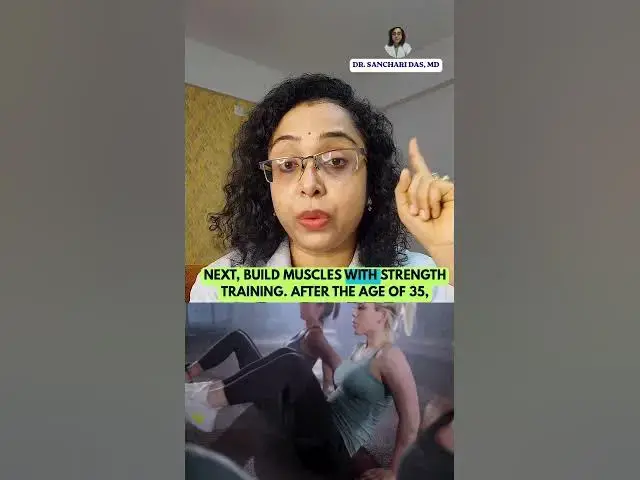
for years. Next, build muscles with
1:14
strengthening. After the age of 35, we
1:16
start losing muscle mass every year and
1:19
thereby protect your bones. Strong
1:21
muscles act like a shock absorber. They
1:23
reduce the stress on ankle and knee
1:25
joint and thereby protect your bones.
1:28
Include strengthening and resistance
1:30
training exercise at least two to three
1:32
times in a week. Do exercises which
1:34
mostly strengthen your hip and leg
1:36
muscles like sit-ups, squats, and wall
1:40
seat. Coming to the nutrition, get
1:42
adequate amount of vitamin D, calcium,
1:44
and good quality protein in your
1:46
everyday diet. Your body cannot absorb
1:48
calcium properly without adequate
1:51
Spend some time in the early morning
1:53
sunlight for better absorption of the
1:54
calcium and take a calcium-rich food
1:56
like dairy, soy milk based like tofu,
1:59
tempeh, and millets like ragi and
2:02
sorghum, sesame seeds, and green leafy
2:04
vegetables. Get your vitamin D levels
2:06
checked, and if you're at risk, please
2:08
take supplements as per your physician's
2:10
advice. Last one is the most important
2:12
point that is control your diabetes and
2:14
don't ignore the pain. High blood sugar
2:16
can weaken down your bones and slow down
2:19
healing. So, if you develop persistent
2:21
knee pain, have difficulty to walk,
2:23
swelling around the knee joints, don't
2:25
ignore it and go for proper treatment
2:28
because early treatment gives much
2:29
better result. So, your bones are your
2:31
lifelong support. The habits you start
2:33
developing in your 30s and 50s can help