Up next in 10

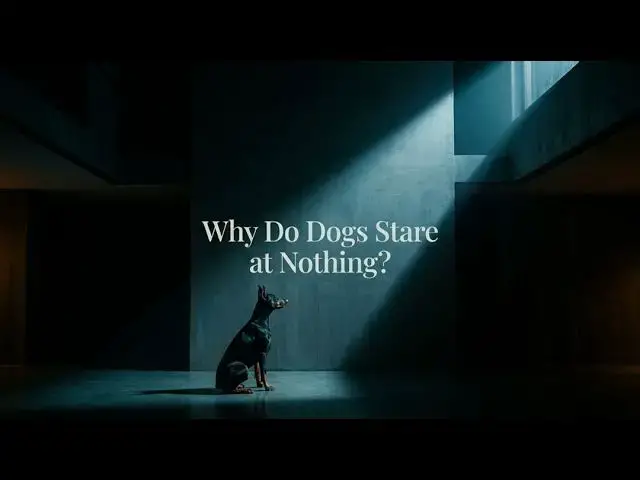
Imagine you are curled up on the sofa at midnight, the tension of a cinematic thriller reaching its peak, when suddenly, your dog freezes. They aren’t looking at you, and they aren’t looking at the door. Their gaze is locked with surgical precision onto a patch of blank drywall in the corner of the room.
It is a moment that shifts rapidly from humorous to unsettling, the classic “phantom stare“ that has led many owners to wonder if their house is haunted or if their pet has simply “lost the signal.”
While the “ghost“ theory is a staple of pet-owner lore, the biological reality is far more compelling. To understand the gaze, we must first accept that a dog’s reality is a multi-layered sensory symphony, quite distinct from our own.
This behavior is a fascinating intersection of superhuman sensory integration and an evolutionary journey that began thousands of years ago. Using recent behavioral research, we are ready to “crack the code“ of the phantom stare.
The inspiration for this podcast episode is from the article called: Dog Behavior Secrets: Why Do Dogs Stare at Nothing? (https://doggozila.com/why-dogs-stare-at-nothing/) I recommend to check out after you finish listening our discussion!
Dogs Are Not Living in Your Reality
To bridge the gap between our experience and theirs, we must recognize that dogs process a “fire hose of data“ that is entirely invisible to the human nervous system. When a dog stares at what we perceive as “nothing,” they are often deep in the middle of a complex sensory task, navigating an olfactory and auditory landscape we cannot access.
While we perceive a quiet room, a dog may be processing:
* Acoustic Artifacts: The high-frequency buzz emitted by smart plugs or internal wiring that sits well outside the range of human hearing.
* Olfactory Echoes: The distinct scent trail of a squirrel that traversed the porch twenty minutes ago, still vivid to a canine nose.
* Subterranean Movement: The vibration and faint rustle of a mouse moving behind the drywall or under the floorboards.
* Distal Stimuli: The sound of a neighbor’s car door closing three blocks away, filtered through their acute auditory processors.
“They are not staring at nothing... They are actively processing a fire hose of data that we are completely oblivious to.”
This sensory gap defines the fundamental difference in our shared lives. We inhabit the same physical space, but while we see a blank wall, the dog is interacting with a dense, living map of information. The “stare“ is simply the outward manifestation of intense mental processing.
Ancient “Wolf Software” in a Modern Home
This hyper-vigilance is an evolutionary vestige of the dog’s history. Whether you share your home with a Great Dane or a tiny Yorkie, your companion is running core programming inherited from their ancestor, the wolf.
In the wild, the ability to detect the slightest shift in the environment was the primary factor in “finding dinner versus being dinner.”
We have domesticated dogs for companionship (https://doggozila.com/humans-and-dogs/) , yet we have not deleted the “Wolf Software“ hardwired into their DNA. This ancient programming demands a level of environmental awareness that remains active even in the safety of a suburban living room.
“It’s like they’re running ancient wolf software on a modern domesticated dog’s hardware.”
This creates a counter-intuitive experience for the owner:
We see a “weird“ or “creepy“ quirk, but the dog is actually performing a vital, life-or-death vigilance task. They are not merely spacing out, but they are fulfilling an ancestral duty to remain attuned to the world around them.
Join Doggie Delight’s subscriber chat (https://open.substack.com/pub/dogmindgears/chat?utm_source=chat_embed)
Join The Cause & Support! (https://dogmindgears.substack.com/subscribe)
The Dog Stare as a Silent Alarm or Social Signal
The phantom stare often functions as a proactive guarding instinct. In an unfamiliar environment, a dog may stare to assess potential threats.
However, within the home, this behavior shifts toward monitoring the “perimeter“ of their territory. They are acting as proactive protectors rather than just reactive ones, scanning for anything that deviates from the norm.
This also ties back to pack dynamics. Dogs are socially hardwired to “keep an eye on their pack“, which in a modern context, means you and your family.
By staring into the distance, they are often maintaining a silent watch, ensuring the social structure remains secure and the environment is stable for their “human pack.”
Subscribe to support and help me to continue stand for dogs and be their voice, to our voiceless furry friends! You will receive all of the work if support now, and get access to the magazine!
When the Stare is a Cry for Help
It is essential
Show More Show Less View Video Transcript
0:00
Hey, before we begin with the
0:01
discussion, let me ask you something. As
0:02
a dog owner, have you ever noticed your
0:04
dog staring at empty space in the
0:06
distance or at the blank white wall like
0:09
totally at nothing?
0:11
>> Well, yes, I have noticed that.
0:13
>> Well, do not worry. We have an
0:14
explanation for that weird doggy
0:16
behavior.
0:18
Hello and welcome to another episode of
0:19
the Dog Mind Gears podcast by the Doggy
0:22
Delight.
0:22
>> Absolutely. And I am really excited to
0:24
get into this today.
0:25
>> Yeah. So today um we are jumping into
0:28
this really fascinating deep dive based
0:30
on a great article from Dogazilla
0:32
magazine. It's called uh why do dogs
0:34
stare at nothing? Dog behavior secrets.
0:37
>> It is a great piece really eye opening
0:39
>> right and our whole mission for this
0:40
deep dive is to completely deconstruct
0:42
the canine mind. We want to figure out
0:44
what is actually happening when your dog
0:47
appears to be you know having an intense
0:49
staring contest with the drywall
0:51
>> which is such a common thing. Right.
0:53
>> Exactly. We are trying to bridge this
0:56
massive evolutionary gap between the
0:58
domestic life your dog lives right now
1:01
like in a cozy climate controlled living
1:03
room and that wild ancient survival
1:06
driven programming that is just running
1:08
deep in their neural pathways.
1:10
>> Yeah. And to even begin decoding that
1:12
programming, we really have to throw out
1:14
our human bias. I mean completely toss
1:16
it.
1:16
>> That is the hardest part, isn't it?
1:18
>> It really is. We constantly view our
1:20
dogs through this strictly human
1:21
psychological framework. Like when a
1:23
person stares blankly at a wall, we
1:25
assume uh they are daydreaming or
1:29
dissociating or maybe just exhausted.
1:30
>> Right. Like they're just zoning out
1:32
after a long day at work.
1:33
>> Exactly. But applying human cognitive
1:36
states to canine behavior is just a
1:38
fundamental error. We share our homes
1:40
with an entirely different species, you
1:41
know,
1:42
>> and [snorts] their baseline interaction
1:44
with the environment is built on this
1:45
foundation of acute survival mechanics,
1:48
not human leisure.
1:49
>> So, the hardware is just completely
1:50
different from ours.
1:51
>> Totally different. If you trace their
1:53
evolutionary lineage back to their wolf
1:55
ancestors, environmental awareness
1:57
wasn't just a passive activity. It
1:59
wasn't a hobby.
2:00
>> No, I mean, it was the primary mechanism
2:01
that kept them alive, right?
2:03
>> Exactly. The individuals who survived to
2:05
pass on their genetic material were the
2:07
ones constantly scanning for micro
2:09
changes in their environment.
2:11
>> So, you mean like uh a shift in wind
2:13
direction or a faint rustle of brush?
2:16
>> Exactly that. Or the faint scent of a
2:18
predator or even prey. That heightened
2:21
state of alert isn't something they just
2:23
turn on and off when they feel like it.
2:25
>> It's their default operating system.
2:27
>> Yes. Think about it like a human
2:29
sleeping alone in a dark forest. You
2:31
know how every snapping twig puts you on
2:33
high alert?
2:34
>> Oh yeah, my heart would be pounding,
2:36
>> right? But for a dog, that biological
2:38
high alert software is basically running
2:40
24/7. There is a huge biological cost to
2:44
that system
2:45
>> because in a wild environment, missing a
2:47
subtle cue literally means starvation or
2:50
death.
2:50
>> Spot on. So their nervous systems evolve
2:53
to prioritize sensory input over almost
2:55
everything else. the sympathetic nervous
2:58
system uh the network responsible for
3:00
the fight orflight response it's primed
3:03
at a completely different baseline than
3:04
ours.
3:05
>> So for a human living in a constant
3:07
state of hypervigilance that is
3:09
basically a trauma response. Right.
3:10
>> Right. It leads to adrenal fatigue for
3:12
us. But for a canine it is literally
3:14
their standard state of being.
3:16
>> Wow. Okay. Which means we need to look
3:18
at the actual data they're taking in.
3:20
Because when we look at a blank wall,
3:21
our human eyes are optimized for
3:23
detecting specific color spectrums, you
3:27
know.
3:27
>> Yeah. And complex facial recognition.
3:29
>> Exactly. So, our eyes tell us the space
3:31
is empty, but a dog's sensory apparatus
3:35
is processing a completely different
3:37
spectrum of reality.
3:38
>> Oh, entirely. Their visual processing
3:40
relies heavily on a really high
3:42
concentration of rod cells in the
3:44
retina.
3:44
>> And rod cells are the ones for light
3:45
detection, right?
3:46
>> Yes. which makes them incredibly
3:47
sensitive to the absolute tiniest shifts
3:50
in light and motion even in near
3:52
darkness.
3:52
>> Okay, so they're seeing things we just
3:54
literally cannot see.
3:55
>> Right. And add to that their flicker
3:56
fusion rate.
3:57
>> I have heard of that. But what is it
3:58
exactly?
3:59
>> So a dog's eyes process visual frames
4:02
faster than humans do. If you and your
4:04
dog watch the same television screen,
4:06
you see a fluid moving image, right?
4:08
>> Yeah. Like normal video.
4:10
>> Well, your dog likely sees a rapid
4:13
stuttering slideshow. So when they stare
4:15
at a seemingly blank space, their
4:18
optical hardware might be tracking, say,
4:21
the microscopic stuttering trajectory of
4:23
a single dust might.
4:25
>> Just a dust might caught in a thermal
4:27
draft. That is wild.
4:28
>> Or maybe the minute shadow cast by a
4:31
moth outside the window. They aren't
4:32
staring at nothing. I mean, they are
4:34
actively tracking micro stimuli.
4:36
>> And vision isn't even their primary data
4:38
collection tool, is it?
4:40
>> Not at all. If we look at the olfactory
4:42
bulb, we are talking about an organ that
4:44
is proportionally 40 times larger than
4:46
ours in relation to total brain size.
4:48
>> 40 times. That is massive.
4:50
>> It is basically a biological mass
4:52
spectrometer. They possess up to 300
4:55
million olfactory receptors compared to
4:57
our 6 million.
4:59
>> So when they are locked in that staring
5:00
posture, what's happening with their
5:02
nose?
5:02
>> Their nose is rapidly pulling in
5:05
chemical compounds, separating them and
5:07
analyzing them. They can smell the
5:08
adrenaline spike of a neighbor two
5:10
houses down.
5:11
>> You're kidding.
5:12
>> Nope. Or they might smell the
5:14
pherommones of a squirrel that ran
5:16
across the roof like an hour ago.
5:18
>> So they freeze to process all that.
5:20
>> Exactly. The physical stillness of the
5:22
stair is a strict requirement for that
5:24
level of processing. It's like when a
5:27
computer runs a massive resourceheavy
5:29
diagnostic program,
5:31
>> right? The other functions just slow
5:32
down or stop entirely to give it
5:34
processing power.
5:35
>> The dog is doing the exact same thing.
5:37
And we haven't even talked about their
5:38
ears yet.
5:39
>> Oh, right. The ears. Don't they have
5:41
like a ton of muscles just in their
5:42
ears?
5:43
>> Yeah, they possess 18 specific muscles
5:46
in their ears, which allows them to
5:48
independently pivot and triangulate
5:49
sound waves.
5:50
>> So, they are actively tuning into
5:52
frequencies far beyond the human
5:54
auditory limit.
5:56
>> Exactly. They hear the highfrequency hum
5:58
of electrical wiring inside the wall or
6:00
pests moving deep beneath the
6:02
floorboards. The stillness, that stare,
6:05
is just the physical manifestation of
6:07
their brain dedicating maximum bandwidth
6:10
to sensory analysis.
6:11
>> Okay. So, if they're constantly
6:13
buffering this immense amount of
6:14
environmental data, what shifts that
6:17
natural data collection into a
6:19
problematic psychological state
6:21
>> because the dogilla piece points heavily
6:23
to boredom and under stimulation.
6:26
>> Yes, particularly when dogs are left
6:27
alone in the house. But I have to push
6:29
back on the standard definition of
6:31
boredom here because, you know, if I
6:33
take my dog on a grueling 5m run and
6:36
completely exhaust them physically, I
6:38
will still sometimes find them sitting
6:39
in the hallway an hour later just
6:41
staring at the front door,
6:42
>> right? And they aren't physically
6:43
underststimulated in that moment.
6:44
>> No, they are exhausted. So why the
6:46
stare? Is it really boredom or are they
6:48
just zoning out like we do in front of
6:50
the TV?
6:51
>> That distinction right there between
6:52
physical exhaustion and mental
6:54
stimulation is where most pet owners get
6:56
tripped up. Cardiovascular fatigue does
6:58
not equal cognitive fulfillment.
7:00
>> Okay, unpack that for me.
7:02
>> Well, modern dogs were selectively bred
7:04
for thousands of years to execute highly
7:06
specific, incredibly complex tasks.
7:09
Hering breeds, for example, were bred to
7:11
anticipate the unpredictable movements
7:13
of livestock and make split-second
7:16
spatial calculations.
7:17
>> Right. And retrievers were bred to
7:19
memorize the exact trajectory and
7:20
landing spot of multiple targets across
7:23
vast distances.
7:24
>> Exactly. So when you take a dog with
7:26
that level of specialized cognitive
7:28
machinery and put them in a quiet static
7:30
house, their brain starts desperately
7:32
searching for a problem to solve.
7:34
>> It's basically a neurochemical deficit.
7:36
Yeah. Right. Like they're experiencing a
7:38
lack of dopamine.
7:39
>> Yes. In a working environment, executing
7:41
a task uh like finding a send or coring
7:45
a sheep triggers a huge dopamine release
7:48
>> which reinforces the behavior.
7:49
>> Exactly. But in a living room, there is
7:51
no task. So the seeking circuit in their
7:53
brain just loops endlessly.
7:55
>> So they stare at the wall or the door
7:58
because their problemsolving
7:59
neurosircuitry is basically starved and
8:01
overclocked.
8:02
>> Precisely. They are searching for any
8:04
input that will trigger that chemical
8:06
reward. And when that seeking circuit is
8:08
chronically unfulfilled, the baseline
8:11
stress levels begin to rise,
8:13
>> which kind of bridges the gap between
8:15
simple boredom and you know profound
8:17
separation anxiety.
8:18
>> It really does. Dogs are inherently
8:20
packoriented animals. Their ancestral
8:23
survival depended entirely on the
8:25
cohesion of the social unit.
8:26
>> So when the human, who is basically the
8:29
primary social anchor and resource
8:31
provider, leaves the environment,
8:33
>> the dog's brain doesn't just process it
8:35
as a temporary absence, in many cases,
8:37
it registers as a critical breakdown of
8:39
their survival structure.
8:41
>> Oh wow. We're talking about the HPA axis
8:43
here, right? The hypothymic pitary
8:45
adrenal axis.
8:46
>> Yes. That exact biological mechanism.
8:48
When you lock the door and drive away,
8:50
the dog's amydala, which is the fear
8:52
center of the brain, perceives a massive
8:54
threat.
8:55
>> It signals the hypothalamus, which
8:57
triggers the adrenal glands to just
8:58
flood the system with cortisol and
9:00
adrenaline.
9:01
>> Exactly. So, the staring isn't just a
9:02
casual vigil. It is a biological holding
9:05
pattern. They are frozen in a state of
9:07
high autonomic arousal.
9:08
>> Basically, waiting for the safety
9:10
parameter, meaning you, to return and
9:12
downregulate their nervous system,
9:13
>> right? And even if a dog doesn't suffer
9:15
from full-blown separation anxiety,
9:18
their genetic hardware still assigns
9:20
them a specific role within the
9:22
territory. This brings us to the
9:24
guarding instinct.
9:25
>> Okay. Yeah. Because ancestral wolves
9:29
meticulously monitored the perimeter of
9:31
their den to detect rival packs or
9:33
predators, right?
9:34
>> They had to. So when your dog stares out
9:36
the bay window at an empty street, they
9:39
are executing a deeply ingrained genetic
9:41
directive. They are acting like a
9:43
dedicated security guard or a bouncer at
9:45
a club, just constantly scanning a
9:47
perimeter even when the room seems
9:49
perfectly calm.
9:50
>> Exactly. They are assessing the
9:51
territory, noting the baseline
9:53
normalities and watching for anomalies.
9:56
>> Can I imagine this varies wildly by
9:57
breed genetics too?
9:59
>> Oh, tremendously.
9:59
>> Like if you look at a livestock guardian
10:01
breed like a great Pyrenees, their
10:03
specific predatory motor sequence was
10:06
genetically modified over centuries,
10:07
right?
10:08
>> Yeah. The instinct to chase and bite was
10:10
basically bred out of them. But the
10:12
instinct to observe and guard was
10:15
massively amplified.
10:16
>> So a great Pyrenees is genetically
10:19
programmed to just sit on a hill and
10:21
stare at an empty field for 12 hours a
10:24
day.
10:24
>> And it is highly rewarding for them to
10:26
do so. But if you put a Belgian
10:28
Malaninoi in that same window,
10:30
>> oh boy, a breed requiring intense
10:33
dynamic engagement.
10:35
>> Exactly. For a malaninoi, that staring
10:37
is a manifestation of deeply frustrated
10:39
kinetic energy,
10:40
>> which means we can't just apply a
10:42
one-sizefits-all solution to this
10:45
solitude induced staring.
10:47
>> No, we really can't. If their brain is
10:49
acting like an overworked security
10:50
system or a starved supercomput, we have
10:53
to fundamentally alter the environment.
10:55
>> We have to engage those specific
10:57
biological needs, right? Which brings us
10:59
to actionable steps. Once we recognize
11:02
that the staring stems from boredom,
11:04
anxiety or hypervigilance, what can we
11:06
actually do?
11:07
>> The foundational step is providing
11:09
targeted mental enrichment that
11:11
specifically activates their cognitive
11:13
hardware. And this is where we need to
11:14
elevate the conversation past just, you
11:17
know, buying them a generic squeaky toy,
11:18
>> right? Because the science behind puzzle
11:20
feeders is actually fascinating. It's
11:22
rooted in Jack Pank's work on effective
11:24
neuroscience, isn't it?
11:25
>> Yes. Specifically, his research on the
11:27
seeking system. When a dog has to
11:30
manipulate a puzzle or nudge a lever or
11:33
sniff out hidden kibble, it engages that
11:36
exact ancestral foraging loop we were
11:38
talking about earlier.
11:39
>> The act of searching and acquiring food
11:42
releases a steady stream of dopamine.
11:44
>> Exactly. And that dopamine actively
11:46
counteracts the cortisol being released
11:48
by your absence. You are essentially
11:50
giving them a neurochemical tool to self
11:52
soothe.
11:53
>> That is so cool. But I assume that
11:55
mental heavy lifting must be paired with
11:57
physical regulation, too. It has to be.
11:59
But again, it is all about the type of
12:01
exercise. A frantic, high stress game of
12:03
fetch in a tiny backyard might actually
12:06
spike their adrenaline.
12:07
>> Really? I always thought fetch tired
12:09
them out.
12:09
>> It tires them physically, but chemically
12:11
can leave them more on edge when they go
12:13
back inside. What regulates the canine
12:15
nervous system most effectively is
12:17
sustained, forward movement,
12:18
cardiovascular output,
12:20
>> like a long hike or a steady walk.
12:22
>> Ideally, in an environment rich with
12:23
olfactory data. Yeah. It mimics the
12:26
nomadic roaming of a wild pack.
12:28
>> Right. Because that sustained movement
12:30
burns off the circulating cortisol and
12:32
activates the parasympathetic nervous
12:34
system, the rest and digest state.
12:36
>> Exactly. It chemically prepares the
12:38
brain for periods of static rest, which
12:41
addresses the root cause of the restless
12:43
staring.
12:44
>> Well, what if we are dealing with a dog
12:45
whose HPA axis is already hijacked by
12:49
separation anxiety? I mean, exercise and
12:52
dopamine puzzles won't fully override a
12:53
full panic attack, will they?
12:55
>> No, they won't. If the amydala is
12:57
screaming that the path is broken, you
12:59
need heavier interventions. This is
13:01
where creating a comfortable
13:02
environment, specifically through
13:04
olfactory manipulation, becomes
13:06
incredibly powerful.
13:08
>> Yeah. The Dog Azil article suggests
13:10
leaving a heavily scented piece of
13:11
clothing like an unwashed gym shirt in
13:14
their bed.
13:14
>> And this isn't just about the dog like
13:16
missing your smell because they love
13:17
you. It is literally a biological hack.
13:19
I love that. Can you break down why
13:21
scent is so grounding for an anxious
13:23
dog?
13:23
>> Sure. A dog's vominasal organ, also
13:25
known as Jacobson's organ, is located in
13:27
the nasal cavity and is specifically
13:29
designed to detect ferommones and
13:31
chemical signatures.
13:32
>> Okay. And how is that different from
13:34
regular smelling?
13:35
>> Unlike other sensory inputs that have to
13:38
be routed through the phalamus, which is
13:39
the brain's relay station, the alactory
13:42
signals from Jacobson's organ travel
13:44
directly to the amydala and the
13:45
hippocampus.
13:46
>> Wow. So it bypasses conscious thought
13:48
entirely.
13:49
>> Exactly. It instantly triggers the
13:51
neural pathways associated with safety,
13:53
resource security, and social cohesion.
13:56
It acts as a chemical anchor in an
13:58
unstable environment.
13:59
>> That is amazing. And we compare that
14:01
chemical anchor with classical
14:03
conditioning to break the cycle of
14:04
panic. Right.
14:05
>> We definitely should. If your dog stares
14:07
anxiously at the door the second you
14:09
pick up your keys, they have built a
14:11
neural association between the sound of
14:13
the keys and the trauma of isolation. So
14:15
gradual desensitization is the process
14:18
of breaking that associative loop,
14:19
>> right? You pick up the keys and you just
14:21
go sit on the couch
14:22
>> or you put on your coat and you make a
14:24
cup of coffee.
14:25
>> Yes. You fire the trigger without
14:27
delivering the traumatic event. You
14:29
slowly degrade that neural connection
14:31
until the trigger no longer causes an
14:33
autonomic nervous system spike.
14:35
>> It minimizes stress and reinforces a
14:38
positive association with alone time.
14:40
But what happens if this doesn't work?
14:42
Well, there is a distinct threshold
14:44
where environmental manipulation and
14:46
classical conditioning fail. If Yog's
14:49
nervous system has been fundamentally
14:50
altered by severe early life trauma or
14:53
genetic predispositions to anxiety,
14:56
their baseline cortisol levels might be
14:58
so high that they literally cannot
15:00
learn.
15:01
>> They can't form new safe associations
15:03
because their brain is just too flooded
15:05
with panic hormones.
15:06
>> Precisely. If the staring is accompanied
15:08
by clear signs of distress uh like
15:10
selfmutilation, destructive chewing of
15:13
door frames or hyper salivation, the
15:15
biological hardware is basically
15:16
malfunctioning.
15:17
>> And that is the point where seeking
15:19
professional guidance isn't just
15:20
helpful, it's an ethical requirement,
15:22
right?
15:22
>> Absolutely. You need to call a
15:23
veterinarian or a certified animal
15:25
behaviorist. A veterary behaviorist
15:26
isn't just a dog trainer. They are
15:28
basically a psychiatrist for canines,
15:30
>> right? because they understand when a
15:31
dog requires psychopharmarmacological
15:34
intervention like an SSRI or a targeted
15:37
anti-anxiety medication.
15:38
>> Exactly. And the medication doesn't
15:40
magically fix the behavior, but it
15:42
lowers the biochemical panic threshold
15:45
just enough so that the dog's brain can
15:47
actually process the behavioral
15:48
modification training.
15:50
>> It gives them the biochemical space to
15:52
learn that the environment is safe.
15:53
>> Yes, expert assistance ensures a
15:56
tailored, comprehensive approach. So,
15:58
the big takeaway here is really about
16:00
empathy. Observing a dog's actions, even
16:03
just staring at a wall through a lens of
16:05
their individual needs, fosters a
16:08
stronger human canine bond.
16:10
>> It leads to a much happier life for the
16:11
dog. For sure. Understanding that
16:13
distinction between when a behavior is a
16:15
quirk, when it is an unmet need, and
16:18
when it is a medical crisis requires us
16:20
to look deeply into the evolutionary
16:22
journey of the species,
16:23
>> which is the perfect transition because
16:25
empathy requires looking at where dogs
16:27
came from. To truly understand our
16:29
living room companions, we have to
16:30
travel back thousands of years and look
16:32
at the ancestral behaviors that still
16:34
shape their instincts today.
16:36
>> We really do. We have to look at the
16:37
domestication syndrome and the ancestral
16:39
blueprints that govern their existence.
16:41
Let's trace that lineage back. We are
16:43
looking at a dog domestication timeline
16:46
spanning tens of thousands of years.
16:48
>> Right? The journey from wild wolves to
16:50
domestic companions is wild. The process
16:53
likely began when the least fearful,
16:55
most opportunistic wolves began
16:57
scavenging around the edges of human
16:59
nomadic encampments.
17:00
>> So, he didn't just capture wild wolves
17:02
and tame them.
17:03
>> No, not really. They essentially
17:04
self-domemesticated by adapting to a new
17:06
ecological niche, which was human waste
17:09
and scraps. But as we shifted from
17:11
unintentional cohabitation to
17:13
intentional selective breeding, we
17:15
triggered a cascade of biological
17:17
changes.
17:17
>> Huge changes. And this is perfectly
17:19
demonstrated by Dmitri Bollev's silver
17:21
fox experiments in Russia.
17:23
>> Oh, I have read about that. That
17:24
experiment is basically the keystone to
17:26
understanding modern dog hardware, isn't
17:28
it?
17:28
>> It really is. Blev selectively bred
17:31
foxes solely for one trait, tameness. He
17:34
didn't breed for coat color or ear shape
17:36
or tail length. He just picked the ones
17:38
that were least aggressive toward
17:39
humans.
17:39
>> Exactly. But within a few generations,
17:42
selecting strictly for a docil
17:43
temperament fundamentally altered their
17:45
endocrine systems
17:46
>> because they produce less adrenaline and
17:48
more serotonin. Right.
17:49
>> Yes. And here is the fascinating part.
17:52
This biochemical shift actually affected
17:54
the migration of neural crest cells
17:56
during embryionic development.
17:58
>> Wait, neural crest cells? What do those
18:00
do?
18:01
>> They are responsible for a lot of
18:02
physical traits. So this shift resulted
18:05
in floppy ears, curled tails, piebal
18:08
coats, and juvenile facial features.
18:10
>> That is incredible. So the very genetic
18:12
mechanisms that made dogs friendly and
18:14
adaptable to human environments also
18:17
changed their physical appearance.
18:19
>> Yes, we essentially created a species
18:22
locked in a state of prolonged
18:23
adolescence, which is biologically known
18:25
as neotony.
18:26
>> But here is a big question for you. How
18:28
much of a dog's personality is hardware,
18:31
meaning genetics, versus software,
18:33
meaning training?
18:34
>> That is the crucial point regarding
18:36
behavior. Because while we soften their
18:38
exterior and dial down their reactive
18:40
aggression, we did not erase the core
18:42
predatory and social software of the
18:44
wolf.
18:45
>> So, the wild traits are inherited and
18:48
still there.
18:49
>> Exactly. Genetics set the absolute
18:51
boundaries of an animal's capability,
18:53
and the environment dictates where the
18:55
animal operates within those boundaries.
18:57
You can run highly sophisticated
18:59
obedience software on a border collie,
19:02
but you cannot delete the genetic
19:04
hardware that compels them to stare
19:05
intently at moving objects.
19:08
>> No, you can't. That ancestral software
19:10
is permanently running in the
19:12
background. And that brings us to
19:14
unraveling ancestral behaviors in dogs,
19:17
specifically pack dynamics and social
19:19
structure.
19:20
>> Right. Because a wild wolf is not a
19:21
solitary creature. It is a highly
19:24
specialized cog in a family unit.
19:26
Exactly. They cooperate within packs.
19:28
And the neurobiology of canine social
19:30
bonding relies heavily on oxytocin
19:32
loops,
19:33
>> which is the exact same chemical pathway
19:35
that bonds human mothers to their
19:37
infants.
19:37
>> Yes, it is. When dogs interact
19:39
positively with humans, both species
19:41
experience a measurable spike in
19:43
oxytocin. The domestic dog hasn't just
19:45
learned to tolerate humans, they have
19:47
hijacked our biological bonding systems,
19:50
and we have hijacked theirs. So that
19:52
translates directly to a domestic dog's
19:54
need for social interaction and healthy
19:56
dynamics with humans.
19:57
>> It does because of that deeply ingrained
20:00
cooperative survival structure.
20:02
Isolation is processed as an existential
20:04
threat.
20:04
>> Like we mentioned earlier with
20:06
separation anxiety in a wild pack. An
20:09
individual separated from the group
20:11
basically cannot survive.
20:13
>> Right? They can't hunt effectively. They
20:15
can't defend against rival packs and
20:17
they cannot survive harsh elements. So
20:19
when a modern dog is isolated, their
20:21
ancient genetics are telling them that
20:23
their survival probability is dropping
20:25
to zero.
20:26
>> This is why clear, consistent social
20:28
structures within the home are vital.
20:31
>> Yes, it provides the dog with a
20:32
predictable framework, lowering their
20:34
cognitive load and allowing their
20:36
nervous system to remain in a regulated
20:38
state.
20:39
>> And within that social structure, they
20:41
still engage in highly complex ancestral
20:44
communication protocols. Right.
20:46
Specifically regarding territory.
20:47
>> Oh, absolutely. Territorial instincts
20:49
and marking behavior are huge. We get
20:52
annoyed when a dog stops to sniff every
20:54
fire hydrant and fence post on a walk,
20:56
dismissing it as a bad habit.
20:58
>> But we are fundamentally
20:59
misunderstanding the biology of scent
21:01
marking. They aren't just leaving a
21:02
signature.
21:03
>> No, they are engaging in a highly
21:05
sophisticated biochemical data exchange.
21:08
It is essentially a localized bioassay.
21:11
>> A bioassay? That sounds intense. What
21:14
are they actually reading from a fire
21:16
hydrant? Well, when a dog investigates a
21:18
marked spot, their vomasal organ is
21:21
breaking down the pherommones and
21:23
endocrine markers left by the previous
21:25
animal. They are detecting luteinizing
21:27
hormone to determine reproductive
21:29
status.
21:30
>> Oh, okay.
21:30
>> They are detecting cortisol metabolites
21:32
to assess the stress levels and
21:34
potential volatility of the other dog.
21:36
They are even detecting major
21:38
hystocompatibility complex proteins.
21:40
>> And what do those proteins tell them?
21:42
They provide a readout on the genetic
21:44
and immune health of the local
21:45
population.
21:46
>> That is just mind-blowing. So, a dog
21:48
staring out the front window is actively
21:50
monitoring the visual perimeter, while a
21:52
dog sniffing a fence post is basically
21:54
downloading a chemical spreadsheet of
21:56
the neighborhood's population dynamics.
21:58
>> Exactly. Both are expressions of the
22:00
same ancestral drive to map and secure
22:02
the territory.
22:03
>> Okay, let's explore how hunting and
22:05
foraging instincts survive the
22:07
evolutionary leap. We touched on this
22:10
earlier with the puzzles, but there's a
22:11
whole predatory motor sequence, right?
22:13
>> Yes. And the full sequence goes orient,
22:16
eye, stalk, chase, grabbite, killbite,
22:19
dissect, and consume.
22:20
>> And every single wild canine relies on
22:23
that exact sequence to survive.
22:25
>> They have to. But what humans did
22:27
through selective breeding was
22:29
essentially take a pair of scissors to
22:31
that genetic code,
22:32
>> amplifying certain parts of the sequence
22:34
and suppressing others depending on the
22:36
job we needed them to do.
22:37
>> Right? So pointers, for example, were
22:39
bred to orient. And I literally freezing
22:42
and staring at prey, but never to chase.
22:44
>> And retrievers were bred to chase and
22:46
grab, but the kill bite was heavily
22:48
suppressed so they wouldn't damage the
22:49
hunter's game.
22:50
>> Exactly. And this directly answers a
22:52
massive part of the staring mystery.
22:54
>> Because if you have a dog with highly
22:56
amplified eye genetics, like a hurting
22:58
breed or a pointing breed, staring is
23:00
literally a misfiring of their predatory
23:02
motor sequence. Yes, they are
23:05
biologically compelled to lock their
23:07
visual focus onto a target to initiate a
23:10
sequence. But in a living room, there is
23:12
no target and no subsequent sequence to
23:14
execute.
23:15
>> The software just freezes. So the
23:17
staring is the manifestation of a paused
23:19
predatory drive.
23:20
>> And because that drive is thwarted, it
23:22
can manifest as frustration or
23:24
displacement behavior, which leads us
23:26
right into communication through body
23:28
language,
23:29
>> right? Breaking down the subtle cues.
23:31
Humans rely on verbal articulation, but
23:34
dogs utilize a silent, incredibly
23:36
intricate autonomic language inherited
23:38
from wolves.
23:39
>> Yes. By the time a dog vocalizes through
23:42
a bark or a growl, they have already
23:44
exhausted a vast vocabulary of micro
23:46
expressions and body postures
23:48
>> like tail position, ear movement, and
23:49
facial expressions. And we miss the
23:51
early warnings completely, don't we?
23:53
>> We really do. We look at a dog yawning
23:55
and assume they are tired or we see them
23:57
licking their lips and assume they are
23:58
hungry. But in the context of stress, a
24:01
yawn is an autonomic nervous system
24:03
response. Right.
24:04
>> Yeah. It's attempting to draw in more
24:06
oxygen to regulate a rising heart rate.
24:09
And a lip lick is an appeasement signal,
24:11
>> which is a pacifying gesture hardwired
24:14
into wolfpack dynamics to deescalate
24:16
tension and avoid fatal physical
24:18
conflicts.
24:19
>> Exactly. When you observe the subtle
24:21
stiffening of the spine or the specific
24:23
dilation of the pupils or pyo erection
24:26
which is the raising of the hair along
24:28
the back, you are watching their
24:30
sympathetic nervous system prepare for
24:32
action.
24:33
>> If we ignore these subtle cues, the dog
24:36
learns that silent communication is
24:37
ineffective,
24:38
>> right? Forcing them to escalate to overt
24:40
behavioral issues or causing them to
24:42
shut down entirely, retreating into that
24:45
blank stressed stare. So, how does all
24:47
this ancient wolf programming function
24:49
in a modern, sometimes chaotic human
24:52
world? This integration of ancestral
24:54
hardware into a modern environment is
24:56
where so many behavioral breakdowns
24:58
occur, isn't it?
24:59
>> Oh, absolutely. Let's look at a dog's
25:00
instinctual responses to fear and stress
25:02
based on their ancestry.
25:04
>> The flight oright response,
25:05
>> right? An ancestral wolf's flight oright
25:07
response was designed for natural
25:09
observable threats like a bear, a rock
25:11
slide, or a rival pack. The response was
25:13
straightforward. assess the threat and
25:15
either engage physically or use vast
25:18
open terrain to flee.
25:19
>> But place that exact same hardware in an
25:21
urban apartment. Let's say a
25:23
thunderstorm rolls in or a neighbor sets
25:25
off fireworks.
25:26
>> The dog's acoustic processing registers
25:28
an overwhelming omniirectional explosion
25:31
of low frequency sound.
25:32
>> And their ancient brain interprets this
25:35
not as a localized threat, but as a
25:37
catastrophic environmental collapse.
25:39
>> Exactly. The autonomic nervous system
25:42
instantly floods the body with
25:43
adrenaline to initiate the flight
25:45
response.
25:46
>> But there is nowhere to flee. The
25:47
environment is closed.
25:48
>> Right? The inability to execute the
25:50
biological mandate to escape causes a
25:53
massive compounding loop of panic. The
25:56
energy has nowhere to go.
25:57
>> This is why dogs destroy crates, dig at
26:00
carpets, or stare blankly while
26:01
trembling.
26:02
>> Exactly. And the expert consensus is
26:04
that we have to mitigate this by
26:06
creating environments that minimize
26:08
these ancestral stress triggers.
26:10
Providing sensory deprivation zones like
26:12
interior closets, heavy blankets or
26:14
white noise
26:15
>> to basically simulate a deep den
26:16
environment where the ancestral brain
26:18
can finally register a sensation of the
26:20
threat.
26:20
>> Yes, precisely. And that same principle
26:23
of unfulfilled biological imperatives
26:25
applies to reproduction and mating
26:27
behaviors. Oh, this is a big one because
26:29
ancestral wolves had highly specific
26:32
reproductive strategies, right?
26:33
>> Yes. In a wild pack structure,
26:36
reproductive rights are fiercely
26:37
contested and tightly regulated, often
26:40
restricted only to the alpha pair to
26:42
ensure resource stability.
26:43
>> But the drive to mate is second only to
26:46
the drive for immediate survival.
26:48
>> Exactly. When an intact domestic dog
26:51
senses the pherommones of a receptive
26:53
mate miles away, their endocrine system
26:56
commands them to seek out that mate at
26:58
all costs,
26:59
>> which results in severe behavioral
27:00
distress in a modern setting. They
27:02
experience profound frustration, pacing,
27:05
vocalizing, and intense staring at
27:07
escape routes like windows and doors.
27:10
>> The biological imperative is demanding
27:11
action, but the environment prevents it.
27:14
This connects directly to our modern
27:15
responsibilities. Managing breeding
27:17
behaviors and responsible pet ownership.
27:19
>> Right? Managing these behaviors through
27:21
spaying and neutering isn't just about
27:23
population control. It is fundamentally
27:25
about regulating their endocrine
27:27
systems.
27:27
>> Removing the hormonal catalyst removes
27:30
the associated biological stress,
27:32
allowing the dog to operate with a much
27:34
lower baseline of anxiety.
27:36
>> Exactly. Which brings us to nurturing
27:38
and respecting ancestral behaviors,
27:40
aligning modern play with evolutionary
27:42
needs. If we understand that a dog is an
27:45
ancient sensorydriven predator living in
27:47
a synthetic environment, our job is to
27:50
curate outlets for those specific
27:52
ancestral drives.
27:53
>> You cannot suppress millions of years of
27:55
evolution, but you can channel it
27:57
through dog enrichment activities
27:59
>> like outdoor adventures and interactive
28:00
puzzles. If you have a terrier bred to
28:03
execute the dissect portion of the
28:05
predatory sequence on vermin, you give
28:07
them puzzle toys they can tear apart,
28:09
>> right? And if you have a hound bred for
28:11
extreme oldactory tracking, you hide
28:13
their meals in the yard so they can
28:15
execute their seeking circuitry.
28:17
>> You honor the genetic hardware. And this
28:19
understanding completely redefineses how
28:21
we approach training, shifting to
28:23
positive training approaches.
28:25
>> Oh, it completely shifts the paradigm.
28:27
Traditional dominance-based training
28:29
methods relied on the flawed premise
28:31
that wolfpacks were ruled by violent
28:34
physical subjugation and therefore
28:36
humans had to forcefully assert
28:38
themselves as the alpha.
28:40
>> But modern behavioral science has
28:42
completely debunked this, hasn't it?
28:43
>> Entirely. Wild wolfpacks operate as
28:46
cooperative family units. Leadership is
28:49
established through resource control,
28:51
guidance, and mutual trust, not physical
28:54
domination. So when we use operant
28:56
conditioning, specifically positive
28:58
reinforcement, we're literally speaking
29:00
their neurobiological language.
29:02
>> We are utilizing the dopamine reward
29:04
system to shape behavior. We acknowledge
29:06
that mutual understanding and trust
29:08
mirror the natural cooperation found in
29:10
healthy pack dynamics.
29:12
>> We create a collaborative relationship
29:13
where the dog actively wants to engage
29:15
with us because the interaction is
29:17
chemically rewarding and structurally
29:19
predictable. And a dog operating within
29:21
a predictable, rewarding framework does
29:23
not need to anxiously stare at the
29:25
walls. Their environment makes sense to
29:27
them.
29:27
>> You're shifting them from a state of
29:28
reactive survival to a state of
29:31
cognitive engagement.
29:32
>> Exactly. When you finally grasp the
29:34
sheer depth of their sensory
29:36
superpowers, the fact that they are
29:38
constantly analyzing a chemical and
29:39
acoustic world, completely invisible to
29:42
us, you stop seeing a stubborn or weird
29:45
animal. You see a highly specialized,
29:48
incredibly adapted organism trying to
29:50
make sense of a world it didn't evolve
29:52
to live in. Bringing everything full
29:55
circle, recognizing a dog's wild
29:57
ancestry allows us to honor their
29:59
instincts.
30:00
>> It demands empathy. By understanding
30:02
their sensory capabilities and their
30:04
pack heritage, we forge deeper bonds and
30:07
celebrate their uniqueness.
30:08
>> The next time you catch your dog locked
30:10
in a dead stare with a corner of the
30:12
ceiling, you aren't just going to see a
30:13
blankout moment. No, you are going to
30:15
recognize a biological supercomputer
30:17
processing micro vibrations, analyzing
30:19
pheromone trails, or perhaps misfiring
30:22
an ancient predatory sequence because
30:23
their brain is starving for a puzzle to
30:25
solve.
30:26
>> We owe it to them to understand the
30:27
machinery beneath the fur.
30:28
>> We absolutely do. And if we push that
30:30
understanding even further, building on
30:31
the fact that dogs process immense
30:33
sensory data and possess deep ancestral
30:36
intelligence, it raises a truly profound
30:38
question.
30:39
>> Oh, what's that? What if when the
30:41
environment is perfectly quiet and their
30:43
biological needs are fully met, that
30:46
intense motionless stare isn't just
30:48
active data collection?
30:49
>> What else could it be?
30:50
>> What if we are witnessing them accessing
30:52
a unique complex form of canine memory?
30:55
>> Wait, like daydreaming?
30:57
>> Yes. Synthesizing past events,
31:00
processing the scent of an old trail, or
31:02
tapping into a primal instinctual loop.
31:05
They might be processing a reality
31:06
through a blend of chemical data,
31:08
acoustic memory, and ancient instinct
31:11
that our limited human minds simply do
31:13
not possess the architecture to
31:15
understand.
31:15
>> I think that would wrap up our
31:16
discussion for today. For all of you
31:18
that want to continue research and
31:19
explore on this topic, as everyone
31:21
should, and you have any questions, then
31:22
you should visit the source article on
31:24
Dogazilla magazine at dogazilla.com.
31:27
Thank you for listening, dear dog lovers
31:28
and brave pack leaders. That was all for
31:30
this episode and until the next time,
31:32
bye-bye to all listeners and subscribers
31:34
of the Dog Mind Gears
Pets & Animals