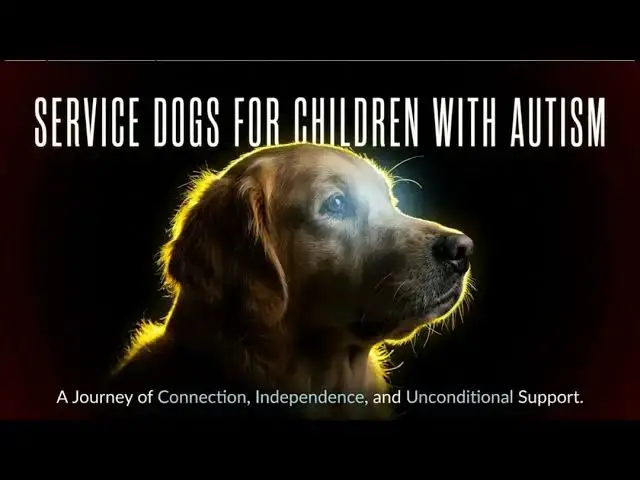

Service Dogs for Children with Autism (Video Part)
Aug 21, 2026
Service dogs represent a transformative intervention for children diagnosed with Autism Spectrum Disorder (ASD). Beyond simple companionship, these highly trained animals provide specialized emotional, social, and practical support tailored to the unique developmental challenges of the child.
Key benefits include enhanced safety through the mitigation of wandering behaviors, the provision of deep pressure therapy for sensory overload, and the facilitation of social interactions.
While the acquisition of a service dog involves significant financial investment and a rigorous two-year training process, the long-term impact on a child’s independence and the family’s quality of life is profound.
Listen to the Podcast Episode on This Topic:
For in-depth information read the original article called: Service Dogs For Children With Autism (https://doggozila.com/service-dogs/) by our friends at Doggozila!
Understanding Autism Spectrum Disorder (ASD)
Autism Spectrum Disorder is a complex developmental disability that manifests in varied ways across individuals.
Primary challenges include:
* Communication: Difficulties with nonverbal cues, eye contact, and maintaining conversations.
* Social Interaction: Struggles with understanding facial expressions and body language.
* Behavior: Engagement in repetitive actions (e.g., rocking, specific patterns) and high sensitivity to sensory stimuli.
Service dogs are specifically trained to address these symptoms by providing a grounding presence and performing functional tasks that mitigate the impact of ASD on daily life.
Read the articles, listen the podcast episodes or watch the video guides & explainers for free, but your support can help me to create, post so much more!
The Service Dog Lifecycle: From Matching to Certification
Client-Dog Matching
The matching process, often facilitated by non-profit organizations such as Integrity Inc., is a meticulous evaluation to ensure a compatible long-term partnership.
* Child Assessment: Experts evaluate the child’s strengths, challenges, and goals through interviews and observation.
* Dog Selection: Candidates are selected based on size, breed, energy level, and temperament. For example, larger dogs may be used for mobility, while calmer dogs are matched with children prone to anxiety.
* Controlled Interaction: Trainers observe natural connections between the child and the dog before finalizing the match.
Specialized Training Programs
Service dogs undergo a rigorous training period, typically lasting two years, which includes:
* Foundational Skills: Basic obedience and socialization to ensure the dog remains calm in diverse environments.
* Task-Specific Training: Custom training based on the child’s needs, such as:
* Deep Pressure Therapy (DPT): The dog leans against or lies on the child to provide calming weight during sensory overload.
* Behavior Interruption: Nudging the child to stop repetitive or self-harming behaviors.
* Safety Maneuvers: Acting as a grounding anchor in public or alerting caregivers if a child attempts to “bolt” or wander.
* Transitions: Leading the child between activities to reduce stress during change.
Team Training and Integration
Integration into the home requires “team training,” where the family learns to:
* Execute commands and interpret the dog’s body language.
* Navigate public spaces and establish daily care routines.
* Maintain the dog’s physical and mental well-being as a valued family member.
Functional Impacts of Service Dog Partnerships
Social and Communication Development
Service dogs act as “social bridges,” helping children navigate complex human interactions:
* Modeling Behavior: Dogs respond to commands like “look” or “watch,” helping the child focus on social cues and facial expressions.
* Ice Breaking: The presence of a dog encourages others to approach and initiate conversation, providing the child with a consistent topic for social practice.
* Empathy and Responsibility: Caring for a living animal helps children learn to recognize and respond to needs outside of themselves.
Emotional and Practical Assistance
* Anxiety Reduction: The unconditional love and constant presence of the dog boost self-esteem and provide a sense of security.
* Independence: By helping children stay on-task in school or therapy, dogs foster a greater sense of autonomy.
* Safety: The ability of the dog to alert parents to wandering behaviors provides families with vital peace of mind.
Discover All Types Of Service Dogs: Different Kinds but All in Service (https://doggozila.com/types-of-service-dogs/)
Legal and Financial Frameworks
Legal Rights under the ADA
Under the Americans with Disabilities Act (ADA), service dogs are permitted in public areas where pets are typically banned (e.g., restaurants, transportation).
Requirements include:
*
Show More Show Less