Up next in 10

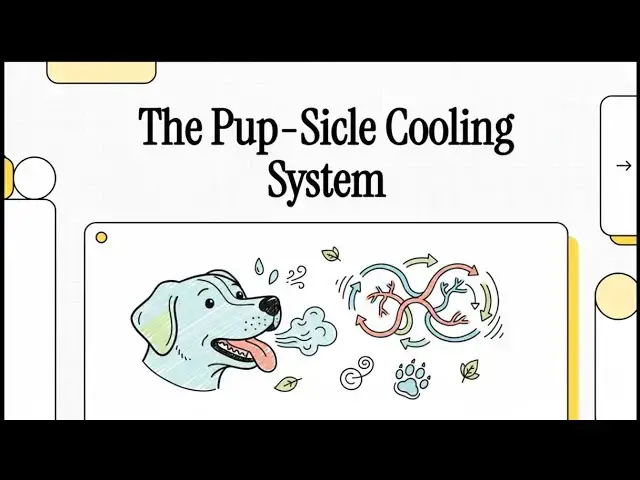
How do dogs sweat?
Ever watched your pup panting on a scorching day and wondered, “Do they even sweat like I do?“ Grab a frosty pup cup, settle in with your furball, and let’s unravel this juicy mystery together. Trust me, it’s cooler than you think!
Forget the image of a dripping doggy gym towel – their cooling system is a fascinating, multi-layered masterpiece!
Grab a frosty drink (and maybe a pup-sicle for your furry BFF), settle in, and let’s unravel this cool mystery together. Trust me, understanding this is key to keeping your best friend safe and comfy during those hot weather adventures!
Read the full article from the source material by Doggozila Magazine on the link below: 👇
🔗 https://doggozila.com/how-do-dogs-sweat/
👆
#dogsweat #dogbody #dogbodylanguage #doghealth #doghealthcare #doghealthtips #dogcare #doglove #doglife #dogmagazine
Show More Show Less View Video Transcript
0:00
All right, let's get into it. Today,
0:01
we're tackling one of summer's, well,
0:03
hottest questions, literally. How do
0:05
dogs actually stay cool? We're going to
0:07
unravel the fascinating and kind of
0:09
weird masterpiece that is their internal
0:11
cooling system. You know, if you're a
0:13
dog owner, I'm willing to bet you've had
0:15
this exact thought. It's a scorching
0:17
day. You're sweating like crazy. You
0:19
look over at your best friend and
0:21
they're just panting. It's so different
0:23
from how we handle the heat, right? So,
0:25
what's really going on? How are they
0:27
actually dealing with it? And trust me,
0:29
the answer is way cooler than you might
0:31
think. Seriously, understanding the
0:34
science here isn't just trivia. It's
0:36
absolutely key to keeping your buddies
0:38
safe and happy all summer. So, let's
0:40
dive in. Okay, first up, the science of
0:43
the splute. And we're talking about more
0:44
than just panting here. It's so easy to
0:47
just assume that's the whole story. But
0:49
a dog's cooling system, man, it's this
0:51
brilliant piece of natural engineering.
0:53
There are a bunch of different parts all
0:55
working together. And this chart really
0:57
lays it all out for us. I mean, look at
0:59
that. Panting is the undisputed
1:00
champion, right? It's doing like 80% of
1:03
the heavy lifting. But you see those
1:05
other two slices, vasoddilation and paw
1:07
sweating. They might look small, but
1:09
don't underestimate them. They're super
1:11
important support systems. Let's break
1:13
each one down. So, let's start with the
1:15
main event, panting. And I want to be
1:18
clear, this is not just heavy breathing.
1:20
It's this superefficient system of heat
1:22
exchange. A dog can take up to 400
1:24
breaths a minute. Think about that.
1:27
Every single one of those breaths pulls
1:28
cool air over their wet tongue and
1:30
lungs. That moisture evaporates and
1:33
poof, it pulls heat right out of their
1:35
body. It's incredibly effective. But,
1:37
and this is a big butt. It definitely
1:39
has its limits as we're about to see.
1:42
Okay, so this answers that big question
1:44
from the beginning. Dogs sweat? Yes,
1:47
just not like we do. This is where it
1:50
happens. They have these specialized
1:51
things called meran glands, and they're
1:53
only on their paw pads and nose. Have
1:55
you ever seen those little damp paw
1:57
prints on your tile floor on a hot day?
1:59
Yep, that's what that is. It's not their
2:01
main way of cooling down, but it's a
2:03
really cool part of their toolkit. And
2:05
that brings us to their secret weapon,
2:07
something called vasoddilation.
2:10
The easiest way to think about this is
2:11
like a built-in radiator. What their
2:13
body does is it pushes warm blood into
2:15
the blood vessels in their ears and
2:17
their face. You know, the places with
2:19
less fur. The air flows over those
2:21
spots, cools the blood down, and then
2:23
that cooler blood goes back into their
2:25
body. So, next time you see your dog's
2:26
ears looking a little pink or flushed,
2:28
that's not just you. That's their
2:29
cooling system hard at work. All right,
2:32
section two, a tale of two sweaters.
2:35
Look, understanding how they cool off is
2:37
one thing. But the really crucial part
2:39
is realizing just how different it is
2:42
from how we cool off. Because if we
2:44
don't get that, our best intentions, our
2:46
human ideas about staying cool can
2:47
actually be pretty useless or even
2:49
flatout dangerous for our dogs. And this
2:51
slide just puts it side by side, crystal
2:54
clear. Look at us humans on the left.
2:56
We've got millions of sweat glands
2:58
everywhere. We're basically designed to
2:59
let heat escape from our entire body.
3:02
Then you look at dogs on the right.
3:04
Their system is way more localized. It's
3:06
all about the mouth, paws, and ears. And
3:08
this one fundamental difference, it's
3:10
the reason for one of the biggest, most
3:12
common myths in all of dog care. Oh, I'm
3:15
sure you've heard this one. Maybe you've
3:17
even thought it yourself. It makes
3:19
perfect sense on the surface, right?
3:21
Less fur, less heat, a cooler dog.
3:24
Simple. But now that you understand how
3:26
their cooling system actually works, you
3:28
can see why this logic is completely
3:30
100% backward. And I'm not just saying
3:34
it doesn't work. I mean, it is genuinely
3:36
dangerous. Taking clippers to a
3:39
doublecoated dog, we're talking about
3:40
your huskys, your goldens, your German
3:42
shepherds, you can do so much more harm
3:45
than good. So, why is it so bad? Well,
3:48
that double coat is an absolute
3:50
masterpiece of natural engineering. That
3:52
fluffy undercoat, it's not just for
3:54
warmth in the winter. In the summer, it
3:56
traps a layer of cooler air right next
3:59
to the skin. It works just like the
4:01
insulation in your house, keeping the
4:02
heat out. When you shave it all off, you
4:05
destroy that natural protection. You're
4:07
exposing their super sensitive skin to
4:09
sunburn. And get this, you're actually
4:11
letting them absorb more direct heat
4:13
from the sun. The real key isn't
4:15
shaving, it's brushing. Getting all that
4:17
loose, dead undercoat out so the system
4:20
can work properly. Okay, moving on to
4:22
section three. Not all pups are the
4:25
same. So, that whole coat thing is a
4:27
huge piece of the puzzle, but it brings
4:29
up another really important point. Not
4:31
all dogs are created equal when it comes
4:33
to heat. Their breed, their anatomy, it
4:36
all plays a massive role. And this table
4:39
is a perfect example. Look at this. On
4:41
one hand, you have a breed like a
4:43
dachshun. Turns out they have a way
4:45
higher number of those little sweat
4:46
glands in their paws. Now, compare that
4:48
to a pug, a brachyphalic or flatfaced
4:51
breed. Not only do they have fewer of
4:53
those paw sweat glands, but their short
4:55
snout makes their main cooling tool,
4:57
panting, way, way less efficient. So,
5:00
what happens when your body isn't great
5:02
at cooling itself? You have to change
5:04
your behavior. And these dogs, they
5:06
instinctively know they're at a
5:07
disadvantage. You'll see them making
5:09
smart choices, seeking out shade more
5:11
often, doing that classic sploot on a
5:13
cool tile floor to get their belly nice
5:15
and cold, and just moving less. They'll
5:18
cut their activity by more than half
5:19
sometimes. It's our job as their owners
5:21
to see that and help them out. Which
5:23
brings us to our last section. Be a cool
5:26
parend. Okay, we've got the science
5:28
down. So, what do we do with it? Let's
5:30
talk about the practical, actionable
5:32
stuff that can literally save a life.
5:35
And we have to start by busting the
5:37
single most dangerous myth out there. I
5:39
really can't stress this enough. So,
5:41
please listen. There is absolutely no
5:43
version of this that is safe. Not for
5:46
just a minute. Not with the windows
5:48
cracked. Not even in the shade. Never.
5:50
Ever. A car literally becomes an oven.
5:54
It's like a greenhouse on wheels. Even
5:56
on a pretty mild day, say 24 degrees C,
6:00
the temperature inside that car can
6:01
shoot past 38 degrees. That's over 100
6:04
Fahrenheit, in just 10 minutes, a dog's
6:07
cooling system doesn't stand a chance.
6:08
It gets overwhelmed almost instantly.
6:11
It's a death trap. Plain and simple.
6:14
Okay, so you need to know the signs of
6:16
heat stroke. Look for frantic panting,
6:18
super bright red gums, any kind of
6:20
weakness, or even collapse. Those are
6:23
major red flags. If you see any of them,
6:25
you have to act immediately. Step one,
6:28
get them out of the heat. Step two,
6:30
start cooling them down with cool water.
6:32
And I mean cool, not icy. Ice water can
6:36
actually make things worse by trapping
6:37
heat. While you're doing this, get on
6:39
the phone to your vet. Then get your dog
6:41
to the vet as fast as you possibly can.
6:44
Every single second counts here. But
6:46
look, the best way to deal with heat
6:48
stroke is to never let it happen in the
6:50
first place. Prevention is everything.
6:52
And being proactive is actually pretty
6:54
easy. We're talking simple stuff. Shift
6:56
your walks to early morning or late
6:57
evening. Always, always have a water
6:59
bowl with you. Think about getting a
7:01
cooling mat for the house or a cooling
7:02
vest for outings. And please don't
7:05
forget to protect their paws from that
7:06
scorching asphalt. This isn't about
7:08
taking away the summer fun. It's about
7:10
making sure the fun is safe. So, there
7:14
you have it. When we actually understand
7:16
our dog's unique biology, we can start
7:18
working with their natural cooling
7:20
systems instead of against them. And
7:22
this goes way beyond just keeping them
7:24
comfy. It's about keeping them safe. So,
7:26
I'll leave you with this. Now that you
7:27
know the science, what's one thing
7:29
you're going to change to help your dog
7:30
beat the heat this summer?
#Pets & Animals
#Dogs