0:00
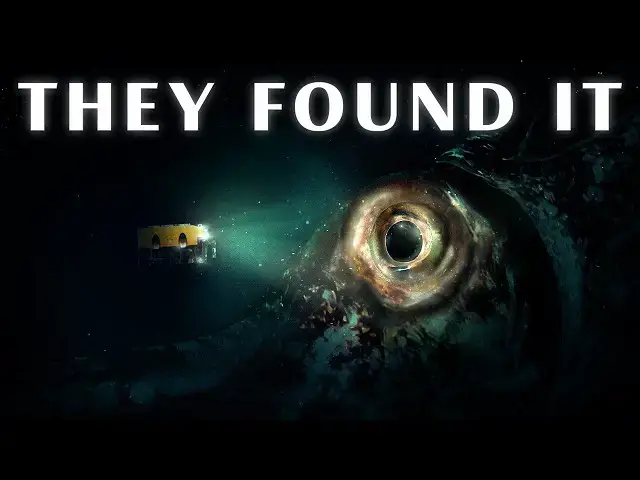
March 9th, 2025. South Atlantic Ocean.
0:04
Nearly 2,000 ft below the surface, a
0:06
deep-sea robot moved through total
0:08
darkness. No sunlight, no waves, no
0:11
sound from above. Only black water,
0:14
crushing pressure, and one camera light
0:16
searching the deep. The robot was called
0:19
Subastian. It was exploring near the
0:21
South Sandwich Islands, one of the most
0:23
remote places in the South Atlantic. At
0:26
first, the camera saw nothing unusual.
0:29
Particles drifted past the lens. Small
0:31
shapes appeared, then vanished. Then
0:34
something different entered the light.
0:36
Small, transparent, almost weightless.
0:40
It looked like a piece of glass floating
0:42
in the dark. A clear body, orange arms,
0:45
tiny hooks. It did not look dangerous.
0:48
It did not look enormous. And it
0:50
definitely did not look like the
0:52
creature scientists had been trying to
0:54
see alive for almost 100 years. For a
0:57
moment, it seemed like another strange
0:59
animal in the deep sea, but it was not.
1:02
The scientists did not know it yet, but
1:04
Subastian had just filmed one of the
1:06
rarest moments in ocean science. That
1:09
tiny transparent creature was a colossal
1:11
squid, alive in its natural habitat,
1:14
filmed for the first confirmed time in
1:16
history. So, why did one of the heaviest
1:19
animals without a backbone appear as
1:21
something small, clear, and fragile? And
1:24
what did those tiny hooks reveal? The
1:26
colossal squid has one of the most
1:28
misleading names in nature. When people
1:31
hear it, they imagine a monster, a huge
1:33
body, massive eyes, long arms moving
1:36
through black water. And adults really
1:39
can be enormous. They can grow to around
1:41
23 ft long. They can weigh close to
1:44
1,000 lb. But for almost a century,
1:47
scientists [music] did not know this
1:49
animal by seeing it alive. They knew it
1:51
from clues. A beak found inside a whale,
1:54
a damaged body pulled up by a fishing
1:56
vessel, a dead or dying squid near the
1:59
surface, fragments of something huge
2:01
from a world humans could barely reach.
2:03
Scientists knew it existed, but knowing
2:06
is not the same as seeing. A dead
2:08
specimen can prove an animal is real,
2:11
but it cannot show how it moves, how it
2:13
reacts to light, how it looks in the
2:15
pressure and darkness of its own world.
2:18
That is why this footage mattered. This
2:20
was not a squid dragged to the surface.
2:23
It was not trapped in a net. [music] It
2:24
was not dying in shallow water. It was
2:27
alive, moving freely, exactly where it
2:30
belonged. But here is the twist. The
2:33
animal in the video was not the giant
2:35
people expected. It was a juvenile, only
2:38
about 1-ft long. Its body was mostly
2:41
transparent. Its arms were tinted
2:43
orange, and it floated through the black
2:45
water like a ghost. The world had waited
2:47
for a monster, but the first confirmed
2:49
living image came as something tiny,
2:52
almost invisible, a creature that did
2:54
not look colossal yet. But hidden in
2:57
that small body were the clues, the
2:59
hooks, the suckers, the shape of the
3:01
arms. In the deep ocean, strange is not
3:03
enough. A camera can capture an image,
3:06
but science [music] needs proof. So
3:08
experts studied the footage. They
3:10
compared the animal. They checked the
3:12
details. And when the clues matched, the
3:14
strange little creature stopped being
3:16
just another deep-sea mystery. It became
3:18
history, a live colossal squid confirmed
3:22
in its natural habitat for the first
3:24
time. That is what makes the moment so
3:26
rare, not because the squid was
3:28
imaginary, it was real, but because its
3:31
real home is almost impossible to watch.
3:33
The Southern Ocean is enormous. The
3:35
water is cold. The darkness is complete.
3:38
And the animals there do not wait in
3:40
front of cameras. They pass through the
3:43
light for a moment, then vanish. That is
3:45
exactly what happened here.
3:48
For a few seconds, the ocean opened a
3:49
door, and Sebastian was looking at the
3:51
right place at the right time, but the
3:54
discovery did not end the mystery. It
3:57
Because if the baby was there,
3:59
where are the adults? What would a fully
4:02
grown colossal squid look like alive in
4:04
the deep? Would it avoid the robot
4:06
lights? Would it disappear before the
4:08
camera could focus? Nobody knows yet.
4:10
For nearly 100 years, the colossal squid
4:13
was mostly a creature of fragments, a
4:15
beak, a body, a story from a fishing
4:17
boat, a mark on a whale. Then, in 2025,
4:21
a small transparent animal drifted into
4:23
a camera beam nearly 2,000 ft below the
4:26
surface. At first, it looked too fragile
4:28
to matter, too small to be historic, but
4:31
the hooks told the truth. The experts
4:35
>> and suddenly, that tiny creature became
4:37
the first confirmed living colossal
4:39
squid ever filmed in its own deep-sea
4:42
world. The footage does not show a
4:43
giant. The animal does not attack the
4:45
camera. It simply appears, silently,
4:48
briefly, alive. And sometimes, that is
4:51
more powerful because real discoveries
4:54
do not always arrive the way people
4:55
expect. Sometimes, the ocean does not
4:58
reveal its secrets with a massive
4:59
shadow. Sometimes, it gives you
5:01
something smaller, a clear body, orange
5:04
arms, tiny hooks, a living clue. And
5:08
then, it disappears again.
5:10
Because sometimes, the first sign of a
5:11
giant is not a shadow filling the
5:13
screen. Sometimes, it is a baby made of
5:16
glass floating quietly in the deep. If
5:19
the ocean hid this creature alive for
5:21
almost 100 years, what do you think is
5:23
still waiting in the dark?