Up next in 10


For 108 years, the ocean kept this secret buried in total darkness.
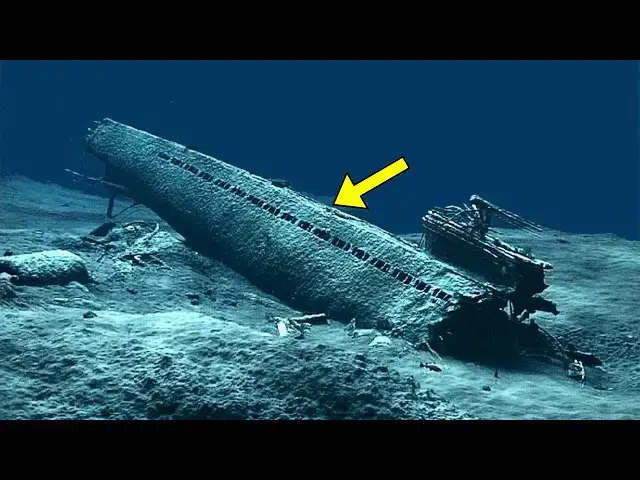
Then divers descended more than 300 feet below the Atlantic… and saw a shape on the seabed that changed everything.
No treasure. No gold. Just a forgotten wartime mystery that vanished so completely, the world almost gave up looking.
But the sea didn’t erase it forever.
#OceanMystery #DeepSeaDiscovery #LostHistory
Show More Show Less View Video Transcript
0:00
April 2026, 50 miles off the coast of
0:03
Cornwall, England, a team of technical
0:05
divers descended into the Atlantic
0:07
Ocean. More than 300 ft below the
0:09
surface, the water turned dark, cold,
0:12
silent, [music]
0:13
and difficult to search. They were not
0:15
looking for treasure. They were not
0:17
looking for gold. [music] They were
0:18
looking for a ghost, a US Coast Guard
0:21
ship that had vanished during World War
0:23
I. For 108 years, no one knew exactly
0:26
where it had come to [music] rest. The
0:27
ship was called Tampa, and in 1918, it
0:31
appeared so fast that the sea seemed to
0:33
erase it. Then, after years of
0:35
searching, the divers saw something on
0:37
the seabed, a shape, a wreck,
0:40
>> [music]
0:40
>> a piece of metal history lying in the
0:42
dark. At first, it was only another
0:44
possible target, another site to check,
0:47
another mystery under the water. But
0:49
when they looked closer and compared
0:51
what they found to old photographs and
0:53
technical records,
0:54
they realized they had finally found the
0:56
lost Coast Guard cutter [music] Tampa.
0:59
So, how did an American warship vanish
1:01
during World War I? Why was it missing
1:04
for more [music] than a century? And how
1:05
did divers finally find it 300 ft
1:08
beneath the Atlantic?
1:10
Let's get into it. The story of Tampa
1:12
did not begin as a mystery. It began as
1:14
a working ship. Before it was called
1:16
Tampa, the vessel had another name,
1:18
Miami. It was launched in 1912 before
1:21
the modern US Coast Guard even existed
1:23
in its current form. At first, it served
1:26
in the Revenue Cutter Service, one of
1:28
the services that later became part of
1:29
the United States Coast Guard.
1:31
>> [music]
1:31
>> Then, in 1915, the US Coast Guard was
1:34
formed, and the ship became part of that
1:37
new history. In 1916, Miami was renamed
1:40
Tampa, but just 1 year later, the world
1:42
changed. The United States entered World
1:45
War I, and Tampa was sent across the
1:47
Atlantic. Its mission was dangerous, but
1:49
not dramatic in the way people often
1:51
imagine war. It was not chasing glory.
1:54
It was protecting convoys, merchant
1:57
ships, supply [music] ships, vessels
1:59
crossing dangerous waters where German
2:01
submarines were waiting. For months,
2:03
Tampa escorted ships between Gibraltar
2:05
and Britain. Again and again, it crossed
2:07
waters where one hidden submarine could
2:10
change everything. And for a long time,
2:12
Tampa did its job. Convoys moved, ships
2:15
arrived, the cutter kept going.
2:17
>> [music]
2:17
>> But on September 26, 1918, the war was
2:21
only weeks from ending, and Tampa was
2:23
making what should have been another
2:24
routine movement. It had separated from
2:26
a convoy and was heading toward Milford
2:28
Haven, Wales. The ship was low on coal
2:31
and needed to resupply. The crew did not
2:33
know that beneath the surface a German
2:35
submarine was watching. [music] Its name
2:37
was UB-91,
2:39
and that night it moved into position.
2:41
The U-boat fired one torpedo, just one.
2:44
>> [music]
2:44
>> The torpedo struck Tampa, and within
2:46
minutes the ship was gone. All 131
2:50
people aboard were lost. 111 members of
2:53
the US Coast Guard, four US Navy
2:55
personnel, and 16 British Navy personnel
2:58
and civilians. It became the largest
3:00
single American naval combat loss of
3:03
life in World War I, but the tragedy did
3:05
not end there because after Tampa sank,
3:08
the [music] exact location of the wreck
3:10
remained unknown. Searchers found
3:12
pieces. They found signs that the ship
3:14
had gone down, but not the final resting
3:17
[music] place of the vessel itself. The
3:19
sea kept that part hidden. And as the
3:21
years passed, Tampa became more than a
3:23
lost ship. It became a name on
3:25
memorials, a story in Coast Guard
3:28
history, a tragedy remembered but not
3:30
fully located. Families had names,
3:33
historians had records, the Coast Guard
3:35
had the story, but the ocean still had
3:37
the ship. For more than a century, the
3:39
wreck stayed somewhere beneath the
3:41
Atlantic. Storms [music] passed above
3:43
it, ships crossed over it, technology
3:45
changed, wars came and went, but Tampa
3:48
remained in the dark. Then, in 2023, a
3:52
British technical diving group called
3:54
the Gasparados began searching. This was
3:56
not easy diving. More than 300 ft down,
3:59
every minute matters. The pressure is
4:02
dangerous, the light is limited, the
4:04
water is cold, and the wrecks on the
4:06
seabed are not labeled. A shape on sonar
4:09
does not tell you its name. A broken
4:11
piece of metal does not immediately say
4:13
what ship it came from. So, the team had
4:15
to search carefully. They studied
4:17
[music] records. They checked possible
4:19
locations. They worked with historical
4:21
information from the US Coast Guard.
4:23
They made dive after dive, one target
4:25
after another, one possibility after
4:28
another. For 3 years, they kept looking.
4:30
And then, finally, they reached the site
4:32
that changed everything. On the seabed,
4:34
they found the remains of a ship. But,
4:36
finding a wreck is not the same as
4:38
identifying it. There are many wrecks
4:40
beneath these waters. Some are merchant
4:42
ships, some are warships, some are
4:44
forgotten accidents, some are known,
4:46
[music]
4:46
some are not. So, the divers needed
4:48
proof. They documented what they could
4:50
see. They compared the wreck to old
4:52
photographs of Tampa. They looked at
4:54
technical details, the shape, the
4:56
equipment, the layout, the pieces that
4:59
matched the lost cutter. And slowly, the
5:02
evidence came together. This was not
5:04
just another wreck. This was Tampa.
5:07
The ship that had vanished in 1918.
5:10
The ship that had carried 131 people on
5:13
its final voyage. The ship the ocean had
5:15
hidden for 108 years. For the divers, it
5:19
was not a treasure discovery. It was a
5:21
historical moment. For the Coast Guard,
5:23
it was something deeper. Because Tampa
5:25
was not just a vessel, it was [music]
5:27
part of the service's identity. A
5:29
reminder that Coast Guard crews did not
5:31
only rescue ships and patrol coastlines.
5:34
They also served in war. They crossed
5:36
dangerous waters. They protected others.
5:39
And sometimes, they never came home.
5:42
That is why finding the wreck matters.
5:44
It gives the story a place, not just a
5:47
date, not just a name, not just a record
5:50
in an archive. A real place on the
5:52
seafloor, a final location, a point in
5:55
the ocean where history stopped moving
5:57
and settled into silence.
5:59
And there is something powerful about
6:01
the way it was found. No one walked into
6:03
a museum and solved it from a display
6:05
case. No one opened a box and found the
6:08
answer written down. The answer was
6:10
still out there, far offshore, deep
6:12
underwater, waiting for people willing
6:15
to keep searching. For 108 years,
6:17
[music] the Atlantic kept the final
6:19
secret of Tampa. Then a team of divers
6:21
went down into the dark and brought that
6:23
secret back into the light. Not by
6:25
raising the ship, not by disturbing the
6:27
site, but by finding it, identifying it,
6:30
and giving its story back to the world.
6:32
The wreck will now be studied with care.
6:35
The Coast Guard plans further underwater
6:37
research and exploration, but the
6:39
discovery already changed something,
6:41
>> [music]
6:41
>> because the mystery is no longer just
6:43
where Tampa sank. Now, people can look
6:46
at the map and know where the ship
6:47
finally came to rest. A ship that began
6:49
its life as Miami, became Tampa, crossed
6:52
the Atlantic in wartime, protected
6:55
convoys, [music] and disappeared just
6:57
weeks before the war ended. For more
6:59
than a century, its final location was
7:01
missing. Then, 300 ft beneath the
7:04
Atlantic,
7:05
>> [music]
7:05
>> divers saw the shape they had been
7:06
searching for. A wreck in the dark, a
7:09
lost American ship, a piece of World War
7:12
I history that had waited longer than a
7:14
human lifetime to be found. And
7:16
sometimes, that is what the ocean does.
7:18
>> [music]
7:18
>> It hides things so completely that the
7:20
world begins to think they are gone
7:22
forever. But gone is not always gone.
7:25
Sometimes, history is still there, under
7:27
the waves, under the darkness,
7:29
>> [music]
7:29
>> under years of silence, waiting for the
7:31
right people to look in the right place.
7:33
The Coast Guard cutter Tampa vanished in
7:35
1918. For 108 years, the sea kept its
7:39
final resting place hidden. Then, divers
7:41
finally found it, and a century-old
7:43
mystery beneath the Atlantic came
7:45
[music] to an end. If a lost US warship
7:48
could stay hidden for 108 years, what
7:50
else do you think is still waiting on
7:52
the ocean floor?
#Jobs & Education