Up next in 10


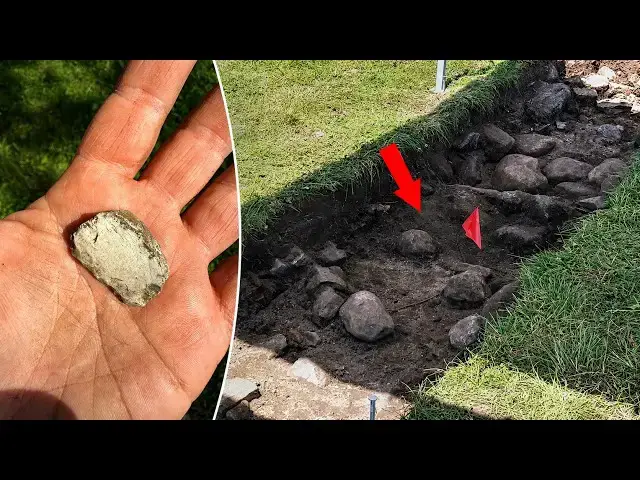
Archaeologists were digging beneath a quiet town green in Lebanon, Connecticut, when they uncovered the remains of a buried structure linked to the American Revolution.
At first, it looked like an old foundation — but the deeper they looked, the more it revealed a hidden story about French troops, wartime survival, and the ordinary thing that helped keep an army alive.
#Archaeology #AmericanRevolution #HiddenHistory
Show More Show Less View Video Transcript
0:00
June 2026, Lebanon, Connecticut.
0:03
Archaeologists were digging beneath a
0:05
quiet town green. From above, it looked
0:08
ordinary, but under the ground, the
0:10
archaeologists began finding pieces that
0:13
did not belong to the modern town. At
0:16
first, it looked like the remains of a
0:18
buried foundation. Then, on the final
0:21
day of the excavation, they found
0:23
something different, a burned gunflint,
0:27
a small piece of stone once used in
0:29
flintlock firearms. And suddenly, the
0:32
quiet town green did not feel so quiet
0:35
anymore.
0:37
Because the archaeologists were not just
0:39
standing over an old structure, they
0:41
were standing over a place connected to
0:43
the American Revolution, a place that
0:46
may have helped feed French troops who
0:48
came to help America fight for
0:50
independence.
0:52
So, what was buried under this ordinary
0:54
patch of grass?
0:56
Why had people believed for more than a
0:58
century that something was hidden there?
1:01
And how could a small underground
1:02
structure be connected to one of the
1:05
biggest turning points in American
1:07
history? Let's get into it. Lebanon,
1:10
Connecticut is not just another small
1:12
town. During the Revolutionary War, it
1:15
was one of the important places where
1:17
military activity, planning, and support
1:20
happened far from the famous
1:22
battlefields.
1:23
When people think of the American
1:25
Revolution, they usually picture
1:27
muskets, generals, flags, and battles.
1:30
But armies do not survive on battles
1:33
alone. They need food, camps, storage,
1:36
hospitals, roads, and people working
1:39
behind the scenes to keep thousands of
1:41
soldiers moving. And that is what makes
1:44
this discovery powerful. Because
1:47
archaeologists were not uncovering gold,
1:49
a cannon, or a dramatic battlefield
1:51
scene, they were finding something more
1:54
ordinary,
1:55
>> [music]
1:55
>> and in some ways, more important, a
1:57
bakehouse, a place built to make bread.
2:01
That may not sound huge at first, but
2:04
during a war, bread could keep an army
2:06
alive.
2:07
The structure was found beneath the
2:09
Lebanon Town Green. For years, local
2:12
history had suggested that a [music]
2:14
French bake oven once stood in this
2:16
area. There was even an old belief that
2:18
the site had been explored back in 1896,
2:22
but that older dig left no clear modern
2:25
record, no careful map, no complete
2:28
archaeological documentation, [music]
2:30
and no proof strong enough to show
2:32
exactly what remained under the ground.
2:35
So, when archaeologists opened the site
2:37
in 2026,
2:39
they were not just looking for a story,
2:41
they [music] were testing whether the
2:42
story was still there.
2:45
And it was. The foundation appeared to
2:48
be largely intact. It was filled with
2:50
stone rubble. The remains suggested a
2:53
structure that was more than a quick
2:55
temporary oven, not a small earth oven
2:58
used for a day or two by troops
3:00
constantly on the move. This looked more
3:03
semi-permanent.
3:05
A stone base, brick from the oven
3:07
structure, something built for an
3:09
encampment that lasted long enough to
3:12
need a real place for baking.
3:14
That detail matters because French
3:17
troops were not just passing through
3:19
American history, they were part of it.
3:22
In 1780, thousands of French soldiers
3:25
arrived under General Rochambeau. They
3:28
had come to help the American cause at a
3:30
time when the war had dragged on for
3:32
years. Then in 1781,
3:35
French and American forces moved toward
3:38
Yorktown. That campaign helped trap the
3:41
British army and led to one of the
3:43
decisive victories of the Revolutionary
3:46
War.
3:47
But before armies can march hundreds of
3:49
miles, someone has to feed them. Before
3:52
a soldier can fight, someone has to bake
3:55
bread. Before history becomes a famous
3:58
victory, it has to pass through ordinary
4:00
places like this.
4:02
That is why a buried bakehouse matters.
4:06
It shows the hidden side of war, not the
4:08
side of paintings or dramatic speeches,
4:11
but the side made of work, food, fire,
4:15
brick, [music] and survival.
4:17
And the artifacts made the site feel
4:19
human. The ceramics suggested daily
4:22
life. The animal bones hinted at meals.
4:26
The pipe fragments and bottle glass
4:28
pointed to people spending time there,
4:30
not just passing through. And the burned
4:33
gun flint connected the quiet foundation
4:36
back to the age of flintlock weapons and
4:39
the Revolutionary War.
4:41
Each object was small, but together they
4:45
turned an ordinary green into a window.
4:48
A window into a time when French troops,
4:51
American leaders, local workers, and
4:54
wartime logistics all passed through the
4:57
same landscape.
4:59
The discovery also suggested something
5:02
bigger.
5:03
Before the dig, a ground-penetrating
5:05
radar survey had shown that the stone
5:07
and brick structure might be part of a
5:10
larger complex.
5:12
That means the bakehouse may not have
5:14
stood alone. There may have been other
5:17
military support structures nearby.
5:19
Other features, other buried evidence,
5:23
may be connected to the French
5:24
encampment, militia training, or other
5:27
Revolutionary War activity in Lebanon
5:30
that archaeologists are still trying to
5:32
understand.
5:34
That is why the story is not finished.
5:37
More testing is planned, and more clues
5:40
may still be hidden under the town
5:42
green. And that is the part that makes
5:45
this discovery feel bigger than a single
5:47
oven because the site reminds us that
5:51
history is not always buried under
5:52
castles or battlefields. Sometimes it is
5:56
under grass, under a public space, under
6:00
the place people walk past every day
6:03
without thinking twice.
6:05
For generations, this ground looked
6:07
ordinary, but underneath it were the
6:09
remains of a structure that may have
6:12
helped feed soldiers connected to the
6:14
campaign that changed the future of
6:16
America.
6:17
A bakehouse, a place where bread was
6:20
made. And yet, that simple structure
6:23
tells a story most people forget.
6:26
Wars are not won only by the people who
6:29
fire the shots. [music]
6:31
They are also won by the people who move
6:33
supplies, build [music] camps, cook
6:36
meals, carry food, repair roads, and
6:39
keep armies alive long enough to reach
6:42
the decisive moment.
6:44
The French alliance helped America win
6:46
its independence, but behind that
6:49
alliance were thousands of ordinary
6:51
needs, and somewhere beneath the Lebanon
6:54
town green, one of those needs left a
6:56
mark in stone and brick.
7:00
For centuries, the bakehouse
7:01
disappeared. The oven went cold. The
7:04
soldiers moved on. The war ended. The
7:07
town changed. People walked above the
7:10
spot without knowing what was under
7:12
their feet.
7:13
Then, archaeologists opened the ground,
7:16
and the past came back. Not as a
7:19
monument, but as a foundation. Stone,
7:22
brick, burned material, small artifacts,
7:26
and one quiet reminder that even the
7:29
biggest moments in history depend on
7:32
ordinary things, like bread.
7:35
So, the next time you walk across a
7:37
quiet town green, remember Lebanon
7:40
because beneath ordinary ground, there
7:42
may be more than dirt. There may be a
7:45
forgotten structure, a wartime secret, a
7:48
piece of an army's daily life, a place
7:51
where food was made for soldiers on the
7:54
road to history.
7:56
And sometimes the thing hidden
7:58
underground is the place that helped
8:00
keep an [music] army alive. If
8:03
archaeologists found this under a quiet
8:05
town green, what else do you think is
8:08
still hiding beneath ordinary American
8:10
towns?
#Jobs & Education