Up next in 10



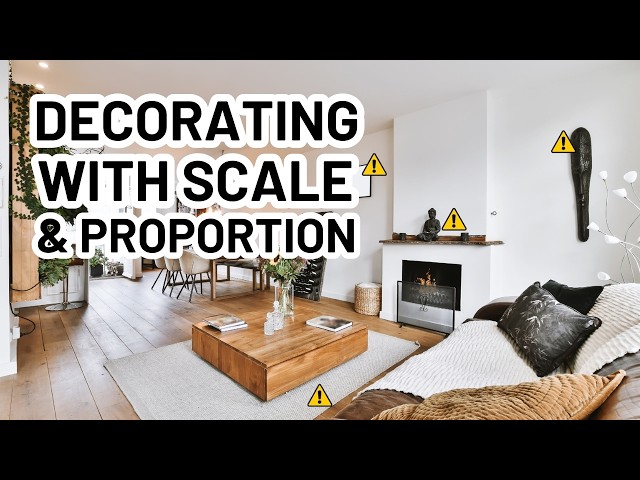
When a room feels “off,” it’s usually not the color palette or the style of decor… It’s the scale and proportion.
In this video, we’re breaking down what scale and proportion are in interior design so you can finally understand why some spaces look professionally styled — and others feel awkward or unfinished.
Whether you're decorating a small apartment, rearranging a living room, or trying to make oversized furniture work, understanding scale and proportion will completely transform the way you decorate.
If you’ve ever wondered why your art looks too small, your rug feels “wrong,” or your space just doesn’t flow — this video will help you fix it with confidence.
| CHAPTERS |
00:00 INTRO
01:35 WHAT IS SCALE?
06:07 WHAT IS PROPORTION?
09:40 HOW TO CREATE DRAMA & DECORATIVE FOCAL POINTS
11:09 OUTRO
If you love practical decorating tips that actually make a difference, this one’s for you.
Don’t forget to like, comment, and subscribe for more home inspiration and decor tips!
Show More Show Less View Video Transcript
0:03
Hi, it's Lindsay Diane from
0:05
dianecor.com.
0:07
In this video, let's talk about scale
0:09
and proportion in home design. One of
0:12
the most common reasons that our space
0:14
feels off has nothing to do with color
0:17
or style or the quality of the items
0:20
chosen. It boils down to scale and
0:23
proportion.
0:24
These two foundational design principles
0:28
quietly shape the way a room functions,
0:32
flows, and feels. When scale and
0:35
proportion are right, a room feels
0:37
comfortable and intentional. When
0:40
they're wrong, even beautiful furniture
0:42
and decor can feel awkward or out of
0:45
place. So, in this video, we're going to
0:47
dive into what exactly scale is and what
0:52
proportion is and how those affect a
0:55
room. And then we're going to talk about
0:58
how you can play with these things to
1:00
create dramatic moments and focal points
1:02
in your space. This is the second video
1:06
in my interior design principles series.
1:08
In the first one, we talked about
1:11
balance and repetition. If you haven't
1:13
seen that video, I will link it in the
1:15
description box below. Combine together
1:18
these four things, scale, proportion,
1:21
balance, and repetition will give you a
1:23
fantastic foundation to work off of so
1:27
that you can design any room in your
1:29
home and have it turn out beautifully.
1:32
So, without further ado, let's jump in
1:34
to scale and proportion. So, what is
1:37
scale? Scale refers to the size of an
1:40
object in comparison to the things
1:43
around it. In interior design, we most
1:47
often compare the size of an object to
1:51
the human body or to the room it
1:54
occupies. So, for example, a dining
1:58
chair that is too low or too deep may
2:01
technically fit in a room, but it won't
2:04
feel comfortable for the person using
2:06
it. Similarly, a tiny coffee table
2:09
placed in front of a large sectional may
2:12
technically work, but it will look
2:14
visually insignificant in comparison to
2:17
that adjacent object. Scale also
2:20
explains why certain furniture pieces
2:23
are designed for specific environments.
2:26
Toddler and kids-siz sofas are scaled to
2:29
smaller bodies. Apartmentsiz sectionals
2:33
are designed to fit compact living
2:35
spaces and typically seat three to four
2:38
people instead of six to eight people.
2:42
An oversized sectional in a small
2:44
apartment living room can overwhelm the
2:46
space, making it difficult to walk
2:48
through or add complimentary furniture.
2:51
So in short, scale is about choosing
2:54
items that feel appropriate for the
2:57
space and the people using them. Now,
3:00
let's dive a little bit more into how
3:02
scale affects your space.
3:05
Using items that are not appropriately
3:07
scaled can dramatically affect how a
3:09
room feels. Furniture that's too small
3:12
can make a space feel sparse and
3:14
unfinished, while furniture that's too
3:17
large can make it feel crowded and
3:20
difficult to navigate.
3:22
In most homes, furniture scale is the
3:25
biggest culprit behind why rooms don't
3:28
quite work. Bedrooms are a great
3:30
example. Children's bedrooms usually
3:33
feature twin beds, bunk beds, or loft
3:37
beds. These are scaled down for smaller
3:40
rooms and smaller bodies. Right? So,
3:43
that's the specific environment that
3:45
we're talking about. The scale of the
3:49
children's furniture is made smaller
3:52
because children's rooms typically are
3:55
smaller and they're also scaled down
3:58
because children's bodies are typically
4:00
smaller. So, they're going to be lower
4:02
to the floor because kids aren't as
4:04
tall. They don't need to be as wide
4:07
because kids aren't as big. The little
4:09
steps on a ladder tend to have rungs
4:12
that are closer together than a ladder
4:14
that you might use to change a light
4:16
bulb. Right? So, this is where we start
4:19
to see scale come into play in our
4:22
homes. Now, on the opposite side of the
4:24
spectrum, large commercial spaces
4:27
require furniture that matches their
4:29
scale. A bank lobby or hotel atrium
4:33
needs oversized chairs and large tables
4:37
and tall decor to make those elements
4:40
feel balanced within that large space. A
4:43
small row of metal folding chairs would
4:46
look completely out of place because
4:48
they're out of scale with the
4:50
architecture. This is why we see a 10,
4:52
12, or even 20 foot Christmas tree
4:55
decorated inside a hotel lobby or even a
4:59
retail shop versus a 6 or 7t one. Even
5:04
on the high end, somebody might go 9 ft
5:06
in their home if they have a really, you
5:08
know, tall double height ceiling. But
5:10
that's typically the size that you would
5:12
see in a residential home compared to
5:13
something that you would see in a
5:15
commercial space. Rugs are another
5:17
common scale issue. A rug that is too
5:20
small can make furniture feel
5:22
disconnected and as if it's just sort of
5:24
floating around a room instead of being
5:27
an anchor around which a seating area is
5:31
formed. So choosing a rug that is
5:33
appropriately scaled is really
5:36
important. So an easy way to keep scale
5:39
in the back of your mind when you're
5:40
decorating is to ask yourself, is this
5:43
appropriate for the size of the person
5:45
that's going to be using it? and is this
5:47
appropriate for the size of the room
5:49
that it's going to be in? By keeping
5:51
those two things in mind, it will help
5:53
you avoid choosing items that are either
5:55
too small or too large for the space
5:58
you're going to use them in or too small
6:00
or too large for the person that's going
6:02
to be using them. So, now that we've
6:04
covered scale, let's talk about
6:06
proportion. So, now what is proportion?
6:10
Now while scale refers to the size of
6:12
something in comparison to its
6:13
surroundings or the human body,
6:16
proportion refers to the size of a part
6:20
of a hole. So my head is big for my
6:24
body. This is a proportional issue or my
6:29
nose is big for my face. That's a
6:32
proportional issue. In interior design,
6:35
proportion works in the same way. A
6:38
lampshade that's too small for its base
6:41
will look unbalanced. A chair with an
6:43
extremely tall back compared to its seat
6:46
can feel awkward and visually heavy.
6:49
Even framed artwork relies on
6:51
proportion. The size of the matting
6:54
around a picture compared to the size of
6:57
the artwork within can either enhance or
6:59
diminish the piece. Another good example
7:03
is window treatments, specifically
7:05
curtains. This is something that we hear
7:07
about a lot, the size of your curtains
7:10
not being correct for the size of your
7:12
window because we are viewing this
7:14
together as a visual moment. The window
7:17
and its window treatments we are viewing
7:19
as a unit. So your curtains need to be
7:22
in proportion to the size of your
7:24
window. It has nothing to do with the
7:27
size of the human body or even the size
7:29
of the room itself that it's in. It's in
7:32
comparison as a part of a whole, right?
7:35
it's it's a part of the entire visual
7:39
moment of the window. So, understanding
7:42
proportion helps ensure that visual
7:45
elements within a space feel harmonious
7:48
rather than mismatched. Remember, when
7:50
proportion is off, a room can feel
7:53
visually unsettling, even if everything
7:56
technically fits. Items that are out of
7:59
proportion disrupt the natural flow of a
8:02
space, making the pieces feel like they
8:04
don't belong together. By paying
8:07
attention to scale and proportion, you
8:10
create visual harmony that makes your
8:12
home feel intentional and welldesigned
8:15
rather than accidental. So, when you are
8:18
designing your space, you want to ask
8:20
yourself the important questions as it
8:23
relates to scale and proportion. One, is
8:27
this the appropriate size for the person
8:29
that's going to be using it? Two, is
8:32
this the appropriate size for the
8:34
overall space that I'm working with in
8:37
this room?
8:39
Three, is this the appropriate size in
8:43
comparison to the things that are going
8:45
to be grouped with it and seen as a
8:48
unit? So, is this sofa the appropriate
8:52
size for this seating arrangement?
8:54
because it's all going to be viewed as a
8:56
whole. Are these curtains the
8:58
appropriate size for this window?
9:00
Because it's all visually going to be
9:02
viewed as a whole. Same thing with
9:05
vignettes on a tabletop or a countertop.
9:08
Is this vignette or the items in this
9:11
vignette the appropriate size for the
9:14
tabletop that it's on? These are all a
9:18
matter of size. Whether it's scale or
9:20
proportion, it's these sizing questions
9:24
that you want to ask yourself when you
9:26
are designing and laying out your room.
9:29
And if you have yeses to all three of
9:31
those things, you are on the right path.
9:34
Now, let's jump into how scale and
9:36
proportion can be used to create focal
9:39
points and drama. Now, while balance is
9:42
typically the goal, scale and proportion
9:45
can be intentionally manipulated to
9:47
create dramatic moments or focal points,
9:51
things that are going to draw your
9:53
attention. We are going to manipulate
9:56
the proportions of something to create
9:59
interest and to draw your attention.
10:02
Designers often take creative liberties
10:05
by exaggerating size or proportions to
10:08
draw the eye and make a bold statement.
10:12
Oversized headboards, floor toseeiling
10:14
mirrors, extra-l large artwork, and
10:18
sculptural furniture pieces are all
10:20
examples of intentionally playing with
10:22
scale and proportion. These elements
10:25
stand out precisely because they break
10:27
expectations, creating visual interest
10:30
in a strong focal point. In a room with
10:33
otherwise restrained furnishings, a
10:36
single oversized element can elevate the
10:39
entire space. A large mirror can make a
10:42
room feel taller and brighter. An
10:44
oversized piece of art can anchor a wall
10:47
and set the tone for the room's design.
10:50
When done thoughtfully, these moments
10:52
feel dramatic rather than overwhelming.
10:54
The key is intention. When you
10:57
understand the rules of scale and
10:59
proportion, you can then creatively
11:03
break some of these rules to create
11:06
dramatic moments and focal points in
11:08
your space. That's all for this video. I
11:11
hope you found it helpful. If you did,
11:14
please give it a like and consider
11:15
subscribing to my channel. I thank you
11:17
so much for watching. Don't forget to
11:20
visit me at diancor.com.
11:22
I post all about home decorating and
11:24
interior design over there. Thanks again
11:26
for watching. I'll see you in the next
11:28
one. Bye.
#Home & Interior Decor
#Home & Interior Decor
#Home Furnishings