Up next in 10


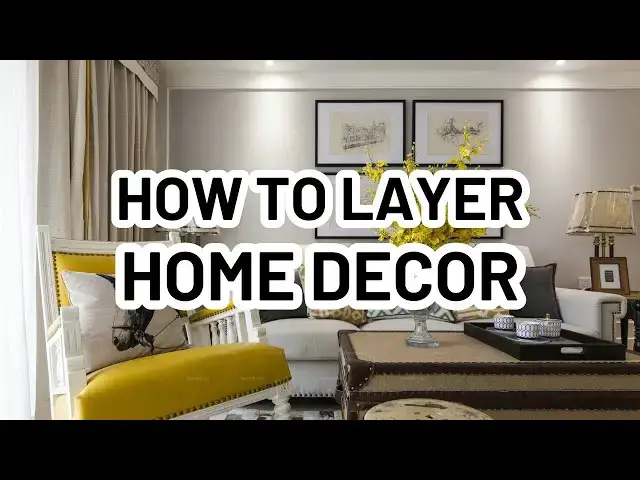
Learn how to layer home decor to give your space more depth, warmth, and personality. In this video, I’ll walk you through the key elements of layering—from mixing textures and patterns to balancing colors and finishes—so you can create a home that feels curated and inviting.
Whether you’re decorating a cozy living room, a bedroom retreat, or a small space, these layering tips will help you create a polished, designer-inspired look that still feels like you.
If you enjoy decorating ideas and styling tips, don’t forget to like, subscribe, and hit the bell so you never miss a video!
| CHAPTERS |
00:00 Intro
00:49 Layer Textiles
02:36 Mirrors
04:24 Candle & Lantern Clusters
06:18 Trays
08:35 Picture Ledges
11:40 Outro
| BLOG POST |
The Layering Formula: How to Add Depth to Your Home Decor - https://diannedecor.com/blog/advice-tips/decorating-inspiration/the-layering-formula/
Show More Show Less View Video Transcript
0:03
Hi, it's Lindsay Diane from
0:05
dianecor.com.
0:07
In this video, let's talk about
0:09
layering. What does it mean to layer
0:11
your decor? Why should you do it? And
0:14
how to do it. I'll also share with you
0:18
my tried andrue formula for layering
0:21
decor all over your home. So whether
0:23
it's your sofa, your floors, your
0:27
windows, your walls, I'll teach you how
0:30
to layer decor like a pro. Let's get
0:33
started. Layering is a time-tested
0:36
method for adding interest and depth to
0:39
everything from fragrances to clothing
0:42
and yes, even home decor. The concept is
0:47
simple. You want to stack and combine
0:49
multiple elements in a way that is
0:52
harmonious and visually pleasing.
0:55
Ideally, at a minimum, your layering
0:57
should include a base layer, a mid
1:00
layer, and a top layer. You can even
1:02
think of this as a landscape painting.
1:06
You have a background, a midground, and
1:09
a foreground. When you're layering
1:11
decorative accents and accessories,
1:13
you're following the same model. You're
1:15
sort of piling on one layer on top of
1:18
the other to add more depth and interest
1:21
into your space. So, why layer decor?
1:26
Usually, decorative accents are very
1:28
visually interesting on their own. Some
1:31
are textured, some are patterned, some
1:34
are, you know, colored a certain way.
1:37
Others have really beautiful
1:38
silhouettes. on their own. Many
1:41
decorative accents are just beautiful to
1:43
look at and can stand on their own
1:45
without being layered with other things.
1:48
So, why do it? There are two main
1:50
reasons to use a layering approach to
1:54
your home decor. Number one is
1:57
flexibility and personal expression.
2:00
Layering gives you the freedom to mix
2:02
and match until your space reflects your
2:04
personal style. By playing with
2:06
different fabrics, finishes, and
2:08
accessories, you can create countless
2:11
combinations without having to start
2:13
from scratch each time you want to
2:15
decorate a space or refresh a room. This
2:18
flexibility means you can easily refresh
2:21
your decor seasonally or adapt new
2:24
trends without doing a complete
2:26
overhaul. We talked about this exact
2:28
thing in a recent video called how to
2:31
transition your interior design style
2:34
without starting from scratch. I will
2:36
leave that linked in the description box
2:38
below. But layering is a way that you
2:41
can do this. Let's use windows as an
2:43
example. Your window frame and your
2:46
glass are your base layer. On top of
2:49
that, your midground or your middle
2:51
layer would be blinds. And then on top
2:55
of that, you would have curtains or
2:57
drapery.
2:59
This is a great example of layers to
3:02
your windows that you can swap out if
3:06
you want to change up your interior
3:07
design style. Let's say you were in a
3:10
sort of moody, you know, dark academia
3:14
sort of style for your home office and
3:17
your drapes are a deep hunter green
3:21
velvet drape that's really gorgeous. But
3:23
now, you know what? You want something
3:25
light and fresh and airy, and you want
3:28
to go modern, minimalist, and you really
3:30
want to brighten everything up. Well,
3:31
you have a layer that you can now swap
3:34
out. You don't have to start from
3:37
scratch and pick new windows or pick new
3:40
blinds. You can just choose one layer to
3:43
change. Or maybe you don't have blinds
3:46
and in your case your window is your
3:49
base layer and maybe you have a double
3:51
hung rod where you have shears on the
3:55
inside and a heavier drapery on the
3:58
outside. Well, you can just peel away
4:01
that heavier drapery layer and you will
4:04
have a much more light and airy feel.
4:07
So, this is how you can play with
4:09
layers. The combinations really are
4:10
endless. Again, you're thinking about
4:12
doing this all over your home. It's not
4:14
just your windows, it's your furniture,
4:16
it's your floors, it's your walls, it's
4:19
your tabletops. So, when you adopt a
4:23
layering uh technique for your home
4:26
decor, you will have endless
4:29
possibilities and a flexibility to sort
4:32
of move and change and adapt over the
4:34
years. The second reason why we layer is
4:38
for cohesion and unity. This is a tool
4:41
by which you can start to sort of bring
4:44
everything together to make everything
4:47
sort of gel. And we usually do that
4:49
through repetition. We do that through
4:51
repetitions of textures, of patterns, of
4:55
colors, of, you know, metallic finishes.
4:59
Things like this we use to sew a thread
5:02
through our home to create a cohesive
5:05
look from space to space to space so
5:07
that our home doesn't feel disjointed
5:10
and as if you know one person designed
5:12
this room and another person designed
5:14
this bedroom and another person designed
5:16
the living room and another person
5:18
designed the kitchen. You don't want
5:19
that disjointed feeling in your home.
5:21
You want some unity and some cohesion.
5:24
And a tool to achieve that is by using
5:29
layering. Because again, you can layer
5:31
in certain colors, certain textures into
5:35
your space or even certain silhouettes
5:38
so that you create repetition throughout
5:40
your home. So, now that you know what
5:43
layering is and why we do it, let's dive
5:46
in to how you can layer your home decor
5:49
throughout your home. Let's start with
5:52
windows, walls, and doors. Your walls,
5:56
your doors, your windows, and your
5:58
ceilings all offer opportunity for you
6:01
to add depth. They are simply the base
6:06
layer on which you build up additional
6:09
layers of decor. For example, your
6:13
walls. Your wall itself, your painted
6:16
wall is going to be your base layer. on
6:20
top of which you can layer on decorative
6:22
accents. You can add things like
6:25
mirrors, wall art, pictures,
6:29
shelving,
6:31
all sorts of things that you can add
6:33
onto your walls and hang on your walls
6:35
are another layer of decor. You can also
6:39
add molding and trim to your walls to
6:43
add more interest and depth. So things
6:46
like chair rails,
6:48
um baseboards,
6:50
crown molding that goes all the way up
6:52
at the top of your wall where it meets
6:54
the ceiling. These sorts of elements are
6:57
great to layer in to add more interest
7:00
and depth to your walls. We also layer
7:03
our walls and our doors with seasonal
7:05
decor. So things like wreaths, garland,
7:09
swags, these are all elements that we
7:12
bring in from time to time and can swap
7:14
out seasonally so that we can add a
7:17
little bit more depth and interest into
7:20
our home during certain times of year.
7:23
And believe it or not, we also have the
7:26
opportunity to add layers to our
7:27
ceilings. We can make statement
7:30
ceilings. We can put up paneling and
7:32
molding. You can put um ceiling
7:35
medallions. There are a lot of
7:38
interesting architectural details that
7:40
you can add to your ceiling that will
7:43
add a new layer of decor and a new layer
7:45
of interest and depth into your space.
7:48
Next is furniture and floors. Your
7:51
furniture and flooring provide the next
7:53
set of layers in your decor. These
7:56
elements add both comfort and visual
7:58
richness. When it comes to your
8:00
furniture, you have some soft layers
8:02
that you can add onto your furniture.
8:04
So, if your sofa, for instance, is your
8:08
base layer. On top of that, you can
8:10
layer on a throw blanket or an afghan.
8:13
This is going to be a mid layer. You can
8:16
toss it over the arm of your sofa. You
8:18
can lay it beautifully along the back of
8:21
your sofa and just sort of fold it over
8:23
so that one half is hanging off the back
8:25
of the sofa, one half is hanging towards
8:27
the front. And then you you can layer on
8:30
a topper, a third layer, a foreground
8:33
layer if you will. And that would be
8:35
done through decorative pillows. This is
8:37
the way that we start to layer on our
8:40
decor. The pillows themselves can take
8:42
on their own layering scheme. You can
8:45
have a larger pillow in the back, a
8:48
midsize pillow layered in front of that,
8:51
and then a smaller like lumbar pillow um
8:55
that's layered into the front. Another
8:58
form of layering is to add slip covers
9:00
to your sofa or your chairs. This is
9:03
another layer that you can peel away
9:05
from time to time if you want to swap
9:07
things out, but it's also an opportunity
9:10
for you to add a particular texture into
9:12
your space or for you to add a
9:13
particular color or pattern into your
9:16
space. Again, this goes back to being a
9:20
device for cohesion and unity and just a
9:24
dynamic sort of interesting visual. You
9:27
want to have a nice combination of some
9:30
rich textures, some rich colors, and
9:33
some rich patterns to make it really
9:36
visually interesting. And this is all
9:38
done through soft layers on your
9:40
furniture. When it comes to your floor
9:42
layers, this is where rugs, runners, and
9:46
mats come into play. Now, typically with
9:49
the floors, your base layer is going to
9:52
be like your hardwood, your tile, or
9:55
your carpet. On top of which, you can
9:58
layer in an additional area rug, a
10:02
runner, a mat. Sometimes we layer
10:05
multiple rugs. So, if you want to have a
10:09
more neutral, larger area rug on top of
10:12
which you want to add something with a
10:15
lot of texture and a lot of, you know,
10:17
pattern to it, you can add that on top.
10:21
You can also add a like a a bare skin
10:24
rug or a faux cowhide rug as a topper on
10:28
top of an area rug that already exists
10:31
on top of a hardwood floor. And so, here
10:33
you're seeing those three layers come
10:35
into play. But for the most part,
10:37
usually you're only going to see one
10:39
additional layer with your floors.
10:42
You've got your base layer, and then
10:44
you're going to top it with something
10:46
else. Usually, a runner or a area rug is
10:51
most commonly used for your floors. Your
10:54
floor layers are not only functional,
10:56
but they make you feel comfy and cozy as
10:59
well. And last, but not least are
11:01
tablescapes, table tops, and shelves.
11:05
These are all of your horizontal
11:08
surfaces. You could also throw in
11:09
countertops here as well. Now, even the
11:12
smallest surfaces benefit from layering.
11:16
Tablescapes and shelf styling are
11:18
perfect examples of how small details
11:21
add up to a big impact.
11:25
Textile layers are a great way to
11:27
approach your tabletop layering. So,
11:31
think about things like with your dining
11:33
room table. You would have a tablecloth
11:37
or you could have a table runner. You
11:39
have placemats and chargers. These are
11:42
all opportunities for you to add in a
11:45
secondary layer. So again, your table
11:48
would be your base layer. Your mid layer
11:51
or your secondary layer is going to be
11:53
something that's of a textile. And then
11:56
on top of that, you may have a
11:58
centerpiece or you have your serve wear
12:01
and your dishes. Those would be your
12:03
third or topper layer. When it comes to
12:06
shelves and side tables, there are
12:08
different ways that you can layer on
12:10
your decor there. Of course, you can go
12:13
the textile route. You can use a table
12:15
runner on a console table, or you can
12:17
use placemats or a different type of
12:20
sort of fabric charger or something like
12:22
that to add a layer to your console
12:26
table or your buffet table or what have
12:29
you. But more often than not, we see
12:32
layering in the form of vignettes on
12:34
tabletops, on shelves, on bookcases.
12:38
Here is where you start to see multiple
12:41
small elements combined together to
12:43
create one larger visual impact. We
12:46
talked a lot about this in the um simple
12:49
decorating series. I will leave those
12:51
two videos linked in the description box
12:53
below. But things like a stack of books
12:56
topped with a candle or a stack of books
13:00
topped with a little potted plant, a
13:02
decorative dish that's filled with, you
13:06
know, shells or some other sort of
13:07
organic filler. This is the type of
13:10
layering that starts to happen on your
13:12
tabletops and on your countertops. You
13:16
also have trays that you can add little
13:19
vignettes to as well. These are great
13:22
ways to start to layer onto that base.
13:24
So whether it's a shelf or whether it's
13:26
a tabletop or whether it's a countertop,
13:28
you're starting to layer in that visual
13:31
interest through other decorative
13:33
accents. Again, these are things that
13:35
are going to be very easy for you to
13:37
swap out. Whether it's season to season
13:39
or whether you want to just switch up
13:41
your interior style al together, you are
13:44
able to do this with the layering. You
13:47
don't have to start from scratch. You
13:48
can just swap out maybe just the tray
13:51
that you're using to hold your vignette.
13:53
Or maybe you're just swapping out some
13:55
of the small decorative accents that are
13:57
on the tray. Or maybe you're swapping
13:58
out some of the books because the spine
14:00
color doesn't go with your color scheme
14:03
anymore. These are ways that layering
14:06
becomes really, really beneficial and a
14:09
functional choice when it comes to how
14:12
you go about decorating your home. So
14:15
that's it for this video. Those are all
14:17
the ways that you can layer decor in
14:18
your home. I hope you found this video
14:21
helpful. If you did, please give it a
14:23
like and consider subscribing to my
14:25
channel. And don't forget to visit me at
14:27
diancor.com. I post all about home
14:30
decorating ideas over there. I thank you
14:33
so much for watching and I'll see you in
14:34
the next one. Bye.
14:39
[Music]
#Hobbies & Leisure
#Home & Interior Decor
#Home & Interior Decor
#Home Furnishings