Up next in 10


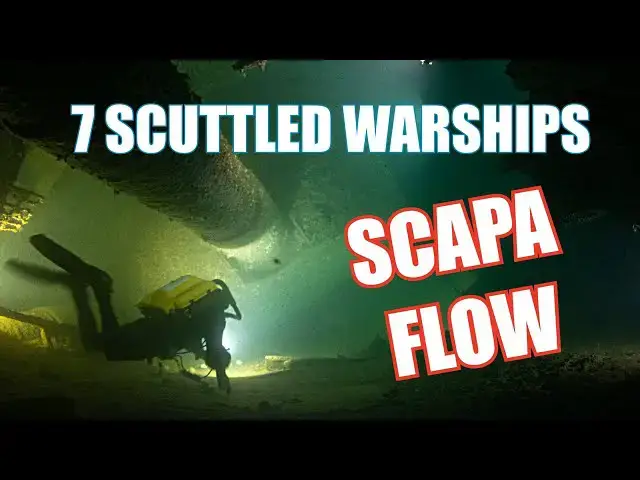
This is your complete beginner's guide to diving Scapa Flow - the world's greatest wreck diving destination. I'll show you what it's really like to dive all 7 German High Seas Fleet warships: 3 massive battleships and 4 light cruisers scuttled in 1919. Everything you need to know about planning your first Scapa Flow trip.
ABOUT SCAPA FLOW:
On June 21st 1919, Admiral Ludwig von Reuter ordered the scuttling of 52 German warships interned at Scapa Flow after WWI. Most were salvaged, but 7 major warships remain as protected war graves and artificial reefs. These wrecks represent the largest collection of intact WWI capital ships anywhere in the world.
THE SEVEN WRECKS:
Battleships: SMS König (38m), SMS Kronprinz Wilhelm (40m), SMS Markgraf (43m)
Light Cruisers: SMS Karlsruhe (27m), SMS Brummer (36m), SMS Cöln (36m), SMS Dresden (38m)
OPERATOR
I dived from MV Clasina (Halton Charters) owned and operated by Bob Anderson - https://www.clasina.co.uk/
THANKS
Many thanks to
👉 Prof Chris Rowland 3DVisLab, University of Dundee for his 3D Visualisation of the wrecks
👉 Bob Anderson, skipper of MV Clasina, for his excellent images
👉The crew of MV Clasina for being awesome
👉 Paul Fry and Duncan Simpson for their video
👉My buddy James Balouza from https://indeep.co.uk/
Show More Show Less View Video Transcript
0:00
Above me rests 25,000 tons of German
0:04
steel.
0:06
The SMS Kron Prince Vilhelm, a
0:09
Dreadnaugh battleship that once
0:12
contested the rule of the North Sea. On
0:15
the 21st of June 1919,
0:18
her crew opened the Sea Cox and sent her
0:21
to the bottom. She wasn't alone.
0:26
54 warships of the German high seas
0:29
fleet scuttled themselves in one day.
0:33
The greatest act of maritime defiance in
0:36
history.
0:38
Today, seven of them remain on the
0:40
seabed. I've dived them all and I'm
0:43
going to show you exactly how you can do
0:45
it, too. I'm here in Scapplow, Orcne, 10
0:49
miles off the northeast coast of
0:51
Scotland.
0:52
This isn't just another dive trip for
0:55
avid wreck divers. This is the
0:58
pilgrimage, the wreck diving equivalent
1:00
of Mecca.
1:02
After World War I ended, 74 ships of the
1:06
Imperial German Navy were interned here
1:10
while the Allies decided their fate at
1:12
Versailles.
1:14
The Germans, however, had other plans.
1:18
At 11:20 a.m. on Midsummer's Day 1919,
1:22
Admiral Ludvig von Rutter gave the
1:25
order. Within hours, the fleet was gone.
1:30
52 ships on the bottom. The Royal Navy
1:33
managed to save 22, but simply worked
1:36
quick enough to get them all. Of the 52
1:40
that were scuttled, most were salvaged
1:42
in the 1920s and 30s, but seven major
1:46
warships remain. Three battleships and
1:50
four light cruisers sitting in depths
1:53
between 18 and 45 m. These are great
1:57
depths for diving, which is one of the
1:59
reasons that Scapper is so popular. In
2:02
this video, I'm going to give you the
2:04
lowdown on what it's like to dive there,
2:07
a few tips and tricks, and what to look
2:09
out for on the Rex. So, without any
2:12
further ado, let's dive in. Of the seven
2:16
divable wrecks, three are battleships.
2:20
The SMS Conig, SMS Margraph, and SMS
2:24
Crom Prince Vilhelm. These are the crown
2:27
jewels of Scapperflow.
2:29
All three are dreadnaugh class
2:31
battleships,
2:33
25,000 tons each,
2:37
175 m long, armed with 305 mm guns. They
2:42
all fought at Jutland in 1916 and all
2:46
sit between 38 and 45 m deep. And all
2:50
three are completely inverted, upside
2:53
down on the seabed.
2:55
When you first drop onto one of these
2:57
wrecks, the scale is overwhelming.
3:02
You're looking at a curved wall of steel
3:04
that disappears into the darkness in
3:06
both directions.
3:08
It takes your brain a moment to process
3:11
what you're seeing. This isn't a wreck.
3:14
It's a steel cathedral.
3:17
Each battleship carried five main gun
3:20
turrets,
3:22
twin 305 mm guns capable of hurling
3:26
shells over 20 km.
3:30
Because they're inverted, the turrets
3:32
are underneath, but on Crom Prince
3:35
Vilhelm, you can actually get beneath
3:37
the hull and see them. Massive gun
3:41
barrels still pointing downward into the
3:44
sand.
3:46
There's actually also an eighth ship in
3:49
Scappa Flow, another battleship, the
3:52
even larger SMS Bayern.
3:56
Most of her though was salvaged in the
3:58
1930s.
4:00
But when they raised the hull, the main
4:02
gun turrets fell out. Now they sit
4:05
inverted on the seabed at 36 m.
4:09
Four massive turrets, each weighing over
4:13
600 tons, lying like discarded relics
4:17
from another age.
4:19
You can dive the Bayern turrets as a
4:21
separate site. Swimming around these
4:24
isolated pieces of a battleship is
4:27
surreal. They're monuments to both the
4:30
engineering of 1916 and the salvage
4:33
operations of the 1930s.
4:37
Back to the three intact battleships.
4:40
The sterns are where most divers start.
4:44
Massive propeller shafts. The props
4:47
themselves were salvaged, but the shafts
4:50
and large chunks of engine components
4:52
remain.
4:54
Rudders the size of buses.
4:57
Every surface is covered in plumos and
4:59
enemies. White feathery creatures that
5:02
make the steel look almost organic. If
5:06
you're interested in penetration, then
5:08
there is absolutely tons to do on these
5:10
wrecks. Of course, everything is
5:13
inverted. Hatches in the ceiling, decks
5:16
above you. Inside you'll find corridors,
5:19
compartments, machinery, all inverted,
5:24
collapsed after the impact of a 100red
5:26
years of corrosion and degradation.
5:30
Getting underneath the crown prince to
5:32
see those gun turrets is one of the most
5:35
incredible moments of diving scapper
5:37
flow. These are the weapons that fought
5:40
at Jutland, now frozen in place,
5:43
pointing at nothing but sand and
5:45
darkness.
5:48
Of course, these are deep wrecks and
5:51
bottom time is limited. At about 43
5:54
mters on the Marraph, you're not going
5:56
to be down there very long before your
5:58
deco racks up. The good news is it's
6:02
easy to multilevel them and you can come
6:04
up and spend time on the top of the
6:06
hull. There's such a huge amount to see
6:08
though that you won't get it all in in
6:10
one dive. So, you're going to have to
6:12
come back and do it again. And that's
6:14
one of the reasons people come to
6:16
Scapper Flow over and over again.
6:19
Nothing else in the world compares to
6:21
diving a battleship that fought at
6:24
Julland.
6:25
The four light cruisers are a very
6:27
different experience. SMS Brummer, Col's
6:32
and Dresden. They're much smaller, about
6:35
5,000 tons, 150 m long. And crucially,
6:40
they're more accessible.
6:43
All of the light cruisers have been
6:44
salvaged to a greater or lesser extent.
6:47
What that means is the engine areas are
6:50
normally a bit of a mess, but that
6:51
offers the opportunity to see plenty of
6:54
things that you might not be able to
6:55
otherwise. They all also have their own
6:58
individual characteristics. K's the
7:01
shallowest. Maximum depth 27 m with the
7:05
port side at just 14. Brummer and Cole
7:09
both sit at 36 m max, but lying on their
7:12
sides, the top of the hull comes up to
7:14
22 to 25 m.
7:17
Dredston is deeper, 38 m at the CERN, 27
7:21
at the bow, with the shallowest point at
7:24
17 m.
7:26
What makes these cruisers special is
7:28
what has survived. Brummer still has
7:31
this incredible brass antimagnetic
7:34
bridge and lying just off to the side in
7:37
the seabed. An incredible search light
7:39
iris that allowed the Germans to turn
7:42
them on off at an instant and that
7:45
performed so well at Jutland. Dresdon
7:48
and Cole are still relatively intact.
7:51
Even though Carl's Rar was heavily
7:53
salvaged with explosives, what that
7:56
means is that you can see so much of the
7:58
internal machinery exposed. And as time
8:02
starts to take its toll on each of the
8:04
cruisers and the decks start to peel
8:06
away, there's more and more to see. Each
8:09
of them is fascinating in its own right,
8:12
and each of them rewards closer
8:14
inspection. The great news is because
8:17
they're relatively shallow, you're going
8:19
to have plenty of time to do that. And
8:21
if you're planning a week in Scappa
8:23
Flow, you'll get to dive all four and
8:26
possibly some of them more than once.
8:29
So, you've like the idea of that. How do
8:32
you get there? Well, Scappa Flow is in
8:35
Ornne in Scotland, which is pretty much
8:38
as far north as you can get. There's
8:40
basically several ways of getting there.
8:43
You can either fly to Kirkwall on the
8:45
island or take a ferry from mainland
8:47
Scotland, which is what most people do.
8:50
The dive operators are all based in
8:52
Stromst, which is where the ferry
8:54
unloads. So, it's quite a popular
8:57
option. It's for people to put their
8:58
gear into special uh containers that
9:01
then go on the ferry and you can then
9:04
manhandle it off the other side.
9:06
Optionally, you can take a vehicle and
9:08
there's plenty of parking in Strong
9:09
Ness. In terms of accommodation, two
9:13
main options. Most of the operators have
9:16
liverboard boats where you can actually
9:18
sleep on board the boat. They'll come
9:20
back into Strom Ness every night. Other
9:22
operators offer shore-based
9:24
accommodation. Either way, every day
9:27
you're going to be back on land for the
9:29
evening. Stum Ness isn't a massive place
9:31
and doesn't have a whole load of
9:33
facilities, but it does have pubs and
9:36
shops and perhaps crucially a dive shop
9:39
where you can either buy equipment or
9:41
get stuff fixed. They particularly
9:43
specialize in turning dry suits round
9:45
really quickly. a facility that lots and
9:48
lots of people have used over the years.
9:50
So, when's the best time to go? Well,
9:53
people have their individual
9:54
preferences. Some people like the summer
9:56
because obviously the weather is nicer,
9:58
the days are longer. If you go later in
10:01
the year, visibility can tend to be
10:03
better, but then you obviously have to
10:05
contend with the cold and the weather.
10:08
But hey, that's diving. So, what will a
10:11
typical day at Scappa look like? Well,
10:13
normally you'll have had your gas and
10:15
everything done. the day before. So, you
10:18
get on the boat or you may be on the
10:20
boat already. You finish last minute
10:22
preparations. You may have breakfast on
10:24
the boat if uh if that's what your boat
10:26
does. You then head out. As you get
10:28
close to the site, the skipper will
10:30
normally deliver a briefing and all the
10:33
skippers, you know, this is what they
10:34
do. They know these wrecks inside and
10:36
out. So, you'll understand where you're
10:37
going to go down, what you're going to
10:39
see, and where they prefer you to come
10:42
back up. And and each boat's got its own
10:44
individual procedures. They'll also let
10:46
you know any specific hazards on site.
10:49
You'll get kitted up and get in the
10:52
water in your buddy teams. The wrecks
10:54
are normally all shoted, so descend down
10:57
the line, do your dive. At the end of
11:00
the dive, you can either come back to
11:01
the shot or you can stick up a delayed
11:04
SMB. Really important that wherever you
11:06
are in Scapper that your ascent is
11:08
marked. Some skippers prefer you to come
11:10
up shot lines. Some uh insist on you
11:12
doing a DSMBB ascent, but your skipper
11:15
will let you know what that is. You get
11:17
back on the boat. Normally there'll be
11:20
some sort of lunch. You'll get regassed.
11:22
You get your cylinders filled if if
11:23
that's uh required. And then you'll have
11:26
another briefing. And normally a couple
11:28
of hours after you've come out from the
11:29
first dive, you'll go back and do the
11:31
second dive. And that will be on a
11:34
normally a much shallower wreck. Once
11:36
that's complete, you'll then head back
11:38
in and on the way back in, obviously
11:41
there's the opportunity to sort out
11:42
gear, start getting things filled, and
11:45
then that's the end of the diving day
11:47
and the evening is yours. That gives you
11:50
plenty of opportunity to have a look at
11:52
any videos you've taken, sort out
11:54
photographs, chat with the other divers,
11:57
fill in dive logs, and of course, get
12:00
something to eat and have a drink if
12:02
that's your thing. What I would say is
12:05
uh multiple days, repetitive days of
12:07
that diving. You'll find you've done
12:09
some absolutely incredible dives, some
12:11
of the most memorable dives of your
12:12
life, but you'll also be really
12:14
exhausted. This is physically and
12:16
mentally demanding diving in some pretty
12:20
um you challenging conditions. So that
12:23
scappa flow, seven scuttled warships
12:26
from the Imperial German high seas fleet
12:29
resting between 25 and 43 m deep in the
12:33
cold, sometimes clear waters of uh
12:36
Orcne.
12:38
Three battleships, Koig, Cromp Wilhelm,
12:42
and Margraphth. Massive, deep, technical
12:45
dives that demand respect and
12:47
experience. The four light cruisers,
12:50
Col, Carl's, Brummer, and Dresden. More
12:54
accessible, but still incredibly
12:56
detailed and perfect for building your
12:58
wreck diving skills and spending the
13:00
time to really appreciate them as
13:03
individual wrecks. If this is your first
13:06
trip to Scappa, a really important piece
13:08
of advice is don't try to do everything
13:10
in one week. Most of the operators are
13:13
only going to give you two dives a day,
13:15
and that's 10 to 12 dives across five
13:18
days. You'll dive each wreck once, maybe
13:21
twice if the conditions allow you. The
13:24
battleships are obviously the most
13:26
challenging, but the cruisers are the
13:28
most surprising, and don't dismiss them.
13:31
There's also a whole load of other dives
13:33
that I've not talked about on this
13:34
video, and you may end up doing some of
13:36
those as well. But what I can guarantee
13:40
you is by the end of the week, you'll
13:42
understand why divers come back here
13:44
year after year. And I know people
13:46
who've been here 20 odd times. And the
13:49
reason is because this isn't normal
13:51
wreck diving. These ships were scuttled
13:54
by their own crews in a final act of
13:57
defiance after Germany's defeat in World
13:59
War I.
14:01
It's incredible to think that within
14:03
hours 52 warships went to the bottom.
14:06
And although most were salvaged, these
14:09
seven remain as historical monuments to
14:12
that incredible moment in history. A
14:15
century later, they've become artificial
14:17
reefs. The steel is slowly returning to
14:20
the sea, covered in marine life. But the
14:23
shapes are still recognizable. Gun
14:25
turrets, propeller shafts, massive armor
14:28
plating. You're not just looking at
14:30
metal, you're looking at history.
14:33
So, if you're planning your first Scappa
14:36
Flow trip, here's my advice. Number one,
14:39
get your dry suit course if you haven't
14:42
already got one. This is cold and
14:43
demanding.
14:45
Make sure that you're capable of diving
14:47
to the depths of these wrecks. They're
14:50
ideal for rebreathers,
14:52
but if you're open circuit, there's
14:54
still a ton to do. Top advice, make sure
14:57
you've got some sort of nitrox
14:58
qualification. If you've got the ability
15:00
to accelerate your decompression, even
15:03
better. Don't forget your video or
15:05
underwater camera because you're going
15:07
to want to record this so that you can
15:09
look back on it in the future because
15:11
this is bucket list diving. It's
15:13
challenging, it's historical, and it's
15:16
absolutely worth it. If you've enjoyed
15:18
this video, look out for the ones on the
15:20
individual wrecks that are coming up.
15:23
Please, of course, don't forget to like
15:25
and subscribe. I'm Deep Wreck Diver and
15:28
I'll see you on the next dive.
#Water Sports
#Diving & Underwater Activities
#Adventure Travel