
Divers Can't Agree on Safe Depth for Air Diving—Here's Why
Jan 14, 2026

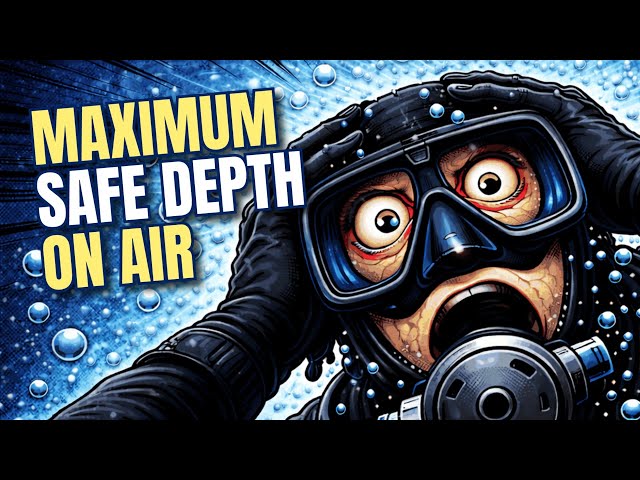
What is the Maximum Safe Depth to Dive on Air?
This has to be one of the most debated topics in scuba diving: how deep is "too deep" before you need to use different gases - nitrox or trimix?
In this video, I analyze the community consensus by breaking down hundreds of your comments and comparing them against the physiological realities of Deep Air Diving. While some divers boast about pushing limits, we explore the critical balance between experience and safety, looking at how Nitrogen Narcosis, gas density and PO2 impact decision-making at depth.
I explain why I draw a hard line at a 50m depth limit for air diving and why switching to trimix or other mixed gases is the smarter choice for deeper wreck exploration.
Whether you are a recreational diver curious about limits or a tech diver planning your next expedition, understanding these boundaries is key to safe exploration.
For anyone who missed the original posts on various Social Media channels
* YouTube - http://youtube.com/post/UgkxEJuICI4XfLHxZsuMknAgj5s2dO3OKn3i?si=zki-dnYdtlJPzGJD
* Facebook - https://bit.ly/4jzzvyO
#DeepWreckDiver #ScubaDiving #TechnicalDiving #DeepAir #NitrogenNarcosis #ScubaSafety
━━━━━━━━━━━━━━━━━━━━━━
ABOUT THIS CHANNEL:
DeepWreck Diver explores shipwrecks, submarines, and sunken relics from around the world - combining technical diving with detailed wreck identification and storytelling. Subscribe for wreck diving guides, historical deep dives, and underwater exploration.
*Kit I Use*
Note, some of these are affiliate links so help support making my videos:
👉 Gloves are Ansell Alphatec 87-063 - https://amzn.to/4jDHhX4
👉 Drysuit is an O-Three Ri2-100 - https://www.othree.co.uk/drysuit-range/ri-2-100-drysuit/
👉 CCR is an AP Diving Inspiration (XPD) - https://www.apdiving.com/
👉 Backup computer is a Shearwater Perdix v2 - https://amzn.to/42FXZOW
👉 Reels are by Kent Tooling - https://www.divingproducts.co.uk/
👉 Phone housing is Divevolk Seatouch 4 Max - https://s.click.aliexpress.com/e/_omJlNKL
👉 Stickers for gear by Dive Signs - https://www.divesigns.com/
*Video Gear*
I use the following gear (also affiliate links)
👉 Action Camera is Insta360 Acep Pro 2 - http://bit.ly/4nkMEwA
👉 Helmet mounted cameras are Paralenz Vaquita
👉 Video light is LetonPower Sealion L24 (10% off!) - http://bit.ly/4nFLCva
*Strobes*
I use two different strobes (also affiliate links)
👉 Prozhaozhu 3000 Lumen Diving Strobe - https://s.click.aliexpress.com/e/_oBMRF3X
👉 Prozhaozhu 4000 Lumen Diving Strobe - https://s.click.aliexpress.com/e/_oCTEses
👉 Jon clip - https://s.click.aliexpress.com/e/_oDqq0RW
━━━━━━━━━━━━━━━━━━━━━━
📱Follow My Socials!
Instagram 👉 https://www.instagram.com/deepwreckdiver/
Facebook 👉 https://www.fb.com/DeepWreckDiver
Buy Me A Coffee 👉 https://buymeacoffee.com/d33puk
Email 👉 [email protected]
Show More Show Less