Up next in 10



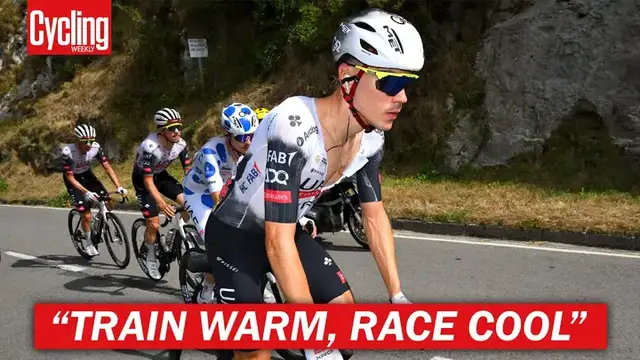
Even if you want to get faster on the bike, copying pro cyclists isn't always advisable...But is their latest training tool too good to be true? We dive in to the pros and cons of heat training and why it's changing indoor training for cyclists all over the world.
Unlike other cycling training methods such as altitude training or carbon monoxide rebreathing, heat training is relatively inexpensive, especially if you use a free indoor training app like us.
Show More Show Less View Video Transcript
0:00
You join me on a mild but rather wet August evening for a bike ride in my shed
0:07
Now that might sound like a rather odd concept but this is what the top riders are doing up and
0:13
down the country. But why? Well in this video we're going to find out. Things are about to get nerdy
0:21
for absolutely years cyclists have been feasting themselves and putting themselves
0:32
in uncomfortable situations in order to get an edge over their rivals whether that be slogging
0:40
up a really long climb or sitting at the top of a mountain where there's no air well now there's a
0:46
new way and it involves wearing one of these rather fetching if I do say so myself
0:53
it might not win any prizes for fashion but apparently this is going to help me get faster
1:01
the good news is that for not a lot of money you can take advantage of what is potentially
1:07
one of the most powerful performance enhancing tools at your disposal for about three quid you
1:15
can pick up a set of coals for yes a turbo might set you back a bit but there's lots of deals on
1:21
secondhand marketplaces especially at this time of year and then I'm using my whoosh which is
1:27
completely free and if I get really good then it might even make me money. So how does this work
1:34
Well as the sweat pours my motivation inevitably wanes and my heart rate climbs disproportionately
1:42
to the power that I'm putting out. This discomfort can unlock a range of physiological adaptions
1:50
that will not only prepare me for hot weather racing, but improve my performance across all
1:55
conditions. Train hot, race cool. That seems to be the phrase of the pro peloton in 2025
2:03
This is significant as cyclists are not particularly efficient. At best, a top level
2:09
World Tour Pro will have a maximum efficiency of around 25 whereas most other riders riders like me I don know if I even pushing 20 efficiency Let say I produce 300 watts of power This generates 1080 kilojoules of energy to power
2:27
the pedals as 1 watt equals 3.6 kilojoules per hour. With a 25% efficiency that means 4,320
2:36
kilojoules is being burned, of which 3,240 kilojoules is being turned into heat. It takes
2:44
a hell of a lot of energy to remove from the body, and when the body temperature level heats up too
2:51
much, well, the body starts to prevent itself from generating more. In other words, you can't
2:57
sustain power and you have to slow down, just like normally happens to me on my whoosh
3:04
If you can improve your capacity to lose heat, you can push more watts for longer before thermal load becomes too much
3:13
So, what is the science behind heat training? How can you use it to your advantage
3:21
What do you need to be cautious of? And how can you use hydration, fueling and recovery strategies to be adapted to support this unique form of stress
3:31
right let's get this show on the road so when the body is exposed to repeated heat stress it
3:40
undergoes several key adaptions within a span of around 7 to 14 days assuming that you're at
3:49
least doing it a bit consistently cyclists can experience significant improvements in their
3:54
ability to tolerate thermal strain. Much better than I am doing this next interval
4:02
So basically this is known as heat acclimatization and you've probably heard of that
4:07
And one of the primary adaptions of this is an increase in plasma volume. Now this enhances your
4:16
cardiovascular stability and improves the oxygen delivery to the working muscles. And what that
4:22
is it enables you to sustain efforts at low heart rates. Look at that guy going next to me
4:30
That was an absolute sprint The body also becomes more efficient at cooling itself which will be quite useful right about now So it begins sweating earlier and more profusely which helps dissipate heat more effectively
4:48
via the convection process of evaporating sweat. Over time these changes result in a lower core temperature at any given workload, a reduction
4:59
in received effort as well. Again, that would be lovely right about now. And enhanced efficiency
5:06
So, how do you do it? Well, one of the most effective ways to create a heat adaption stimulus
5:12
is through indoor training, just like I'm going to do here on my whoosh. The indoor environment
5:18
naturally limits airflow and creates a pocket of warm, humid air around the rider. This amplifies
5:24
thermal strain, particularly if the fan is used sparingly, or an extra layer of clothing
5:30
is being worn. Even moderate intensity sessions can raise core temperature significantly in
5:37
this context. It's no surprise then that indoor training is one of the most effective
5:42
ways to train. Whilst riding on these rather fetching virtual reality roads, I can adjust
5:48
my effort based not only on my power or heart rate, but also my thermal stress. Apparently
5:54
core temperature between 38.5 and 39.5 degrees centigrade during these sessions will provide the
6:01
optimal balance between stimulus and safety. Now it should be noted that exceeding that temperature
6:07
can cause excessive thermal strain and that will probably mean that I never recover
6:13
If you do decide that you want to copy the pros and add heat training to your schedule then it is
6:19
wise to err on the side of caution. Heat training adds another level of stress to an already demanding
6:26
training load. It is essential to monitor for signs of non-functional overreaching or early
6:34
burnouts. These can include, but are by no means limited to an elevated resting heart rate, poor
6:40
sleep, low mood, declining power outputs, or an inability to recover between sessions. Given that
6:48
just about all training is about balancing the overall stress load For people who are working full jobs have children or are in education it probably best to avoid adding heat training to your routine That is unless you undertaking very specific events where heat acclimatisation
7:06
will make the biggest difference, such as an event in high temperatures. Adding an additional
7:11
stressor might be better served by incorporating appropriate high-intensity training or maximising
7:17
volume. Basically, as with everything, train for the demands of your specific event or goal
7:24
and work backwards from that end target. As with all training interventions
7:29
heat adaption should be individualised. Start with a short, low-intensity session, and gradually build exposure as your tolerance improves. Use metrics such as perceived exertion
7:40
it can often be underrated, heart rate and temperature feedback to gauge internal load
7:46
and be prepared to back it off if the fatigue begins to accumulate
7:51
In summary, training in hot conditions, whether indoors, outdoors, or passively through hot water
7:57
immersion, offers a potent stimulus for performance gains. The physiological adaptions include improved
8:05
cardiovascular function, enhanced thermoregulation, and more efficient energy use. When combined with
8:12
appropriate hydration, salt intake and carbohydrate fueling, heat training can form a valuable
8:18
part of any rider's preparation for competition. With specialist tools like the core body temperature sensor and heat suits, applying this training
8:28
method to the same degree as the pros is even more practical and achievable
8:34
Used wisely and with respect for the body's limits, heat adaption can help riders build
8:39
resilience, increase blood volume, improve endurance and achieve peak performance in all weather conditions
8:45
It's even been described by some World Tour trainers as a sort of altitude light training
8:52
but let's be honest, it's got significantly less financial investment required. Thank you to MyWish for sponsoring this video and making it possible
9:00
If you want to find out any more about their free indoor training platform then we'll
9:04
pop a link in the description below. let us know your thoughts on heat training in the comments section
9:11
As always, if you enjoyed this video then please give it a like, subscribe to the channel
9:14
for lots more like this and we'll see you next time
Fitness
sports
Cycling