Up next in 10



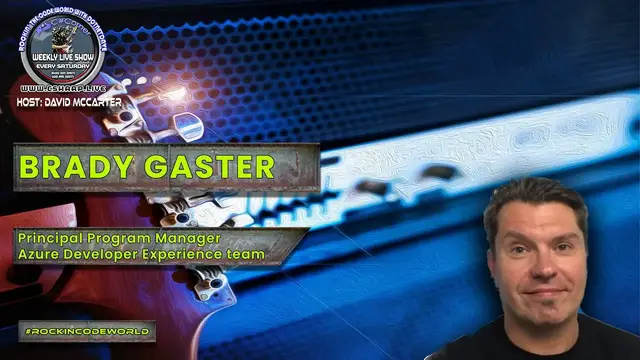
Join David McCarter with Brady Gaster on January 16 (Saturday) at 10:00 AM (PST) for the next episode of Rockin' The Code World - weekly live show focused around .NET technology.
C# Corner - Community of Software and Data Developers
https://www.c-sharpcorner.com
#csharpcorner #liveshow
Show More Show Less View Video Transcript
0:00
Thank you
0:29
Thank you
0:59
Thank you
1:29
We'll be right back
1:59
Hey, welcome everybody to another episode of Rockin' the Code World with Don Ed Dave
2:11
I'm David McCarter. I'm glad you're here. It's actually, you know, where I live in San Diego, California
2:20
It's actually a super nice day outside. The sun's coming up and I think the weather is going to be into the 70s, maybe low 80s today in January
2:29
So it's a good day in San Diego, at least. It's too bad we're all locked down
2:37
I think it gives me a little hope after the last week and a half, America's been dealing with a lot of stuff
2:47
And we have another five days of dealing with stuff and maybe things will get better after that
2:52
So anyway, welcome to the show. This is the number 12. And I'm pleased to say that my guest today, fellow musician and coder Brady Gaster from Microsoft. So we're going to be talking to him in just a few minutes
3:08
If you want to email me, there's my new email address for Rock of the Code World and C Sharp Corner
3:16
So please always email me your questions or comments or suggestions or anything you want to email me
3:24
It's easy to do. It doesn't cost you a thing. So, OK, let's get going
3:29
So, you know, my world conference tour this year is called, for those about to code, Worldwide Tour 2021
3:44
I'm guessing that most of it will be virtual like it was last year
3:49
Hopefully, towards the end of the year, we'll be getting out and doing some live conferences
3:55
And I can't wait to do that. I've been going through speaking withdrawal for almost a year now
4:02
So I'm really looking forward to that. So if you want to see where I'm going or if you want to request me to speak
4:09
please go to that URL and fill out the form. And I'll be happy to speak at your event this year, virtual or in person
4:18
as soon as I get the shot in my arm, which as of the news the last couple of days
4:23
who knows when that will be. But okay. So guess what? My bread
4:34
PowerPoint's running a little slow today. So my brand new book is out as of yesterday
4:42
It's called David McCarter, Rock Your Code, Coding Standards for Microsoft.net. And I'm really happy to announce this book
4:49
I've been working on it for a big chunk of last year. It features 130 new pages of information and updated, and it's completely geared towards Visual Studio 2019 and .NET 5
5:05
So I'd like to say with that is I'm going to leave the older version up, the 6th edition, because that is the one that's focused on .NET Core and the CLR
5:16
But this one and going forward will only be the new frameworks. So anyway, it's all available on amazon.com right now in print
5:25
And I hope you go and pick up a copy. And if you pick up a copy or buy one for your friend
5:32
they can get a free copy of Code Rush from DevExpress just for purchasing the book
5:37
So there's where you can go to get the book. I hope you'll check it out. It's a, you know, all my books are a labor of love because there's no money in it, really
5:47
I do it for you guys and to help you guys out. And so I don't have to look at Spaghetti Code
5:54
So anyway, new book. We have the same giveaways as we've had recently
6:02
Everybody is going to win a copy of Code Rush from Derrick's Press. And at the end of the show, I'll give away some C-sharp corner swag to the first person who can answer the question
6:14
And so, you know, I kind of have a every Saturday I wake up and try to figure out the question I'm going to ask you
6:23
So I've dedicated that, you know, all the questions this year will come from my book
6:29
So if you pick up a copy, you can win some free stuff
6:34
OK, so pay attention at the end and you can win some C-Sharp Corner stuff
6:40
I have a brand new article that just came out yesterday on C-SARP Corner
6:47
It's all about code quality with open source projects. And I had a previous article where I reviewed a bunch of open source projects, including some from Microsoft
6:59
But I've decided to start doing these just one-off articles on specific frameworks and code review them like .NET Dave would do
7:08
and give an honest review of the code, pointing out, you know, places in the code that need to be
7:17
you know refactored and or fixed to meet coding standards And the first one is this package that I actually using at work to import and export CSV files through ASP And this was the package that my team member found and we started using it
7:37
And then when I started looking into it, I was finding a lot of issues with the code itself
7:42
And so anyway, it has a code quality rating of 8.08, which means there is a violation every 8.08 lines of code
7:54
which is not good. So the lower number, the worse it is really about the project. So I hope you'll
8:01
read the article. I tried to pick out common things that I see developers doing over and over again
8:07
incorrectly. And the other thing I'd like to point out with this, and we did talk a little
8:13
bit about this yesterday on the Growth of Mindset show with Mahesh, and that is, you know, when you
8:19
put something on open source, and especially when people start downloading it and using it like we
8:25
are in my team, you know, it's, it's, it's really your responsibility to make sure that your open
8:33
source project has all the proper things. And I mean by, you know, code quality, coding standards
8:41
documentation, you know, because, you know, not only are you, you know, putting the code out there
8:47
for somebody to use, but I think a lot of people forget that this is really representing you
8:54
right, as a developer. And, you know, when I look at code bases and it just looks like a bunch of
9:00
spaghetti code, you know, that's not going to go very well on my opinion of that developer. And
9:05
I was thinking about this morning and that even is more important, like when you go for interviews
9:11
Right. Because, you know, when you interview in front of me, I research you, you know, before you come in on the interview
9:19
You know, I research social media. I research, you know, any repositories you might have out there and start getting to know you via that
9:28
And if you're putting out really bad examples of coding on public repositories, it's not going to go well for you in the future when you're trying to find your dream job
9:41
So anyway, to me, coding has always been a passion of, you know, it's a passion of mine, of course
9:50
But it's also I want to be proud of what I put out there and I want to be proud of my accomplishments
9:55
And part of that is following common standards and things and documentation and things like that
10:01
So anyway, enough about that. But anyway, I hope you check it out
10:06
It's got almost 1,000 reads I checked this morning in one day. All right
10:13
And everybody wins a copy of CodeRush from DevExpress. CodeRush has been around since the beginning of Visual Studio pretty much
10:20
and it's the only refactoring tool that I've ever used in Visual Studio
10:27
Well, I did try ReSharper once, but I went back to CodeRush. So anyway, I use this every day that I'm coding
10:34
and it really helps me to be not only a more, I can code faster
10:40
but it helps me actually learn things too. So, you know, in our day
10:45
we talked about this yesterday on the show, you know, we learn all the time
10:49
And, you know, you can't stop learning. You know, if you don't want to learn, you're in the wrong job being a software engineer
10:56
So anyway, I hope you check it out. It's free. It's a real copy
11:00
It's not a fake, you know, stripped down version. It's a real copy of CodeRush
11:04
So I hope you go check it out. And with that, we're on to our guest, Brady Gaster
11:12
He is a principal program manager in the developer division at Microsoft
11:16
where he works on SignalR microservices, HTTP APIs, integration with Azure service teams
11:23
in hopes to make it exciting for developers to work on. And he also learns coding with his two sons
11:31
which I think is really cool. And he also is a musician like myself
11:35
and plays guitars and synthesizers. And so maybe we'll talk some about that
11:40
at the end if we have time. So with that, I'd like to bring Brady on the show
11:46
Hey, how's it going? Hey, how's it going? Doing pretty good. Just wishing we had the
11:51
same kind of weather you have up here. It's pretty cold. Yeah, you're in Seattle, right
11:59
Just outside. I'm in Sammamish. So yeah. Well, you're always welcome down here in sunny California
12:04
anytime you want. Nice. I appreciate that. I love it down there. It's fantastic. Yeah
12:08
I live about a mile from the beach. So it's always nice where I live. That's great. Yeah
12:14
The weather here is pretty awesome. And like, I don't even have an air conditioner
12:20
And, you know, until the last few years with global warming, I rarely even turned on my heater
12:25
You know, I think I've gone years without turning on my heater at all. That's crazy
12:29
You know, I know. Yeah. Yeah. Ours is on six months of the year, pretty much
12:35
But we do pay for it because it's freaking expensive to live here
12:40
So you pay for it one way or the other, I guess. That's for sure. That's for sure. So how are you doing? How's everything going with you and, you know, Microsoft, the restrictions, you know
12:53
Things are good. We've been, I've been in this room pretty much since March
13:00
Things have been, you know, I mean, we're in the same situation. It definitely seems like it got started here pretty quick with the rest time situation and like things kind of taken off
13:12
Uh, but, uh, our governor was really good. He kind of locked things down early. We got a lot of programs
13:18
Um, uh, Microsoft has really been supportive. Uh, uh, we get an email once a week from our, you know, basically our, you know, the person
13:26
who takes care of us, uh, from the, on the HR side. And it's just a very supportive email
13:32
And what's really nice about it is that, um, he kind of describes like, uh, he, you know
13:36
he walks through, you know, our worldwide progress on reaching zero. He walks through things going on locally
13:44
He literally goes through each region in which we have folks and like gives guidance
13:49
And then there's stories in those emails that are just fantastic. I'm hard of hearing
13:54
I have like a serious hearing deficit. So at one point, one of the one of the emails included something I think somebody in Microsoft
14:03
I don't want to say invented, but they got involved with the idea of making clear masks for folks like me
14:10
who read it. And I replied to him and I just said, this is, this is
14:13
and this is cool. Like when, uh, when, uh, you know, the, the director of, you know, people stuff at Microsoft emails you and then you reply to them and
14:21
you say like, you know, I'm just some PM, you know, this, this really was
14:25
this really was inspiring to me because I'm hard of hearing. And my team was at the head of the table so I can read all the lips in the
14:31
room and, you know, know what's, you know, know what's being talked about. So I'm asking like, this is, you know, really, really, you know, cool
14:37
He replied and he added the people who did it. So, you know, it's really cool to like be connected with people who are like trying to
14:43
make our world better. That's really cool. It's nice. Yeah, yeah, that sounds cool
14:48
And, you know, I'm hard of hearing too. But that because I gone to too many freaking concerts Yeah well it does have something to do with it you know and and practicing every weekend in my in my in my practice firm you know that doesn help either you know because
15:05
i think my my amps are tuned to about 90 decibels so oh wow um yeah and i have three amps so i play
15:12
through three amps at one time you know and i i kind of stole that idea from uh the the guitarist
15:19
and tool because that's what he does yeah yeah he always plays through three amps two guitar
15:24
He stands right in the center of it. Yeah, yeah. Right. Two normal amps and one bass amp
15:30
And that's exactly what I have. Nice. And I have the amp set up, you know, in my room
15:35
So it creates this really kind of cool surround sound kind of thing, you know, with only one guitar
15:41
Right. That's cool. Yeah. But, yeah, and especially doing photography for bands
15:46
I mean, when I do photography for bands now because of my hearing, you know, I have to wear earplugs
15:51
Because when you're in the pit at a concert, guess what you're standing right in front of
15:57
The speakers. That's true. You should meet one of my colleagues. He's one of the developers on Playwright here in DevDiv
16:09
He actually lives in Slovenia. He's also a music photographer. He's photographed Mark Knopfler
16:17
He's photographed a whole bunch of people really, really close up and met folks and stuff
16:21
He'd be a good person to have on the show too. He's also a guitar player. So you guys could talk about that stuff all day, I bet
16:27
Very cool. Yeah. I've been doing, you know, concert photography and working for bands since the eighties
16:32
And I actually got started with, you know, the number one heavy metal band, you know
16:38
back in the eighties in San Diego. And that's how I got my start doing photography
16:42
and working for bands and being like the roadie. And I was like the bass player's roadie
16:47
including doing photography and stuff like that. And that's cool. And after the show, I was kind of like the bouncer because I was bigger than everybody else
16:54
And so, you know, I kept people out that weren't supposed to be back in the dressing room
16:58
And yeah, fun days of the 80s. Oh, yeah. I was up here the other day
17:04
You know, every musician and programmer has at least one wire tub, you know, the cables
17:10
You know what I mean? So I'm up here like the third time that day, like reorganizing the cables and, you know, rewiring my desk and, you know, setting all my synths up and everything
17:19
It was kind of over the holidays trying to get everything going for the, for the new year. I went downstairs and I told my wife, I said, 48 years old, I've figured out what I want to do when I grow up
17:30
What do you want to do? And I said, I want to be a roadie. Perfect
17:34
You should have done that like a long time ago. No, you don't want to be a roadie
17:40
Let me tell you. It's a hard life. Yeah. Oh, it's, it's, it's a, it's no, it's not a life I wouldn't want to have, you know
17:49
maybe being the rock star. I could dig that, but not being the roadie, you know
17:55
yeah, that's not a glamorous job, you know? Yeah. Doing, doing the, doing the shows at Microsoft
18:02
A lot of the stuff that I did for a number of years wasn't necessarily being on
18:07
the stage. It was actually backstage. There's a lot of stuff that goes on backstage at a big Microsoft event
18:14
And I was backstage one day and I was talking, I'm always talking to the guys because, you know, they're all musicians too, you know, so we're having a couple of conversations about gear and headphones and like whatever else
18:25
And I get to the airport and I think it was in Orlando. I get to the airport and I see one of those dudes at the airport, you know, he's got his big cases and he's carrying stuff around, you know
18:35
And I was like, so we started chatting again. I said, so, you know, is this all you do
18:40
And he goes, he goes, well, I do I do shows, too. Like I did concerts as well. And I was like, what do you prefer
18:46
And he was like, oh, definitely the Microsoft things. He goes, they're way bigger. There's more to do
18:52
You guys are, like, so honest. Like, we have to, like, stay on our toes
18:57
You know, like, at a concert, go do this, and then you go wait. So it was pretty cool
19:03
He said those conferences are a little bit more lucrative for them as well
19:08
Oh, yeah. I guess they have a bigger budget. So I would surely think that something like the Scorpions would have a bigger budget than, like, a Microsoft show
19:16
but he was like, no, no, no, no, probably not these days because they have it so stripped down and so
19:21
uh, you know, down to just exactly who they need. And, and, and
19:26
and most, a lot of concerts I've been to, you know, photography lately is that, you know, the more and more, you know
19:33
the roadies are doing multiple things, you know, and like even some of the latest concerts I've been to, you know
19:39
like the same guy is doing lights and sound at the same time, you know
19:43
yeah yeah and so they've even yeah no no no because i used to do lights you know for shows and uh
19:51
that's a full-time job just in that but to try to worry about the sound at the same time i mean
19:55
that's not cool that's like way way way too much work to do for one person that's not yeah that's
20:00
yeah that's too much work yeah and i see those guys they all look pretty stressed out oh yeah
20:05
they're all frazzled um and it's funny like you know people are like well is it stressful back
20:09
there and i'm like yeah but like everybody backstage at one of these events like i actually
20:13
thinks is one of the most fun things to talk about working at Microsoft is like these big events
20:17
like what goes on to like make them happen. You know, somebody asked me one time, they said
20:22
of all the things you've done, what was the thing that most prepared you to work at Microsoft? And
20:26
I said, we have to think about what I do at Microsoft. I'm like backstage doing these things. Like that's more fun than like being on stage with a wide margin, you know, but there's two
20:35
things about it that are interesting. And that is that like, after you do it a few times, like the
20:39
people that are back there they kind of developed this uh the best way i can think of to describe
20:44
it is like this optimistically temporary attitude it's like you know like everybody's like like this
20:49
yeah but like you get backstage and all of a sudden you're kind of in this zenful place because you
20:55
know you've got an hour and like the last two months this is all that's mattered and it's going
20:59
to be done in an hour and it's like you know like developers don't have a job where they can like
21:04
be done at five and go home they just like you know what i mean so to like have a thing where
21:10
you're like all right we're done let's get a drink yeah yeah let's go really nice it's cool
21:14
also i also i hope uh all the big backstage people aren't drinking like they are at concerts you know
21:20
so you would you would be spotted in a second i know yeah that would not work out and and you
21:26
never know that's the other thing like somebody said you know what what job did you do that prepared you and i said don't run concerts that's that's weird you're like a pm and you work with
21:35
devs and stuff like how did doing concerts like prepare you for your job at microsoft and i'm like
21:40
if you run concerts you have to be prepared for things that you have no idea when they're coming
21:44
and like microsoft is like that you know like we have a bajillion customers you know we have a
21:49
bajillion products we have all these different things and and you know it's it's like you always
21:53
have to be on your test you know and and i kind of feel like like you know being with those things
21:59
backstage at music events really, really kind of prepared me for like, like the long hours of
22:04
travel. That's another one. You know what I mean? So it's like the past year has been great for that
22:08
because like I get to hang out with my family. Um, you know, I do miss traveling, but nobody
22:14
misses being in airports, you know? No, no. I hate the flying part. Yeah. No, I hate it. Yeah
22:21
Yeah Well you know you kind of making me think about you know the backstage stuff Oh I you know probably at conferences it probably similar to concerts And that is you know before the show starts there a lot of stuff going on
22:39
You know, people are stressing out, making sure everything is in the right place and turned on and whatever
22:45
And once the show starts, it's actually pretty easy from there. Right. And and, you know, the only thing like I had to do as a roadie back then is I had to constantly be looking at the stage of things
22:57
Mike's falling off the drums or, you know, something happened with the guitarist and I would have to run out there and fix it, you know, within just a couple of seconds and run back off the stage, you know
23:06
And so that, you know, that was probably the the only stressful part of the show itself was that part and making sure the performers, you know, stuff was always working
23:18
And, you know, we didn't want to we didn't want to stop the show just because of something broke
23:22
And as far as when I was a roadie, I don't think we ever did that. So that's cool. Yeah
23:27
The only thing that's really stressful for our shows, especially the big keynotes
23:32
Yeah. Yeah. Just like just like you and I, you know, when we're when we're doing our shows or, you know, we're presenting at user groups or in front of 100 people or twitching or whatever
23:42
You know, we go off script. You know, I got this crazy demo. Let me see if it works
23:48
and you pull it out and you try it out and whatever. Sometimes it works, sometimes it doesn't
23:53
Executives do that too. And the people who build the machines, sometimes they'll hear something backstage like
24:00
oh, let me try this thing. And they'll say, whatever tool you have not installed on the computer
24:06
You know what I mean? And for just about a second, everybody backstage is like, uh-oh. And then the person who's on stage, they've been us before too
24:15
so they know it doesn't always go well. and they can recover from it but like just for a second there's 100 people by stage going
24:23
oh who's getting fired you know what i mean so but uh well we've seen some of that but it always
24:29
ends well it always ends well so yeah and i'm not talking about pop shows because pop shows to me
24:34
are just like the worst waste of your money but if you go to see real bands like garrill smith and
24:39
you know people like that yeah you know um now i completely forgot where i was going with that uh
24:45
yeah, I, oh, oh, and I know what I was going to say, and I hope I don't upset Microsoft
24:54
but you know, when you watch a Microsoft demo, there's actually one or two people behind the
24:59
scenes mirroring what that person's doing in the demo. So if something happens, you can quickly
25:04
switch over and the audience doesn't know. I have seen shows like that before. I have seen
25:09
Yeah. Yeah. And that's that that typically is called shadowing. Yeah. And it's not like you're you're doing it for them
25:18
You're you're doing it like like, you know, if you look at I've seen this so many times, you know, like somebody's presenting a mouse will freeze
25:27
The video car will flip out. It happens. There's an AB button, you know, on stage and they can hit that button
25:33
I have this, too. Like I usually bring a second machine because, hey, you know, you never know what's going to happen
25:38
The difference between me bringing a second machine and something like an executive keynote is they might need to basically push the button and continue going with their demo
25:49
So in some of those shows, you'll have somebody who's basically making sure that that second machine is ready at all times
25:56
And that just basically means sitting there and moving the mouse every couple of seconds to make sure the machine's still awake
26:02
Sometimes you'll open a browser window or something like that to get that machine ready, just in case like they have to hit the A, B button
26:09
But it's really good to have that A, B button there. It's like a good thing
26:13
Well, yeah, I think this week I was watching. After this, we'll change the topic
26:18
Sorry, guys. We're geeking out on music. But, you know, this week I was watching
26:23
So one of my new my latest guitar purchase was actually the first electric guitar I bought in 15 years
26:29
and uh i bought it uh the signature model from uh mark tremante oh cool um oh but that's that's uh
26:39
that's ultra bridge okay i was watching a video the other day with the the guitars from disturbed
26:44
oh yeah i play i play a lot of their songs and uh you know i've known uh bands do you know they
26:52
have a they have a backup you know system you know for the guitars and everything backstage
26:56
age but he actually plays with two backup systems oh wow and they and they showed them and they
27:02
showed the racks and the racks were identical yeah you know and all they have to do is push a button
27:08
and boom it works right they don't have to do anything else than that you know yeah i have seen
27:13
it as specific as uh you get like if you're if you're a demo or you get handed two machines
27:19
like like let's say it's the surface demo uh you're you're given two machines to prep on you
27:24
get to take them home you know what i mean for like two or three days before the show uh there's
27:28
a blue one and a red one and one is your primary and the red is your backup you know what i mean
27:33
and like yeah that they tell you try to really only use the backup you know what i mean like
27:38
use the backup get used to it try the primary like once or twice but don't mess with the primary
27:44
yeah you just want to make sure you know what i mean so it's it it i've only seen it like once or
27:49
twice where we've like had to like use the backup environment um one of my demos we had to do that
27:54
once that was a little hairy um but uh you know i mean people spend a lot of money to go to those
27:59
conferences you want to give them a good show yeah yeah yeah they are pretty expensive you know
28:04
and we're probably just going to be worse once we get back you know to doing live conferences
28:08
oh man the first couple in-person conferences are going to be so awkward i know because i'm
28:13
out of practice now right now it's you know and and when i speak it's not like most people speak
28:20
And so it's a whole production kind of, and yeah, I'm going to have to get back into it
28:24
You know, I, I much prefer speaking in public far better than being online
28:31
Um, uh, but yeah, you're, you're right. We've all gotten used to online
28:36
And then the first time we're going to go out there and we're going to go, Hmm
28:40
Because you can't talk, you know, in person, like you do here. Yeah
28:44
You know, it's, yeah, it's completely different. You can have all kinds of things waiting in the wings if you're doing something virtual like this, you know, but when you're on the page, you're just like, you know, it's the kimono
28:56
Yeah, that's true. Yeah. So we don't have any questions yet, but hello from UK
29:03
Somebody wrote, that's cool. Hey. So what are you, you know, most working on it in the developer division at Microsoft now
29:12
What I work on is kind of an interesting story. Like on paper, I am the SignalR PM
29:22
So I've been a SignalR fanboy for probably eight years now. I do a lot of demos with SignalR
29:29
I've written some of the docs for SignalR. I've done quite a bit with it
29:35
I am not a dev on the team. I just have so much respect for those members of the team
29:41
and like all the stuff that they do for it. They really make a great product
29:46
But recently I've been kind of expanding what I do. I'm kind of the Azure guy on the team
29:51
Wear my Azure T-shirt right now. But I tend to work a lot with the different Azure partners
29:57
So I work with like app service partners that I've been working with a lot recently
30:02
Jeff Holland from the functions team and the folks on his team doing a lot of stuff with functions
30:06
and the Azure SignalR service. Then my kind of my favorite place
30:11
where I'm spending a lot of time right now is on web API and HTTP APIs
30:16
And you'll probably hear me say web API less than you'll hear me say HTTP API
30:21
because I know that like Steve Smith has written this cool API endpoints thing out there
30:26
You can do HTTP APIs with .NET just using a startup CS file, crying out loud
30:33
It doesn't always have to be Web API. Just Web API is kind of like it's been there forever
30:37
You know what I mean? And then we've also got Azure Functions. I work a lot with Azure Functions folks
30:42
But really kind of where I'm pivoting right now is working a lot with those Azure teams to help
30:49
It's kind of called an end-to-end role. It's an end-to-end PM role
30:53
Essentially, what I do is I will talk to a lot of customers
30:57
I'll watch the boards. I'll watch the different pieces of feedback that we're getting, watch Twitter
31:02
Hanson will send me people's times. Damien will send me people's times. And essentially, my main role is to make sure that we're doing everything we can to make sure that the .NET developer community has a great experience building apps on Azure
31:16
There's a gentleman I work with, Dan Taylor. Dan Taylor does that for Python
31:20
devs. Brian Holt does it for JavaScript, Node devs. And then Aser does it for Java. And then we have
31:29
a couple of other folks that we work with in the docs team. But the
31:33
idea is to really kind of look at that developer experience and make sure we're doing
31:37
everything we can. We know we can't get it perfect. Nothing's perfect. Software's never finished
31:41
But we want to do everything we can to make it easy. And where I really focus my efforts is on
31:46
REST APIs, HTTP APIs. I'm doing a lot of work with the runtime team right now to a lot of help from Maria, who kind of drives that crew
31:58
And one of the things that we're doing is really trying to double down on things like open API investments, Swagger
32:06
But we want to make it not necessarily we've done a pretty good job of making it easy for people to build APIs
32:11
But what we want to do is make it easy for people to build APIs that they can then use with other products like Power Platform, like Logic Apps, like API management in Azure
32:22
Folks who are running their stuff in AWS, for instance, I know that they use a product called Swagger Hub, and it has a great way to integrate with OpenAPI
32:33
But .NET developers have not always had a great way to do OpenAPI. There's a great open source package or two
32:39
There's three that I can think of off the top of my head. probably the most popular one is Swashbuckle
32:44
Then there's a second one, Nswag. The people that build the Nswag product
32:48
they actually have a desktop thing you can install to help you design your APIs
32:53
They've got some good stuff. And then there's a new project you might have heard of called Carter, the Carter project
32:59
It kind of feels a little bit like Nancy felt on NTFX. But they've got really great support for OpenAPI
33:06
just built right in. And all that stuff's really important because like you remember the Wisdle days
33:11
You know, you could just generate your description. With that comes bad descriptions
33:17
You know what I mean? Like, you know, it's great when you can write code and generate the description from your code
33:23
But that doesn't always mean that your API is clean. You know, so what I'm trying to do is to find open source packages out there like the three I already mentioned
33:33
I'm just going to set up a meeting with Steve Smith to look at his API endpoint stuff in the future
33:38
So I'm just kind of looking across that entire API landscape. Claire Novotny on the team has recently, or not even recently
33:45
it's kind of an older project called Refit. If you haven't heard of Refit, I'd encourage you to look at Claire's GitHub project
33:51
It's a really clean way to basically create clients to talk to your REST APIs
33:56
rather than having to know all the HTTP stuff. You can look at Refit, and Refit can make a lot of that stuff elegant for you
34:05
And then there's another project called API versioning that's out on GitHub
34:11
And it's a great way to, like, enable HTTP API versioning in your web APIs
34:18
That's something that, like, no dev really thinks about. Because it's hard to do
34:23
I've done it 10 years ago, and it's not easy. It's not easy
34:27
So I'm starting to look at those projects and figuring out how we can work more closely with those projects
34:32
I don't want to like ingest them into the runtime because, you know, that that's that means we have to maintain it now
34:39
And that's like a lot of work and we don't have a big team. So, you know, like people don't people think that like there's a lot of people on the dotnet team
34:46
I think the SignalR team is like two people, three people. The whole runtime team is like 26, 27 people
34:54
And that's like Web API, the whole thing, like everything. You know, like that's that's ASP.net side
35:00
Sorry. But if you just, you know, it's. It's a very nimble, very small team, you know, and we're going as fast as possible
35:08
But those edge cases, you know, like they get hard. You know, API versioning is not an easy thing to do
35:14
And I'm trying to figure out, talk to devs, do customer research. That's one of the other things I do is I interview a lot of customers and just watch them use our tools, watch them use our runtime and ask them, like, why'd you do that
35:24
Why'd you do that? You know, tell me about this. I think I have 10 videos of customers reading our docs and trying them out that I have to go watch over the weekend
35:32
You know what I mean? And that stuff, like I encourage every dev out there, like don't like teach somebody how to use your stuff
35:40
Just give it to them and watch them use it. Yeah. It's amazing
35:44
Like you're like, oh my gosh, like I never thought of that. I never thought anybody would do that. So that's been a lot of my focus over the last year is literally just watching people use the .NET framework, .NET 5, all those things with Azure, asking them why they're doing the things they're doing, figuring out what their pain points are, figuring out what they would love to have, figuring out what they absolutely do not want us to build
36:07
you know um and then really working with a lot of different open source uh projects because there's
36:13
so much greatness in the open source community that like people in microsoft community don't
36:18
know about it's just you know we we for a long time we talked about how we wanted to be more open
36:23
now we are more open and a lot of our community is like well i still want the microsoft logo on
36:27
everything i do you're like you're gonna have to wait a little while you know that takes time
36:32
you know like you know richie's been working on swashbuckle for eight years you know you know
36:37
Rico has been working on NSWAC for about the same amount of time, if not more, you know, these projects are not quick projects. So, you know
36:44
it's great that we can, you know, be hand in hand with the community and like using their stuff as well
36:48
So, so I, I do have a comment though, now that you've said something about, you know, engaging
36:57
gauging, you know, the users of, of, you know, SignalR and things like that that you work on. So, and this is, you know
37:06
and I hope you guys take it to the right way, but developers of Microsoft kind of live in a bubble, right
37:13
And they live in the Microsoft bubble and they don't really know how we're dealing with it
37:20
in the trenches every day. And I've always felt there's been a disconnect
37:24
and I know the MVP program has helped with that I not sure how much it helps with it now But so how do you engage people that you know are working in the trenches every day to look at you know these kind of things to help you out in your job
37:41
Oh, there's a lot of tools we can use for that. First and foremost, you know, Hanselman has this phrase that he says called dark matter developers
37:49
You know, there's a lot of people out there that they're not on social media
37:53
they're too busy working, they're not into it, you know, whatever reason here. So those folks
38:00
are kind of hard to reach, you know, like if they don't want to be reached, like it's hard to reach
38:05
them. So the first thing I would, I would, the first way I would answer that question is I'm
38:08
going to isolate my answer to people who want to be reached. And I would encourage anybody out there
38:16
who doesn't think that you're making yourself available to us, please do so because we really
38:21
really, really want to hear from you. So the first thing I do is I have a lot of columns in my TweetDeck
38:28
and I have an entire monitor dedicated to it. And all of the columns are things on which I work
38:34
So Azure and .NET, I have the .NET column, I have the SignalR column, the ASP.NET Coral
38:38
And I watch those kind of a lot. Like if I see it tick, I'll look over
38:43
If it's important, I'll ping somebody. I know that some of the other PMs, some of the community PMs do the same thing
38:50
we're shooting stuff to each other all day. Like, you know, you talk about being prepared for things
38:55
I probably spend about three hours a day reacting to stuff. So
38:58
and it's just like, you just have to be on it. You know, customers need your help, you know? So that's the first way
39:03
Social media is absolutely fantastic for that. I don't really do LinkedIn scouring
39:08
I've tried to take lessons from people on that. I'm just terrible at it. So LinkedIn
39:12
LinkedIn doesn't seem to be really, I mean, Twitter, I think would be the best way to like you do and use
39:18
You use TweetDeck, and that's all I use, too, on my computer is TweetDeck
39:22
Because of what you just said, the columns, and you can always see what's going on and stuff like that
39:27
I try to keep it to like eight columns because then I just start getting anxiety
39:31
It's too much. It's like too much signal. But that's the first way
39:37
The second way is we have this amazing team in the developer division
39:42
And pretty much every org has a team like this that we call our, and it's kind of an odd name for it
39:49
We call it the UX research team. They don't always do UX
39:53
In fact, a lot of them don't do UX. It kind of started that way because that's the user experience folks
39:58
And you have to like, you know, every single thing in DS goes through this board
40:02
You know what I mean? And like, you should move that over there. We don't really do this this way
40:06
We don't put a tree view in that, you know, whatever. But there's a lot of those details
40:09
But the other thing that the UX research team does that's fantastic is they have this very rigorous set of processes that they go through
40:17
So they have groups that they work with, internal and external, who have hordes of customers that just want to give feedback
40:26
They might not be interested in social media. They might not be interested in being rock stars, but they're very interested in the product
40:32
And they're very interested in telling Microsoft what they think. Some of these people are more outspoken than others
40:36
what what they do is they uh they they this like i'm thinking of one company that will reach out
40:44
to and we'll say we need customers that match the following profile and there's like a series of
40:49
questions there's a screener we give them essentially and like people will answer those questions and you know there's a lot of there's a lot of people in their database so they'll reach
40:56
out to the folks the folks will do the the the survey and then some of those folks will say they
41:01
want to talk to us you know and if they match the if they match the profile you know we'll talk to
41:05
So I'll work with my guy. His name's Chuck. So I'll work with Chuck
41:09
Chuck will set up interviews and we'll sit with these folks for an hour and a half, two hours. And I'll usually have a script that I want them to walk through
41:14
I have a set of things I want them to do. In the beginning, every PM does this
41:19
They'll give them step by step by step by step. They want them to do it. Ask the customer, what do you think
41:24
And the customer goes, oh, that's cool. I learned a lot. It's like, darn, that's not why you're here
41:29
So you have to kind of back up. And you have to have a little bit of schadenfreude with it because sometimes you're putting something in front of a customer that they might not ever see again
41:39
It's like they're trying the feature out. There's no dot for it because it's not released yet
41:46
There's no way for them to figure out how to use it from asking a friend because they haven't seen it yet
41:50
So we have to sit there. So what you do is you come up with these hypotheses
41:54
Like I hypothesize that a customer will be able to right click publish an application to app service in five minutes or less without me telling them how to do it
42:03
Then we watch them. And at five minutes I go, that's invalidated. You know what I mean? And then we tell them how to do it
42:08
You know what I mean? And it's not that it's not that we're mean. It's just like we want to see what you're doing because we want to create a pit of a pit of success
42:16
And if you watch the despair happen, then you know what not to do
42:20
So that's there's a couple of ways. The other way is we actually have, and I encourage everybody to go look at the site, usertesting.com
42:28
If you go to usertesting.com, you can create a profile and they kind of do the same thing
42:33
They'll send out, you know, like, you know, if I say I'm a Web API developer, you know, if somebody wants to do a Web API test, my name will pop up
42:41
And then they'll email me and they'll say, does this look like something you want to do? Say yes, no. And then they basically say, turn on your camera
42:47
and you turn on the camera and they give you the script and you walk through it and you talk about
42:51
what you're doing as you're doing it. And there's a lot of people in usertesting.com. Some of those
42:57
it's not just Microsoft, you know, studies. It's like, you know, everybody does these things
43:01
You know, usertesting.com is a service that companies like Microsoft use to test their
43:05
stuff on camera. And it's really cool because you're not in the room with those people and
43:10
they are really honest. And I've got, like I said, I've got 10 of those in my inbox right now
43:17
And I think I got those 10 happened like almost simultaneously because we launched a screener and it was a pretty, it's a pretty, it's something a lot of ASP.NET developers do, but we get like, want to make easier. So we had a lot of respondents very quickly. I think we launched that survey at like 4 PM. And I think I had all 10 by eight
43:38
wow so yeah cool yeah we have a lot of different ways um it's exhausting i'll be honest with you
43:44
like watching that stuff is exhausting because like you think like everybody thinks their product
43:48
is awesome yeah yeah yeah and then you see somebody use it and you're just like
43:51
like how did i not do that you know like yeah and that's and that's you know besides just the
43:59
coding part you know uh you know you you can always tell a program that was developed just
44:06
by a developer, right? Because they're usually hard to use. They're usually pretty ugly
44:13
And that's why when people say, well, why can't you test your stuff
44:19
And I go, are you kidding? I know how it works. So I'm not going to break it
44:25
the way you're going to break it because I wrote the damn thing. And so why are you asking me to test my stuff
44:32
That's just wrong, wrong, wrong. Right. And devs don't think of a test the way like a user acceptance test is. You know what I mean? Like a UAT test is not the same thing as a developer test
44:46
Right. A developer test is this two plus two equal four. You know, a thousand times
44:50
Yeah yeah And and so yeah I wish for companies would kind of do the whole testing thing a little better And not only that but invest time into automated testing and things like that You know I would love to see how they test Visual Studio someday
45:06
You know, I'd love to know how they do that, you know, especially when they release a patch one day after the last one
45:12
You know, and I'm going, well, wait, what's your testing suite? You were able to release Visual Studio one day
45:18
Come on. Right. You know, I want to see what you guys are doing. But yeah, that's we could talk all about that
45:23
I could even like have one of our researchers like send you a thing
45:27
Maybe we get you in a study and like give us some feedback. That'd be cool. Well, we did get a question
45:33
So I kind of want to do that. But before we move off of this, you know, I want to, you know
45:37
if anybody at Microsoft is watching this besides you, you know, you have a whole army of MVPs out there that are more than willing
45:45
to help you with this kind of stuff. So reach out to us, you know, especially now during the pandemic
45:50
we don't have anything to do. you know we have lots of free time we could be helping on things you know but you know quite
45:56
frankly i hardly ever hear from the avp program anymore so um so microsoft you know there's a lot
46:03
of us out there who are vocal you know and are willing to help you know because my my goal is
46:09
always to make it as easy as possible for someone else to understand it and in my whole career even
46:14
before i was you know a full-time developer i've always always always tried to put myself in the
46:20
user's shoes, right? Whoever's using whatever I'm doing, right? And so like one of the first apps I
46:26
wrote was for mainly secretaries and stuff in the company. And so I tried to, when I was writing it
46:32
I kind of was pretending I was a secretary and how they would look at this and how to make it easier
46:36
and things like that. And a lot of developers don't have that skill. And I also will say
46:44
and I think this is just part of what happens is that, you know, the longer I'm a developer
46:48
it's harder for me to do that, you know? And in the early days, it was a lot easier for me to do
46:54
than it is nowadays. So it's tough, you know, and that's why we need to have different teams and
47:00
other people looking at things. But anyway, the question we got is, you know, what's new and
47:05
exciting coming out from SignalR in the near future? New stuff from SignalR. The main thing
47:12
I can think of that we have kind of on the books right now is we are working on a C++ client for it
47:18
Brennan Conroy on our team is actually knee-deep working on a C++ client for it
47:25
That's actually the biggest thing I can think of that we've been working on for a while
47:31
We're working on it for a couple of different partners inside of Microsoft, as well as some folks outside of Microsoft who've wanted it
47:37
Another thing is we've talked a lot about, I want to be very clear how I say this
47:43
I'm going to say it slowly, because I've been misunderstood on this a few times
47:47
We have been asked by a lot of customers, both internal and external
47:53
And when I say that, I mean like Microsoft partners like Teams is one of our customers. Let me think of another customer
48:00
A couple of different phone apps are our customers. There's a lot of people inside of Microsoft who use SignalR inside of other products, like Blazor
48:07
Blazor, yeah. But one thing that we've been asked quite a few times is I want a iOS client
48:15
I want a native iOS client. So we say, well, do you want it in Swift or do you want it in Objective-C
48:21
And like literally we ask 50 people, 25 of them will say each one
48:26
So we're like, this isn't helping. You know what I mean? And then what's interesting is like most of the people will say, and I will not use the other one
48:34
Like flat out, I will not use the other one. Like, that's so weird
48:38
But I admit I don't know a lot about iOS state of development
48:41
Okay, I don't know anything about iOS and nothing. I know I haven't tried it yet, which is on me
48:46
I should try it. But there's a fantastic, here I go again, open source client that was actually
48:52
started by a gentleman who used to be on the SignalR team. And he maintains it whenever we
48:59
do a release, he updates, like he's, he's passionate about his Swift, Swift SignalR client
49:04
And whenever somebody asks Fowler, Fowler says you should use the Swift SignalR client, sorry
49:08
out there. Well, there are a lot of customers who can't or won't use something unless it has this
49:12
logo on you know so you know people have said but why don't you ingest that well we don't like
49:17
ingesting open source projects unless we have complete agreement so you know um so one of the
49:23
reasons that we wanted to put out a c++ client is we've actually talked to folks in the objective c
49:28
community who said well if you give me a c++ client then i can do whatever they need to do to
49:31
to produce a objective c client so i'm like i don't i don't know how that works but okay um and
49:38
And we know we have partners who want a C++ client and need a C++ client
49:42
So that's actually kind of our, that's one of the biggest things we're working on right now in
49:46
in SignalR that I can think of off the top of my head. Trying to think of anything else we're working on for six
49:54
I can't think of anything off the top of my head at the moment that we're working on big for SignalR and six
49:58
We've talked about a bunch of stuff, but again, I, you know, I'm going to be full transparent because my team will tease me if I'm not
50:04
like SignalR is something that I PM, which means the devs who wrote it and who like do a great job on it
50:11
They ping me when they need a PM's help. They ping me when we need to work on the docs
50:16
which I've not been doing a good enough job of. But you know, like they are, you know, they're like
50:23
they love that product so much. Like they really only need me to kind of inject myself when
50:28
when they need like a decision. We have a meeting next week. Darn it
50:32
Like we've had the show next week. the planning meeting was actually set up by one of the devs
50:38
You know, he's like, hey, I want to talk about what we're going to do and what we're not going to do, because they know that I'm off doing this partner stuff
50:43
So I'm kind of like the member of the team who takes it from here and then they go to Azure
50:48
and they make sure that the Azure teams are they have what they need and, you know, whatever else
50:53
So I'm definitely more of the I'm not as I'm not as involved in the triages and the scrums as I would like to be
51:00
But I'm also doing like other stuff as well. So the team is just doing a great job
51:04
I want to this year I've kind of made a resolution to like re-inject myself into like every one of those meetings and to like try really hard to focus on that stuff because we do have a lot of great stuff coming in six
51:16
Last year it was really like dealing with all of this stuff, making sure the work at home thing was being enabled by the .NET on Azure stuff, all the partner work and everything else
51:24
So, you know, my apologies to my team. I have not been as present as I would like to be in the in the the the the it's tough the team room
51:32
Yeah. Well, it's tough these days. I think all teams are, you know, going through this kind of growing pains or whatever
51:41
And even, you know, in my team, you know, early in the pandemic, I kept trying to get them to turn on the cameras so we can kind of pretend like we're actually in a room together
51:49
And I, you know, I don't know if it's a difference between older developers and younger developers, but the younger ones just would not turn on their cameras
51:57
Interesting. You know, I know. I thought it was really weird. You know, the generation of selfies and stuff like that don't want to turn on their cameras at work, you know
52:05
And yeah. And so I gave up. I don't even try anymore. But but yeah, it's tough
52:11
You know, we're all, you know, learning how to deal with, you know, developing in the virtual world
52:16
And, you know, I wrote a couple articles right when the pandemic started about my hopes of
52:22
what you know will happen from the pandemic as far as remote work goes and things like that And so you know the one good thing I can say I won say it a good thing but you know the one thing I think we learned you know
52:36
during, you know, the last 10 months or so is that working from home works
52:42
you know, and in some cases better. I mean, Microsoft's even put out articles on how much more work they're getting
52:47
with, you know, done with all the people at home. And, you know, in talking to, you know, you and Richard last week and Scott Hunter and, you know, Mads, you know, it's pretty amazing you guys got, you know, there wasn't a big slip in Microsoft 5, you know
53:09
And that has to be a testament, you guys being able to, you know, quickly switch and quickly get things together and quickly keep on schedule
53:18
I'm sure there's probably stuff you had to drop to keep on schedule, but you did
53:22
And you came out when you were supposed to come out. And, you know, we're on track to get, you know, done at six later in this year
53:30
And it's pretty cool, you know. To the individual who asked me that question, I'm looking at my calendar right now
53:39
And I have a meeting with my fantastic devs, Brennan and Halter, on Wednesday at 1230
53:50
So I would encourage you to ping me on Twitter Wednesday at one
53:56
And I'll tell you what we talked about. I know. I think we've agreed on
54:02
But because we literally just had like a brief little chat last week in triage
54:07
And one of the things we kind of came to the conclusion was, you know, we've really rat holed on the C++ client work
54:14
Like I said, we've got reasons we have to build that. You know, you all got reasons
54:19
Then, you know, Brennan and the team, like the other thing to remember is like the people who work on SignalR also wrote Kestrel
54:25
You know what I mean? Like talk about the guy backstage, the person backstage, pardon me, was doing sound and lights at the same time
54:31
The people on our team are doing all those things at the same time. You know, they work on SignalR
54:36
I think like there's the MVC room and that's like the Web API, MVC
54:41
all those folks, they, they, they, they kind of concentrate on that stuff. Then there's the server and I work in the server. And, and I would say
54:49
you know, over there, you know, you can, you can ping Halter and you can ask him a question about SignalR or Kestrel or
54:54
literally anything in there because all the folks on the team, they
54:58
they rotate, you know what I mean? They, and there's reasons for that. Like, you know, things, you know, this product will stomp on that product
55:04
Will, you got my bug in this, you know, you never know. Yeah
55:10
I wish more teams, even, you know, at companies where I work would rotate and, you know, stuff like that
55:15
But because, you know, problem when you don't rotate, I know you're talking maybe about something different, but, you know
55:21
problem when you don't rotate is, you know, now you have only one person in the company and knows how to do what happens
55:27
And, you know, if they get COVID or they're away on vacation, I mean, you're SOL, you know
55:32
And so it's, yeah, we, I've always seen that problem and I've never seen it really get that much better, especially now with smaller teams that, you know, we mostly deal with these days
55:43
Oh yeah. And, and there, and most of the, I'm probably, I'll be completely candid with you. I, you know, I have, I would probably argue I'm maybe the least technical ASP
55:55
dev PM. I'm passionate about the stuff and I'm passionate about using it in Azure. And I know a
56:00
lot about that side of stuff as well. But like folks like Saurabh on my team, you know, it's fun
56:05
to like being, it's fun to be in a sprint with Saurabh and like, let's say a new dev who thinks
56:11
Saurabh's just a PM, you know, like Saurabh can tell him everything about the ACTP stack. You know
56:15
what I mean? He can tell you everything about the way Kestrel works. He can tell you everything about the way, you know, Bedrock works. He can tell you all those things. You know, we have Damien same
56:23
way you know what i mean that's it's really great to work with those folks uh you know you talk about
56:27
imposter syndrome it's it's kind of weird have you ever noticed that like developers as a general
56:31
rule tend to be really like into accepting one another and like you know being being cool with
56:37
one another but the only people that developers are not cool with is themselves like we are the
56:41
hardest people on ourselves and like i'm totally that way and being around those great individuals
56:47
is is painful sometimes you know what i mean but what's funny is like when you get one-on-one with
56:52
any of them, they'll tell you the same thing. You know what I mean? Like, like it's just, we work with fantastic people that we all respect and, and it's just, you know, sometimes it's hard
57:01
to be in the room. Yeah. Well, it's, you know, it's, um, uh, no, I forgot where I was going with
57:08
that again. I had like two ideas floating around my head and they both gone. So we kind of have to
57:14
wrap up anyway, cause we're very short on time and, and, uh, and I really appreciate you being
57:20
on the show i hope to get you back on uh because i've really enjoyed this you know and i you know
57:25
i know we geeked out with music stuff in the beginning but um i hope people got some value
57:30
in that because you know i as i always say there's more than life than programming right and and oh i
57:36
know what i can say artists you know to be a great developer you have to be creative you basically
57:42
are an artist in a way right and you and i are both artists in other ways too like playing guitar
57:47
Right. And, you know, I do photography and stuff like that. And I will tell you, I'm the worst critic on myself, you know, and and even, you know, the intro song that I wrote, you know, for the show was was really hard for me to do because I was afraid of being judged, you know
58:07
And even that song I released last year dedicated to my mom who passed away four years ago
58:15
Again, that was another painful decision because I didn't really want to put it out there because, again, you know, being being ridiculed or, you know, bad things saying against you for something you've worked so hard for, you know, and then have somebody just tear it down in one second
58:31
It's tough. You know, so be positive, you know, accept each other
58:36
You know, we're all in this together and we're not in a competition really
58:42
Right. Yeah. I think my favorite way to describe that, Hanselman's actually done a couple of conversations about imposter syndrome this week
58:50
And with all due respect to Hanselman, I love what he has to say about it. But my favorite way to like deal with imposter syndrome is something that Donna Sarkar said from the Windows team and now from CA team
59:03
um uh donna said you know i look at something that i did and i look at what what people do that like
59:10
they really like the experts do and and i you know last week i did this thing and i was comparing
59:15
like what i produced that was like a power bi dashboard or something like that you know and
59:19
she was like i was looking at my crappy power bi dashboard and comparing it to like something that
59:23
i saw like a power bi expert doing and i realized like that's not what i should be doing like i'm
59:29
learning this, what I should do is I should compare what I did this week to how bad it was
59:34
last week. And I shouldn't be comparing how bad what I did this week is to like something that
59:39
like the CVP of Power BI can do. You know what I mean? It's not a fair comparison. So I would say
59:45
like in addition to being nice to other people, like try to remember, like try to be reasonable with yourself. Like that's something devs are not good at or artists. No, no, no. Yeah, yeah
59:54
We're definitely not good at that. So, yeah, we could talk about that
59:59
That's a whole other story. right there. But anyway, thanks for being on the show. I hope, like I said, I hope to get you back
1:00:05
I hope you stay warm up there. You're always welcome in San Diego. And maybe someday in the
1:00:10
future, we'll both be at the same conference and we can play guitars for the audience like I do
1:00:16
I'm lucky enough. I get to go to India and play a guitar in front of 800 people and then smash it
1:00:21
at the end and throw the pieces out. So that is crazy fun. I love it
1:00:29
I've been there twice. I want to go back again so bad. Yeah, I love going to India too. And actually when you said, you know, when you were just talking about how, you know, we need to, you know, accept each other and be nice to each other and stuff like that
1:00:46
You know, that's one thing I like being in India because, you know, they're completely different than we are in America
1:00:52
And they're much more like that than we are here. And so it's nice, you know, to spend five days around people like that, you know, that don't have all these kind of things Americans do when it comes to those kind of things
1:01:04
So, yeah, I hopefully have learned. I know I've learned, you know, I've been in India three times now and I know I've learned a lot, you know, from being around those people, you know, while I'm there
1:01:15
And I do miss it. It's, you know, that's if there's one country I really miss going to is is the India for sure
1:01:22
Yeah, I was there in October of 2019. And the folks that brought us over for the tour we did, it was a really awesome tour. I was there with Nish Anil. You should have Nish on the show. But I was over there doing a two week tour. And the gent who took me over there said, well, since effectively next year, you would be the senior person coming. So, you know, like, keep your October open
1:01:50
and I was like, oh, cool. Like I hadn really thought about that Like this is not an easy trip but I hadn thought about it but yeah okay You know and I was super excited Not there You know what I mean So I hope I hope I get asked again It was it was really really awesome
1:02:04
So, yeah, I don't think I'll make it to India this year, but you know, I hope soon, you know
1:02:09
cause I really miss all of my followers back there cause they're so nice to me
1:02:12
and, and I really miss them, you know? So anyway, thanks a lot
1:02:18
And if you want to hang out, we can chat a little bit afterwards
1:02:22
and I hope you have a great weekend with your sons. Take them some code
1:02:27
Thanks. Yeah, my son just used Mike code to make a calculator
1:02:32
So I have to do some other words. Awesome. All right. Thanks a lot
1:02:36
Take care. I'll see you after the show. Have fun. Well, thanks, everybody
1:02:41
That was an awesome interview. I know we geeked out on some music stuff
1:02:45
and hearing loss and things like that. But, you know, this is where the show goes sometimes
1:02:50
when I don't get a lot of questions. I just talk about what I want to talk about. So I hope you liked it
1:02:56
And I hope to have Brady back. All of my guests have went back so far have on the show
1:03:02
because I've had a lot of fun doing these shows. And I've learned a lot, of course
1:03:08
And I hope you have too. You know, this show is for you. Okay, so I know we're a couple minutes over time
1:03:15
So I'm going to do this quick. Like I said, all these questions are coming from my new book
1:03:20
I hope you pick up a copy. So here's the question for today
1:03:24
I think you have like 20 seconds to type the answer into the chat window
1:03:29
and then we'll pick the winner, and that's it. So anyway, what does the acronym DDD mean in software engineering
1:03:50
I hope you heard the sound my Jeopardy guitar music So what does D mean If you know the answer type it in and we give the prize away to whoever answers it first All right So thanks for watching I
1:04:08
really enjoyed the show and I really need the distraction from everything going on in America
1:04:13
right now. So next week, I'm really super excited about having Magnus Martinsen on
1:04:21
from Sweden. He's a good friend of mine. I hang out with him every time I go to India
1:04:27
speaking of India. And I really miss Mads. And I'm sorry, Mads. I'm Magnus. I'm sorry, Magnus
1:04:37
I really miss him. And he's always a pleasure to be around and talk to. And I always learn
1:04:43
something from Magnus when I talk to him. So I hope you'll join me next week for that show
1:04:50
It's going to be fun. Also, please, please, please be safe. I say this every week and I will keep saying it until the pandemic's over
1:05:00
But, you know, please listen to your professionals and please stay safe. Don't go anywhere. Stay home. Wear a mask. Get the vaccine as soon as you can
1:05:10
I'm going to get it as soon as I can. But because of the shenanigans going on in America, who knows when that will be now
1:05:16
But anyway, please, please listen, because I want you back next week and next month and next year when I come speak in your country
1:05:25
And and also something you can help, which doesn't cost you a penny except for your time
1:05:33
And that is go donate blood at your local blood bank. I don't I'm donating again next Sunday
1:05:39
And every time I go there, they're in really dire need for blood because people just aren't donating in the normal numbers, you know, because of COVID
1:05:51
So if you haven donated blood please give it a try It makes me feel good every time I do it And that why I do it every four weeks
1:06:02
So do that. Email me your suggestions and requests to rockinacoldworld at csharpcorner.com
1:06:10
And with that, I'll see you next week. Thanks a lot. Thank you
1:06:51
Thank you
1:07:21
Thank you
#Windows & .NET
#Computer Education