0:00
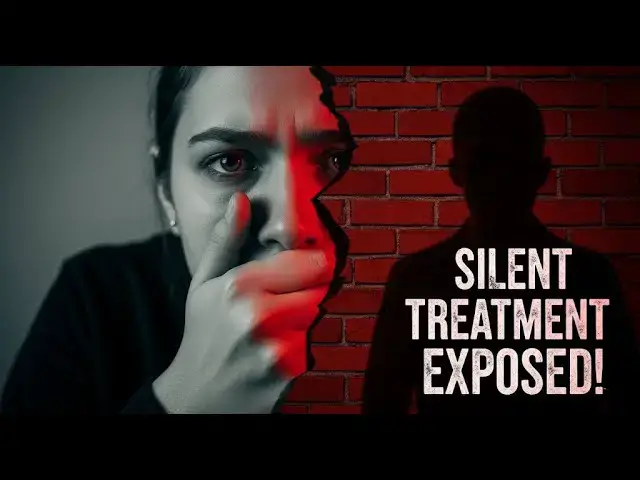
Ever felt like you're talking to a brick
0:01
wall? Or that cold, heavy silence just
0:04
screams louder than any argument ever
0:11
That's the silent treatment. And if
0:13
you're experiencing it or even giving
0:14
it, you know it feels like a dagger to
0:16
the heart of your relationship. But what
0:18
if I told you it's not just annoying,
0:20
it's actively sabotaging your
0:22
connection. Hey everyone, it's Clear
0:24
Life Happiness and today we're pulling
0:27
back the curtain on one of the most
0:28
toxic yet often overlooked relationship
0:31
patterns, the silent treatment. This
0:34
isn't just about someone needing a
0:35
moment. It's a powerful destructive tool
0:38
that can erode trust, build resentment,
0:40
and leave you feeling utterly alone even
0:43
when you're right next to your partner.
0:48
We're going to expose why people use it,
0:50
how it's systematically ruining your
0:52
bond, and most importantly, I'm going to
0:54
give you actionable strategies to stop
0:56
it. Now, whether you're receiving it or
0:59
you're the one dishing it out, ready to
1:01
transform your communication and reclaim
1:03
your relationship, let's dive in.
1:12
First things first, what is the silent
1:14
treatment really? It's more than just
1:16
not talking. It's a deliberate refusal
1:18
to communicate, often in response to
1:20
conflict or perceived wrongdoing.
1:27
It's a shutdown, a withdrawal of
1:29
emotional and verbal engagement designed
1:31
to punish, control, or avoid difficult
1:33
emotions. People resort to it for a
1:35
myriad of reasons. Maybe they feel
1:37
overwhelmed. They don't know how to
1:39
express their anger or hurt
1:40
constructively. or sadly sometimes it's
1:43
a manipulative tactic to gain power or
1:50
Now for the hard truth. Why is it
1:52
ruining your relationship? Think about
1:54
it. A relationship thrives on
1:56
communication and safety. The silent
1:58
treatment shatters both. One, it's a
2:01
form of emotional abuse. Yes, I said it.
2:03
It's passive aggressive, manipulative,
2:05
and can feel like psychological warfare.
2:14
It denies you validation, connection,
2:16
and the chance to resolve conflict. It's
2:18
designed to make you feel invisible and
2:24
One, it erodess trust and safety. How
2:27
can you trust someone who stonewalls
2:29
you? You start walking on eggshells,
2:31
constantly worried about triggering
2:32
another shutdown. That secure foundation
2:34
crumbles. One, it prevents resolution.
2:38
You can't fix a problem if you can't
2:39
talk about it. The issue just fers
2:42
growing into a giant unspoken resentment
2:44
that poisons your entire connection.
2:49
One, it creates deep resentment for both
2:52
sides. The person receiving it feels
2:54
angry and hurt. The person giving it
2:56
often feels misunderstood and isolated,
2:58
reinforcing their avoidance. It's a
3:00
vicious cycle. So, how do we stop it
3:02
now? Let's tackle this from both sides.
3:08
Scenario A. You're the one receiving the
3:10
silent treatment. It's agonizing, I
3:12
know, but your power lies in not playing
3:15
the game. One, don't chase. Don't plead.
3:18
Don't beg for attention or an
3:19
explanation. This often reinforces the
3:22
behavior. One, state your boundary
3:24
calmly, once, clearly, and assertively.
3:27
Something like, "I see you're
3:29
withdrawing. I'm here when you're ready
3:30
to talk respectfully about what's going
3:32
on. Until then, I'm going to focus on my
3:35
activity/my feelings. One, focus on your
3:38
feelings, not accusations. Instead of
3:41
you're ignoring me, try I feel hurt and
3:43
disconnected when we go silent like
3:45
this. I want to understand. One, give
3:48
space, but don't tolerate prolonged
3:50
abuse. If the silence is ongoing and
3:52
destructive, you need to decide what you
3:54
can and cannot accept in your
3:56
relationship. Self-preservation is key.
4:01
A scenario B, you're the one giving the
4:04
silent treatment and want to change.
4:06
First, acknowledge that you're doing it,
4:08
and that's a huge step. This often comes
4:11
from a place of being overwhelmed,
4:13
feeling unheard, or not having healthy
4:15
communication tools. One, identify your
4:18
triggers. What situations or emotions
4:20
lead you to shut down? Anger, fear,
4:23
feeling criticized. Understanding this
4:25
is crucial. One, learn to ask for a
4:28
timeout. Instead of shutting down
4:30
completely, articulate your need. I'm
4:32
feeling overwhelmed right now and I need
4:34
30 minutes to collect my thoughts. Can
4:36
we revisit this conversation then?
4:42
This respects both your needs and your
4:46
One, practice verbalizing your feelings.
4:49
Even if it's hard, start small. I'm
4:53
feeling really angry right now or I'm
4:55
feeling hurt and confused. This is
4:58
tough, but it's the bridge back to
5:09
One, commit to re-engaging. The timeout
5:11
is not a permanent shutdown. It's a
5:13
pause. Make sure you genuinely re-engage
5:16
at the agreed upon time, ready to listen
5:18
and contribute. Breaking free from the
5:20
silent treatment, whether you're
5:22
receiving it or giving it, isn't easy.
5:24
It requires courage, self-awareness, and
5:27
a genuine commitment to healthy
5:28
communication. But it is essential for
5:31
building a respectful, loving, and truly
5:34
connected partnership.
5:42
If you found this video helpful, please
5:44
give it a big thumbs up. It helps this
5:47
message reach more people who might be
5:48
struggling. Subscribe to your channel
5:50
name for more insights on building
5:52
stronger, healthier relationships.
5:57
And I want to hear from you. Have you
5:59
experienced the silent treatment? What
6:01
strategies have you found helpful? Share
6:04
your thoughts and experiences in the
6:05
comments below. Let's create a community
6:08
of open, honest communication. Until
6:10
next time, keep connecting, keep
6:12
communicating, and keep building that