Up next in 10


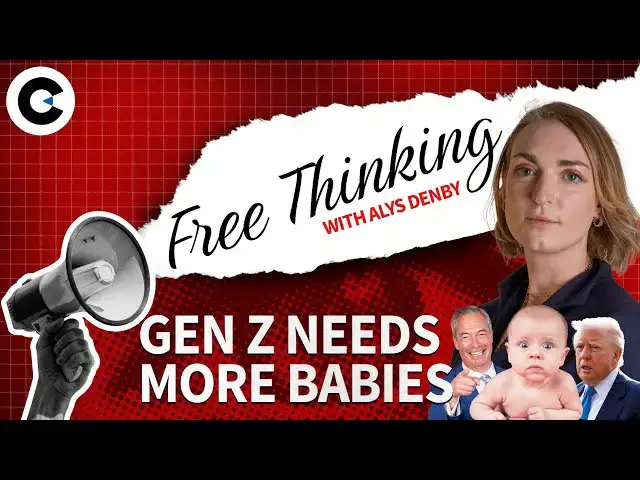
For this week's episode of Free Thinking, Alys Denby is joined by generations expert and best-selling author of Inheritocracy, Eliza Filby.
As Donald Trump marks 100 days in office, they discuss the prospects for young people growing up in an uncertain economy and with deep demographic changes, and why the future depends on Gen Z having more babies.
Read more informed opinions and insightful analysis here 👇
https://www.cityam.com/opinion-2/
Get more of City AM 👇
🌐 http://www.cityam.com
X(formerly Twitter): http://twitter.com/CityAM
Facebook: http://www.facebook.com/cityam
Instagram: http://www.instagram.com/city_am
LinkedIn: www.linkedin.com/company/cityam
Produced by: Alys Denby, Emmanuel Nwosu, Scarlett Wild, Joe Lee
#news #donaldtrump #nigelfarage #farage #trump #birthrate #childcare #genz #millennials #personalfinance #finance #financialnews #business #businessnews #politics #politicalnews #economy #economics #reform #reformuk #opinion
Show More Show Less View Video Transcript
0:00
the 90-day freeze on the tariff negotiations I think has had and
0:06
certainly I'm hearing this from businesses I'm working with in America just frozen everything and certainly I'm
0:12
beginning to see that kind of happening in in London and and and Europe the
0:18
short-term consequence of the tariff thing is is yes the shock and now the freeze and it's a bit like actually what
0:23
Rachel Ree did with the budget where she was going "The bad news is coming it's coming." And she trailed that for
0:29
literally weeks and months before the budget was actually announced and actually just what happened was business froze it stopped making decisions it
0:35
stopped hiring it stopped signing contracts it's and that's so corrosive i wonder if this could be a perverse
0:41
benefit for Britain actually are we now looking like more of the safe haven we're you know we've got the rule of law
0:47
we've got you know strong regulations rule of law and I think we are seeing Britain perhaps slightly benefiting from
0:53
the chaos of Trump we have John Cordwells an entrepreneur in cityam this week arguing that America's already
0:58
experienced a brain drain you know the strength of America has been in its its people obviously but a lot of other
1:04
things as well you know Silicon Valley sort of explosion was a mix of entrepreneurialism government investment
1:10
and immigration so um it's not just about people the secret of America's genius but certainly a brain drain
1:16
particularly in STEM tech to Europe not just the UK potentially Canada as well
1:22
will have a a a kind of negative impact on America for sure and potentially benefit the UK i think we need to have
1:28
an honest conversation about fertility rates and demographics fertility rates
1:34
have been declining since the late '60s this is not a millennial Gen Z issue and
1:40
it has serious economic consequences the economic consequences is not just that people are having fewer babies is that
1:46
people are living longer and there's a disproportionate ratio of older people that by and large are expensive and
1:52
young people by and large pay into the coffers it's the dynamic of that and the economic consequences of that there's a
1:58
brilliant author called Dr paul Mand who writes exceptionally well about the economic consequences of of a low birth
2:04
rate society and it's sluggish growth it's higher dependencies on immigration
2:10
it quite often means fewer wars um but you know you end up in a society like
2:15
Japan where you know it it's been um sort of suggested that diapers for old
2:20
people out sell diapers for babies so there is a really important economic conversation we need to have about a
2:27
society that is is is living in an era of low birth rate welcome to free thinking bringing
2:33
you informed opinion and insightful analysis from the comment pages of cityam with me Alice Dembi opinion and
2:39
features editor of cityam and today I'm delighted to be joined by the brilliant Eliza Philby historian generations
2:46
expert best-selling author of Inheritocracy and most importantly of course a city columnist eliza welcome
2:52
thank you for joining me um delightful the city is bathed in sunshine as we celebrate a hundred glorious days of
2:59
Donald Trump and according to him it's been the greatest start to any administration ever but I think the
3:05
markets are telling a slightly different story today's city man no he's not modest um so we've got today's city
3:12
front page uh apparently the American economy has actually um experienced a 0.3% fall in growth in the first three
3:20
months of 2025 so what do you make of Trump's first 100 days how would you say
3:26
it was going i think it's been an absolute onslaught of everything all the
3:33
things all at once and I think it's been you know it's hard to kind of take stock but whether we're talking about the
3:38
signal chat whether we're talking about the Zalinski interview whether we're talking about the tariffs bingo like there's been so much it really has been
3:45
like the first series of a reality TV show um and he does you know he's not
3:51
he's unashamedly a politician that plays that game i mean I think this is really
3:58
trit thing to say but it's almost like too soon to tell as to what the consequences are the 90-day freeze on
4:04
the tariff negotiations I think ha has had and certainly I'm hearing this from
4:11
businesses I'm working with in America just frozen everything right and certainly I'm beginning to see that kind
4:18
of happening in in London and and and Europe so I think the con the short-term
4:24
consequence of the tariff thing is is yes the shock and now the freeze and it's a bit like actually what Rachel
4:30
Reeves did with the budget where she was going "The bad news is coming it's coming." And she trailed that for
4:36
literally weeks and months before the budget was actually announced and actually just what happened was business froze it stopped making decisions it
4:42
stopped hiring it stopped signing contracts it's actually that's so corrosive yeah and and you know those
4:48
those figures on the US economy therefore are not surprising and potentially will get much worse um so
4:55
you know that sort of old adage that business likes uncertainty well we're in for a rocky ride of consistent
5:01
persistent uncertainty so it's trying to find sort of the levers you can pull and the decisions you can make in that kind
5:08
of climate and just kind of basically embrace it and get used to it i wonder if this could be a perverse benefit for
5:13
Britain actually are we now looking like more of the safe haven we're you know we've got the rule of law we've got you
5:19
know strong regulations rule of law um and I think we are seeing Britain
5:24
perhaps slightly benefiting from the chaos of Trump we have John Cordwells an entrepreneur in City AM this week
5:30
arguing that America's already experienced a brain drain which I find I think that's really fascinating i mean I think you know the strength of America
5:36
has been in its um its people obviously but a lot of other things as well you know Silicon Valley sort of explosion
5:42
was a mix of entrepreneurialism government investment and immigration so
5:48
um it's not just about people the secret of America's genius but certainly a brain drain particularly in STEM tech to
5:54
Europe not just the UK potentially Canada as well um will have a a kind of
6:00
negative impact on America for sure and potentially benefit the UK i mean we're
6:05
seeing lots of people immigrate from the UK particularly high netw worth individuals and particularly young
6:11
bright minds bright young things who are looking for you know a lower tax burden
6:16
more accessible housing and you know greater bang for their buck and and more frankly better weather so lots of them
6:23
are going to Dubai there is a potential that Europe and UK benefits particularly in the tech sector will we see you know
6:30
because of this brain drain actually the next Google in Dublin Paris or London um
6:35
who knows but I think speaking to people in the US the sense I'm getting um
6:42
particularly young people in the US I have a lot of family in America there's a sense of uncertainty hostility
6:51
um and an idea of you know we're not sure this is a place we can you know
6:58
build a family build a home you know those kinds of things so where do we look to do that and I think you know the
7:05
UK obviously has not just the rule of law but particularly London when people think of the UK abroad they you know
7:11
basically think of London let's be honest um has that infrastructure
7:16
um and that ecosystem and particularly the educational um scene as well is really really important but I think it's
7:22
particularly important therefore that the government stops making bad decisions on tax on you know attacking
7:28
our education sector the independent sector um and making and making sure that this country is as appealing as
7:34
possible to international talent because you know we do have an opportunity here as a result of Trump but I think
7:41
I sort of struggle with this idea of of whether we're poaching nurses from Indonesia or techies from California um
7:49
we should also be investing in the infrastructure ructure and the the skills building within the UK to ensure
7:54
that young people in this country feel equipped to build the futures that they want to build for themselves and we don't and we haven't historically um
8:01
we've pumped a lot of money and sent a lot of people to university and those rewards haven't always come and we did
8:07
very little for those that didn't go to university so you know business historically and now is crying out for
8:15
skilled um individuals and those skills are evolving at pace because of AI and I
8:20
just think cherry-picking talented people from abroad isn't always the solution and of
8:27
course we do need to increase our own domestic population we've got a terrible fertility crisis in this country as
8:32
America does as well and and you wrote a brilliant piece in CCM this week about Trump's plan to solve America's
8:39
fertility crisis by giving people I think sort of $5,000 for having a baby splashing the cash
8:45
i mean I remember actually um a similar proposal being floated here in Britain but it was in terms of a tax break and I
8:52
think like well when me and my husband were trying for a baby we really weren't thinking of the tax man yeah exactly
8:57
come on darling let's do it yeah the man from HMRC is watching um I maybe an
9:03
upfront cash bonus is slightly more appealing but I think as you argued in your piece it's not going to work i
9:09
think we need to have an honest conversation about fertility rates and and demographics because it has become
9:17
fertility rates have been declining since the late60s this is not a millennial or gen Z issue this has been
9:24
historically you know declining um in Europe particularly and quite dramatically actually also in America in
9:31
the last 20 years and it has serious economic consequences the economic consequences is not just that people are
9:37
having fewer babies is that people are living longer and there's a disproportionate ratio of older people
9:43
that by and large are expensive and younger people by and large pay into the coffers and pay for the older people in
9:50
in the population so it's the it's the dynamic of that and the economic consequences of that there's a brilliant
9:57
author called Dr paul Mand who writes exceptionally well about the economic consequences of of a low birth rate
10:03
society and it's sluggish growth it's higher dependencies on immigration it it
10:08
it quite often means fewer wars um but you know you end up in a society like
10:14
Japan where you know it it's been um sort of suggested that diapers for old
10:19
people out sell diapers for babies and so there is a really important economic conversation we need to have
10:27
about a society that is is is living in an era of low birth rates
10:32
however number one those countries around the world that have tried this Trump approach of incentivizing with
10:39
cash and actually the Trump incentive of $5,000 is actually quite low compared to even Russia where they offer $7,000 per
10:45
child and in Hungary where they offer married couples a 30 grand loan and that loan is wiped out if they if they have
10:52
three children so actually it's it's actually quite portery compared to the other initiatives but also the other
10:59
initiatives haven't worked like you know Taiwan is a brilliant example it spent
11:04
three billion pounds not just in cash incentives but state structural reforms
11:09
to offer better maternity leave better parental leave better nursery care for
11:15
women and and families to to grow and have children and they haven't really
11:20
push the dial moves the needle on the birth rates in that country so it's not just cash incentives don't work but also
11:27
al frankly also changing the state services for families doesn't work either so what does this is the question
11:34
and I think we need to have a a recognition that essentially having a choosing to have a child is a personal
11:40
choice and it it's a personal choice in the 2020s in a very different way that it was a personal choice in the 1960s
11:47
when there was greater access to contraception and the fundamental change has been the position of women and the
11:52
access and availability of opportunities um um particularly in careers for women
11:58
and and I think the conversation around pronationalism worries me hugely because
12:05
it's becoming quite toxic and politicized when actually the real conversation you should be having is how
12:11
can you not tell women to have more babies and get back you know get back into remraing the role of motherhood and
12:18
their their traditional duties is actually how can you create the conditions in which those
12:24
that have children have more because they're the ones you're going to convince they're the ones that
12:29
potentially certain levers that you pull in the economy um and in state services could make a difference i mean I I have
12:35
two children if it was cheaper if it was easier um for example I run my own business if
12:42
there was some kind of tax incentives that I can offset the child care um that I have to pay for in order to do my work
12:48
I may have had a third child i do find it really interesting as you say that this is a phenomenon across the
12:54
developed world in countries with very difficult political environments which does suggest as you say that this isn't a policy problem it's a woman's choices
13:01
problem and I feel exactly the same as you I mean I I've got one child I'm very
13:06
happy I find it easy to balance u my career ambitions with my child care um
13:12
and I feel like that's a perfectly legitimate choice and I as you say I find it quite worrying when people tell
13:18
me you should be having two or three because that's the replacement rate um that's going to incentivize you again
13:24
that's as bad as the man get on that replacement rate exactly exactly yeah uh
13:30
and so I Yeah I do think that you're right that um it's encouraging women
13:36
who've already made that choice who've already found a stable relationship um or not you know I have plenty of
13:42
friends that are single mothers by choice as well and and and not by choice
13:48
actually as well so I think it's I do worry the
13:53
pronatalism debate will go down a rather toxic route if it hasn't already i do
13:58
then worry that we're not actually looking at and being really honest about what a low birth rate economy looks like
14:07
no politician really talks about that um and I also think like as we
14:12
said help those that already have children have more because that's where the real potential is as well that said
14:20
I do think there are some specific policies that we have here in the UK that are enimical to families for
14:25
example we have the two child benefit cap that seems crazy when when we don't have enough children yes and it's also
14:31
quite judgmental well it's it's assuming that you there's a certain section of society
14:37
that you don't want to breathe too much exactly um I think element to that an
14:42
appalling policy i think we also have a welfare system that shovels benefits towards pensioners at the expense of
14:47
working families um I don't think that's sustainable um and we know about the ongoing uh social care costs of an aging
14:54
population so that's a completely unsustainable system that no politician is upfront and honest about and also the housing crisis of course you can't be
15:01
making babies if you don't have bedrooms to do it in and bedrooms for them to Yes i mean I I I don't always buy the
15:07
economic argument that um h better housing will mean more babies because I
15:13
mean look you know women had a lot more babies in a lot worse economic conditions i think it's about actually
15:19
the story of progress that we've seen in the last 30 years is that women have more choice and you know we've given
15:24
them other things that they can do now brilliant you know exactly I think it's
15:30
a positive as well as one with negative consequences for Exactly exactly i think
15:35
what was really interesting was that you said that this has um been happening since the 60s but I do feel like the
15:41
reasons why people are choosing to have fewer have maybe changed generation by generation i feel like we're we're
15:48
millennials and I feel like we're a generation that was told you can have it all you you should um pursue a career um
15:55
and you can have babies and you can balance it all
16:05
women actually want to hear or need to hear more of the positives like how
16:11
happy and fulfilling family life can be because I feel like they're quite put off by us moaning about it all the time
16:17
i think it's important not to look through this debate through a sort of predominantly middle class educated lens
16:24
um I do think one of the striking things is that the real decline in birth rates
16:30
amongst workingclass women not middle class women um however the the the narrative is always this is this is the
16:37
fertility crisis being pursued by women who have you know dropped babies for books and and careers um I think you're
16:44
right i think the the millennial narrative was kind of let's sort of learn from the sort of Sex and City Gen
16:50
X women who sort of tried to have it all but couldn't have it all and quite often
16:55
was trying to contort their fertility around a career structure that was built for men we grew up feeling that we could
17:02
do everything and and were told don't have babies too early yes you know the amount of lectures I got in school
17:08
around the dangers of dangers of teenage pregnancy nothing by the way on my fertility clock and how important that
17:15
was to kind of think about i do think Gen Z are much more aware of their
17:20
fertility perhaps too much i would say the level of paranoia around um
17:25
fertility egg freezing all of that you know the the I do I do think that
17:30
there's sort of too much almost kind of too much knowledge out there on that and and creating a level of paranoia um I do
17:37
think they're um perhaps looking at their Gen X mothers going you know
17:42
actually particularly your professional Gen X mothers going maybe I wanted you
17:47
home more maybe you know that professional path in a digital age meant that you know perhaps when I
17:55
do it I want to do it slightly differently having looked at how my mother did it i I I did a focus group of
18:00
a Gen Z women and one of the striking things that they were saying to me was you know I never saw my mother or when
18:06
she was on holiday she was really stressed or she was really successful and really paved the way in her career
18:11
but actually I wish she'd been home more and I I get a sense that Gen Z women are
18:16
much more sort of realistic about the dangers of focusing too much on your
18:23
career and sacrifice to your family because it is a juggle let's not pretend that i mean where am I going today i'm
18:30
having to do this jump on the tube go to Green Park have a lunch have another
18:35
meeting with a colleague and then I have to leaprog it to Southeast London for a swimming gala and it's like
18:42
oh my god in the middle of the day in the middle of the day where it's just assumed that the mother can do that and
18:49
it is often the mother so I just I just think there is a level of of new level
18:54
of realism amongst Gen Z because they grew up with invariably mothers that were in that
19:01
kind of professional digitalized world that you know that they want to perhaps do it slightly differently when they do
19:06
it i think that's really interesting to hear and I think that the day you're describing this is a world still set up
19:12
for a family in which basically mothers don't work or are always available like even just the school day finishing at
19:19
3:30 i mean what is that i know and the cost of wraparound care wrapped wrapped
19:25
like little gifts i think another way this generational divide is playing out is in the increasing fragmentation of
19:31
our politics so we're recording this on Thursday people are going to the polls in local elections today we don't know what's happening but everybody I mean
19:38
how many people will vote in this how many people will actually vote I mean the turnout I suspect will be may quite
19:44
low yes but people will be looking at the result of the Ronghorn bi-election in particular and these new mar staying
19:51
up for that one oh god no no I'm a mom I'm
19:57
joking you corn yeah everybody is expecting to see great gains for reform
20:03
and what we definitely have seen is this rise in Young men going reform young women going green what do you make of
20:09
this what do you think is the appeal of reform well I think just to kind of take it a step back historically women have always always voted conservative you
20:16
know and actually that quite often surprises young people because they're like "What why?" And historically it's because what women value kind of
20:23
stability family values yeah I think that was sort of you know the cultural conservatives rather than the economic
20:30
conservatism definitely appealed and you know you know Thatcher famously leaned
20:35
into that by holding up you know on the election trail the two the two shopping bags and saying "This is what you can
20:40
buy under Labor and this is what you can buy under the Conservatives showing the the the the impact of inflation on the
20:46
household shopping bill you know." So so Thatcher was brilliant at it leaning into to tying economic conservatism and
20:54
cultural conservativism and uniquely appealing it to women however one of the things that um you're seeing and have
21:01
seen in millennials and now Gen Z is actually historically we start you know
21:09
progressive and liberal and we gradually as we get older and you know more downtrodden and more realistic become
21:15
conservatives yeah or sensible and it hasn't happened for millennial women so
21:20
millennial women have stayed voting Labor and so Gen Z actually not the
21:28
anomaly it's actually millennial women because they haven't moved to the right but you're right in that the other thing
21:35
that's happened is amongst Gen Z um women and men you're seeing a a
21:42
gradual um I think it's somewhat overplayed actually the the the gradual sort of um growing gap between women
21:50
voting left progressive green in particular and
21:55
young men voting reform and I think to
22:00
tease that out you know what is it that's the particular appeal for young
22:06
men when it comes to reform i think reform are amazing on social media i mean I think I think we have to
22:12
acknowledge the ways in which they've tapped into fears around the economy fears around jobs fears around
22:19
immigration and the particular impact it has on young people as opposed to old old people you know that the way that
22:25
you you stoke those fears around immigration for the young is very different for how you play it for the old you know it's more economic than
22:31
cultural for example um I think um the even the way that
22:38
actually reform you know are tapping into support for the NHS you know
22:44
support for the NHS amongst the young is is is pretty high you know and and I think that the reform messaging
22:51
obviously around some kind of um restoring of of of
22:58
confidence is really important for young people and I do a lot of focus groups with Jen Jen Jenz is and and actually
23:04
last week I featured a fascinating interview um with a Jenzir in my Substack and one of the things that he
23:11
was saying to me was like you know I said would you fight for your country
23:16
and he said they've Britain's given me nothing to live for so certainly given
23:21
me nothing to die for and the level of skepticism it's not even skepticism it's
23:27
it's it's disillusionment it's lack of faith in not just the state to transform the
23:35
fortunes of young people but also pride in the UK and desire obviously to seek
23:44
riches opportunity um um frankly even stability and
23:50
certainly low tax elsewhere and I think I think that's the particular appeal of
23:55
reform i think there is also um a danger of overplaying the gender
24:02
divide within Gen Z um because I think there is a an overriding narrative that
24:09
education hasn't bought them what it thought it would and and the impact of
24:14
student loans and student debt for those that go to university obviously is huge on Gen Z the over reliance and need for
24:22
the safety net and support structures of the bank of mom and dad obviously I've written a lot about that um and the
24:29
hotel of mom and dad it's not just the bank of mom and dad it's the hotel of mom and dad the the the the IFS brought
24:35
a report out in January and it it was fascinating to see actually the impact of the hotel of mom and dad on
24:42
workingclass communities much more debilitating whereas for middle-ass families it was very much like a lift up
24:48
you lived at the hotel bank of and the and the bank of mom and dad for a number of years and then you were you could
24:53
leaprog so I think there's there's there's that i think the disillusionment around work and particularly this
24:59
stagnation in wages um I know they've risen recently but essentially work isn't paying work isn't buying you what
25:06
you know what our parents and obviously housing as well um there is no sort of
25:14
where's the access point into adulthood yeah into independence into building a life let alone building a family and
25:22
that is I think being as felt as much by Gen Z women as Gen Z men i think Gen Z
25:29
women perhaps have a greater sense of individual empowerment and particularly those that are you know succeeding in
25:35
the education system because education does still provide you with a leg up so yeah i mean I I'm not sure I suppose the
25:41
bigger point is I'm not sure these local elections will be because they're often about bins rather than great economic
25:47
debates right so I don't I don't know if you'll be able to sort of um great get
25:53
some great tease out some great insights from these elections i think you may see and we talked a bit about this before we
25:58
started shooting was how disillusioned are people with Labor yet yes because I
26:04
think actually paradoxically the
26:09
the Rachel Reeves and and K have done a very good job at going it's all really bad and we don't
26:18
we don't quite know what to do and we're not sure what levers we can pull and you know things have changed and you know
26:24
and it's a great some say it's talking down Britain and it's not great for economic confidence but on the other
26:30
hand it's also really good at sort of like setting realistic expectations politically and it's not just saying
26:37
polit you know we we inherited a mess from the conservatives it's actually like there's war in Europe there's
26:42
tariffs in US you know everything's it's actually really it's given I think the
26:48
Labor party a bit of leverage because they've not come in and promised the world they didn't at all and now they
26:56
they've they're now coming in and going well the world's actually changed so I'm glad we didn't promise it so low
27:01
expectations Yes yes and when I talk to young people and I say young people because I'm not young anymore and it's important to make
27:07
that distinction um you're seeing that the disillusion isn't
27:14
necessarily you know viciously against labor is still with conservatives i mean
27:21
the conservatives have got a real problem and it's still not sort of like you know let's just embrace reform
27:26
because they're definitely offering this kind of vision of the future it's interesting too so we're in a real trans
27:32
I think transition point as we should be between elections and I wonder I wonder if to to loop us right back around to
27:38
the beginning if reform might at some point be punished for their perceived closeness to Trump that's a dynamic
27:44
we've certainly seen it play out in Canada yeah if you look at the data actually it's interesting that people have ceased to see America as this kind
27:51
of beacon of Well as they should of No but it's not just Trump it kind of
27:57
predates that it also involves you know the kind of the race riots and you know
28:02
that there's George Floyd yeah but it's also about the decline of Hollywood and the sort of globalization of culture
28:08
through Tik Tok and so I think there's I grew up thinking I just want to get to New York or I want to get to
28:15
LA there's a there was a kind of aspirational dreamy sense of what America represented i don't think young
28:21
people have that anymore i did look at some data this morning was saying is would would your anti-Americanism stop
28:28
you from buying Americanmade products uh in France it it does
28:34
that's so French it is so French in the UK they were way down okay in Canada yes
28:40
it does there's a real anti-American hostility there but I think the sort of
28:46
idealism and the fascination with America is gone mhm and I think maybe there's a yearning and this is why
28:52
reformer is succeeding for British identity to mean something again
28:58
yeah but I mean I I I sort of feel like historically we always have that
29:04
conversation it's al you know they're having that conversation you know when Yeah the kind of post imperial Britain
29:10
and decline conversation has been going on for hundreds of years yeah i mean I feel like you know whether it was cool Britannia or whether it was you know
29:17
when we created Britain you know with Scotland I feel like that perennial
29:22
debate is quite tiresome i do think you know a sort of understanding of our
29:30
place in the world post Brexit is still a bit murky definitely and and that's understandable because not just we have
29:38
changed but the world has changed um particularly in the last six months so we're still sort of you know stepping
29:45
into the dark we don't actually know what that means are we aligning ourselves with Europe are we aligning ourselves with America are we trying to
29:50
sort of you know play everyone off against each other are we you know sort of aligning ourselves with Chinese
29:56
investment or you know Middle East where are we getting this magic infrastructure from we don't know i I think it's sort
30:04
of crudely speaking all to play for i think that is a note to end on we don't know it's all very uncertain
30:11
um join us again thanks so much thank you
30:20
[Music]
#News
#Politics
#Demographics