Up next in 10


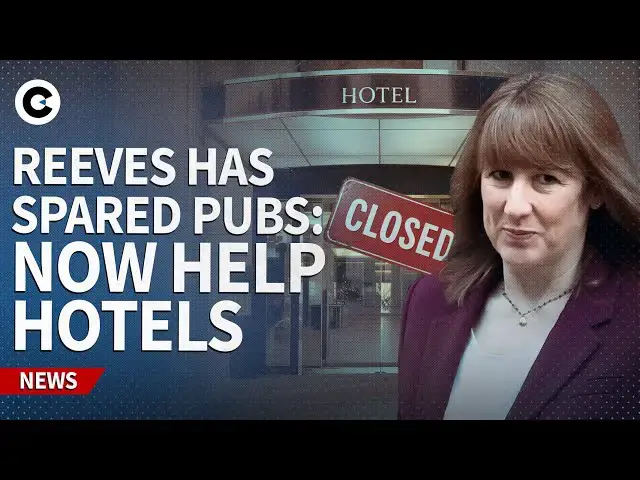
Following a public uproar and major media coverage, the government has U-turned on business rates - but only for pubs.
Now, the rest of the hospitality sector is in focus, and hotels - from budget chains to high end luxury - are in deep trouble.
City AM's Matt Kenyon visits a top hotel in the Square Mile, and gets insights from a top hospitality expert.
#hotels #economics #politics #news #london
Show More Show Less View Video Transcript
0:00
From budget chains to the top end,
0:01
Britain's hotels and restaurants are
0:03
facing a deeply gloomy climate. And
0:06
while it looks like pubs might get some
0:08
relief, other parts of the hospitality
0:10
sector are worried that they are being
0:12
left behind. I'm here at the South Place
0:14
Hotel at the heart of the city of
0:16
London, where rooms like these generally
0:19
go for a few hundred quid a night. But
0:21
even on the glamorous end of
0:22
hospitality, these businesses are facing
0:25
more difficulties than they ever have
0:26
done before. Employment costs are
0:28
rising, so are energy costs. And of
0:31
course, the strangle hold of taxes
0:33
doesn't seem to be loosening anytime
0:35
soon. This week, the hospitality giant
0:37
Whitbread offloaded a chunk of premier
0:39
in hotels to the property group London
0:42
Metric in an 89 million pound deal.
0:45
Citym reported back in October that even
0:47
top-end luxury hotels such as the
0:49
Seavoy, the Ritz, and the Dorchester are
0:52
all struggling to turn a profit. The
0:54
business group UK hospitality has found
0:57
that as many as 574 hotels could be
1:00
forced to close their doors in 2026
1:02
alone based on the current pressures on
1:05
the sector. The average hotel will see
1:07
their business rates sore by 28,900
1:10
next year and by a massive £25,200
1:15
in the next 3 years. The group wants to
1:17
see the business rates discount up from
1:19
5 to 20 p for all hospitality
1:22
businesses. I spoke to Kate Nichols,
1:24
chair of the group.
1:25
>> The sector's uniquely impacted and it is
1:27
a whole sector problem. So, it needs a
1:30
sector solution. They were the sector
1:32
that was closed down for the best part
1:33
of two years in COVID. That means
1:35
they've got high debts. They've got
1:36
shattered balance sheets. They're not
1:38
yet fully recovered in value and volume
1:40
terms from COVID. And they are the
1:42
sector that was exposed the most to
1:45
energy and food price inflation that was
1:47
coming through and labor market
1:48
inflation. And finally, since the Labor
1:51
government came to power, you've also
1:52
had significant increases in costs and
1:55
tax in the employment space.
1:56
>> This week, the Chancellor finally
1:58
unveiled a hospitality bailout. It looks
2:00
like it'll be worth as much as 300
2:02
million pounds, but it will only be for
2:04
pubs, and it will only be temporary. So,
2:06
the pressure is growing on the
2:08
government to broaden this out to the
2:10
rest of hospitality. It even made the
2:12
front page of our paper this week.
2:14
Exclusive polling commissioned by cityam
2:17
and freshwater strategy has found that
2:19
70% of Brits would back a fullyfledged
2:22
relief package for the industry.
2:24
Meanwhile, Rachel Reeves says that the
2:26
current rate of discounts means that
2:28
hospitality and retail are facing the
2:31
lowest rates of taxes since 1991. But
2:34
this doesn't quite hold up. Property
2:35
revaluations and various COVID relief
2:38
packages coming to an end mean that
2:40
business rates overall are very much
2:42
still climbing. And the business
2:44
secretary, Peter Kyle, even said in an
2:46
interview on Times Radio that the
2:48
government did not know the knock-on
2:50
impact of this policy on the broader
2:52
business rates. He said the decision was
2:54
made by an independent body. So the big
2:56
question now is how many hotels need to
2:59
close before the government takes action
3:01
on this issue.
#News