Up next in 10

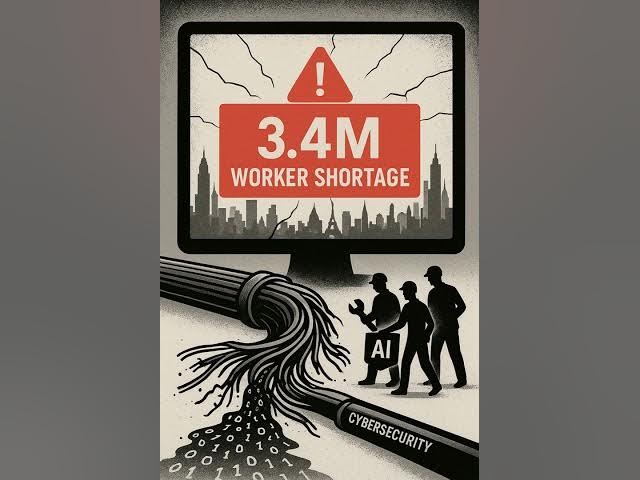
The 3.4 Million Gap: Cracking the Code on Cybersecurity's Global Workforce Crisis
Oct 14, 2025

The cybersecurity industry faces a critical global shortage of 3.4 million workers, a deficit compounded by evolving threats, high attrition rates due to burnout, and geopolitical factors such as costly H-1B visa policies. We investigate how major tech hubs like Nama Bengaluru are rising as global capability centers (GCCs) for AI and cybersecurity, even as the region battles a pervasive mismatch between current theoretical training and critical industry demands, including Cloud Security and Data Forensics. This episode analyzes why the talent pipeline is failing, focusing on the need for transformative diversity and inclusion (D&I) initiatives, capacity building for trainers, and a shift away from "frozen middle" management mindsets to drive value-based innovation.
www.securitycareers.help/the-global-tech-fault-line-how-indias-silicon-valley-bengaluru-is-leading-the-ai (http://www.securitycareers.help/the-global-tech-fault-line-how-indias-silicon-valley-bengaluru-is-leading-the-ai)
Sponsor:
www.cisomarketplace.com (http://www.cisomarketplace.com)
Show More Show Less View Video Transcript
0:00
Welcome to the deep dive. Today we're uh
0:02
really cutting straight to the core of a
0:04
massive global challenge. We're talking
0:06
about the huge shortfall in IT and cyber
0:09
security talent and maybe even more
0:11
surprisingly the kind of deep-seated
0:13
psychological blockers that are stopping
0:15
leaders especially in middle management
0:17
from really adapting.
0:18
Yeah, it's definitely more than just you
0:20
know needing a few more coders. We've
0:22
been digging into several highlevel
0:23
reports and what they show is this
0:25
fundamental disconnect. It's structural.
0:27
It's cultural.
0:28
How so? Well, technology, things like
0:30
AI, IoT, sophisticated hacking
0:33
techniques, it's just moving so much
0:35
faster than our ability to lead and
0:37
manage it. It's faster than we can even
0:40
structure the workforce for this new
0:41
reality.
0:42
If leadership doesn't catch up, frankly,
0:44
organizations stay incredibly
0:46
vulnerable,
0:47
right? So, our mission today is to
0:48
synthesize all this. We'll look at the
0:50
staggering demand figures, pinpoint the
0:52
skills that are suddenly critical, you
0:54
know, going from zero to hero almost
0:56
overnight. And we want to get under the
0:59
hood of what one source calls the frozen
1:01
middle, that management layer that seems
1:03
to put the brakes on digital
1:05
transformation.
1:06
Exactly.
1:06
And look, getting good specialized info
1:08
and solutions in this space is tough,
1:10
which is why we really appreciate the
1:12
support of www.zoomarketplace.com
1:15
for making this deep dive possible.
1:18
Okay, so let's start digging in. Just
1:20
how big is this gap? The difference
1:22
between the cyber security pros needed
1:24
and the ones we actually have. Uh the
1:26
skill is well it's almost hard to grasp.
1:30
We looked at Microsoft's analysis. They
1:32
estimate that by 2025 globally there'll
1:35
be 3.5 million open cyber security
1:38
roles.
1:38
That's three and a half million.
1:39
Yeah. Millions of jobs designed to
1:41
protect the absolute bedrock of global
1:43
business. Just empty, unfilled.
1:46
It's a staggering vulnerability. What
1:48
about specific regions? Like what does
1:49
it look like in a major tech hub? Say
1:52
India,
1:52
right? Zooming in makes it even clearer.
1:54
Sources show India's demand for cyber
1:56
folks has jumped by about 51% just
1:58
recently. Yeah. Now they have a decent
2:00
workforce, maybe 135,000 people
2:02
currently. Yeah. But even so, they need
2:03
another 68,000 professionals immediately
2:06
just to meet today's needs. Shows that
2:08
demand is just outstripping supply
2:09
everywhere.
2:10
Wow. And the stakes here are, as you
2:12
said, incredibly high. Cyber isn't just
2:14
IT support, right? We're talking data
2:16
integrity, availability,
2:18
confidentiality.
2:19
Precisely. It's about defending against
2:22
really complex threats. crippling
2:24
ransomware that halts production lines,
2:26
sophisticated insider threats, you name
2:29
it. It demands smart solutions, sure,
2:31
but first and foremost, it needs
2:33
skilled, strategic people, people who
2:36
understand the evolving game.
2:37
Okay, so that leads to maybe the most
2:39
fascinating part. It's not just needing
2:41
more bodies. It's needing people with
2:43
fundamentally different skills. What's
2:45
surging? What wasn't even on the radar a
2:47
few years ago?
2:47
The shift is dramatic. It's all moving
2:49
toward advanced data skills and dealing
2:51
with complex interconnected systems. If
2:54
you look at the projections for the next
2:55
5 years, I mean take artificial
2:57
intelligence, it's expected prominence
2:58
in cyber security roles. 56%.
3:01
56 compared to what now?
3:03
Compared to basically 0% right now. It's
3:05
a complete rewriting of the required
3:07
skill set.
3:07
That's that's a huge jump. So what does
3:10
that mean? If you're trying to hire
3:11
someone, you can't just look for the old
3:13
network security basics anymore.
3:15
Absolutely not. Companies need deep
3:17
analytical capabilities. Now look at
3:19
data forensics. It's projected to jump
3:21
from about 17% prominence today to 44%
3:25
expected prominence. Even very technical
3:27
niche areas like hacking wireless
3:29
networks that's expected to hit 28%
3:31
prominence.
3:32
Up from almost nothing.
3:33
Interesting. It feels like a move away
3:35
from just building walls like defensive
3:37
IT towards more proactive almost
3:39
offensive analysis understanding the
3:42
attacker. It absolutely is. And that's
3:44
creating whole new job titles that are
3:45
in high demand. We're seeing predictions
3:47
for huge growth in roles like DevSec Ops
3:50
engineering
3:50
embedding security right into
3:51
development.
3:52
Exactly. And IoT engineers, analysts
3:54
focused on IoT security and crucially
3:57
analysts for operations technology, the
3:59
systems that run industrial plants and
4:01
infrastructure.
4:02
Okay. But developing these complex
4:03
skills, uh, understanding things like
4:06
the latest TTPs, the tactics,
4:08
techniques, and procedures attackers
4:09
use, or complex frameworks like PCIDSS
4:12
for payments or the CIS controls. That
4:14
takes more than just a weekend course,
4:16
right? It needs formal validation.
4:18
And that's where we hit a major snag in
4:20
the pipeline, the certification gap. The
4:22
data we reviewed shows that a staggering
4:24
75% of students coming out of cyber
4:27
skilling programs haven't enrolled in or
4:29
finished a relevant highlevel
4:31
certification think COSSP cryc the big
4:35
ones
4:35
75% that's huge why is it cost time do
4:39
companies not see the value
4:41
it seems systemic the training might be
4:43
there but that final critical step the
4:45
validation the company investing time
4:47
and sponsorship for people to get these
4:48
tougherts it's often missing so you end
4:51
up with a lot of people with some
4:52
knowledge but lacking that certified
4:54
provable expertise needed for complex
4:56
enterprise level security
4:58
which is exactly why businesses need
5:00
reliable resources. Finding people with
5:02
that validated expertise navigating the
5:05
tools and solutions for this skills gap.
5:07
It's critical and that's why platforms
5:09
connecting businesses with vetted
5:10
resources are so important and again we
5:12
thank our sponsor www.seomarketplace.com
5:16
for supporting that need.
5:18
Okay, so let's pivot a bit. Let's say
5:20
you do manage to hire or upskill the
5:22
right talent. There's another barrier.
5:25
Leadership. Digital transformation often
5:27
gets stuck because of what the research
5:29
calls the frozen middle mindset. Middle
5:31
managers just aren't equipped to lead
5:33
this kind of change.
5:34
The frozen middle.
5:35
Yeah,
5:35
it's a powerful image. Suggests inertia,
5:37
right? And their role is changing
5:39
massively. They're not just supervisors
5:41
anymore, especially with AI automating
5:43
tasks. They need to be coaches, talent
5:45
developers, connectors.
5:46
Precisely. They need to lead change. But
5:49
when researchers analyze their
5:50
managerial mindsets using frameworks
5:52
like minsburgs, the data showed this
5:54
huge imbalance. Middle managers
5:56
overwhelmingly favor what's called
5:58
change or action orientation. In one
6:00
study, it accounted for something like
6:01
289 recorded responses. They are wired
6:04
to do.
6:05
So action orientation, what does that
6:07
look like day-to-day? It sounds like uh
6:09
Daniel Conorman's system one thinking,
6:12
fast, intuitive, reactive,
6:14
just get the task done.
6:15
Exactly that. It's geared towards quick
6:17
task completion. And honestly, that
6:20
worked fine in the old IT model, which
6:22
was often about volume. How many tickets
6:24
did you close? How many servers did you
6:25
patch?
6:26
But the new world demands complex
6:28
strategic work, the kind needed for AI
6:31
analysis or deep forensic investigation
6:34
that requires
6:35
the system two thinking, deliberative,
6:37
analytical, slow strategic thought.
6:40
System one fixes the immediate known
6:42
problem. system 2 stops and asks, "Wait,
6:45
why does this problem keep happening? Is
6:47
it a symptom of something deeper?"
6:48
And if managers are stuck on that system
6:50
one action autopilot, they literally
6:52
don't have the bandwidth for that kind
6:54
of reflection, do they?
6:55
That's the core issue. The data backs
6:56
this up starkly when they look for
6:58
evidence of other crucial mindsets.
7:00
Well, the reflective mindset only got 34
7:02
responses in that same experiment.
7:04
Only 34 compared to 289 for action,
7:07
right? And the analytical mindset even
7:10
lower. Just 18 responses. The focus is
7:12
purely on execution, on speed. How do we
7:15
get this done fast, not on the broader
7:17
strategy or context?
7:18
And that must directly impact how they
7:20
manage the very talent they need,
7:22
doesn't it? If you've got, say, an AI
7:24
specialist who needs a couple of quiet
7:26
days to really analyze a complex data
7:28
pattern.
7:28
A manager stuck in action mode might
7:30
just see that as unproductive downtime.
7:32
They don't value the slow, deep work.
7:35
This bias actively prevents them from
7:37
creating the environment needed to
7:38
attract, retain, and effectively manage
7:41
that high-level reflective talent. It's
7:43
a mismatch. And this lack of, let's call
7:45
it, well-rounded thinking, it shows up
7:47
elsewhere, too. First, these managers
7:49
often lean heavily on the organization
7:51
for their own growth. And when faced
7:53
with disruption, their go-to is almost
7:55
always technology. They frame the
7:57
problem and the solution purely in
7:58
technical terms. Ah, so they see the
8:00
tool, the software, the system, but they
8:03
miss the people part, the human context.
8:05
Exactly. They overlook the crucial
8:07
emotional side of change, the fear, the
8:10
resistance, the internal politics
8:12
involved in adopting radically new ways
8:14
of working. They treat transformation
8:16
like a software rollout, not a deep
8:19
psychological and cultural shift.
8:21
And layered on top of this, the sources
8:23
also highlighted some unique challenges,
8:24
especially for women in management
8:26
roles.
8:26
Yes, that came through quite clearly.
8:29
Women managers often carry a heavier
8:31
load of what's sometimes called
8:32
invisible work. Things like primary
8:34
responsibility for child care or elder
8:36
care. There's a strong feeling among
8:38
many that the professional world is
8:40
still fundamentally designed mainly with
8:42
male workers in mind. And the fact that
8:45
concerns about workplace environment and
8:46
flexibility came up mostly from women
8:48
managers. Well, it points to a real gap
8:50
in organizational support reinforcing
8:52
those psychological barriers, that glass
8:54
ceiling effect. So putting it all
8:56
together, the path forward isn't just
8:57
technical training. It sounds like we
8:59
need a profound shift in management
9:01
itself. Managers need more than tech
9:03
skills. They need emotional quotient EQ
9:07
to handle the human side of disruption.
9:09
They need the time and the permission to
9:11
step back, reflect, analyze, think
9:13
differently.
9:14
It's a move from just ensuring
9:15
compliance to fostering genuine
9:17
responsibility. and maybe moving away
9:20
from thinking about growth only as
9:22
climbing the hierarchy towards growth
9:24
driven by impact and purpose.
9:26
So summing up,
9:27
yeah, the data really paints a clear
9:28
picture. Solving this global IT and
9:31
cyber talent crisis needs a two-pronged
9:33
attack. One, yes, mass reskilling in
9:35
those critical future focused areas, AI,
9:37
forensics, IoT, security, all that. but
9:40
two, and just as vital, a fundamental
9:42
shift in leadership mindset, moving
9:44
managers off that action autopilot and
9:46
towards being more deliberate,
9:48
reflective, analytical, and truly
9:49
collaborative thinkers.
9:50
So for you listening, hopefully this
9:52
deep dive gives you a sharper lens on
9:54
where the skills demand really is, but
9:56
also why so many organizations are
9:58
finding it hard to adapt. Understanding
10:00
these gaps both in skills and in
10:02
leadership thinking, that's really the
10:04
first step towards finding solutions.
10:06
And that brings us to a final thought,
10:07
maybe something provocative for you to
10:09
chew on. This whole shift we've talked
10:11
about from volume to value. It suggests
10:13
that your career progression in the
10:15
future might depend less on titles and
10:18
promotions and more on your actual
10:20
impact and purpose, your unique value
10:22
ad.
10:23
So, in a world still often obsessed with
10:26
job titles and climbing the ladder, are
10:27
you focusing your personal development
10:29
on the things that will truly matter?
10:31
Something important to reflect on.
10:32
Definitely. Thank you for joining us for
10:34
this deep dive. And one final thank you
10:36
to our sponsor www.cisoarketplace.com.
#Hacking & Cracking
#Jobs
#Network Security