Up next in 10



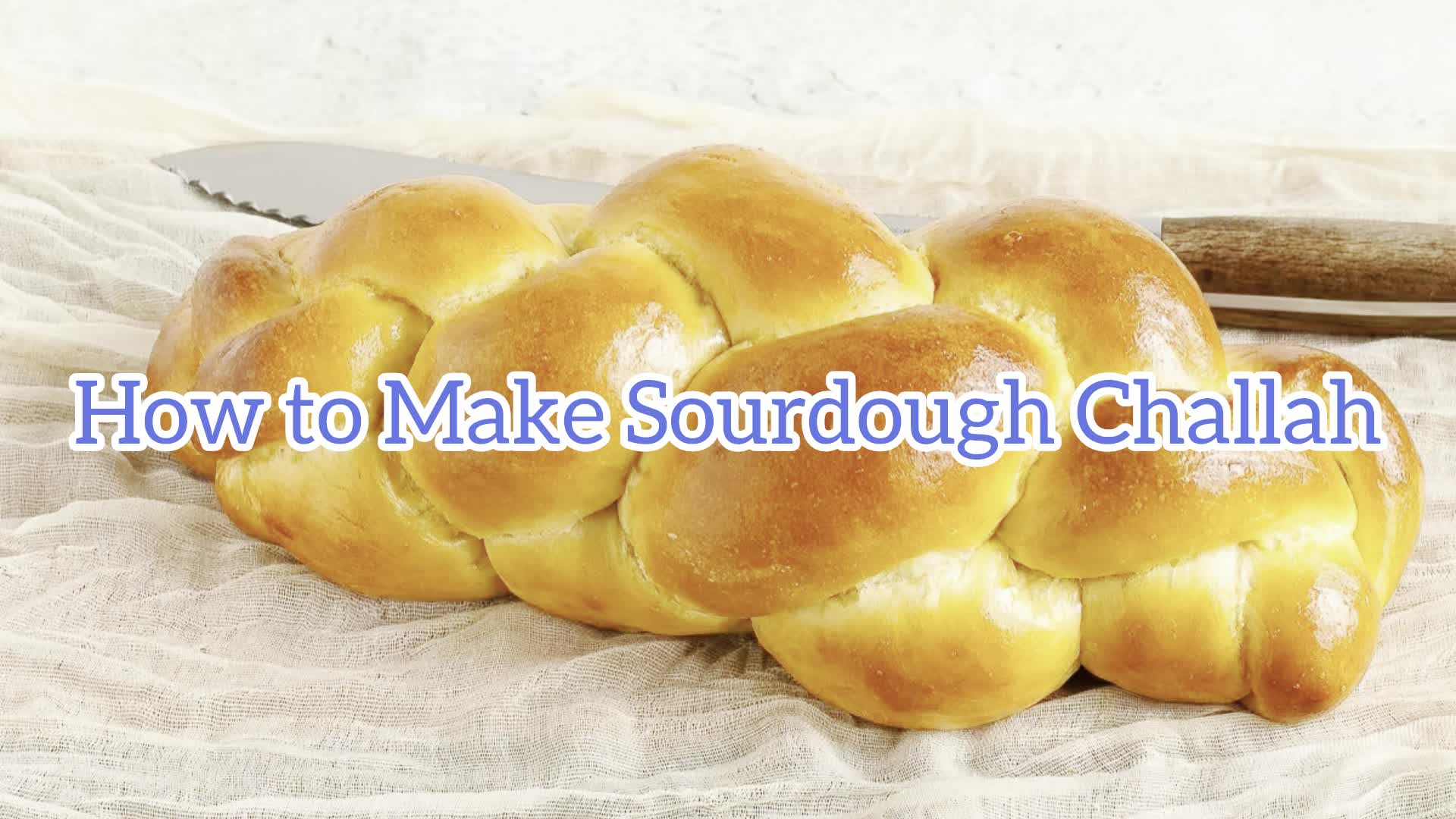
Fluffy sourdough challah is a delicious enriched sourdough bread. This sourdough challah is super soft and perfectly sweet.
Show More Show Less View Video Transcript
0:00
Hi, I'm going to show you how to make a super fluffy, absolutely delicious sourdough challah
0:06
So I'm calling this day one, but you're actually only going to do about five minutes worth of anything
0:12
and you're going to do it just before you go to bed. This is when you take your starter and mix it with some water, a little bit of sugar, and more bread flour
0:22
This is going to be a stiff starter, so it's going to take a few minutes to really mix and
0:29
knead it all together so that all the flour is absorbed by the water
0:35
I use a stiff starter here because that tends to be slightly less sour than a liquid starter
0:51
As you can see I'm really kneading and working the dough in the bowl trying to pick up any
0:56
other dry pieces of flour in the bowl. Once it's relatively smooth, put it in the bowl and cover it with plastic wrap
1:10
I like to poke a few holes in it with a toothpick just to get some air flowing in and out
1:16
Leave it on the counter at a warm room temperature overnight, about 12 hours
1:20
The next morning you will see that it has risen significantly, at least tripling in size
1:26
About a half hour or so before you plan on mixing the dough, make your tangs on
1:31
Take the water and the flour, whisk them together to hydrate the flour, and then churn the flame
1:36
on under the pot. You want to continuously whisk while it's cooking
1:41
You're just going until it's about the consistency of mashed potatoes. I like to use a thermometer because once I get to 149 degrees Fahrenheit, that's when
1:51
I know it's done. Scrape it out, set it aside and let it cool
1:56
Then you're going to combine all of the ingredients into a mixing bowl except for the salt
2:01
You want to make sure your tangzong is no more than about 100 degrees Fahrenheit
2:06
You can just take the entire stiff starter and throw it in if you using a planetary mixer like I using here This is a spiral mixer if you using a KitchenAid with the dough hook or an Ooni mixer If you using a planetary mixer like I using here this is a spiral mixer or if you using a KitchenAid with a dough hook or an Ooni mixer if you using a mixer like an Ankh
2:22
and I believe a Bosch, which I've never used, so I'm not completely sure about that
2:26
you might need to just rip up the stiff starter into pieces
2:31
so that it kneads better into the dough. You're going to let it knead until a smooth dough forms
2:42
Usually this takes about five to seven minutes depending on the mixer you're using
2:47
Once the dough has all gathered together, add the salt and continue eating for several
2:51
minutes until you reach the windowpane test, which you can see here
2:56
Take a small piece of dough and stretch it between your fingers. If it's translucent without ripping, you've reached the windowpane test
3:04
what you're looking for. Gather the dough and shape it into a ball. Place it into a bowl and
3:10
cover it loosely with plastic wrap. I like to leave it not totally covered so that air can flow in and
3:17
out. I leave this to bulk ferment for between four and four and a half hours at 77 degrees Fahrenheit
3:26
in my proofer. If you do not have a proofer and it's warm in your kitchen, you can leave it out
3:33
there it may take a little bit longer. If you have a cooler kitchen it will take
3:37
even longer. You want to just do the poke test. If it holds the shape of the poke
3:42
that's when you know it's done. Then cover it completely in plastic wrap and
3:47
leave it in the refrigerator overnight. The next day on day three remove it from
3:52
the refrigerator while it's cold and start dividing the dough into as many
3:57
strands as you need. Before you even do that actually it's a good idea to knead
4:02
the dough a little bit to release any of the gases. This way you won't have any
4:06
air gaps when you bake your challah. Here I am making two challahs, both four strands, so I'm dividing the dough into
4:23
eighths You can certainly make one large challah with this recipe if that what you prefer Shape each 1 8th portion into a ball and then flatten it into an oval You want to push out all the air bubbles
4:37
Then gather it up so that you can roll it into a strand
4:43
Do this by using the palms of your hands against the countertop and just keep rolling it out
4:49
It's going to start resisting and pulling back because the gluten is really activated
4:54
That's why you just set it aside and move on to the next one
4:57
Keep going as these continue to rest. You can go back and roll them out even further
5:03
once the gluten has rested for a few minutes. I like to roll out my strands
5:17
so that there's a little bit more dough in the center of them and the edges are a little more tapered
5:24
I'll still go back to those four I just did, but this way they can rest a little bit while
5:42
I start working on the next four. Once all eight strands are rolled out, I roll them out just a little bit further
5:50
I also like to coat them in just a very light dusting of bread flour
5:55
This helps keeps the edges a little bit dry in order to prevent the braids from baking into one another
6:02
and we see a more defined shape once it comes out of the oven
6:20
Again, it's just a very light dusting of bread flour, and you want to roll the strands around in it to make sure it's coated on all sides
6:40
Shape the challah bring the ends of one side together and just pinch them together and roll them a little bit so that they will not separate
6:52
To do a four strand braid, take the furthest one to the right all the way to
6:57
the left. Take the one next to it all the way to the right. Then take that one from
7:03
the left, bring it down the very middle. Take the one to the right of it up to the
7:07
left from the one to the right all the way to the middle to the left of that to
7:11
the top. It's a very simple procedure don't think about it just keep the
7:16
repetition that's all that matters here. Keep braiding as far down as you can go and then just join the edges together as
7:33
best you can and then tuck it underneath the challah and give it a pinch so that it doesn't move from there
8:03
Place the challah on a baking tray so that there's a sufficient room for it to still
8:21
continue to rise. I like to give another final dusting of bread flour on top, again just to prevent the braids
8:29
from baking into one another. Then braid the second challah the same way
8:44
You're gonna proof it for somewhere between five to six, maybe even six and a half hours
8:49
until the challah is very, very airy and fluffy. Give it a nice egg wash
8:56
I just use one whole egg. Bake it, let it cool, and enjoy
#Cooking & Recipes
#Cooking & Recipes
#Food