Up next in 10


⚠️ Don't Let a Dead Battery or Electrical Issue Strand You! Whether it's extreme heat or freezing cold, electrical failures happen when you least expect them. Be prepared with the right tools:
🔋 Must-Have Emergency Jump Starter: (Start a dead car instantly - No second car needed)
➤ NOCO Boost GB40: https://amzn.to/4aUH0hI
⚡ Test Your Battery Health at Home: (Is it the alternator or the battery? Find out now)
➤ ANCEL BA101 Tester: https://amzn.to/3LGnOK6
🛠️ Check Engine Light On? Read the Code:
➤ ANCEL AD310 Scanner: https://amzn.to/4sx9u7g
As an Amazon Associate, I earn from qualifying purchases.
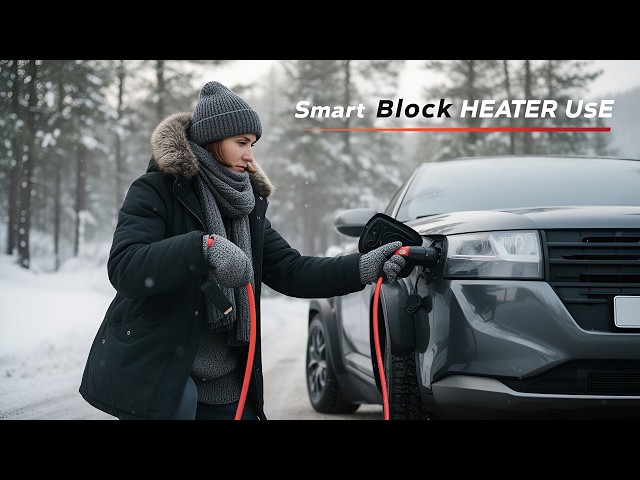
Are you tired of your car's engine block heater running all night, quietly draining electricity and spiking your winter power bill?
In this video from Car Justify, we dive deep into the proper way to use your vehicle's engine block heater so you stop wasting power and get the most benefit from this cold-weather essential.
Discover why leaving it plugged in overnight is a common mistake, how long is actually enough to warm your engine's coolant and oil effectively, and the simple habits that protect your motor from harsh cold starts without unnecessary costs.
Show More Show Less View Video Transcript
0:00
Hey, are you leaving your car's block
0:01
heater plugged in all night during those
0:03
freezing winters, just watching your
0:05
electric bill climb higher and higher?
0:07
Well, the proper way to use it is
0:09
plugging in only 2 to 4 hours before you
0:11
start your engine. That warms things up
0:13
without wasting power. And honestly,
0:16
ignoring this could rack up over $1,000
0:18
in extra electricity costs over a cold
0:20
season, not to mention stressing your
0:22
vehicle's battery or even leading to
0:24
bigger repair bills down the line. So,
0:27
let's chat about this like we're in the
0:29
garage together. A block heater is that
0:31
little electric warmer tucked into your
0:33
car's engine block. It heats the coolant
0:35
so your motor starts easier in the cold.
0:38
You know, without it grinding or
0:40
struggling when temps drop low. I mean,
0:42
think about how your car's engine works
0:44
in winter. Cold thickens the oil, makes
0:47
everything stiff, and that's rough on
0:48
parts like pistons and bearings.
0:51
Plugging in the block heater keeps that
0:52
coolant nice and toasty so your vehicle
0:54
fires up smooth and reduces wear right
0:56
from the get- go. Okay, so first off,
0:59
check if your car even has one. Most
1:02
vehicles in colder areas come with a
1:04
block heater factory installed,
1:06
especially trucks or diesels. You'll see
1:08
the cord dangling from the grill or
1:10
bumper. If not, you can get one added at
1:12
a shop for around 70 to 150 bucks,
1:15
depending on your make and model. The
1:17
thing is, installation's pretty
1:19
straightforward if you're handy. You
1:21
drain the coolant, pop out a freeze plug
1:23
on the engine block, slide in the heater
1:25
element, and seal it up tight. But hey,
1:27
if that sounds messy, just let a
1:29
mechanic handle it. Better safe than
1:31
dealing with leaks. All right, then.
1:33
Once it's in, using it right is key to
1:35
not burning cash on electricity. These
1:37
heaters pull anywhere from 400 to,200
1:40
watts, like running a small space heater
1:42
for your car. So, no need to leave it on
1:44
overnight. That's just throwing money
1:46
away.
1:47
Instead, set a timer. You can grab a
1:49
heavyduty outdoor timer from the
1:50
hardware store for 20 bucks or so.
1:52
Program it to kick on 2 hours before you
1:54
head out and boom, your engine's warm
1:56
without extra power drain. You know, in
1:59
really bitter cold, say below -15 C.
2:03
Bump it to 3 or 4 hours. That gives the
2:05
coolant time to circulate and heat the
2:07
whole block evenly. But anything longer,
2:09
it's pointless. The engine hits max
2:11
warmth after about 4 hours anyway. Well,
2:15
um, let's talk temps for a sec. You
2:17
don't need the block heater every chilly
2:19
day. Save it for when it's - 10 or
2:21
colder, especially if your car sits
2:23
outside. Newer vehicles start fine in
2:26
mild cold, but this helps in those deep
2:28
freezes. And for diesels, it's a
2:30
gamecher. Diesel fuel can gel up in the
2:33
extreme cold, making starts tough. The
2:35
block heater keeps things flowing
2:36
better. Plus, it means your cabin heater
2:38
blows warm air sooner. No shivering
2:40
while you wait. Okay, so here's a pro
2:43
tip. Always unplug before you start the
2:45
engine. Leaving it connected while
2:47
running could overload your alternator
2:49
or fry the heater cord. Just yank the
2:51
plug gently, coil it up, and store it
2:54
away from snow or salt. I mean, common
2:56
mistake I see is folks plugging in too
2:58
early or forgetting the timer
3:00
altogether. One guy I know left his on
3:02
for days. His bill jumped a hundred
3:04
bucks that month. Use that timer and
3:06
you'll cut usage by half easy. Anyway,
3:09
pair it with good habits like checking
3:10
your battery. Cold kills batteries fast.
3:12
So, if yours is weak, the block heater
3:14
alone won't save a no start situation.
3:16
Test it with a multimeter. Should read
3:19
over 12.6 volts when off. The thing is,
3:22
this also boosts your fuel efficiency a
3:24
bit. A warm engine burns gas better
3:26
during those first few miles, cutting
3:28
emissions, too. You're not just saving
3:31
electricity. You're being kinder to your
3:33
wallet and the planet. All right, then.
3:35
If you're in a fleet or have multiple
3:37
cars, smart controllers are worth a
3:39
look. These gadgets sense outside temps
3:42
and only activate the heater when
3:43
needed, like below minus 18. They can
3:46
save even more on power for big
3:48
operations.
3:50
But for most of us, a simple timer does
3:52
the trick. Set it for your morning
3:54
routine. Plug in at night, timer flips
3:57
on at 4:00 a.m., and by 7, your car is
3:59
ready without guzzling extra kilowatts.
4:02
You know, extension cords matter here.
4:04
Use a heavy gauge one rated for
4:05
outdoors. At least 12 gauge to handle
4:07
the amps without overheating. And keep
4:10
it short. Long cords lose power and
4:12
could trip breakers. Okay, so what if
4:15
your block heater is not working? You'll
4:17
notice the engine still struggles in the
4:18
cold or no warmth under the hood after
4:21
plugging in. Feel the cord. It should
4:23
hum a little when powered. If it's
4:25
busted, replacement's not too bad. Parts
4:28
run $50 to $100 plus labor. But test
4:31
first. Plug into a different outlet or
4:33
use a voltmeter to check for juice at
4:35
the prongs. Well, um, while we're on
4:39
diagnostics, grab an OBD2 scanner if
4:41
weird codes pop up from cold starts. It
4:44
plugs into your car's port under the
4:45
dash, reads the ECU module for issues
4:47
like sensor glitches. Links in the
4:49
description if you need one. I mean,
4:52
preventing problems is better. In
4:54
winter, top off coolant with the right
4:56
mix. 50/50 antifreeze to water stops
4:58
freezing, and synthetic oil flows better
5:00
in cold. So, switch if you're still
5:02
unconventional.
5:04
The thing is, block heaters aren't just
5:06
for starts. They cut idling time. No
5:08
more sitting there revving to warm up,
5:10
which wastes gas and adds wear. Plug in
5:12
properly and you drive off sooner. All
5:15
right, then. Let's cover safety quick.
5:17
Never plug in if the cord's frayed or
5:18
wet. That's a shock hazard. Inspect it
5:21
yearly and store it coiled when not in
5:23
use to avoid kinks. You know, in
5:25
garages, watch for carbon monoxide if
5:28
you're warming indoors, but block
5:29
heaters don't run the engine, so no
5:31
exhaust worries. Still ventilative
5:33
testing. Okay, so for electric vehicles,
5:36
it's different. They have battery
5:37
warmers built in. But for gas or diesel
5:40
cars, this old school tech saves the day
5:42
without fancy apps. Anyway, combining
5:45
with other winter prep amps up savings.
5:47
Insulate your garage door or use a car
5:49
cover to hold heat. Little things add up
5:51
to lower bills. I mean, one winter I
5:54
forgot the timer. Bill spiked 40 bucks
5:57
extra. Learned my lesson. Set it and
5:59
forget it, but in a smart way. The thing
6:02
is, if you're in mild climates, skip it
6:05
altogether. But up north, it's essential
6:07
for longevity. Engines last longer with
6:09
less cold start stress. Troubleshooting
6:12
no heat issues. Sometimes it's the
6:14
thermostat in the cord. Those built-in
6:16
ones cut power above 0 C to save energy.
6:19
Test by chilling the cord in the
6:21
freezer. If that's fine, the element
6:23
might be toast. Pull it out and it with
6:25
a meter. Should read around 20 to 30
6:28
ohms for a 1000 watt unit. Okay, so
6:31
replacing drain coolant. Unscrew the old
6:34
one, thread in the new with sealant.
6:36
Refill, burp the air, and you're golden.
6:39
Takes an hour if you're comfy with
6:40
wrenches. You know, aftermarket options
6:43
vary. Stick with OEM for your model to
6:45
avoid fit problems. Brands like ZeroArt
6:48
make good universals, but check reviews.
6:51
All right, then. For RVs or big rigs,
6:52
higher watt heaters are common. Up to
6:55
1500. Same rules. Timer it. Don't
6:57
overdo. I mean, fuel savings from proper
7:00
use. Studies show 10 to 20% less gas in
7:04
the warm-up phase. Adds up over months.
7:07
The thing is, emissions drop, too. Warm
7:09
engines pollute less. Good for air
7:11
quality in your neighborhood. Okay, so
7:13
wrap this up with a real world example.
7:16
Buddy of mine in Alberta timers his
7:18
diesel truck. Saves a hundred bucks a
7:20
winter easy. Starts like summer every
7:22
time. You know, if your car is parked
7:24
far from outlets, batterypowered warmers
7:26
exist, but they're pricey and less
7:28
effective. Stick to plugins. Well, um,
7:32
one more tip. Label your timer settings.
7:34
Work days on at 5:00 a.m. Keeps you
7:37
consistent without thinking. All right,
7:39
then. That's the scoop on using your
7:41
car's block heater the right way. Stop
7:43
wasting that electricity and keep your
7:45
vehicle happy. If this helped, hit that
7:47
like button. Subscribe to Car Justify
7:50
for more tips and check the description
7:52
for scanner links or timers. Thanks for
7:55
watching. Tom here and catch you next
7:57
time. Drive safe out there. Take care.
7:59
Have fun.
#Autos & Vehicles
#Vehicle Parts & Services