0:00
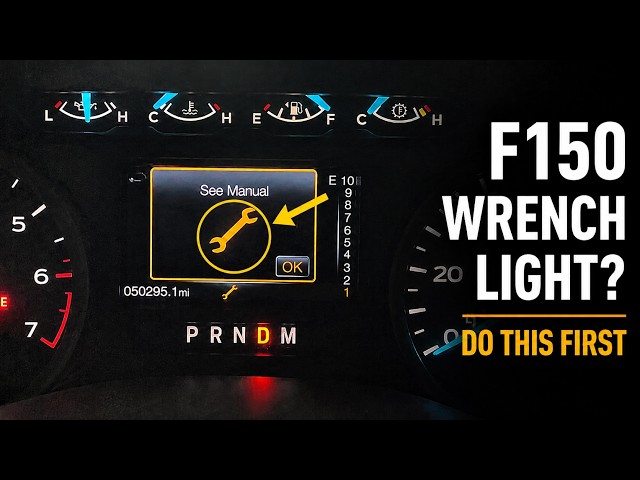
You are driving your Ford F-150. Oh,
0:02
everything seems fine, and then suddenly
0:04
that orange wrench icon pops up on your
0:06
dashboard. Your heart [snorts] sinks
0:08
because almost immediately your truck
0:10
loses power. You press the gas, but it
0:12
barely moves. It feels like your engine
0:14
is dying and your mind starts racing
0:16
toward a $3,000 repair bill. Most people
0:19
panic and call a tow truck immediately,
0:21
but I want you to take a [music] deep
0:22
breath. That light doesn't always mean
0:24
your transmission is toast or your
0:26
engine is ruined. In fact, for many
0:28
F-150 owners the fix is much simpler and
0:31
cheaper than you think. Stay with me for
0:33
the next few minutes, and I'm going to
0:34
show you exactly why your truck just
0:37
went into survival mode and how you can
0:39
get your power back without getting
0:40
ripped off at the dealership. When that
0:43
wrench light appears, your Ford has
0:44
entered what mechanics call limp mode.
0:47
[music] It's basically your truck's way
0:48
of protecting itself from further
0:50
damage. It's different from the check
0:52
engine light. While the check engine
0:54
light usually deals with emissions, the
0:56
wrench light is specifically telling you
0:58
there is a powertrain malfunction.
1:01
>> This usually involves the electronic
1:03
throttle body, the transmission, or the
1:05
four-wheel drive system. Now, if you've
1:07
been searching for answers online,
1:09
you've probably come across a very
1:11
popular video titled "Ford F-150 oh
1:14
wrench light, what it means and how to
1:16
fix it." Because it highlights just how
1:18
common this issue is. But what that
1:20
video and many others don't always
1:22
emphasize is how often this is caused by
1:24
a simple communication error between
1:26
your gas pedal and your engine.
1:28
The most frequent culprit is the
1:30
electronic throttle body or ETB. Inside
1:33
that little part is a motor and some
1:35
sensors that tell the engine how much
1:37
air to let in. Over time, those sensors
1:39
get dirty or the internal gears wear
1:41
out. When the truck's computer gets a
1:43
signal it doesn't like, it gets scared
1:45
and cuts your power to prevent the
1:47
engine from revving out of control.
1:49
Before you go out and buy a whole new
1:51
throttle body, try this. Safely pull
1:53
over, turn the truck completely off,
1:55
wait about 60 seconds, and restart it.
1:57
Often, the light will disappear and the
1:59
truck will drive normally again. This
2:02
doesn't mean the problem is fixed, but
2:03
it clears the temporary glitch, so you
2:06
can get home. However, if that light
2:08
came on once, it will come back. The
2:10
next step is to use a basic OBD-II
2:13
scanner. You can get these at any auto
2:15
parts store. You're looking for codes
2:20
These codes literally mean your throttle
2:22
body is stuck. If you see these, you
2:24
found your ghost. Sometimes, all you
2:25
need to do is take the air intake hose
2:27
off and clean the carbon build-up around
2:29
the butterfly valve with some
2:31
specialized throttle body cleaner.
2:33
>> It costs about $5 and takes 10 minutes.
2:36
If cleaning doesn't work, replacing the
2:38
throttle body is a job you can actually
2:40
do yourself with basic tools in your
2:42
driveway. It's four bolts and one
2:44
electrical plug. By doing this yourself,
2:47
you save hundreds of dollars in labor
2:48
costs. Another reason for that wrench
2:50
light could be related to your
2:51
transmission's lead frame or a simple
2:53
sensor. If your speedometer drops to
2:56
zero while you're driving, or your gear
2:58
display disappears right when the light
3:00
hits, that's a huge clue that it's a
3:01
sensor issue and not a mechanical
3:03
failure of the transmission gears
3:05
themselves. The most important thing is
3:08
not to ignore [music] it. Driving in
3:09
limp mode for long periods puts
3:11
unnecessary stress on other parts of
3:13
your truck. By catching it now, you're
3:15
preventing a small sensor issue from
3:17
turning into a major mechanical
3:18
headache. Dealing with truck repairs is
3:20
stressful, but having the right
3:22
information makes it manageable. If this
3:24
explanation helped you understand what's
3:26
going on under your hood and gave you a
3:28
bit of peace of mind, please consider
3:30
hitting the like button and subscribing
3:32
to the channel for more
3:33
straight-to-the-point automotive advice.
3:36
My goal is [snorts] to keep you on the
3:37
road without breaking the bank.
3:40
Thanks for watching. I'm glad you're