0:00
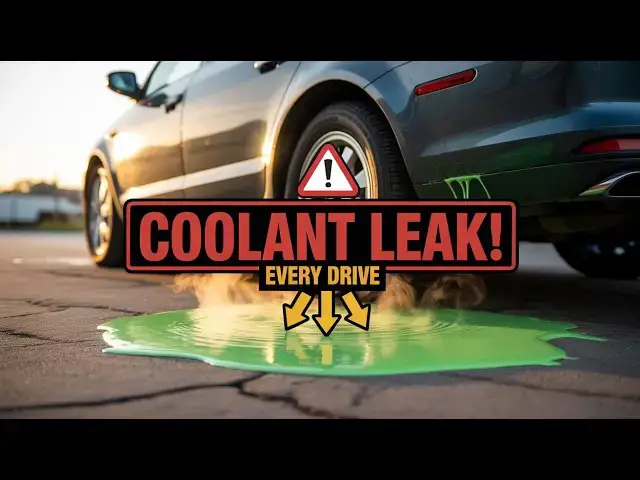
Coolant leaking after every drive. Yeah,
0:02
that's not something you want to ignore
0:04
because that bright green, pink, or
0:06
orange puddle under your car is
0:07
basically your engine's lifeline
0:09
dripping away. Hey folks, Tom here from
0:11
Car Justify, and I've helped more than a
0:13
few people track down mystery coolant
0:15
leaks before they turned into tow truck
0:17
calls. Now, if you're finding coolant
0:19
after every drive, that means
0:21
something's losing fluid while the
0:23
system is hot and under pressure. A
0:25
small leak when cold, that can hide for
0:27
weeks. But hot leaks, they usually show
0:29
themselves fast. The first place I
0:32
always check is the radiator hoses.
0:34
These guys get brittle over time,
0:35
especially near the clamps. When the
0:37
engine heats up, pressure builds, and
0:39
any tiny crack will spray coolant like a
0:41
shaken soda bottle. Pop the hood, run
0:43
the engine till it's warm, and look for
0:45
wet spots or steam. Next up, the
0:48
radiator itself. I've seen them corrode
0:50
at the seams or get little pin holes
0:52
from road debris. Sometimes you can see
0:54
the crusty white or green residue around
0:56
the edges. That's dried coolant. A dead
0:58
giveaway. If you've got an aluminum
1:00
radiator, those end tanks can split
1:03
along the plastic seams. Yep, happens a
1:05
lot. And usually right after a cold to
1:08
hot cycle. Don't forget the water pump.
1:10
The pump has a small weep hole built
1:12
into it. And if the internal seal starts
1:14
going bad, coolant drips from that hole,
1:17
especially right after a drive. You
1:19
might not see it pooling under the pump
1:20
because the heat can make it evaporate
1:22
quickly, but you'll notice staining
1:24
around the area or maybe a sweet smell
1:26
after you park. Then there's the heater
1:28
core and the hoses going into it. Now,
1:30
this one trips people up all the time
1:32
because if it's leaking inside the dash,
1:34
you won't see a puddle under the car.
1:36
Instead, you might notice damp carpet on
1:38
the passenger side or foggy windows that
1:40
smell like maple syrup. If you've got
1:43
that, it's heater core city. And of
1:46
course, the coolant reservoir. I had a
1:48
buddy last week who swore up and down
1:49
his radiator was leaking. Turned out the
1:52
reservoir had a hairline crack along the
1:54
bottom. Every time the system pushed hot
1:56
coolant into the tank, it dribbled out.
1:58
Super cheap fix, but only once you know
2:00
where to look. Here's a quick tip.
2:02
Pressure test the system. You can rent a
2:04
cooling system pressure tester from most
2:06
auto parts stores. It's basically a hand
2:08
pump you attach in place of your
2:10
radiator cap. Pump it up to the rated
2:12
pressure, usually written right on your
2:14
cap, and see where the coolant comes
2:16
out. Do this with the engine cool, so
2:18
you're not dealing with hot liquid under
2:20
pressure. One more thing, coolant can
2:22
also leak from your head gasket into the
2:24
combustion chamber, which means you
2:26
won't see it on the ground at all. If
2:28
you're losing coolant but can't find a
2:30
single drip, check your exhaust. White
2:32
sweet smelling smoke after warmup could
2:35
be a head gasket. Not the best news, but
2:37
better to know early than roast your
2:39
engine. So, quick recap. hoses,
2:42
radiator, water pump, heater core,
2:44
coolant reservoir, and in rare cases,
2:46
the head gasket. Start with the easy
2:49
stuff you can see, work your way to the
2:50
hidden stuff, and pressure test if you
2:52
can't spot the problem. And remember,
2:54
running without enough coolant will cook
2:56
your engine faster than you can say towe
2:58
bill. All right, that's it for today. If
3:00
this helped you figure out where your
3:01
coolant's going, hit that like button
3:03
and subscribe so you don't miss more car
3:05
saving tips. And drop a comment if
3:06
you've chased down a weird coolant leak
3:08
before. I'd love to hear your