Up next in 10



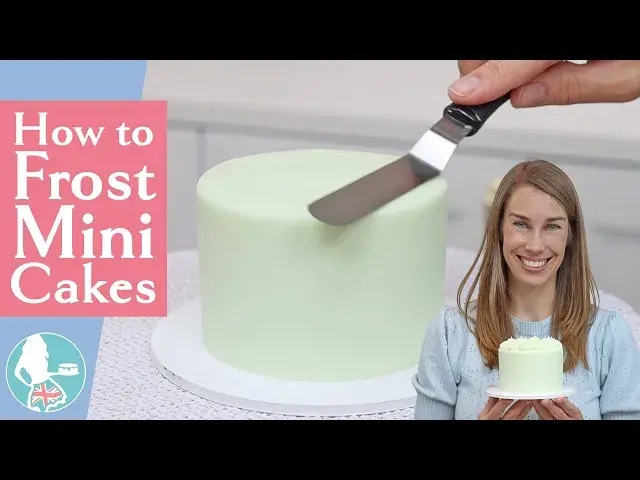
Mini cakes can be tricky to frost but with the right tools AND the right technique, it’s simple! In this tutorial I’ll share my tips and tricks for super smooth frosting on mini cakes.
*Start your FREE 7 day trial on my cake school
https://britishgirlbakes.teachable.com/p/all-you-can-cake/
*LEARN The Basics of Cake and The Basics of Buttercream in my most popular online courses!
https://britishgirlbakes.teachable.com/
*My 4 Minute Buttercream recipe
https://www.britishgirlbakes.com/recipes/buttercream-frosting/
*READ a written version of this tutorial (with photos!)
https://www.britishgirlbakes.com/how-to-frost-mini-cakes/
*SUBSCRIBE to my channel for a new cake decorating tutorial every week!
*SAY HI!
Website: https://www.britishgirlbakes.com
Instagram: https://www.instagram.com/britishgirlbakes
Show More Show Less View Video Transcript
0:00
Mini cakes can be tricky to frost, but with the right tools and the right technique, it's simple
0:05
In this tutorial, I'll share my tips and tricks for super smooth frosting on mini cakes
0:13
Before diving into the technique, let's talk about the tools you'll need
0:17
There's nothing fancy for this, just a turntable with a non-slip mat
0:21
which can just be a little piece of drawer liner or even a ring of masking tape
0:25
to attach the cakeboard to the turntable so it doesn't slide around. The cakeboard can be cardboard with a grease-proof lining, or foam core or acrylic
0:34
and it should be at least two inches wider than your cake. You'll need an offset spatula and a cake comb with a straight edge, also called a frosting smoother
0:42
and any material is fine for this, plastic, metal or acrylic. A piping bag is really helpful, but not essential, and you don't need any piping tips for it
0:52
Just cut a little piece off the end and fill it with frosting. I'm using my four-minute buttercream, and the recipe is a little bit of the recipe is
0:58
on British Girlbakes.com. For mini cakes, I add a little bit more milk than normal
1:04
so that the frosting is a bit less stiff, and you'll see how this makes the process much easier
1:09
Okay, now for the technique. The most important part is to pipe or spread
1:14
a bit of frosting onto the cake board in the middle, and then press your first cake layer down onto that dot
1:21
Adjust it to center it, and that frosting underneath is going to set
1:24
and it will act like glue to hold the cake in place, so it doesn't move around as you
1:28
frost it You can pipe or spread your filling onto the cake Piping is quicker and will pull off fewer crumbs from the cake even when you spread it to level it afterwards But skipping the piping and spreading it straight onto the cake is fine too As you place your next cake layer on top it important to spin the
1:47
turntable to check it from all angles to make sure it's directly above the layer below
1:52
so that the sides are straight, because with mini cakes, if the layers are even half an inch offset
1:57
the cake will look like it's leaning and you'll need lots of frosting to make it. it look straight. Alternate filling and cake layers and when you've finished spread around the sides
2:06
to push the filling flat against the cake if it's sticking out. Now the other most important step is to
2:12
chill the cake before frosting it. Room temperature cake layers are soft and crumbly but when they're
2:18
cold they're firm and much less crumbly so when you spread on your frosting you're much less
2:22
likely to pull off crumbs or even worth chunks of cake. Put the cake in the freezer for 30 minutes to
2:28
chill or the fridge for an hour, and meanwhile, check the consistency of your frosting. It should be smooth
2:34
without air bubbles and it should be easy to stir, but just stiff enough to hold peaks when you pull
2:39
your spatula out of the bowl. When your cake is cold, pipe or spoon some frosting onto the top
2:45
and spread it around to cover the top so that it sticks out over the edges. This is the first layer of
2:51
frosting called a crumb coat, and it doesn't have to be perfect because it's going to be covered up
2:56
but it does need to trap any crumbs that come off the cake
2:59
so it needs to cover the entire cake. For the sides, I like to pipe the frosting on
3:04
because this way you'll pull off the fewest crumbs by spreading it after piping it Use side motions with your offset spatula and if the frosting is the right consistency it should be easy to spread it smoothly and almost effortlessly around the cake
3:20
When the cake is completely covered with frosting, switch to a cake comb and push the base down on the cakeboard
3:25
to line it up straight, and then scrape around the cake to smooth the frosting and take off the excess
3:31
For mini-cakes, it's really important that you don't let much frosting build up on your cake comb
3:36
because that weight can push the cake sideways and dislodge it from the frosting on the cake board
3:42
That's acting as glue to secure the cake. So when you notice it building up on the cake
3:47
swipe away from the cake and scrape that excess frosting into a bowl. Then you can spread that frosting back onto the cake to fill in any indents
3:55
where the frosting is shallower than on the rest of the cake, and then scrape again
4:01
Tidy up the top edge by pushing sideways with your offset spatula to take off the frosting that's sticking up
4:06
up, leaving a sharp edge behind. Chill the cake again for 15 minutes in the freezer or 30 minutes in the fridge to set
4:14
this crumb coat, and meanwhile, tint the frosting for your final coat, if you haven't already
4:20
Then repeat the process of frosting the cake, except for this final coat you'll want it to be
4:24
much neater, so take your time. Smooth the top by spinning the turntable and holding your
4:30
offset spatula at a 45-degree angle. Once the top is smooth, move down to the sides, spreading
4:35
the frosting to cover the whole cake, and for me, I always find that the frosting around the top
4:40
of the cake isn as thick as lower down so I go back up and spread a bit more there And for this frosting at the top spread it upwards as well as sideways so that you create a lip around the top edge of the cake and this will prevent drooping
4:53
edges or a domed top. Scrape around the cake with your cake comb, pushing down on the cakeboard
4:59
to line it up straight, and go around several times before touching up any indents or gaps
5:05
by spreading more frosting over those, and then scrape again. I start off with a plastic cake comb
5:11
which I find the quickest to use, but for the final stages I switch to a metal or acrylic comb
5:16
because I find that those give me the smoothest frosting. When the sides of the cake are smooth
5:22
push sideways with your offset spatula to take off the sticking up frosting from around the top edge
5:28
and you should be pushing sideways to do this, not down at all, otherwise you'll cause a bulge in the frosting on the sides of the cake
5:36
I like to chill my cakes before decorating them so that the frosting gets firm and doesn't get damaged
5:41
unless, of course, I accidentally poke my finger into the frosting like I did here
5:45
which luckily is easy to fix by spreading on some more frosting to cover up the finger hole
5:50
and then smooth over that part of the cake again. There are so many ways to decorate mini cakes
5:56
and you'll find hundreds of designs and techniques on my cake school on British Girl Bakes.com
6:00
I have a membership option called Club Plus, which gives you access to every master course and mini course on the school
6:06
as well as live workshops and five-minute Fridays, where I teach tips and techniques and demonstrate frequently asked questions in just five minutes
6:15
I hope to see you there. Thanks for watching
#Food & Drink
#Cooking & Recipes
#Desserts