Up next in 10



Learn about Tokyo's different neighborhoods, landmarks, and districts to decide where to stay and what to do.
Get the FULL TRAVEL COURSE to Tokyo HERE
https://www.brighttrip.com/courses/experience-tokyo
Make sure to subscribe to the channel to learn how to travel smarter
===== FOLLOW ON SOCIAL =====
Bright Trip Newsletter: https://mailchi.mp/brighttrip.com/signup-form
Bright Trip on IG: https://www.instagram.com/bright.trip/
Bright Trip on Pinterest: https://www.pinterest.com/brighttriptravel/
Bright Trip on Facebook: https://www.facebook.com/BrightTripTeam
Bright Trip on Twitter: https://twitter.com/trip_bright
===== ABOUT BRIGHT TRIP =====
Bright Trip creates video-based travel courses to help you travel smarter. From our location courses that visually demystify places like Tokyo, London, Costa Rica, or Cape Town to our skills courses that cover how to travel solo, with kids, or how to document your travels more effectively and efficiently - each course is created by real travelers, like you, and aims to create a community of curious travelers that are eager to travel smarter.
Our prefered music platform is MusicBed try it out https://www.musicbed.com/
Show More Show Less View Video Transcript
0:00
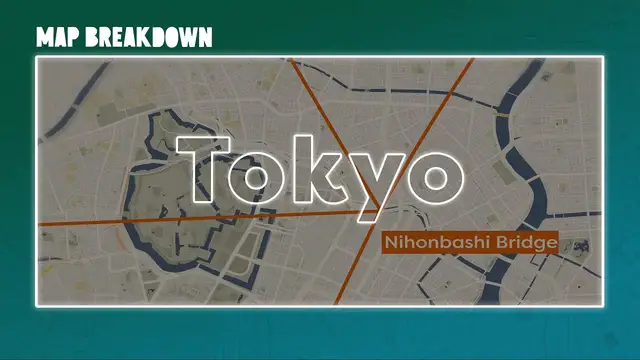
Let's look at a map of Tokyo
0:03
It's a big place, but let's get familiar with it and suddenly it'll feel much more manageable
0:08
In this chapter, we're going to look at this map a bunch, and we're going to start to get familiar with the different neighborhoods and districts
0:15
Where they are, what they look like, and what they're known for so that you can decide where you might want to stay or what you want to do in each part of the city
0:23
Our goal is not that you memorize this map, but by the end of this chapter
0:26
hopefully it'll be fairly familiar so that when you're navigating and looking at your phone or a
0:31
paper map you'll have a gauge on where you are. Let's dive in and talk about the major landmarks
0:37
in Tokyo. The stuff that everyone visits when they go to Tokyo. Let's plot these on the map
0:41
and start to get an idea of where the big things are in this city. First let's zero in on the
0:47
epicenter of Tokyo's busy energy. This area right here. This is the Shibuya Crossing which is perhaps
0:55
the busiest crosswalk in the world with up to 3,000 people crossing at a time
1:05
This is one of the most dense and busy parts of Tokyo, and we'll talk more specifically about this
1:10
later in the chapter, but for now just know where it is in the city. The next big iconic site to
1:16
anchor your understanding to this map is right up here. It's this giant forested area called
1:22
Yoyogi Park. This is a massive forest right in the middle of the city, and so it's a fantastic
1:28
respite of nature in the middle of a very busy city. You can wander through it, and then you can
1:34
even visit Tokyo's largest and most famous Shinto shrine, which happens to be right alongside Yoyogi
1:40
Park. And it also happens to be incredibly stunning. Another good anchor to have in your
1:50
mind on the map is down here, right next to the bay. This is called Ski-ji Market. I know the
1:57
pronunciation for this word kind of seems weird because of its spelling, but just know that it's
2:01
pronounced Ski-ji. Anyway, this is a really famous market in Tokyo, and it's a paradise for street
2:07
food. Okay, so you've got a few markers now. Let's look up here more in the north of the city
2:16
where you have Ueno Park, which is a great place to get some quiet. This park is where most of
2:22
Tokyo's museums are, including Tokyo's National Museum, which if you choose to go to one museum
2:28
this should be it. It has the world's largest collection of Japanese art, and it really isn't
2:32
too busy if you go in the morning. Let's look at one other major landmark to get kind of a general
2:38
idea of this map, which is the Mori Tower, which is the only skyscraper that has an open air
2:43
observatory that affords you a really amazing view of the skyline. Okay so let's look at all
2:50
of these landmarks. Remember these are not all of the major landmarks in Tokyo. They're just some big
2:55
anchors for all of the regions of the city that you should start to internalize as we learn this
3:00
map. You can kind of get an idea that a lot of Tokyo's action happens over here. Next we're going
3:06
to go into a more detailed view of the different neighborhoods of Tokyo. The point here is that you
3:12
You can see what these neighborhoods look like and start to decide where you want to stay and where you want to visit while you're in the city
3:18
Let's start with the dead center of Tokyo. If we had to give this part of town a name, we might call it the financial political center
3:26
of the city. Your visual anchor for this part of town might be this big green space, which is the Imperial Palace
3:33
It's where the Emperor sits. See if you can find this neighborhood without any of the markings
3:40
It's right here. Okay, so the Imperial Palace, this big green space with a moat around it where the Emperor sits
3:46
that should be your focus for the dead center of Tokyo. This is the part of the city that will probably be the first thing you see when you get to Tokyo
3:54
since this is where Tokyo's central train station is. It's right here next to the Imperial Palace
4:00
and it's right in the thick of the busy financial district of Tokyo. Let's see what it looks like
4:08
The train station is definitely worth a visit You can store your luggage here in lockers if you aren able to check into your lodging yet as you getting into town And the station is just generally huge with thousands of trains coming in and out every day
4:22
You'll find tons of really good, unique food and shopping opportunities in this station
4:28
If you walk outside, you'll see what you'd expect to see in a financial center of a city
4:33
Tall buildings and lots of business people. But this area also has some deep history that might be worth visiting
4:39
Here you'll see the Imperial Palace, which is home to Japan's emperor
4:45
The grounds are absolutely beautiful. But the only part that is open to the public on a day-to-day basis is this garden right here
4:53
Type in Kokyo Gai-en on your map to find it. The rest of the grounds of the Imperial Palace are only available through a booked tour
5:01
So you can decide to book a tour or do what a lot of locals do, which is go for a walk or jog around the perimeter of the Imperial Palace grounds
5:09
You can also walk a little bit and see this famous bridge, which if you look at a lot of Japanese historical art
5:15
you'll see this bridge depicted as quintessential Edo period Japan. This bridge used to be the very center of Tokyo
5:23
and in fact, it became literally known as the center of Japan
5:27
because all distances in Japan are measured from this point. So if you're in some other prefecture or town and it says 80 kilometers to Tokyo
5:37
it's literally meaning 80 kilometers from this exact point which is in the middle of this road
5:43
So when you come here you're coming to this symbolic center of all of Japan which is pretty
5:49
cool. Okay so that's the political and financial center of Tokyo right here in the dead center of
5:56
this city. You should stay here if you like that kind of traditional downtown feel of big skyscrapers
6:03
and a lot of business people walking around. There's a lot of good food options around here
6:08
and access to public transport. So it's a pretty convenient place to stay
6:12
Here, you're gonna have a lot of hotels as well. They're gonna be a little bit more predictable
6:17
and less zesty as if you stay in other parts of the city, but they're solid options nonetheless
6:22
Next up, let's talk about the neighborhood right below, which is Tokyo's high-end shopping
6:27
and street food districts. So just below this financial political center that we just talked about
6:32
you have a region of the city that's known for its shopping. We'll label this part of town the shopping and street food part of the city
6:40
The two main districts here are called Ginza and Tsukiji. Your visual anchor for this part of town can be all these strips of water down here
6:49
which are some man-made islands and a bunch of little pieces of land that go out into Tokyo Bay
6:55
Ginza and Tsukiji are known for their shopping. And when I say shopping, I mean both the lavish luxury shopping as well as street food shopping
7:05
If you go to this part of town, you'll know what I mean. Ginza is the shopping part
7:17
It's one of the world's most famous shopping districts. It's like Fifth Avenue in New York City
7:22
Here you'll find a bunch of designer stuff, but you'll also find more accessible and interesting
7:27
stores like this 12-story clothing store Uniqlo or this 12-story stationery store. Right on the
7:34
main strip of Ginza, you have this big mall called Ginza 6, which if you go down to the second floor
7:40
of the basement, you'll see this amazing display of food of all kinds. So go grab some food in the
7:47
basement of Ginza 6 and then head to the elevator and hit R, which will take you to the rooftop
7:52
garden where you can eat your food and look over the busy, dazzling Ginza streets
7:59
So that was Ginza, which is right below that financial political center. But as you walk towards the bay, you'll wander into what feels like a maze of street food
8:07
called the Skiji Market. Skiji is home to what was for a really long time a fish market, where they would buy and
8:14
sell the catch of the day in the inner market, and then the outer market was the street food area
8:18
The inner market where they sold fish has since moved to a close-by location, but the street food area persists
8:25
And today you can get everything from amazing snacks to Japanese cookware including a wide selection of Japanese steel knives which are considered some of the best knives in the world
8:39
Okay, so Ginza and Tsukiji are two must-wander-through parts of Tokyo. They hold some of Tokyo's most quintessential and iconic and best offerings
8:50
so you should definitely plan to visit. You can also plan to stay here too. There's a lot of fantastic hotels and even quieter parts
8:57
of these districts that will give you quick access to all of these amenities and sites
9:02
as well as fantastic transportation access to the rest of the city
9:10
Next, we're going to talk about this area over here. We're going to call this
9:14
art museums and nightlife, which seemed like a really weird combination, but you'll see what I
9:19
During the day, this area is peaceful and quiet. You've got wonderful parks and gardens and public spaces that are really nice
9:32
And you have tons of art museums and galleries and shopping. In this area, you'll also find one of Tokyo's most beautiful shrines
9:40
But at night, things change. This area, and specifically Roppongi, is an epicenter for nightlife and clubs and party culture in Tokyo
9:54
So if you're looking to go out late and have a good time while you're in Tokyo, this is definitely an area to consider going to
10:02
But again, during the day, this place can be very peaceful with gardens and galleries sprinkled throughout
10:07
There are some really quiet neighborhoods here, and so this might be a good place for you to consider staying
10:12
Especially because it's in a very central area where you can access a lot of other parts of the city
10:17
Next, let's talk about Tokyo's futuristic entertainment district. This area includes the neighborhoods of Shibuya and Harajuku, which look like this
10:27
this place is busy kind of at all hours but you should really come here at night which is when it
10:40
really comes alive shibuya is almost like the times square of tokyo it's where you have this
10:46
really busy iconic tokyo crossing that we talked about earlier but besides the crossing there's
10:51
also a lot of other reasons why you might want to come here walking through this place is sensory
10:56
overload. Tons of screens and shops and more screens, music and video games, robotics, fashion
11:04
You can really sum this part of town up as youth culture, but regardless of your age
11:09
you'll likely find Shibuya fascinating. There are also tons of food options, including this
11:15
robotic sushi place where you can order on a screen and have a high-speed conveyor belt bring
11:20
you your order within minutes. The ward next door to Shibuya is called Harajuku, which is known as
11:26
the epicenter of Japan's kawaii culture. Kawaii refers to this Japanese aesthetic of cuteness
11:33
stuff like this or this. This aesthetic and culture has spread throughout all the world
11:38
and you've probably seen examples of it in Hello Kitty or Pikachu. There's this one street called
11:44
Takashita Street, which is where you'll be inundated with this kawaii culture. While this
11:49
street is said to be the place where kawaii culture originated, beware that it's become
11:54
pretty saturated with visitors and because of that there's a lot more kitschy souvenir shops
11:59
that doesn't really represent the original culture very well. But even still a stroll through
12:04
Takashita Street will certainly be a cultural experience regardless. More generally Harajuku
12:09
has tons of other shopping opportunities including lots of outdoors shopping and boutiques and great
12:16
coffee shops. To contrast from the busy entertainment district of Shibuya and the Kauai culture
12:22
district of Harajuku. This region of the city also includes an experience
12:28
that is the exact opposite of all this flashy youth culture, which is this park
12:33
It's really a forest, honestly. It has over 100,000 trees. It's called Yoyogi Park
12:38
and it has Tokyo biggest and most famous shrine right next door This region is quintessential Tokyo and it worth a visit You could start the day in the park and shrine and then move on to Harajuku and Shibuya
12:53
to experience the glowing nightlife. It's also a place you might consider staying because again
12:58
it's incredibly central and has a lot of Tokyo's best offerings very close by
13:03
Let's move up to a very important part of Tokyo. It's called Shinjuku and it's one of the
13:10
densest, busiest places on the planet. We're going to call this part of town the Everything District
13:22
Shinjuku is the Everything District because it has elements of everything we've talked about in
13:27
the other lessons. Skyscrapers, quiet expansive parks, glowing entertainment streets, big store
13:33
shopping, a thriving nightlife, a huge variety of food. What makes this district unique is the sheer
13:39
density of all of it in this one little area. So in Shinjuku, you can walk out of Shinjuku Station
13:46
which happens to be the busiest train station on the planet, and then you can immediately enter a
13:51
multi-story department store. Then turn the corner and suddenly you're in a little alley full of a
13:56
bunch of crammed food stalls serving drinks and typical bar food. At the end of the alley, just a
14:03
few more turns and you'll see a street exploding with neon tones. Shinjuku's entertainment and red
14:09
light district, full of 24-hour restaurants and robots and huge arcades. At the end of this street
14:15
there's a hotel where you can go up into the lobby and walk out onto a terrace to see a giant replica
14:21
of Godzilla. I mean, all this stuff within just a few blocks. Shinjuku truly is one of the densest
14:29
most packed parts of Tokyo, and it's definitely worth a visit. So if being close to all this
14:34
intensity and entertainment and food is something you're interested in, consider staying in Shinjuku
14:40
It's a little bit further west and not as central as maybe Roppongi or Shibuya, but even still
14:47
it's very accessible and very well connected. The final place we're going to plot on the map
14:52
is up here. We're going to call this place the museum and park district of Tokyo. If you want a
14:59
big dose of museums and parks, head to this part of town. Here you're going to find Tokyo's biggest
15:09
and best museums, many all contained within this one park called Ueno Park. You'll also find
15:15
beautiful traditional structures, gardens, and temples. All of this will tell you the story of
15:20
Japan and its culture and history. So if you're into history and geopolitics and art, this is your
15:26
place. Your main anchor for this part of town is going to be Ueno Park, where you have the highest
15:31
concentration of museums in all of the city, as well as the city's zoo. But there's plenty more
15:37
than just museums in this area. Here you can see the capital's oldest Buddhist temple, which is an
15:42
absolutely stunning structure. You can also visit Tokyo's Dome City, which has a massive amusement
15:48
park. We're calling this region of Tokyo the museum and parks region. It's got tons of good
15:54
food and shopping, as well as really great sites in connection to the rest of the city
15:59
So it's worth a visit, but may also be worth staying here if you're interested in museums
16:04
and history and want access to parks, or you're traveling with kids because there are tons
16:09
of kids offerings in this area as well. Okay, that's it. We've gone over some of the major neighborhoods and districts in Tokyo
16:17
I hope the map is starting to at least become a little bit more familiar
16:21
Again, the point is not that you memorize every one of these neighborhoods, but at least at this point, you understand the major parts of the city and what they have to offer
16:30
Hopefully, you've jotted down a few things that you want to visit, or maybe you now know where you want to stay in the city
16:36
Okay, I'm going to say it one last time, which is this is not everything
16:40
This is not all of Tokyo. We haven't mentioned every single little neighborhood
16:44
There's so much more to the city. what we've done is mentioned the major districts and cities that most visitors want to see while
16:52
they're in Tokyo. You should always be open-minded to explore other parts of the city
16:55
that pop out at you in your research or while you're wandering the city
#Tourist Destinations
#Tourist Destinations
#Regional Parks & Gardens
#Theme Parks
#Historical Sites & Buildings
#Travel Guides & Travelogues