Up next in 10

What is Microevolution - (Animated Explainer)
In this animated explainer video, we delve into the fascinating concept of microevolution. Microevolution refers to the small-scale evolutionary changes that occur within a species over time, driven by mechanisms such as natural selection, genetic drift, and gene flow. Through engaging visuals and clear explanations, we will explore how these processes contribute to the diversity of life on Earth. Whether you're a student, educator, or simply curious about evolutionary biology, this video will provide you with a comprehensive understanding of microevolution and its significance in the broader context of evolution. Join us as we uncover the intricate details of how species adapt and evolve in response to their environments. #Microevolution #EvolutionaryBiology #NaturalSelection
Website: https://biologynotesonline.com/
Facebook: https://www.facebook.com/biologynotesonline
Instagram: https://www.instagram.com/biologynotesonline/?hl=en
animated presentation,explainer video,animated clip,animated videos,explainer video templates,make explainer video,explainer video software,make animated video,coevolution,make animation online,theory of evolution,darwin's theory of evolution,make your own animation,explanation video,animation software,tededucation,free animation software,antibiotic resistance,bio-magnetism,variation,antibiotic,presentation software,make landing page video
Show More Show Less View Video Transcript
0:00
microeolution refers to small-scale changes in alle frequencies within a population over relatively short periods
0:06
of time an important characteristic of microeolution is that it occurs at the population level not at the species
0:13
level these genetic changes happen continuously in all
0:19
living microeolution happens at the population level a population is a group
0:24
of organisms of the same species in a specific area changes occur within this group not across the entire species when
0:32
we talk about microeolution we focus on changes within a single population like this group
0:38
here a key concept in micro evolution is changing al frequencies over time let's
0:44
visualize how a specific trait might change over generations as we move through generations we can observe
0:50
changes in the frequency of traits in this example the amber trait decreases
0:55
while the purple trait increases over five generations to summarize micro evolution is the process of small
1:02
genetic changes within a population that can lead to changes in trait frequencies over time this process happens
1:09
continuously in all living populations and is the foundation of evolutionary change
1:15
the genetic basis of micro evolution centers on changes in al frequencies within a population over
1:22
time but what exactly are alals alles are alternative versions or forms of the
1:27
same gene each gene can have multiple alals that code for different versions of a trait for example a gene for flower
1:35
color might have alals for purple flowers or white flowers let's visualize a population of
1:42
flowers initially 70% of alals in this population code for purple flowers while
1:47
30% code for white flowers over time microeolution occurs as the frequency of
1:53
alals changes in the population various factors may cause white flowers to become more
1:59
common we can visualize this change in al frequencies over time note how the
2:04
purple al frequency decreases while the white al frequency increases
2:10
this shift in al frequencies is the essence of microeolution to summarize the genetic
2:16
basis of microeolution microeolution occurs through changes in al frequencies alles
2:22
are alternative forms of the same gene these genetic changes lead to evolution at the population level and can occur
2:29
over relatively short time periods microeolution is driven by four primary
2:36
mechanisms that change al frequencies in populations over time these four mechanisms can work
2:43
independently or together to drive evolutionary change mutation is the ultimate source
2:49
of genetic variation it creates new alals when DNA is changed during replication or by environmental factors
2:56
when a mutation occurs nucleotides can be substituted added or deleted creating new genetic varants in the population
3:04
most new mutations start at very low frequencies in the population and many will be lost by chance unless they
3:11
provide an advantage natural selection occurs when organisms with certain traits have a
3:17
better chance of surviving and reproducing here the amber individuals have a trait that gives them a survival
3:24
advantage in their environment over time individuals with the advantageous trait reproduce more
3:30
successfully increasing their frequency in the population as a result the frequency of
3:36
the advantageous alil increases across generations which is visible in the population's genetic
3:42
makeup genetic drift is random change in al frequencies due to chance sampling of
3:48
individuals genetic drift has a stronger effect in small populations where random
3:54
events can drastically change al frequencies compare these two populations both start with equal
4:00
frequencies of the purple and amber alals in the small population random chance can lead to dramatic shifts in al
4:07
frequency even causing one al to be completely lost the larger population
4:12
experiences much smaller fluctuations as random effects tend to average out across more individuals
4:20
gene flow is the transfer of genetic material between populations when individuals or gameamtes migrate here we
4:27
have two populations with different alil frequencies population one has mostly purple alals while population 2 has
4:34
mostly amber alals when individuals migrate between populations they bring
4:39
their genes with them altering the al frequencies in both populations over time gene flow tends to
4:46
make the genetic composition of connected populations more similar causing their alil frequencies to
4:52
converge to summarize all four mechanisms of micro evolution mutation natural selection genetic drift and gene
5:00
flow change al frequencies in populations each mechanism has a distinct effect on genetic variation and
5:07
they often work together to drive evolutionary change understanding these mechanisms helps us explain how species
5:14
adapt to changing environments and evolve over time mutations are changes in DNA sequences that create new alals
5:21
in a population these genetic changes are the ultimate source of all genetic variation providing the raw material for
5:29
evolution let's explore the three main types of mutations that can occur in DNA
5:35
in a substitution mutation one nucleotide base is replaced with a different base this is like replacing
5:41
one letter in a word an insertion mutation occurs when one or more extra nucleotide bases are added to the DNA
5:48
sequence this shifts all subsequent bases in a deletion mutation one or more nucleotide bases are removed from the
5:54
DNA sequence this also affects the reading of all bases that follow
6:01
mutations occur randomly during DNA replication and can have various effects on organisms mutations can be beneficial
6:08
increasing an organism's fitness or ability to survive many mutations are neutral having no significant effect on
6:15
the organism and some mutations are harmful potentially causing disease or reduced
6:21
survival over time mutations create new alals that can spread through a population changing al frequencies and
6:29
driving evolution remember that while mutations occur randomly whether they persist in a population depends on
6:35
natural selection and other evolutionary forces mutations are changes in DNA
6:42
sequence that can drastically affect an organism's traits there are three main categories of factors that can cause
6:48
genetic mutations environmental factors include various forms of radiation and chemical
6:58
compounds let's look at an example of how UV radiation damages DNA ultraviolet
7:04
light can cause adjacent thymine bases to form abnormal chemical bonds these thymine DR distort the DNA structure and
7:11
can lead to errors during replication biological factors like viruses can
7:17
insert their genetic material into host DNA causing mutations during DNA replication errors
7:24
can occur when DNA polymerase incorrectly pairs nucleotides cells have evolved
7:31
sophisticated repair mechanisms to fix DNA damage and replication errors however despite these repair systems
7:38
some mutations still escape detection and become permanent changes in the DNA
7:45
mutations in DNA can have various effects on an organism's phenotype or observable traits the central dogma of
7:52
molecular biology shows how DNA information flows to RNA which is then translated into proteins that determine
7:59
phenotype a single nucleotide mutation can significantly alter the resulting
8:04
protein here a T-ucleotide has been changed to an amus a single point mutation this changes the encoded amino
8:12
acid from leucine to glutamine in the resulting protein let's examine cickle cell anemia
8:18
a classic example of how a single mutation affects phenotype in cickle cell anemia a single nucleotide
8:24
substitution changes an A to a T in the DNA coding for betalobin this single change results in glutamic acid being
8:31
replaced by veene at position six of the betalobin protein
8:37
this amino acid change dramatically alters hemoglobin structure causing red blood cells to deform into a sickle
8:44
shape when oxygen levels are low the sickling of red blood cells leads to anemia pain crises tissue damage and
8:51
reduced oxygen delivery to tissues not all mutations affect phenotype some called silent mutations
8:58
have no observable effect for example both GAA and Gag code for glutamic acid due to the redundancy in the genetic
9:05
code similarly both CTT and CTC code for leucine these changes won't alter the
9:11
protein structure or function mutations can be categorized by their effects on proteins and phenotype
9:18
nonsense and frame shift mutations typically have the most severe effects on phenotype as they substantially alter
9:25
protein structure or cause premature termination artificial selection is the process
9:31
where humans deliberately breed organisms to select for desired traits
9:36
unlike natural selection which is driven by environmental pressures artificial selection is directed by human choice
9:44
allowing for much faster changes in populations let's look at some examples
9:49
of artificial selection that demonstrate human directed evolution dog breeds evolved from wolves into hundreds of
9:56
distinct varieties in just thousands of years showing dramatic variation in size coat and behavior agricultural crops
10:03
like cabbage have been transformed into diverse varieties including broccoli cauliflower and kale all from the same
10:10
wild ancestor livestock species have been selectively bred for specific traits like milk production meat yield
10:17
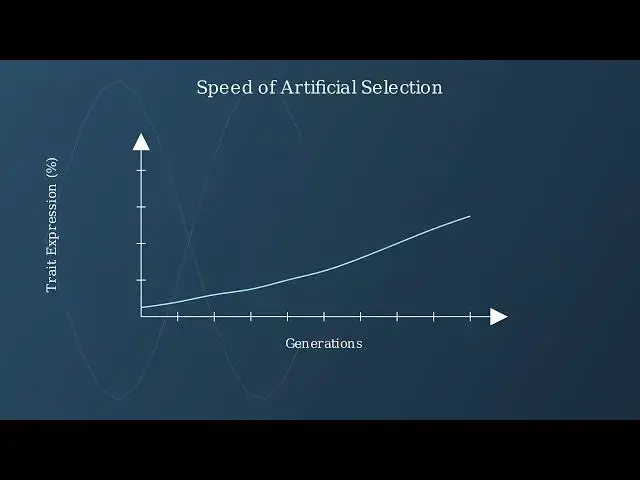
or egg laying efficiency the speed of artificial selection is
10:22
dramatically faster than natural selection what might take hundreds of generations in nature can be achieved in
10:29
just a few generations with controlled breeding artificial selection is characterized by human-directed
10:35
selection pressure dramatically accelerated evolution potentially maladaptive traits and forms the
10:42
foundation of modern agriculture and breeding programs
10:47
population bottlenecks occur when a population undergo a dramatic reduction in size even if the population size
10:54
recovers later much of the original genetic diversity is permanently
11:00
lost let's visualize what happens during a population bottleneck initially a
11:05
population maintains a stable size with high genetic diversity during the bottleneck the population size drops
11:11
dramatically due to a catastrophic event even though the population may recover in numbers over time something important
11:19
has been lost now let's examine how genetic diversity changes during a bottleneck
11:26
before a bottleneck a population contains many different alals providing rich genetic diversity after the
11:32
bottleneck genetic diversity is substantially reduced many alals have been permanently lost even if the
11:39
population recovers in numbers population bottlenecks have been
11:44
observed in many species let's look at some examples cheetahs experienced a severe bottleneck approximately 12,000
11:51
years ago today they have extremely low genetic diversity any two cheetahs are
11:57
as genetically similar as identical twins northern elephant seals were hunted to near extinction in the 1890s
12:04
with only about 20 individuals remaining although they've recovered to over
12:09
100,000 individuals today they still have extremely low genetic
12:15
diversity human populations have also experienced bottlenecks the Finnish and Icelandic populations show reduced
12:22
genetic diversity from historical bottlenecks which has increased rates of certain genetic
12:29
disorders now let's see how random sampling during a bottleneck permanently reduces genetic diversity during a
12:36
population bottleneck only a small subset of individuals survive this random sampling means many alals are
12:42
lost entirely when the population recovers it can only work with the genetic diversity that survived the
12:48
bottleneck the population might return to its original size but with significantly less genetic
12:57
variation population bottlenecks have several important evolutionary consequences
13:03
first bottleneck populations have decreased ability to adapt to environmental changes due to limited
13:08
genetic variation they often show increased susceptibility to diseases as
13:13
protective genetic variance may have been lost the reduced genetic diversity can lead to inbreeding depression
13:20
resulting in reduced fitness bottlenecks can also cause delletterious alals to
13:25
become fixed in a population which would normally be selected against in some cases however bottlenecks can
13:33
facilitate rapid evolution in new environments by allowing beneficial mutations to spread
13:39
quickly gene flow is the transfer of genetic material between populations that occurs through
13:46
migration it happens when individuals or their reproductive cells known as gameamtes move from one population to
13:53
another when individuals migrate from one population to another they bring their genes with them gene flow has two
14:00
main effects first it increases genetic diversity within the receiving population second gene flow makes
14:07
different populations more similar to each other over time as their gene pools mix one common mechanism of gene flow is
14:15
through gameamtes like pollen in windpollinated plants wind can carry pollen over long distances allowing
14:22
genes to flow between plant populations that are far apart animals migrating between populations
14:29
also facilitate gene flow when animals move to a new population and reproduce
14:34
they introduce their genes to the new gene pool over time gene flow causes al
14:41
frequencies to become more similar between populations as individuals migrate between populations the
14:47
frequencies begin to converge toward intermediate values to summarize gene
14:52
flow connects isolated populations through migration occurs via movement of individuals or gameamtes and homogenizes
14:59
al frequencies over time we now explore barriers to gene flow which prevent the movement of alals
15:06
between populations geographic barriers like mountains rivers and
15:12
oce these physical barriers prevent individuals from moving between populations reducing or eliminating the
15:20
exchange of genetic material when populations are separated by barriers they can no longer exchange
15:27
genetic material over time these separated populations accumulate different mutations and experience
15:34
different selection pressures leading to genetic divergence beyond geographical barriers
15:40
several other mechanisms can prevent gene flow behavioral barriers occur when populations develop different mating
15:47
rituals or preferences preventing successful breeding temporal barriers arise when populations breed at
15:54
different times or seasons making crossbreeding impossible genetic barriers develop when populations become
16:01
so different that their genes are incompatible preventing viable offspring
16:07
let's look at real world examples of barriers to gene flow island populations are naturally isolated by oceans this
16:15
isolation leads to unique adaptations and eventually can result in the formation of new species human
16:20
development creates fragmented habitats separating previously connected populations with roads cities and farms
16:28
this reduces gene flow and can lead to decreased genetic diversity
16:33
when gene flow is prevented by barriers al frequencies in separated populations begin to diverge over time initially
16:41
both populations have similar alil frequencies without gene flow populations undergo different
16:46
evolutionary paths due to mutation selection and drift over time this leads to genetic divergence and potentially
16:53
speciation to summarize what we've learned about barriers to gene flow barriers can be
16:59
physical like mountains and oceans or non-physical like behavioral differences breeding times or genetic
17:06
incompatibilities when gene flow is reduced or eliminated populations begin to diverge genetically we see this in
17:13
islands and fragmented habitats where isolation leads to unique adaptations
17:19
over time these barriers can lead to such significant genetic differences that new species form
17:28
horizontal gene transfer is the movement of genetic material between organisms outside of reproduction while most
17:35
organisms inherit genes vertically from parents to offspring horizontal gene transfer allows DNA to move between
17:42
unrelated organisms the first mechanism is transformation where bacteria can take
17:48
up free DNA directly from their environment
17:55
the second mechanism is conjugation where bacteria form a physical connection called a pilus to directly
18:01
transfer DNA from a donor to a recipient cell the third mechanism is transduction
18:08
where viruses called bacterophages can accidentally package bacterial DNA and
18:13
transfer it to another bacterium during infection horizontal gene transfer also
18:19
occurs in ukarotes though less frequently than in bacteria in ukariots
18:24
horizontal gene transfer can occur through endo symbions viral vectors and other mechanisms these rare events can
18:31
contribute to evolutionary innovation horizontal gene transfer can
18:36
rapidly spread adaptive traits such as antibiotic resistance through bacterial populations
18:42
when one bacterium develops resistance it can share that resistance gene with many others through horizontal gene
18:49
transfer this process can lead to widespread antibiotic resistance much faster than would be possible through
18:56
vertical inheritance alone pesticide resistance provides one
19:01
of the clearest examples of microeolution occurring in real time when pesticides are applied they create
19:07
intense selection pressure on pest populations alles that confer resistance
19:13
which may be extremely rare initially rapidly increase in frequency as non-resistant individuals die off a
19:20
classic example is DDT resistance in mosquito populations when DDT was first used most mosquitoes were susceptible
19:27
and died when exposed however a small number carried resistance mutations that
19:32
allowed them to survive when pesticides are applied they eliminate non-resistant individuals resistant mosquitoes survive
19:39
and reproduce passing their resistance genes to offspring let's examine how the
19:45
frequency of resistance alles changes over generations initially resistance alles are rare in the population when
19:52
pesticide is introduced we see a rapid increase in the frequency of resistance alles as generations pass the proportion
20:00
of resistant individuals in the population increases dramatically this demonstrates three key principles of
20:06
microeolution first genetic variation naturally exists in populations second
20:12
selection pressure from pesticides strongly favors resistant individuals finally resistance alles rapidly
20:19
increase in frequency over generations pesticide resistance illustrates how quickly evolutionary change can occur
20:26
under strong selection pressure viral evolution represents one of the most rapid forms of microeolution in nature
20:33
viruses evolve so rapidly due to three key characteristics first viruses
20:38
especially RNA viruses have extremely high mutation rates this is because RNA viral replication lacks error checking
20:45
mechanisms found in DNA replication second viruses exist in enormous population sizes a single infected
20:52
person can harbor billions of viral particles providing countless opportunities for mutations third
20:58
viruses reproduce extremely quickly many viruses complete their entire replication cycle in just hours allowing
21:05
mutations to accumulate rapidly across generations the mutation rates of RNA
21:10
viruses are dramatically higher than those of DNA viruses hiv and influenza
21:15
both RNA viruses have particularly high mutation rates making them difficult targets for our immune system and
21:21
medical interventions viral generation times are remarkably short compared to other
21:27
organisms let's examine antigenic drift in influenza viruses this is the gradual
21:32
accumulation of mutations in the surface proteins of the virus in 2020 the virus
21:37
has a particular set of surface proteins your immune system produces antibodies that recognize and bind to these
21:44
proteins by 2021 mutations have slightly altered the surface proteins but
21:50
vaccines may still be partially effective by 2022 further mutations have
21:55
significantly changed the virus's surface proteins antibodies from earlier infections or vaccines may no longer
22:02
recognize the virus effectively rapid viral evolution creates several significant medical challenges vaccines
22:09
can quickly become ineffective as viruses mutate particularly in their surface proteins antiviral drugs may
22:16
lose effectiveness as viruses evolve resistance mechanisms new viral variants may be more transmissible more virilent
22:24
or better at evading the immune system this is why we need new influenza vaccines every year to match the
22:30
constantly evolving viral strains over time viral populations accumulate
22:35
genetic diversity through mutations this graph shows how genetic diversity increases in viral populations influenza
22:42
shows a steady increase in genetic diversity over time due to its high mutation rate and seasonal pressure
22:49
hiv demonstrates an even steeper increase in genetic diversity due to its extremely high mutation rate and the
22:55
selective pressure from the immune system and antiviral drugs industrial melanism in the
23:02
peppered moth is a classic example of natural selection in action in pre-industrial England light colored
23:08
peppered moths dominated as they were well camouflaged against the light colored lychencoed trees
23:17
as the industrial revolution progressed air pollution darkened tree bark by killing lychans and depositing soot this
23:24
dramatically changed the environment from the late 1700s through the mid 1900s this environmental change drove a
23:32
significant shift in moth populations birds could easily spot light moths against dark trees while
23:38
dark moths became nearly invisible this created strong selection pressure the
23:44
frequency of dark moths increased dramatically during periods of heavy pollution by the late 1800s dark moths
23:51
made up over 90% of the population in industrial areas after clean air acts
23:56
were passed in the midentth century tree bark began to lighten as lychans returned this caused the frequency of
24:03
light moths to increase again demonstrating the remarkable responsiveness of natural selection to
24:09
environmental change this classic example shows how natural selection can rapidly change al
24:15
frequencies in response to environmental changes making the peppered moth story a
24:21
perfect illustration of microeolution in action let's compare microeolution and
24:29
macroeolution two different scales of evolutionary change micro evolution refers to smallcale changes within
24:35
species over relatively short time periods such as changes in alil frequencies within a population
24:42
macroeolution on the other hand involves largecale changes leading to new species and higher taxonomic groups typically
24:49
occurring over much longer time periods these evolutionary processes
24:54
operate on very different time scales from days to millions of years microevolutionary processes include
25:01
changes in alil frequencies natural selection within populations genetic drift and adaptations to local
25:08
environments macroevolutionary processes include speciation which is the formation of new species adaptive
25:14
radiation where species diversify rapidly major evolutionary transitions and extinction events microevolutionary
25:22
changes can accumulate over time potentially leading to macroevolutionary patterns
25:31
to summarize microeolution and macroevolution represent different scales of the same evolutionary
25:37
processes while they occur on different time scales microeolutionary changes can
25:42
accumulate over time to produce macroevolutionary patterns the relationship between
25:48
microeolution and macroeolution represents one of the most important concepts in evolutionary biology
25:56
microeolution involves small-cale changes in al frequencies within populations while macroevolution
26:03
encompasses largecale changes that lead to the formation of new species though these processes operate on different
26:10
time scales they are fundamentally connected micro evolution occurs over
26:15
generations population divergence over thousands of years and macroeolution over millions of years this branching
26:23
diagram illustrates how microeolution can lead to macroeolution over time first genetic changes accumulate within
26:29
an ancestral population when the population splits and experiences different environmental pressures or
26:35
genetic drift populations begin to diverge eventually enough differences
26:40
accumulate that the populations can no longer interbreed resulting in the formation of new species a
26:47
macroeolutionary change several key mechanisms bridge microeolution and macroevolution first
26:54
small genetic mutations accumulate over time geographic isolation allows populations to evolve independently
27:01
different selection pressures in various environments favor different traits genetic drift can cause significant
27:08
random differences between populations finally reproductive isolation marks the point of speciation
27:14
when populations can no longer interbreed darwin's finches provide a classic
27:20
example of how microeolution leads to macroeolution at the microeolution level
27:25
finch beak sizes change in response to seed availability these accumulated changes have led to macroevolutionary
27:32
outcomes more than 14 distinct species evolved from a single ancestral population to summarize the relationship
27:40
between micro and macroeolution microeolution provides the raw material for macroeolution the
27:46
distinction is mainly one of time scale and outcome with the same evolutionary mechanisms operating at both levels
27:53
small changes accumulate over time to create largecale differences between
28:00
species the Hardy Weineberg equilibrium serves as a null model for detecting microeolution in populations this
28:07
mathematical framework predicts how gene frequencies will behave in a population when no evolutionary forces are acting
28:14
on it for Hardy Weineberg equilibrium to apply five conditions must be met first
28:20
there must be no mutations introducing new alals second natural selection cannot be acting on the traits in
28:26
question third there can be no migration bringing in or removing alals fourth
28:32
mating must be random with no sexual selection or preference fifth the population must be large enough to
28:38
minimize the effects of genetic drift the Hardy Weinberg principle is
28:43
expressed mathematically as P ^2 + 2 PQ + Q ^2 = 1 in this equation P represents
28:50
the frequency of the dominant alil while Q represents the frequency of the recessive alil together P + Q always
28:57
equals 1 the equation predicts the frequencies of genotypes in a population
29:03
p^2 represents homozygous dominant individuals 2pq represents hetererozygous individuals and Q^2
29:10
represents homozygous recessive individuals when a population deviates from Hardy Weineberg expectations it
29:17
indicates that evolutionary forces are at work for example if homozygous
29:22
recessive individuals appear less frequently than predicted selection may be acting against
29:28
them let's consider an example of flower color in a population
29:33
if white flowers occur more frequently than Hardy Weineberg equilibrium would predict we can infer that natural
29:39
selection might be favoring white flowers over purple ones the Hardy Weineberg principle gives us a powerful
29:47
baseline model any deviation from the expected equilibrium frequencies indicates that one or more evolutionary
29:53
mechanisms must be operating in the population modern tools have revolutionized how
30:00
scientists study microeolution allowing us to see genetic changes at unprecedented detail these advanced
30:07
techniques include next generation DNA sequencing whole genome analysis and
30:12
biioinformatics dna sequencing technology has evolved dramatically in the 1980s Sanger sequencing could read
30:20
short DNA fragments by the 2000s next generation sequencing increased
30:25
throughput and modern techniques can sequence millions of base pairs
30:30
rapidly genomic analysis allows scientists to compare DNA sequences across populations identifying mutations
30:37
and tracking microeolution changes these genetic tools let researchers track changes in alle frequencies over time
30:45
across different populations revealing evolutionary responses to selection pressures
30:51
the data can show how quickly adaptive mutations spread or how genetic drift affects isolated
30:57
groups one landmark study is the E.coli long-term evolution experiment where
31:02
researchers have tracked bacterial evolution for over 60,000 generations the human genetic diversity project has
31:09
used genomic tools to map human migrations identify selective adaptations and reveal recent
31:15
evolutionary changes in human populations the field continues to advance with
31:21
emerging technologies like single cell genomics crisper-based lineage tracing and environmental DNA analysis these
31:28
tools are making it possible to observe micro evolution in real time and at unprecedented
31:35
scales microeolution has significant practical implications for many human
31:40
challenges these challenges span medical agricultural conservation and climate adaptation
31:46
domains in medicine antibiotic resistance is a prime example of micro evolution bacteria rapidly evolve
31:53
resistance to drugs creating a significant public health challenge bacteria can evolve resistance in just a
32:00
few generations multiple drug resistance is increasing while new antibiotic development struggles to keep pace
32:07
evolutionary medicine proposes solutions based on evolutionary principles antibiotic stewardship programs that
32:14
carefully manage antibiotic use can slow the evolution of resistance by reducing
32:19
selection pressure in agriculture pests rapidly evolve resistance to pesticides reducing
32:26
crop yields and threatening food security more than 600 insect species now show pesticide resistance crop
32:33
losses cost billions of dollars annually agricultural ecosystems create strong selection pressures and single approach
32:40
pest control inevitably fails due to evolution integrated pest management or
32:45
IPM combines multiple approaches to minimize selection pressures working with evolutionary principles rather than
32:52
against them conservation biology relies on understanding microeolution to protect
32:58
endangered species and maintain genetic diversity small populations lose genetic
33:04
diversity quickly inbreeding depression reduces fitness in endangered species genetic rescue can
33:10
restore diversity and a species potential to adapt depends on its genetic variation conservation
33:16
strategies like habitat corridor networks maintain gene flow between populations preserving genetic diversity
33:22
and adaptive potential as climate change accelerates species must adapt quickly or face
33:30
extinction microevolution will determine which species survive rapid environmental changes often exceed
33:36
natural adaptation rates species with short generation times adapt faster
33:42
range shifts follow temperature gradients and assisted migration may help some species survive climate change
33:48
evolutionary rescue programs preserve genetic diversity and promote adaptation to changing conditions giving species a
33:56
better chance of survival by applying evolutionary principles to human challenges we can develop more
34:02
effective and sustainable strategies evolution is not a historical process but an ongoing reality that
34:10
affects our daily lives understanding evolutionary principles is essential for
34:15
addressing the many challenges facing humanity