Up next in 10


What are Non-Communicable Diseases?
In this informative video, we delve into the world of non-communicable diseases (NCDs), exploring their various types, control measures, and real-world examples. Non-communicable diseases, such as heart disease, diabetes, and cancer, pose significant health challenges globally. We will discuss the risk factors associated with these diseases, preventive strategies, and the importance of lifestyle modifications in managing health. Join us as we uncover the impact of NCDs on public health and the steps we can take to mitigate their effects. Stay informed and empowered to make healthier choices! #NonCommunicableDiseases #PublicHealth #HealthAwareness
Website: https://biologynotesonline.com/
Facebook: https://www.facebook.com/biologynotesonline
Instagram: https://www.instagram.com/biologynotesonline/?hl=en
noncommunicable diseases,communicable diseases,non-communicable diseases,non-communicable disease,4 main types of non-communicable diseases,major types of non-communicable diseases,diseases,#non-communicable disease,types of communicable disease,example of communicable diseases spread by protozoa,example of communicable diseases spread by virus,#communicable disease,navigating the 4 primary non-communicable diseases
Show More Show Less View Video Transcript
0:00
what are non-communicable diseases or
0:01
ncds non-communicable diseases are
0:04
medical conditions that cannot be
0:06
transmitted from person to person unlike
0:08
infectious diseases such as the flu or
0:10
covid 19 ncds cannot spread through
0:14
direct
0:15
contact ncds are typically chronic in
0:18
nature meaning they last for long
0:20
periods of time and progress
0:22
gradually these diseases result from a
0:25
combination of four main factors genetic
0:28
factors which include hereditary
0:30
predispositions passed down through
0:32
families physiological factors such as
0:34
high blood pressure or obesity
0:37
environmental influences including air
0:39
pollution and workplace hazards and
0:41
behavioral factors such as tobacco use
0:44
physical inactivity and poor
0:46
diet the global impact of ncds is
0:49
staggering they account for 74% of all
0:51
deaths worldwide making them by far the
0:54
leading cause of mortality globally
0:58
the four major categories of ncds are
1:01
cardiovascular diseases which affect the
1:03
heart and blood vessels cancer
1:05
characterized by abnormal cell growth
1:07
chronic respiratory diseases which
1:09
impact the lungs and airways and
1:12
diabetes a metabolic disorder affecting
1:14
blood sugar regulation
1:17
understanding these non-communicable
1:18
diseases is crucial for developing
1:20
effective prevention and management
1:25
strategies cardiovascular diseases are a
1:28
major category of non-communicable
1:30
diseases affecting the heart and blood
1:33
vessels common cardiovascular conditions
1:36
include heart disease which involves
1:38
narrowed or blocked coronary arteries
1:40
stroke occurs when blood flow to the
1:42
brain is blocked causing brain cell
1:44
death hypertension or high blood
1:47
pressure damages blood vessels over time
1:50
and is a major risk factor for other
1:52
cardiovascular
1:55
diseases cardiovascular diseases affect
1:57
how blood flows through your vessels in
2:00
a healthy blood vessel blood flows
2:02
freely in a diseased blood vessel plaque
2:05
buildup and narrowing restrict blood
2:06
flow reducing oxygen delivery to vital
2:09
organs this restriction of blood flow
2:12
can lead to tissue damage and impaired
2:14
organ function
2:18
several key risk factors increase the
2:20
likelihood of developing cardiovascular
2:22
diseases high blood pressure puts stress
2:25
on artery walls making them more
2:27
susceptible to damage high cholesterol
2:29
leads to plaque buildup in blood vessels
2:32
smoking damages blood vessels and
2:34
reduces oxygen in the blood and obesity
2:37
increases strain on the heart and is
2:39
linked to high blood pressure and
2:41
diabetes these modifiable risk factors
2:44
account for over 90% of cardiovascular
2:47
disease
2:49
risk cardiovascular diseases have an
2:51
enormous global impact they are the
2:53
number one cause of death globally among
2:55
all non-communicable diseases cvds
2:59
account for 32% of all global deaths
3:02
compared to 16% for cancer respiratory
3:05
diseases and diabetes account for 7 and
3:08
4% respectively this translates to
3:10
approximately 17.9 million deaths
3:14
annually from cardiovascular
3:18
diseases cancer is a major category of
3:21
non-communicable diseases characterized
3:24
by abnormal cell growth with the
3:26
potential to invade or spread to other
3:28
parts of the
3:29
body let's look at the difference
3:31
between normal and cancer cells normal
3:34
cells grow in a controlled manner with
3:37
organized structure they die when
3:39
damaged and stay where they belong
3:42
cancer cells however grow uncontrollably
3:44
with irregular structures they resist
3:46
normal cell death signals and can invade
3:49
neighboring
3:50
tissues the most common types of cancer
3:53
include lung cancer which is the leading
3:55
cause of cancer deaths worldwide breast
3:58
cancer is the most commonly diagnosed
4:00
cancer in women colorectal cancer is the
4:03
third most common cancer globally and
4:05
prostate cancer is the most common
4:07
cancer affecting
4:09
men cancer develops through genetic
4:11
mutations that affect the cell's growth
4:14
and division mechanisms this process
4:16
typically starts with a normal cell that
4:18
acquires a genetic mutation leading to
4:21
abnormal growth cancer formation and
4:24
potentially
4:25
metastasis metastasis is the process by
4:28
which cancer spreads from its original
4:31
site to other parts of the body this
4:33
occurs when cancer cells break away from
4:35
the primary tumor travel through the
4:37
bloodstream or lymphatic system and form
4:40
new tumors in distant
4:43
locations several key risk factors
4:45
contribute to cancer development tobacco
4:48
use is the leading preventable cause of
4:50
cancer worldwide unhealthy diets
4:53
particularly those high in processed
4:54
foods and fats can increase cancer risk
4:57
physical inactivity and sedentary
4:59
lifestyles are associated with higher
5:01
cancer risk
5:03
exposure to carcinogens such as certain
5:05
chemicals uv radiation and asbestous can
5:07
damage dna and lead to
5:09
cancer early detection is crucial for
5:12
successful cancer treatment and improved
5:15
survival rates mammogs are recommended
5:17
for women aged 40 to 50 and older every
5:21
1 to two years to detect breast cancer
5:24
colonoscopies are recommended for adults
5:26
45 and older every 10 years to detect
5:29
colurectal cancer psa tests for men 50
5:32
and older can help detect prostate
5:35
cancer though the decision to test
5:37
should be discussed with a
5:40
doctor chronic respiratory diseases are
5:42
long-term conditions that affect the
5:44
airways and lungs making breathing
5:46
progressively more difficult these
5:48
diseases impact the respiratory system
5:51
which includes the airways lungs and the
5:53
muscles that enable breathing
5:56
copd or chronic obstructive pulmonary
5:59
disease is a progressive condition that
6:01
makes breathing difficult due to
6:03
inflammation and damage to lung tissue
6:06
in copd the airways become inflamed and
6:08
narrowed and the air sacks in the lungs
6:10
can be damaged or
6:13
destroyed the primary risk factor for
6:15
copd is tobacco smoke responsible for up
6:18
to 80% of cases worldwide other risk
6:20
factors include exposure to air
6:22
pollution occupational dusts and
6:25
chemicals and certain genetic factors
6:27
like alpha 1 antitrien
6:30
deficiency copd significantly impacts
6:32
quality of life through symptoms such as
6:35
shortness of breath persistent cough
6:37
with mucus production and wheezing as
6:40
the disease progresses even simple
6:42
activities like walking climbing stairs
6:44
or performing daily tasks become
6:46
challenging
6:48
asthma is another major chronic
6:50
respiratory disease where the airways
6:52
become inflamed narrow and swollen
6:55
making breathing difficult during an
6:57
asthma attack the muscles around the
6:59
airways tighten the airway lining
7:01
becomes inflamed and excess mucus is
7:03
produced significantly narrowing the air
7:06
passages unlike copd asthma has both
7:09
genetic and environmental triggers
7:11
environmental factors include allergens
7:13
like pollen dust mites and pet dander as
7:16
well as air pollution cold air and
7:19
respiratory infections genetic factors
7:21
also play a significant role in asthma
7:23
development with family history being a
7:26
strong predictor of the
7:28
condition asthma symptoms include
7:30
shortness of breath chest tightness
7:32
wheezing during exhalation and coughing
7:35
attacks particularly at night or during
7:37
physical activity these symptoms can
7:39
significantly impact quality of life
7:42
causing activity limitations sleep
7:44
disturbances school or work absences and
7:46
sometimes requiring emergency medical
7:48
care for severe
7:51
attacks both copd and asthma are major
7:54
chronic respiratory diseases but they
7:56
differ in key ways copd is progressive
7:59
and largely irreversible primarily
8:01
caused by tobacco smoke and develops
8:03
slowly over years asthma on the other
8:05
hand is characterized by episodic and
8:08
often reversible symptoms has multiple
8:10
environmental and genetic triggers and
8:13
can develop at any age though it's more
8:15
common in
8:17
children diabetes is a metabolic
8:19
disorder characterized by high blood
8:22
sugar levels this occurs when the body
8:24
either doesn't produce enough insulin or
8:27
can't effectively use the insulin it
8:29
produces insulin produced by the
8:31
pancreas is critical for regulating
8:33
blood sugar it allows cells to take in
8:35
glucose from the bloodstream and use it
8:38
for
8:39
energy there are two main types of
8:41
diabetes type one is an autoimmune
8:44
condition where the body attacks and
8:46
destroys insulin producing cells in the
8:48
pancreas type 2 diabetes is when the
8:51
body becomes resistant to insulin or
8:54
doesn't produce enough it's often
8:56
associated with lifestyle factors and
8:58
typically develops in adulthood though
9:00
it's increasingly seen in younger
9:03
populations diabetes affects multiple
9:06
body systems and can lead to serious
9:08
complications if not properly managed
9:11
cardiovascular complications are common
9:13
increasing the risk of heart attack and
9:16
stroke kidney disease or diabetic
9:18
nephropathy is a serious complication
9:20
and a leading cause of kidney failure
9:23
diabetic retinopathy can damage blood
9:25
vessels in the retina potentially
9:27
leading to vision loss or blindness
9:29
nerve damage or diabetic neuropathy can
9:32
cause pain numbness and increase the
9:34
risk of infections especially in the
9:37
feet let's examine the key risk factors
9:40
for type 2 diabetes which accounts for
9:42
about 90% of all diabetes cases
9:45
worldwide obesity especially abdominal
9:48
obesity is strongly linked to insulin
9:50
resistance a bmi over 30 significantly
9:53
increases risk physical inactivity
9:55
reduces the body's ability to use
9:57
insulin effectively less than 150
10:00
minutes of moderate activity per week
10:02
increases risk poor diet particularly
10:05
one high in processed foods sugars and
10:07
unhealthy fats contributes to weight
10:10
gain and affects blood glucose
10:12
regulation genetic factors play a role
10:14
too having a first-degree relative with
10:17
type 2 diabetes increases your risk
10:19
between two and six times age is another
10:22
factor with risk increasing after age 45
10:25
other risk factors include ethnicity
10:27
gestational diabetes history and certain
10:30
medical
10:31
conditions diabetes has become a global
10:34
epidemic with prevalence rising
10:36
dramatically over the past few decades
10:38
according to the international diabetes
10:40
federation as of 2021 approximately 537
10:45
million adults are living with diabetes
10:47
worldwide and this number is projected
10:49
to reach 783 million by 2045 the burden
10:53
is particularly heavy in developing
10:55
countries with three in four people with
10:58
diabetes living in low and middle inome
11:00
countries what's particularly concerning
11:04
is that approximately one in two adults
11:06
with diabetes remain undiagnosed
11:08
increasing their risk of developing
11:10
serious
11:12
complications while cardiovascular
11:15
diseases cancer respiratory conditions
11:17
and diabetes often dominate discussions
11:19
of non-communicable diseases several
11:22
other major ncds affect millions
11:25
worldwide neurological disorders affect
11:28
the brain and nervous system alzheimer's
11:30
disease causes progressive memory loss
11:33
and cognitive decline affecting over 50
11:36
million people worldwide parkinson's
11:39
disease affects movement control causing
11:41
tremors rigidity and balance problems it
11:44
impacts over 10 million people globally
11:46
and progressively worsens over
11:50
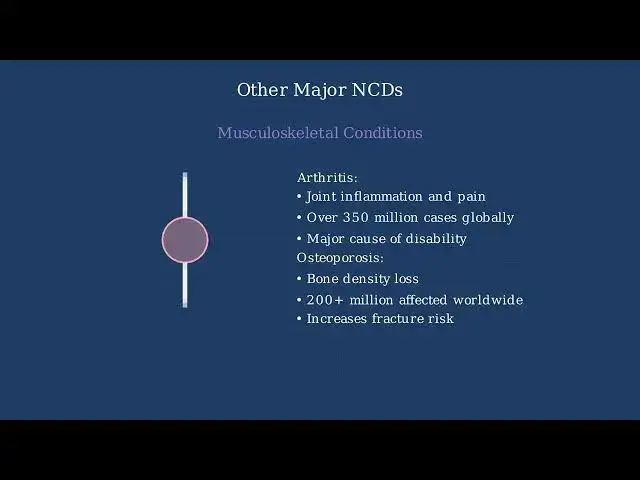
time muscularkeeletal conditions affect
11:53
the joints bones and supporting tissues
11:56
arthritis involves joint inflammation
11:58
and pain affecting over 350 million
12:01
people and causing significant
12:02
disability osteoporosis causes bone
12:05
density loss making bones fragile and
12:08
prone to fracture it affects more than
12:10
200 million people worldwide
12:12
particularly older
12:15
adults chronic kidney disease involves
12:17
the progressive loss of kidney function
12:20
it affects approximately 10% of the
12:22
global population and can eventually
12:24
require dialysis or kidney
12:29
transplantation ckd progresses through
12:31
stages as kidney function gradually
12:34
declines it's both a consequence of and
12:36
contributor to other ncds particularly
12:39
cardiovascular
12:41
disease the global impact of these ncds
12:44
is substantial with hundreds of millions
12:46
affected worldwide chronic kidney
12:48
disease affects nearly 850 million
12:51
people while arthritis impacts over 350
12:54
million these conditions place an
12:56
enormous burden on health care systems
12:58
worldwide through increased
13:00
hospitalization rates and long-term care
13:02
needs they also significantly reduce
13:05
quality of life and workforce
13:07
productivity
13:09
while these conditions often receive
13:11
less attention than cardiovascular
13:13
disease or cancer they affect hundreds
13:15
of millions worldwide and require
13:17
comprehensive healthcare
13:21
strategies risk factors for
13:23
non-communicable diseases can be divided
13:25
into three main categories modifiable
13:28
risk factors that we can change through
13:30
behavior environmental risk factors from
13:32
our surroundings and non-modifiable risk
13:35
factors like age and genetics
13:40
modifiable risk factors are behaviors we
13:42
can change to reduce our risk of
13:44
developing ncds tobacco use
13:47
significantly increases the risk of lung
13:49
cancer heart disease and chronic
13:51
respiratory conditions even secondhand
13:53
smoke exposure is dangerous physical
13:56
inactivity contributes to obesity and
13:58
heart disease while also weakening our
14:00
immune system and decreasing overall
14:02
health an unhealthy diet high in
14:05
processed foods sugar and salt while low
14:08
in fruits and vegetables increases risk
14:10
for multiple ncds including diabetes and
14:12
heart disease the harmful use of alcohol
14:15
damages the liver and contributes to
14:17
several cancers and cardiovascular
14:19
diseases even at moderate consumption
14:22
levels it's important to understand that
14:24
these behavioral factors often
14:26
contribute to multiple ncds
14:28
simultaneously for instance smoking
14:30
affects both heart and lung health
14:35
environmental risk factors are hazards
14:37
in our surroundings that increase our
14:39
risk of developing ncds air pollution
14:42
both indoor and outdoor significantly
14:44
contributes to respiratory diseases lung
14:47
cancer and cardiovascular problems the
14:50
wh estimates that air pollution is
14:52
responsible for millions of premature
14:54
deaths annually workplace exposures to
14:57
chemicals dust radiation and other
14:59
hazardous materials are linked to
15:01
various cancers respiratory conditions
15:04
and other health problems certain
15:06
industries have higher risks of specific
15:10
ncds non-modifiable risk factors are
15:13
aspects we cannot change but must be
15:15
aware of to understand our complete risk
15:18
profile age is a major risk factor for
15:20
most ncds as we get older cellular
15:23
damage accumulates and our bodies become
15:25
less efficient at repair increasing
15:27
disease risk genetics play a significant
15:30
role in ncd risk certain genetic
15:32
variations can increase susceptibility
15:34
to diseases like type 2 diabetes certain
15:37
cancers and heart conditions family
15:40
history often indicates shared genetic
15:42
and environmental factors having close
15:44
relatives with ncds like heart disease
15:46
or cancer increases your personal risk
15:51
the good news is that addressing
15:53
modifiable risk factors can have a
15:55
tremendous impact on disease prevention
15:58
research shows that addressing
16:00
modifiable risk factors could prevent up
16:02
to 80% of heart disease stroke and type
16:05
2 diabetes cases worldwide these four
16:08
modifiable factors tobacco use physical
16:12
inactivity unhealthy diet and harmful
16:14
alcohol use have the greatest impact on
16:17
ncd prevention and should be primary
16:19
targets for both personal and public
16:21
health
16:23
interventions prevention strategies are
16:25
crucial in reducing the global burden of
16:28
non-communicable diseases prevention
16:30
strategies fall into four main
16:32
categories health promotion and
16:34
education creating supportive
16:36
environments policy interventions and
16:39
encouraging healthy individual
16:42
behaviors health promotion and education
16:45
campaigns are essential for raising
16:47
awareness about ncds and their risk
16:49
factors these include public awareness
16:51
campaigns school-based education
16:54
community outreach and digital health
16:56
platforms
16:59
creating supportive environments makes
17:01
healthy choices easier for people this
17:04
includes providing accessible
17:05
recreational spaces implementing
17:08
workplace wellness programs establishing
17:10
smoke-free zones and ensuring healthy
17:13
food options in
17:16
schools policy interventions are
17:18
powerful tools governments use to
17:21
influence health behaviors on a
17:22
population level these include tobacco
17:25
taxes and plain packaging alcohol
17:28
minimum pricing and age restrictions and
17:30
food labeling requirements and sugar
17:32
taxes these policies can lead to
17:34
significant populationwide improvements
17:37
in ncd risk factors with tobacco
17:39
interventions showing the highest
17:43
impact individual health behaviors play
17:46
a critical role in ncd prevention the
17:48
four key behaviors include regular
17:50
physical activity balanced nutrition
17:53
avoiding tobacco products and limiting
17:55
alcohol consumption health guidelines
17:58
recommend at least 150 minutes of
18:00
moderate exercise weekly five or more
18:03
servings of fruits and vegetables daily
18:06
complete avoidance of tobacco products
18:08
and limited alcohol consumption
18:12
prevention strategies for ncds are
18:14
significantly more cost-effective than
18:17
treatment on average prevention
18:19
interventions cost around $5,000 per
18:22
quality adjusted life year gained
18:24
compared to $15,000 for treatment
18:27
studies consistently show that
18:29
prevention strategies are approximately
18:31
three times more cost-effective than
18:34
treatment approaches for reducing the
18:36
global burden of non-communicable
18:38
diseases
18:43
the growing burden of non-communicable
18:45
diseases requires coordinated global
18:47
action across multiple sectors and
18:50
stakeholders currently 85% of premature
18:53
ncd deaths occur in low and middle inome
18:56
countries ncds are responsible for over
18:58
41 million deaths annually worldwide
19:01
with 15 million people between the ages
19:03
of 30 and 69 dying prematurely
19:08
the world health organization
19:09
established the global action plan for
19:11
ncds with the ambitious goal of a 25%
19:14
reduction in premature ncd mortality by
19:18
2025 known as the 25 by 25 target this
19:21
comprehensive plan focuses on key areas
19:24
including reducing exposure to risk
19:26
factors strengthening health systems
19:28
monitoring trends and promoting research
19:31
and development
19:33
strengthening health systems is crucial
19:35
for addressing ncds particularly in low
19:37
and middle inome countries effective
19:40
health systems require robust primary
19:42
care access trained healthare workers
19:45
availability of essential medicines
19:47
functional data systems and sustainable
19:49
financing mechanisms there must be a
19:52
priority focus on low and middle inome
19:54
countries where the burden of ncds is
19:56
growing most rapidly and resources are
19:58
most
20:01
constrained emerging technologies and
20:03
innovations are revolutionizing how we
20:06
address ncds globally mobile health
20:08
solutions artificial intelligence
20:10
wearable devices and tele medicine are
20:13
expanding access to prevention and care
20:15
services even in remote areas these
20:18
technologies are transforming how we
20:19
approach ncd prevention early diagnosis
20:22
and management making health care more
20:25
accessible and
20:27
personalized addressing ncds is
20:29
essential for achieving the sustainable
20:31
development goals sdg target 3.4
20:34
specifically calls for reducing
20:36
premature mortality from ncds by
20:38
onethird by 2030 ncd prevention and
20:41
control supports multiple development
20:43
goals by reducing poverty and inequality
20:45
promoting economic growth strengthening
20:48
health systems and advancing gender
20:52
equality in conclusion addressing the
20:55
growing burden of ncds requires global
20:57
coordination and cooperation multis
20:59
sectoral approaches equitable access to
21:02
health care and substantial investment
21:04
in both prevention and treatment
21:07
together we can reduce the global burden
21:09
of non-communicable diseases and create
21:12
a healthier future for all
#Health Conditions
#Cancer
#Heart & Hypertension
#Obesity
#Public Health